
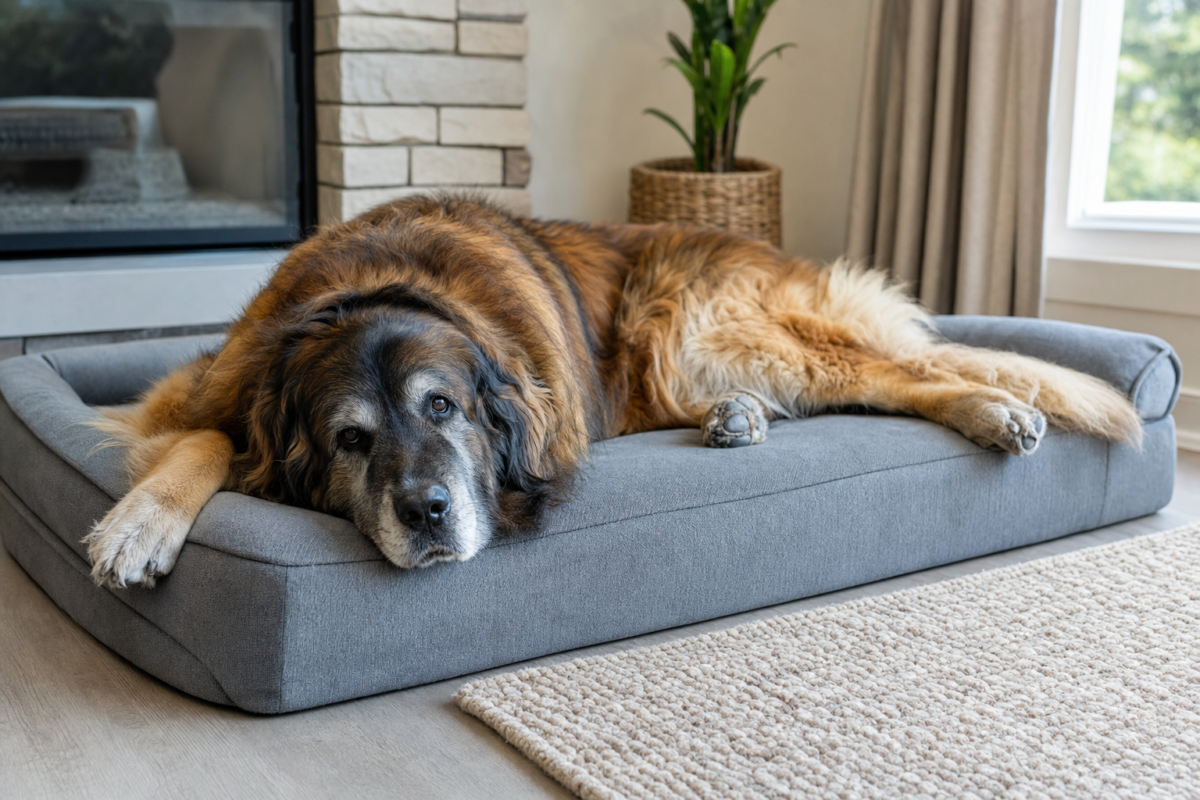
The best bed for a senior large breed dog is a firm orthopaedic bed built around a single slab of supportive foam at least four inches thick, sized so your dog can lie fully stretched out on their side without any limb hanging off. Look for a low entry side that an older dog can step over easily, a non slip base, and a removable washable cover. Place it in a warm, draught free spot on a floor with good grip, away from the busiest walkway in the house.
A good bed does more for an older big dog than almost anything else you can buy. Senior large breeds spend a great deal of the day lying down, they carry a lot of weight through a small number of contact points, and they feel every bit of a thin, sagging cushion on a hard floor. Get the bed right and you see it in how easily your dog gets up in the morning. This guide covers what actually matters in a senior big dog bed, how to size it, where to put it, and how to get a set in their ways older dog to accept a new one.
What is the best bed for a senior large breed dog?
The best bed for a senior large breed dog is a firm orthopaedic bed with a solid core of supportive foam, at least four inches thick and ideally five to seven inches for the heaviest dogs. It should be large enough for your dog to lie flat on one side with legs extended, have at least one low or open side for easy entry, sit on a non slip base, and come with a cover you can strip off and wash.
Notice what is not on that list. Heated beds, raised cots, elaborate bolsters and luxury fabrics all have their place, but none of them is the thing that decides whether your dog is comfortable. Support and size do that. A plain, firm, correctly sized orthopaedic bed beats an expensive bed that is too small or too soft every single time.
Why bed choice changes as a big dog ages
An older large breed dog lies down differently than a young one. Younger dogs flop, roll and shift position freely through the night. Older dogs settle more deliberately, stay in one position longer, and find it harder to push back up to standing. That combination puts sustained pressure on the same points, particularly the elbows, hips and shoulders, hour after hour.
Weight makes this sharper for big dogs than for small ones. A hundred pound dog resting on a two inch foam pad compresses that foam completely and is effectively lying on the floor. The same pad works perfectly well for a twenty pound dog. This is why so many beds marketed as extra large are still not suitable for a heavy senior: they are large in surface area but thin in support.
There is also the business of getting up. A bed with tall bolsters on every side asks an older dog to lift a leg over a wall. A bed that slides when weight goes onto one edge asks for balance your dog may no longer have. Both of those turn a comfortable bed into something your dog quietly starts avoiding, often long before you notice it happening.
What to look for in a senior big dog bed
Work through these features in order of importance rather than picking whichever bed looks the most inviting on a product page.
| Feature | Why it matters | What to look for |
|---|---|---|
| Foam thickness | Thin foam bottoms out under a heavy dog, leaving joints on the floor | Four inches minimum, five to seven for dogs over 100 lb |
| Foam type | Shredded filling shifts away from pressure points overnight | A single solid slab rather than loose shredded fill |
| Firmness | Too soft means sinking and a harder push to stand up | Firm enough that your hand does not reach the base when pressed |
| Size | Older dogs need to stretch out fully to rest comfortably | Measure nose to tail base, then add roughly twelve inches |
| Entry height | Tall sides are an obstacle for stiff back legs | At least one open or low side to step over |
| Base grip | A sliding bed is unnerving and unsafe for an older dog | A rubberised or textured non slip underside |
| Cover | Senior dogs have more accidents and shed more heavily | Removable, machine washable, ideally waterproof inner liner |
How to size a bed for a large or giant breed
Measure your dog lying on their side with legs extended, from the tip of the nose to the base of the tail, then add about twelve inches. That is your minimum bed length. Do the same for width across the shoulders when lying flat and add a similar margin. Most Dog Parents of big dogs end up one size larger than the label suggests, because manufacturer sizing tends to assume a curled dog rather than a stretched one. If your dog currently sleeps with a head, a hip or a paw hanging off the edge, the bed is too small regardless of what the box says.
Too thin
Anything under four inches of foam compresses flat under a heavy dog, which puts elbows and hips straight onto the hard floor.
Too soft
A deeply sinking bed feels luxurious to us but makes standing up harder, because there is nothing firm to push against.
Slippery surroundings
A bed on polished floor means every rise ends with paws scrabbling for grip, which many older dogs start to dread.
Walled on all sides
Full bolsters look cosy but force a stiff dog to lift each back leg over a raised edge to get in and out.
Bed types, and who each one suits
- Solid orthopaedic mattress. The default best choice for most senior big dogs. Flat, firm, easy to step onto, and simple to size generously.
- Orthopaedic bed with a single bolster. Good for dogs who like to rest their head higher, as long as three sides stay open.
- Raised cot bed. Excellent in hot weather and for dogs who run warm, but the step up can be a problem for very stiff dogs and there is little cushioning.
- Heated or self warming bed. Genuinely welcome for older dogs in cold homes, but treat warmth as an addition to good support, never a substitute for it.
- Shredded foam or bean style bed. Usually a poor fit for heavy seniors, because the filling migrates away from exactly the points that need support.
- Donut or nest bed. Lovely for dogs who curl, but most large seniors want to stretch out, and the raised rim gets in the way.
Where to put the bed
Placement is half the job and costs nothing. An older dog wants to be near the family without being in the traffic, warm without being next to a radiator, and on a surface that gives their paws something to grip.
- Choose a spot out of the main walkway, so nobody steps over your dog all evening.
- Keep it away from draughts, exterior doors and cold tiled floors.
- Put a rug or runner around the bed if the floor is hard. Good floor traction makes standing up far less daunting.
- Keep the bed on the ground floor if your dog has started finding stairs difficult, and see our guide on helping a senior big dog with stairs.
- Have more than one bed. Most older big dogs do best with a main bed and a second one in whichever room the family spends the evening.
- Keep water within easy reach, so your dog is not making a long trip in the night.
Helping an older dog accept a new bed
Older dogs are creatures of habit, and a brand new bed can smell wrong and feel wrong all at once. Do not throw the old bed away on day one. Put the new bed alongside it in the same spot, and let your dog investigate in their own time.
Lay the old bed cover or a familiar blanket on top of the new bed for the first week so it carries a scent your dog already trusts. Feed a few treats on it, sit beside it in the evening, and let your dog choose it rather than being lifted onto it. Most dogs switch within a few days. Once your dog is settling on the new bed by choice, you can quietly retire the old one, or move it to a second room as the backup bed.
Supporting comfortable movement day to day
A good bed works alongside the rest of the routine rather than instead of it. Keeping your dog lean, keeping daily movement gentle and regular, and keeping the floors gripped all matter for how easily an older dog rises and settles. Many Dog Parents also build a daily joint support habit once their dog is considered a senior.
MoveGuard Adult is made for this stage of life. It is a six ingredient joint formula for adult medium and large breed dogs, built around clinically studied eggshell membrane and New Zealand Green Lipped Mussel alongside glucosamine, chondroitin, MSM, hyaluronic acid and vitamins C and E, to support comfortable movement and help maintain healthy cartilage and connective tissue. The daily amount is printed on the label and goes by weight, with dogs from 25 to 50 pounds on one chew and dogs of 50 to 75 pounds and above on two. For senior dogs of seven years and older the label directs you to use the higher amount for your dog’s weight and to allow six to eight weeks for the full effect. It ships as 60 soft chews in chicken liver flavour, is made in the USA in an NSF facility, and is backed by a 60 day guarantee.
Support Comfortable Movement
Give your senior big dog daily joint support built for large and giant breeds. Explore MoveGuard Adult.
Signs the bed is working
You will know within a fortnight. A dog whose bed suits them chooses it over the floor, settles quickly rather than circling and repositioning for several minutes, and sleeps through without shifting constantly. Getting up looks like one smooth movement rather than two or three attempts.
The signs that something is wrong are just as clear. A dog who keeps choosing the cool hard floor over the new bed is often telling you the bed runs too hot or sits too soft. A dog who sleeps on the bed but always with their hips off the edge has run out of room. A dog who has started sleeping somewhere new entirely, particularly somewhere with better grip nearby, may be finding the old spot difficult to stand up from. Watch where your dog actually chooses to lie, because that is the most honest review the bed will ever get.
A simple plan for choosing and setting up
- Step 1. Measure your dog lying stretched out on one side, nose to tail base, and add twelve inches.
- Step 2. Filter for solid foam at least four inches thick, or five to seven inches if your dog is over 100 pounds.
- Step 3. Rule out anything with tall sides on all four edges, and anything filled with loose shredded foam.
- Step 4. Check the cover comes off and washes, and check the base has a non slip finish.
- Step 5. Set the new bed beside the old one, in the warmest low traffic corner of the room the family uses most.
- Step 6. Lay a rug or runner around it if the floor is hard, so rising is never a scramble.
- Step 7. Give it two weeks, then check how your dog gets up in the morning compared with before.
Common mistakes to avoid
- Buying on surface area alone and ending up with a wide bed that is only two inches thick.
- Choosing the softest bed in the shop, which makes standing up harder rather than easier.
- Taking the manufacturer size chart at face value instead of measuring your own dog.
- Putting the bed on a polished floor with no rug anywhere near it.
- Removing the old bed immediately, which leaves an unsettled dog with nowhere familiar to go.
- Picking a cover that cannot be washed, then living with it for the next three years.
- Assuming a dog who avoids the bed is being difficult, rather than uncomfortable.
- Waiting for obvious stiffness before upgrading, when the bed is easiest to change while your dog is still moving well.
A few notes by breed and build
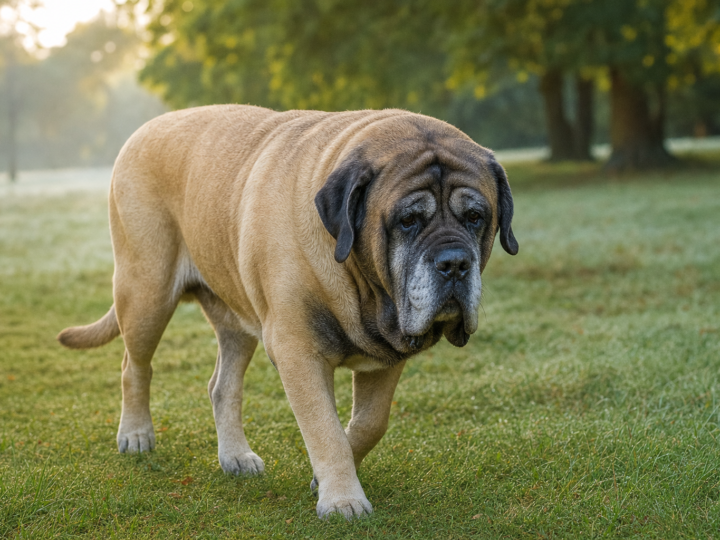
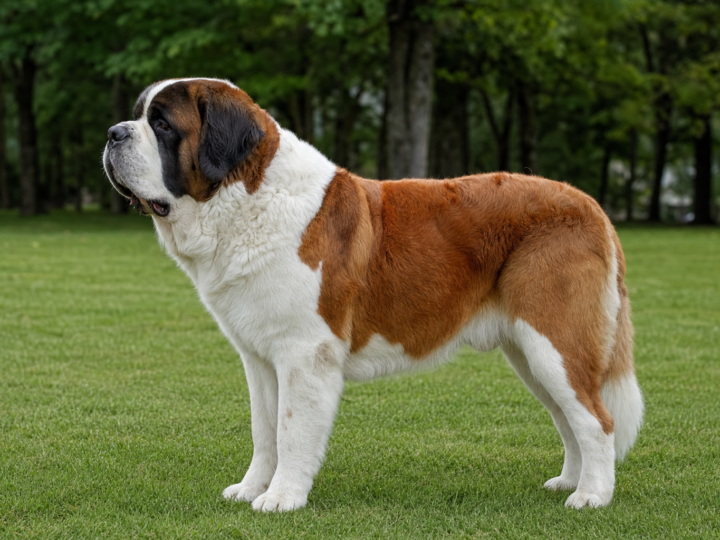
Deep chested, heavy boned breeds such as the Great Dane, the Irish Wolfhound and the Leonberger need serious length above all else, and they are the dogs most likely to end up with a hip hanging off the edge of a bed sold as extra large. Very heavy, densely built breeds like the English Mastiff and the Saint Bernard need depth of foam more than anything, because their weight compresses a standard mattress completely.
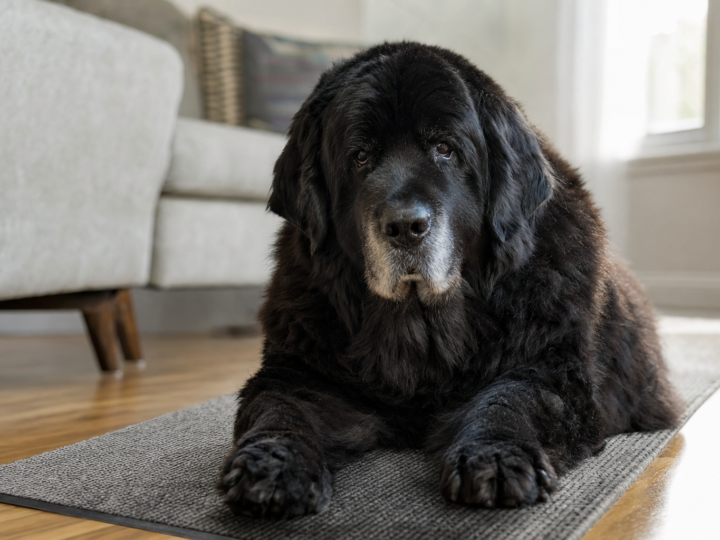
Thick coated northern breeds such as the Alaskan Malamute and the Newfoundland often run warm and may genuinely prefer a raised cot or a firm bed in a cooler part of the room, so do not read a rejected heated bed as a rejected bed. Short coated breeds like the Doberman and the Boxer feel cold floors far more sharply and usually want extra padding and a blanket. Whatever the breed, the individual dog has the final word, and where your dog chooses to sleep tells you more than any specification.
Frequently asked questions
How thick should an orthopaedic dog bed be for a big dog?
Look for at least four inches of solid supportive foam for a large breed, and five to seven inches for dogs over about 100 pounds. The test is simple: press down firmly with your palm, and if you can feel the floor through the foam then it is too thin for your dog to rest on comfortably for hours at a time.
Is memory foam or firm foam better for a senior dog?
A firm supportive foam core is generally the better choice for a heavy senior. Memory foam contours nicely but many versions compress too far under a big dog and make it harder to push up to standing. Some beds combine a firm base layer with a thinner memory foam top layer, which gives you contouring without losing the support underneath.
How often should I wash my senior dog bed?
Wash the cover every one to two weeks, and more often if your dog has had any accidents or comes in wet and muddy. Older dogs are more prone to night time accidents, so a waterproof liner between the cover and the foam is well worth having. Air the foam core itself regularly and follow the manufacturer guidance before ever washing it.
Should a senior dog have more than one bed?
Yes, two or three beds usually works better than one. Older dogs want to stay near the family, and having a bed in the main living room as well as the sleeping spot saves your dog from choosing between comfort and company. It also means there is always somewhere good to lie down without a trip across the house or up any stairs.
My old dog will not use the new bed, what should I do?
Leave the old bed in place, put the new one right beside it, and cover the new bed with a familiar blanket so it smells right. Feed treats on it and let your dog choose it rather than lifting them on. If your dog still refuses after a couple of weeks, look at whether the bed is too soft, too hot or too small, and check the floor around it for grip.
The bottom line
A senior big dog bed is one of the few purchases where the boring option is the right one. Firm, thick, generously sized, easy to step onto, easy to wash, and placed somewhere warm with good grip underfoot. Skip the features that photograph well and spend the money on foam and floor space instead, and your dog will show you the difference in how they get up tomorrow morning.
Want the full picture on keeping an older big dog moving comfortably? Grab our free Big Dog Mobility Guide for practical guidance on movement, home setup and daily joint support through the senior years.
This article is for general educational purposes only and is not veterinary advice. It is not intended to diagnose, treat, cure or prevent any disease. Always consult your veterinarian about your dog’s individual health, nutrition and supplement needs. These statements have not been evaluated by the Food and Drug Administration.
Support Big Breed Joints from Day One
Large and giant breeds carry more load through every growth stage. MoveGuard Growth supports developing joints in young big dogs (8 to 30 months); MoveGuard Adult keeps grown big dogs moving comfortably.
Leave a Reply