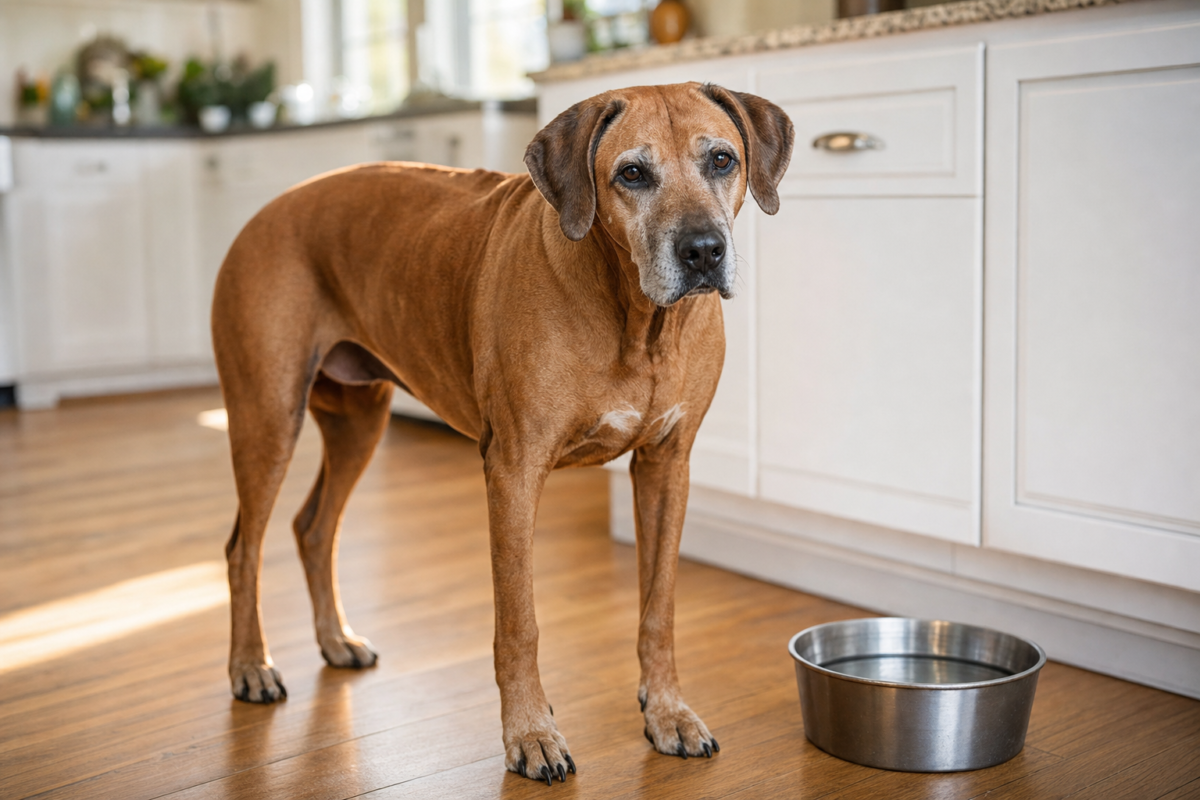
A daily care checklist for a senior large dog covers seven things: a gentle morning warm up before the first walk, fresh water and a measured meal, two or three short low impact walks instead of one long one, a quick hands on comfort check of hips, knees and shoulders, daily joint support, safe footing on slick floors and stairs, and a supportive bed with quiet rest between activity. Run through it at the same points each day and you will spot small changes early, while your big dog stays comfortable, steady and involved in family life.
Somewhere between eight and ten years old, most large and giant breed dogs quietly change gear. The sprint out of the door becomes a stretch first. The leap into the car becomes a pause and a look back at you. None of that means anything is wrong. It means your dog has reached the stage where daily habits do far more work than occasional big gestures. Here is a simple checklist you can run every day, the reason behind each item, and the signs that tell you it is working.
What should be on a daily care checklist for a senior large dog?
A daily care checklist for a senior large dog should include a gentle warm up before the first walk, fresh water and a measured meal fed to a lean body condition, two or three short low impact walks spread through the day, a hands on comfort check across the hips, knees, shoulders and paws, daily joint support, safe footing on hard floors and stairs, and a warm supportive bed with real rest between periods of activity. Add teeth, ears, nails and skin to a weekly layer on top.
Why daily habits matter more as a big dog ages
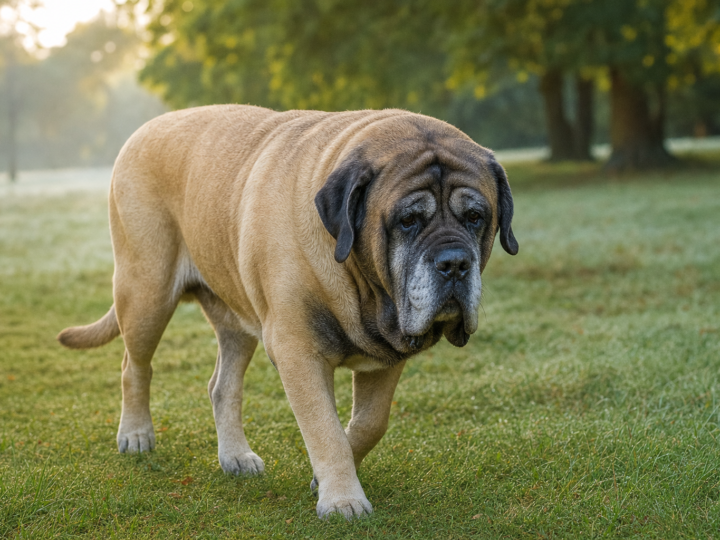
Large and giant breeds carry more weight over the same joint surfaces than small dogs do, and they reach their senior years earlier. A Great Dane or a Mastiff may be senior at six or seven and a Labrador around eight, while a smaller dog of the same age is still in early middle life. That earlier timeline is not a reason to worry. It is a reason to start good habits sooner.
What changes in a senior big dog is mostly recovery. Muscle is built and lost more quickly, and stiffness after a long nap lingers longer. A heavy weekend of activity followed by five quiet days is harder on an older frame than the same total spread evenly. Daily beats occasional at every age, and by a wide margin once your dog is grey around the muzzle.
The daily care checklist at a glance
Here is the whole routine in one place. Most of it takes seconds, and the parts that take longer are the walks you were doing anyway.
| When | What to do | Why it matters |
|---|---|---|
| On waking | Two minutes of slow movement indoors before going outside | Lets stiff joints and cold muscles ease into the day |
| Breakfast | Measured portion, fresh water, daily joint support | Keeps weight steady and habits consistent |
| Morning | Short walk on soft ground at your dog pace | Movement without impact keeps joints mobile |
| Midday | Hands on comfort check plus a toilet break | Catches soreness, lumps and skin changes early |
| Evening | Second short walk, then a measured meal | Spreads activity instead of stacking it |
| All day | Non slip footing at doors, stairs and food bowls | Prevents the slips that shake an older dog confidence |
The American Veterinary Medical Association notes that larger breeds are generally considered senior earlier than small breeds, given their shorter typical lifespans. Read more from the AVMA’s guidance on caring for senior pets.
Morning: the first hour sets the day
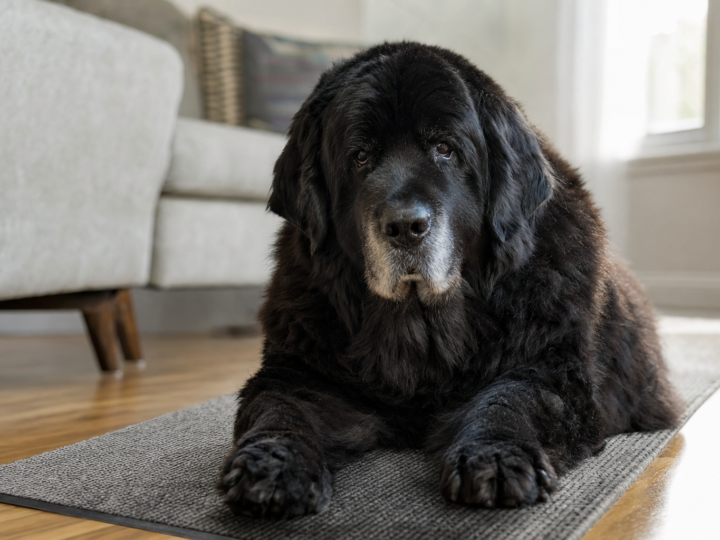
The stiffest moment of a senior big dog day is usually the first five minutes after a long sleep. Sending an eleven year old Newfoundland straight from a deep nap into a cold garden and a set of steps asks a lot of a body that has not warmed up yet. Give your dog a couple of minutes of easy indoor movement first, let it stretch in its own time, then head out.
Breakfast follows, and it is the natural anchor for anything you want to give daily, because it is the one moment that never gets skipped. Fresh water goes down at the same time, and a second bowl somewhere your dog passes often helps, since older dogs drink less when the water is far away.
The two minute hands on comfort check
Once a day, run both hands slowly over your dog, from the neck down the shoulders, along the spine, over the hips and down each leg to the paws. You are not diagnosing anything. You are building a memory of what normal feels like on this particular dog, so that different is obvious the moment it appears.
Notice heat in a joint, a flinch you did not see yesterday, a new lump, gritty ears, cracked paw pads, or nails long enough to change how the foot lands. Most days you will find nothing, and that is the point.
Weekend Warrior Pattern
Five quiet days then one long hike is harder on an older frame than the same activity spread evenly across the week.
Slippery Floors
Hard flooring is where confidence is lost. Runners and rugs on the routes your dog uses most are one of the cheapest wins available.
Creeping Weight
Activity drops but portions stay the same, and the extra pounds land on the joints doing the most work.
Silent Stoicism
Big dogs hide discomfort well. Slower stair use or a new hesitation at the car is often the first thing you will actually see.
Feeding a senior large dog day to day
Weight is the biggest lever you control, and it gets harder to manage as activity falls away. A senior big dog carrying an extra ten percent asks its hips and knees to do measurably more work on every step, all day.
- Measure the food rather than pouring it. Eyeballing portions drifts upward over months without anyone noticing.
- Count treats and training rewards in the daily total, not as extras.
- Keep protein generous unless your veterinarian has advised otherwise, since older dogs need it to hold muscle.
- Review portions with your veterinarian at each visit, because the right amount for a nine year old is rarely the right amount for a twelve year old.
How to check body condition in ten seconds
The scale tells you weight. Body condition tells you what that weight means on your dog frame, and checking it every week or two is more useful than a number once a year.
- Ribs. Run your hands along the sides. You should feel the ribs easily under a thin layer of covering. If you have to press to find them, ease back on portions.
- Waist. Look down from above. You want a visible narrowing behind the ribs rather than a straight line from chest to hip.
- Tuck. From the side, the belly should rise toward the back legs rather than hanging level.
- Muscle. Feel across the back legs and shoulders. Losing muscle while gaining weight is worth mentioning to your veterinarian.
Movement: little and often wins
The instinct when a big dog slows down is to do less. The better answer is usually the same amount in smaller pieces. Regular gentle movement keeps joints mobile and holds the muscle that supports them, while long hard sessions followed by days of rest tend to leave an older dog sore.
- Two or three short walks a day beat one long one for almost every senior big dog.
- Choose grass, soft trails or sand over concrete, and turn for home before you see the pace drop.
- Add gentle sniffing time, which is tiring in the best way and costs the joints nothing.
- Swimming and other low impact exercise options suit older frames beautifully if your dog enjoys water.
Watch the morning after, not just the walk itself. A dog that is stiffer the next day was asked for slightly too much, and the fix is to shorten the outing rather than stop it.
Daily joint support and the comfort habits around it
Every item so far serves one goal: keeping an older big dog comfortable enough to keep moving. A daily joint support routine sits alongside lean feeding, sensible walks and good footing, as one more habit anchored to breakfast.
Many big dog parents add a daily chew made for adult large breeds. MoveGuard Adult is built for this stage of life. It brings together clinically studied eggshell membrane and New Zealand green lipped mussel alongside glucosamine, chondroitin, MSM and hyaluronic acid to support healthy joints, cartilage and connective tissue in adult medium and large breed dogs. It comes as 60 soft chews in chicken liver flavour, is made in the USA in an NSF facility, and is backed by a 60 day guarantee. Dose by weight following the label, and check with your veterinarian if your dog is already on other supplements. If you want to understand what each ingredient actually does before you choose anything, our guide to joint support ingredients walks through them one by one.
Daily Support For An Older Frame
Give your senior big dog daily joint support built for adult large breeds. Explore MoveGuard Adult.
Evening and overnight comfort
How your dog sleeps shapes how the next morning goes. Senior big dogs spend many hours lying down, and a thin bed on a hard floor leaves pressure points on elbows, hips and shoulders that show up as stiffness at dawn.
- Give a bed long enough for your dog to stretch out fully, with real supportive thickness underneath.
- Keep water within easy reach overnight and allow for one more toilet break than you used to.
If your dog has started to struggle into the car or onto a sofa, a ramp or a set of steps removes the impact entirely and protects both of you.
Signs your senior big dog is doing well
You do not need a spreadsheet to know the routine is working. A senior big dog who is doing well gets up from rest without a long negotiation, holds a steady posture on the walk, keeps a bright interest in food and family, and settles calmly at night. Weight stays even and muscle stays present across the back legs.
The changes worth a conversation with your veterinarian are the ones that persist: limping lasting more than a day or two, a sudden reluctance to use stairs, stiffness getting worse week by week, a drop in appetite, or new restlessness at night. Our guide to the signs your large dog is slowing down goes through what usually shows up first.
The weekly and monthly layer
A few things do not need doing daily but do need a rhythm, and they are the ones most likely to slip.
Weekly. Brush the coat and check the skin underneath while you do it, look inside the ears, brush the teeth, and run the body condition check.
Every two to four weeks. Trim or file the nails. Long nails change how the foot lands and quietly alter the whole standing posture.
Every six months. Book a veterinary check rather than waiting for the annual one, since bloodwork gives your veterinarian a baseline to compare against later. Keep a short note on your phone of anything you notice between visits.
Common mistakes with senior big dogs
Most of what goes wrong in senior care is not neglect. It is drift. These are the patterns worth watching for.
- Letting activity collapse. Doing less because your dog is slower speeds up muscle loss. Do the same amount, gently, in smaller pieces.
- Feeding the same portions forever. Needs fall as activity falls. Portions rarely follow on their own.
- Treating slowing down as just old age. New or worsening changes deserve a veterinary opinion.
- Ignoring the floors. Slippery surfaces cost confidence quickly, and lost confidence is hard to win back.
- Waiting for a visible problem before supporting joints. Daily habits are most useful while things are still going well.
What changes in a senior big dog mind
The body is only half of it. Older dogs often become more attached to routine and less tolerant of surprises. Some get a little deaf, which looks exactly like selective hearing until you realise it is not. Keep the day predictable, approach from the front where your dog can see you, and say the name before you touch a sleeping dog.
Do not retire the brain. Scent games, a food puzzle, a few minutes of easy training and new routes on old walks all keep an older mind engaged without asking anything of the joints. If you want the broader picture of this stage, our guide on when a big dog is considered a senior sets out the timeline by size.
Frequently asked questions
At what age is a large dog considered senior?
Most large breeds are considered senior around seven or eight years old, and giant breeds such as Great Danes and Mastiffs often reach that stage at six or seven. Bigger dogs age earlier than small ones, so a size based timeline is more useful than a single number.
How much exercise does a senior large dog need each day?
Most senior large dogs do well with two or three short walks a day on soft ground rather than one long outing. Let your dog set the pace and watch how the next morning looks, since stiffness the day after is the clearest sign the session was slightly too much.
Should I change what I feed my senior big dog?
Many senior large dogs do well on a measured portion of a complete adult food fed to a lean body condition, with treats counted in the daily total. Ask your veterinarian whether a change in food, portion or protein level suits your individual dog before switching anything.
How often should a senior large dog see the vet?
Twice a year is the usual recommendation for senior dogs, rather than once. Things change faster at this stage, and regular bloodwork gives your veterinarian a baseline to compare against if something shifts later.
Can I start joint support for a dog that already seems stiff?
Daily joint support is a habit many big dog parents keep going through adulthood and into the senior years to support healthy joints and comfortable movement. If your dog is already stiff or sore, speak with your veterinarian first so the cause is properly assessed.
The bottom line
Caring well for a senior large dog is not about grand gestures. It is a warm up before the first walk, a measured meal, a couple of gentle outings instead of one hard one, two minutes of hands on attention, daily joint support, floors your dog can trust, and a bed worth sleeping on. Run that checklist every day and you give your big dog the two things that matter most now: comfort, and someone who notices.
Want the simple roadmap in one place? Grab our free Big Dog Mobility Guide for the daily comfort checklist, feeding framework and low impact movement limits, all written for large and giant breeds.
This article is for general educational purposes only and is not veterinary advice. It is not intended to diagnose, treat, cure or prevent any disease. Always consult your veterinarian about your dog’s individual health, nutrition and supplement needs. These statements have not been evaluated by the Food and Drug Administration.
Support Big Breed Joints from Day One
Large and giant breeds carry more load through every growth stage. MoveGuard Growth supports developing joints in young big dogs (8 to 30 months); MoveGuard Adult keeps grown big dogs moving comfortably.

Leave a Reply