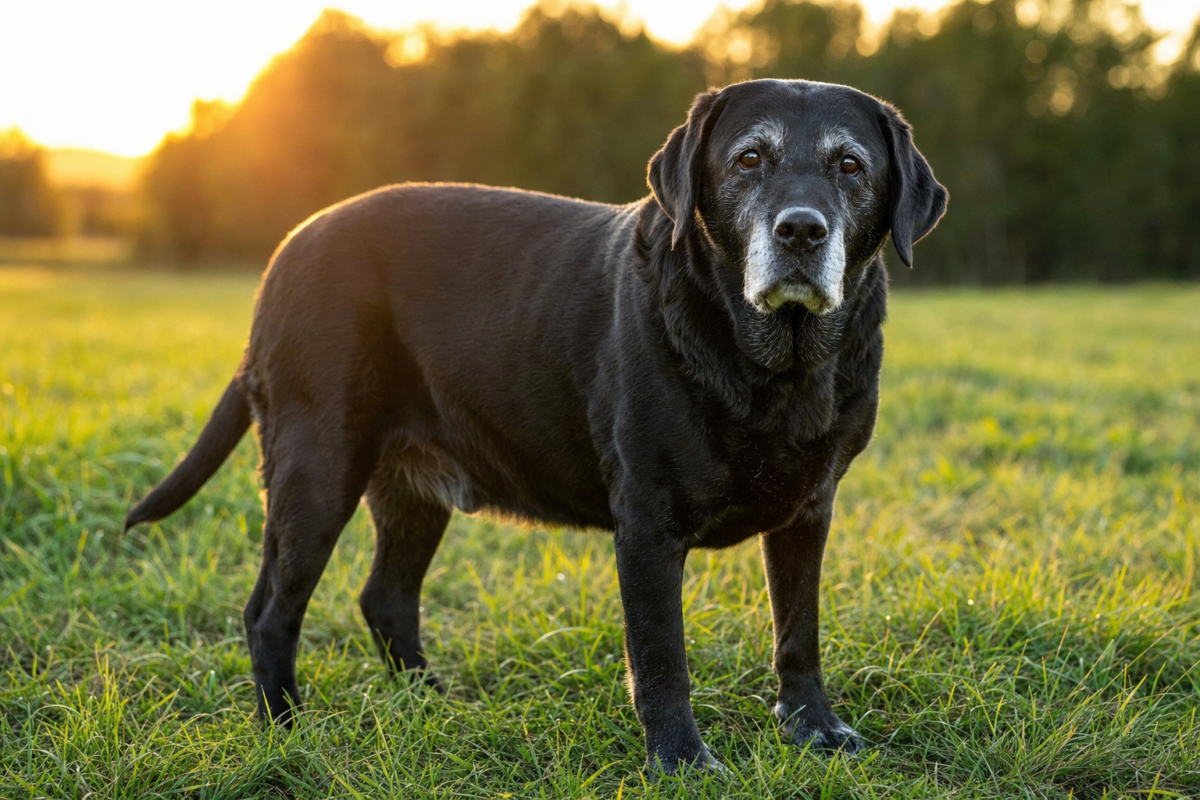
Large breed dogs are generally considered senior from around 6 to 7 years of age, and giant breeds from around 5 to 6 years. That is several years earlier than a small dog, which is often not called senior until 10 or 11. The heavier the expected adult weight, the earlier the label applies. Age alone is a rough marker though. What matters more is what you actually see: slower rising, shorter walks, more sleep and a little less spring in the step.
The word senior lands strangely when your dog still looks magnificent and still pushes the back door open with its nose. For big dogs the label arrives early, often years before you feel ready for it, and that timing catches many Dog Parents by surprise. The good news is that the senior label is not a warning. It is an invitation to change a few small things at the right moment, so your dog stays comfortable, mobile and fully involved in family life for as long as possible.
At what age is a large breed dog considered a senior?
A large breed dog is generally considered a senior from around 6 to 7 years of age, and a giant breed dog from around 5 to 6 years. Most veterinary practices use expected adult weight rather than a single number, because size drives the pace of ageing more than anything else. A 60 pound dog is often treated as senior at seven, a 100 pound dog at six, and a 140 pound dog at five.
The practical meaning of that label is simple. It is the point at which your veterinarian may suggest twice yearly checkups instead of annual ones, at which baseline blood work becomes genuinely useful, and at which small adjustments to food, footing and daily movement start paying real dividends. It does not mean your dog is old, and it certainly does not mean slowing down is inevitable this year.
Why big dogs are called senior so much earlier
Bigger dogs simply live their whole timeline faster. A giant breed puppy grows from two pounds to well over a hundred in under two years, a rate of tissue building no small dog comes close to, and that accelerated pace continues at the other end of life. Larger bodies also carry more load through every joint and every heartbeat, and there is more tissue to maintain with the same basic machinery.
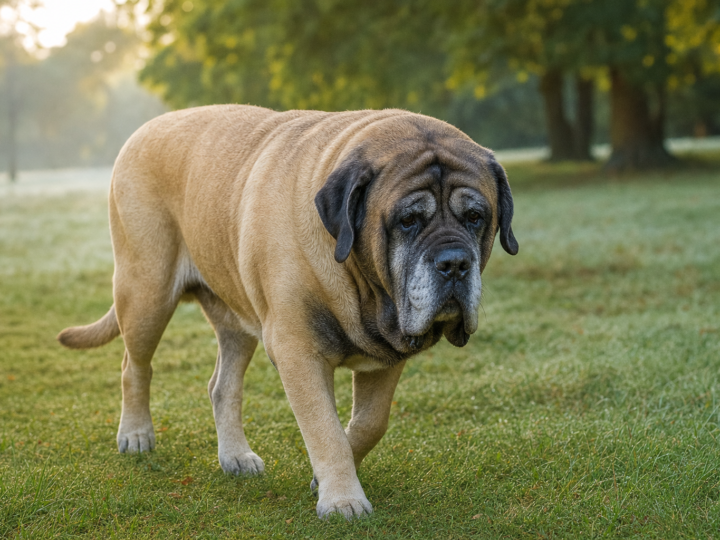
The result is a lifespan compressed at both ends. A Great Dane may be considered senior at five and a Chihuahua not until eleven, even though both are the same species. Our guide on why giant breeds live shorter lives unpacks the biology in more detail. For daily life, the takeaway is straightforward. If you have a big dog, start senior habits earlier than the small dog owners around you, and do not wait for a visible reason.
Senior age by expected adult weight
Use this as a planning guide rather than a diagnosis. Individual dogs vary widely, and a fit nine year old Labrador can easily outpace a sedentary six year old of the same breed.
| Adult weight | Typically senior from | Typical lifespan |
|---|---|---|
| 50 to 70 lb | 7 years | 10 to 13 years |
| 70 to 90 lb | 6.5 to 7 years | 10 to 12 years |
| 90 to 110 lb | 6 years | 9 to 11 years |
| 110 to 130 lb | 5.5 to 6 years | 8 to 10 years |
| 130 lb and above | 5 years | 7 to 10 years |
The American Veterinary Medical Association notes that larger breeds are generally considered senior earlier than small breeds, given their shorter typical lifespans. Read more from the AVMA’s guidance on caring for senior pets.
The signs that mark the transition more reliably than a birthday
Ageing in big dogs is gradual and easy to miss, precisely because you see your dog every day. The shifts below tend to appear before any obvious change, and noticing them early gives you the most room to act.
- Rising takes a beat longer. Watch the first movement after a long nap rather than the tenth minute of a walk.
- The walk gets self edited. Your dog still wants to go, but chooses the shorter loop or turns for home sooner.
- Stairs and the car get a pause. A moment of hesitation before jumping in is worth noting.
- Sleep deepens and lengthens. Senior big dogs often sleep more soundly and are slower to wake.
- Muscle quietly disappears. Run your hands over the back legs. Thinning hindquarters are one of the earliest honest signals.
Our guide on the signs your large dog is slowing down goes through each of these in detail, including what to raise with your veterinarian and when.
Extra Weight
A few pounds matter more at seven than at three. Lean body condition is the single biggest lever you hold.
Muscle Loss
Muscle supports joints. Less movement means less muscle, which means less comfortable movement.
Slippery Floors
Hard flooring is harder on an older dog than a young one. Runners and rugs restore confidence instantly.
Doing Nothing
Waiting for something obvious wastes the window when small adjustments do the most good.
Feeding a big dog through the senior years
Senior feeding is less about a bag labelled senior and more about matching calories to a slower body. Most big dogs need modestly fewer calories from around this age, while still needing good quality protein to hold muscle.
- Reassess portions when your dog turns senior, and again every few months. Activity drops before appetite does.
- Keep protein generous unless your veterinarian advises otherwise. Protein protects the muscle that supports ageing joints.
- Feed two measured meals a day rather than free feeding, so you can see exactly what is going in.
- Weigh your dog every two or three months. A quiet upward drift is far easier to correct at four pounds than at fourteen.
- Confirm any dietary change with your veterinarian, especially if blood work has flagged anything to watch.
Our guide on how much to feed an adult large dog gives you a starting framework to adjust from.
How to check body condition in ten seconds
The scale tells you weight. Body condition tells you whether that weight suits your dog.
- Ribs. Run your hands along the sides. You should feel the ribs under a thin layer. If you have to press, ease back on food.
- Waist. Look down from above. You want a clear waist that tucks in behind the ribs.
- Tuck. From the side, the belly should rise toward the back legs rather than hanging level.
Check monthly through the senior years and adjust portions gently with your veterinarian’s guidance.
Movement that suits an older big dog
The instinct to let a senior dog rest is kind and usually wrong. Movement maintains the muscle that supports the joints, and a big dog who stops moving loses ground quickly. The aim is not less activity but better shaped activity.
- Prefer two or three shorter outings a day over one long one. Twenty gentle minutes, three times, beats an hour of pushing through.
- Favour soft, level ground such as grass and dirt trails over concrete and gravel.
- Warm up at an easy pace and finish before your dog looks tired rather than after.
- Keep going in poor weather. A slow lap of the block beats a skipped day.
- Add scent games, food puzzles and simple training, which tire a big dog beautifully without loading the joints.
- Watch the following morning. Extra stiffness the day after tells you the outing was slightly too much.
Supporting joint comfort every day
Joint comfort is the thread running through everything else in the senior years. A dog who moves comfortably walks more, keeps more muscle, holds a healthier weight and stays engaged with the household. A dog who does not moves less, and the cycle tightens. That is why many Dog Parents treat daily joint support as a fixed part of the routine rather than something they reach for once something looks wrong.
Alongside lean feeding and gentle daily movement, many big dog parents add a joint chew formulated for adult medium and large breeds. MoveGuard Adult is built for this stage of life. It brings together glucosamine, chondroitin, MSM, New Zealand Green Lipped Mussel, eggshell membrane collagen, hyaluronic acid and vitamins C and E to support joint comfort and everyday mobility in adult dogs. The daily amount is printed on the label and set by weight, and the label directs senior dogs aged seven and over to use the higher amount for their weight and to allow six to eight weeks for the full effect. Each jar holds 60 soft chews in a chicken liver flavour, made in the USA in an NSF registered facility. Talk it through with your veterinarian, especially if your dog is already on other supplements.
Keep Them Moving Comfortably
Daily joint support formulated for adult medium and large breed dogs. Explore MoveGuard Adult.
What changes at the veterinary practice
Once your dog crosses into the senior bracket, most practices move to twice yearly examinations. For a big dog this matters more than it sounds, because six months is a meaningful proportion of the years remaining, and quiet changes have less time to build unnoticed.
Expect your veterinarian to suggest baseline blood work and a urine sample, a proper weight and body condition record, a dental assessment and a hands on check of how your dog moves. Baseline results taken while your dog is well are genuinely valuable, because they turn a future test from a guess into a comparison. Bring your own notes too. A short list of what you have noticed at home is often more useful than anything a ten minute examination can reveal.
A simple senior care plan, stage by stage
Think of the senior years in phases rather than as one long stretch.
The year the label arrives. Baseline blood work, a weight record and a body condition check. Add traction to the floors your dog crosses daily. Establish a daily joint routine before anything looks different, because this is the easiest year to build habits.
One to three years in. Shorter and more frequent walks. Watch muscle over the hindquarters. Raise the food bowl if your dog is reaching down awkwardly, and consider a supportive bed with a low edge that is easy to step over.
The later years. Prioritise comfort, footing and dignity. Keep the routine predictable, keep the walks going in whatever form they now take, and check in with your veterinarian more often rather than less. Small adjustments to daily life do more good at this stage than any single decision.
Common mistakes with senior big dogs
The mistakes here are rarely dramatic. They are usually kind intentions applied slightly wrong.
- Treating rest as the answer. Complete rest costs muscle, and lost muscle is hard to rebuild in an older dog.
- Letting weight drift. Ageing dogs need fewer calories, and the drift is slow enough to miss until it is significant.
- Blaming everything on age. Stiffness, reluctance and behaviour change are worth investigating rather than accepting.
- Waiting for a visible reason to start supporting joints. The habits are easiest to build while everything still looks fine.
- Skipping the second annual checkup. Twice yearly visits exist because big dogs change quickly at this age.
Living well with a senior big dog
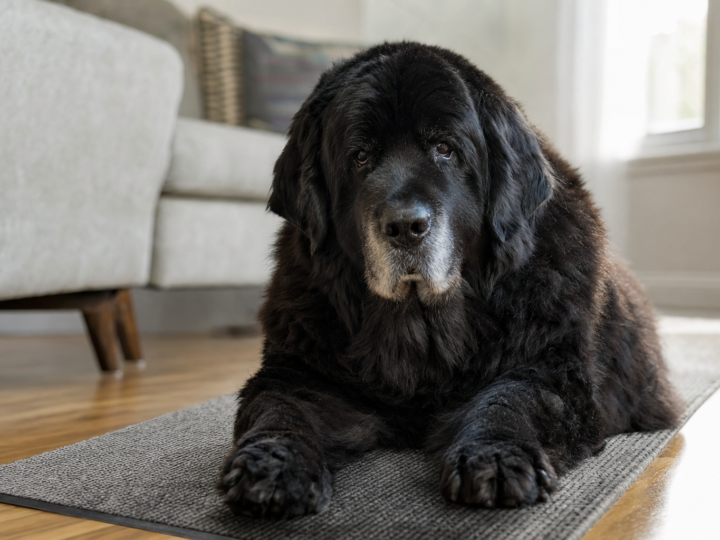
Something worth saying plainly is that the senior years are often the best years. The chewing is finished, the training has landed, and what remains is a dog who knows you completely and asks for very little beyond your company. Many Dog Parents describe this stage as the closest they have felt to their dog.
Keep your senior involved. Big dogs are household animals and they do badly when they are quietly moved to the edge of family life because they are slower. Bring the bed into the room everyone uses. Keep the short walk in the routine. Ask for the same simple behaviours you always have, because being useful matters to a dog at any age. Comfort, inclusion and a predictable rhythm are what a senior big dog needs most, and all three are entirely within your gift. Our full guide to caring for a senior large breed dog covers the daily routine in more depth.
Frequently asked questions
At what age is a large breed dog considered a senior?
Large breed dogs are generally considered senior from around 6 to 7 years of age, and giant breeds from around 5 to 6 years. Practices usually set the threshold by expected adult weight, so the heavier the dog, the earlier the label applies.
Why are big dogs senior earlier than small dogs?
Larger dogs grow faster, carry more load through every joint and have more tissue to maintain, so their whole timeline runs quicker at both ends. That is why a giant breed may be called senior at five while a small dog is not until ten or eleven.
Does the senior label mean my dog is unwell?
No. It is a planning marker, not a diagnosis. It signals the point at which twice yearly checkups, baseline blood work and small adjustments to food, footing and daily movement become genuinely worthwhile.
Should a senior big dog still exercise?
Yes, and it matters more than ever. Movement maintains the muscle that supports the joints. The shape changes rather than the amount disappearing, so aim for shorter and more frequent outings on soft, level ground.
When should I switch my big dog to senior food?
There is no fixed date. What matters is matching calories to a slower body while keeping protein generous enough to hold muscle. Review portions when the senior label arrives and confirm any change with your veterinarian.
The bottom line
Your big dog will be called a senior earlier than you expect, somewhere between five and seven depending on adult weight. Treat that as a prompt rather than a verdict. Book the twice yearly checkup, record a baseline, put rugs on the slippery floors, keep the walks short and frequent, feed for a lean body condition, and build daily joint support into the routine while everything still looks fine. Those few changes protect the thing that matters most, which is comfortable, confident movement, and comfortable movement is what keeps a big dog fully in the middle of family life.
Want the simple roadmap in one place? Grab our free Big Dog Mobility Guide for the senior checklist, gentle movement plan and daily comfort habits, all written for large and giant breeds.
This article is for general educational purposes only and is not veterinary advice. It is not intended to diagnose, treat, cure or prevent any disease. Always consult your veterinarian about your dog’s individual health, nutrition and supplement needs. These statements have not been evaluated by the Food and Drug Administration.
Support Big Breed Joints from Day One
Large and giant breeds carry more load through every growth stage. MoveGuard Growth supports developing joints in young big dogs (8 to 30 months); MoveGuard Adult keeps grown big dogs moving comfortably.

Leave a Reply