
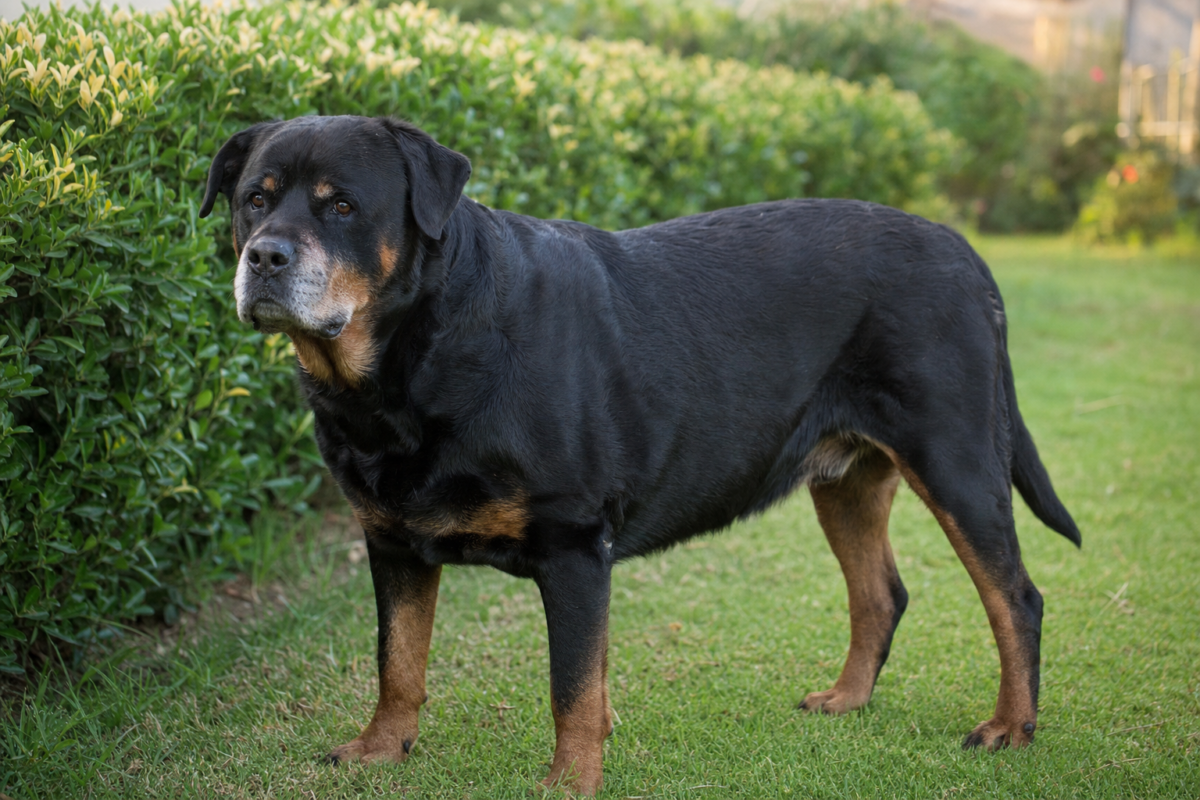
You keep a senior big dog moving comfortably with five daily habits: hold a lean body condition, swap one long outing for several short gentle ones, give every hard floor grip and every step a ramp, keep a joint support routine running year round, and see your veterinarian twice a year instead of once. Large breeds reach the senior years earlier than small dogs, often from seven years of age, so these habits pay you back most when you start them before anything looks different.
There is a quiet moment most big dog parents notice. Your dog takes the stairs a little slower, or stands up in two movements instead of one, and you realise your companion is getting older. It is not a moment to worry about. It is the moment the daily routine starts to matter more than it ever has, because comfort in the senior years is built from small, ordinary habits rather than one big decision.
How can I keep my senior big dog moving comfortably?
Keep your senior big dog moving comfortably by managing five things every day: weight, movement, footing, joint support and veterinary oversight. A lean body condition takes load off every joint. Short frequent walks keep muscle without asking too much at once. Rugs and ramps stop slips and jolts around the home. A daily joint support routine supports comfortable movement over time. Two veterinary visits a year catch small changes while they are still small.
None of this asks for a new lifestyle. It asks you to shape the one you already have around a body that has been carrying a lot of weight for a lot of years.
Why large breeds reach the senior years earlier
Large and giant breeds age on a faster clock than small dogs. A terrier may not be considered senior until ten or eleven, while a Great Dane is often treated as senior from six. The extra mass a big dog carries means more work through every joint on every step of a long life, and the years simply arrive sooner.
This matters because most parents wait for a visible change before adjusting anything. By the time a big dog is obviously stiff, the habits that support comfortable movement have had years to be useful and have not been used. The kinder approach is to treat the senior years as a stage you prepare for rather than a problem you react to.
When a big dog becomes a senior, by adult weight
Size predicts the timing far better than breed name does. Use this as a planning guide, not a diagnosis, and confirm the right timing for your own dog with your veterinarian.
| Adult weight | Often considered senior at | What to start |
|---|---|---|
| 50 to 65 lb | 8 to 9 years | Twice yearly checkups and a weight check every month |
| 65 to 80 lb | 7 to 8 years | Rugs on hard floors and shorter, more frequent walks |
| 80 to 100 lb | 7 years | A ramp for the car and a supportive bed off the floor |
| 100 to 130 lb | 6 to 7 years | Daily joint support and gentle warm ups before activity |
| 130 lb plus | 5 to 6 years | All of the above, plus stair management indoors |
Cornell University’s College of Veterinary Medicine covers how growth rate, nutrition, and exercise interact with joint development in large breed dogs. Read more from Cornell’s canine hip dysplasia overview.
What changes in an older big dog
Three things tend to shift together. Muscle mass falls away, especially over the back legs and hips. Cartilage and the fluid that cushions the joints become less resilient. Sleep gets deeper and longer, which means more time still and more stiffness on rising.
Why muscle is the piece you can influence most
Muscle is the natural support system around a joint, and it is the part of the picture most responsive to what you do this week. A senior dog that stops moving loses muscle quickly, which puts more load on the joint, which makes movement feel like harder work, which leads to less movement again. Gentle daily activity is how you interrupt that loop. Little and often beats one big effort every time, and it is the single most useful thing most Dog Parents can change.
Slippery Floors
Tile and laminate turn every rise into a scramble. Runners and rugs on the main routes make a visible difference in a day.
Extra Weight
Every additional pound rides through older joints on every step. Lean is the most powerful lever you have.
Weekend Overload
Quiet weekdays then a long Sunday hike is hard on an older frame. Even, moderate activity suits a senior far better.
Cold And Damp
Older dogs stiffen in the cold. A warm bed off the floor and a coat for winter walks keep movement easier.
Feeding a senior big dog for comfortable movement
Weight management is the highest value thing you can do for an older big dog, and it is entirely within your control. An older dog usually needs fewer calories than the same dog at four years old, while the appetite rarely gets the memo.
- Feed to a lean body condition rather than to the number printed on the bag, and reweigh monthly.
- Split the daily amount into two meals to keep energy steady through the day.
- Count treats and chews as part of the daily total, since they are where most creeping weight gain hides.
- Ask your veterinarian whether a senior formula suits your dog, because protein needs do not simply fall with age.
- Keep water easy to reach on every floor your dog uses, so drinking never requires a trip down the stairs.
How to check body condition in ten seconds
The scale tells you weight, but body condition tells you whether that weight suits your dog.
- Ribs. Run your hands along the sides. You should feel the ribs easily under a thin layer. If you have to press, ease back on food.
- Waist. Look down from above. You want a clear waist that tucks in behind the ribs.
- Tuck. From the side, the belly should rise toward the back legs rather than hanging level.
Check monthly and adjust portions gently with your veterinarian’s guidance.
Daily movement that suits an older frame
The goal for a senior big dog is consistency rather than distance. Aim for movement most days, at a pace your dog chooses, on ground that gives good grip.
- Prefer two or three short walks over one long one, and let sniffing set the pace.
- Choose grass, dirt and forest floor over concrete wherever the route allows.
- Begin every outing with five slow minutes, which lets an older body find its rhythm before it does any real work.
- Add gentle strength work such as slow walking up a shallow slope, if your veterinarian agrees it suits your dog.
- Skip jumping into the car and use a ramp instead, because landing loads shoulders and elbows hard.
- Watch the day after. Comfortable movement the following morning is your best sign the outing was right.
Everyday habits that support joint comfort
Alongside weight and movement, many Dog Parents keep a daily joint support routine running through the whole of the senior stage rather than starting and stopping it. Consistency is the point, because the ingredients that support joint comfort work with time rather than overnight.
MoveGuard Adult is built for medium and large breed adult dogs from 25 to 75 pounds. It brings together glucosamine, chondroitin, MSM, New Zealand Green Lipped Mussel, eggshell membrane collagen, hyaluronic acid and vitamins C and E to support cartilage, connective tissue and comfortable movement. Dosing follows weight, so a dog from 25 to 50 pounds takes one chew a day and a dog from 50 to 75 pounds or more takes two, with the label advising senior dogs aged seven and over to use the higher amount for their weight and to allow six to eight weeks. It ships as 60 chicken liver flavoured chews, is made in the USA in an NSF registered facility, and carries a 60 day guarantee.
Support The Years Ahead
Give your older big dog daily joint support made for medium and large breeds. Explore MoveGuard Adult.
Signs your senior dog is doing well
You do not need a formal assessment to see that the routine is working. Look for a dog that rises in one smooth movement, keeps an interest in the walk from start to finish, settles calmly afterwards, holds a steady lean weight, and moves the same way on Monday as on Friday.
Take notes on your phone every few weeks. A short video of your dog walking away from you, filmed the same way each time, is far more useful at a checkup than trying to remember whether things looked different two months ago.
Speak with your veterinarian if you notice limping, a change in gait, stiffness after rest that lasts more than a day or two, reluctance to use stairs, panting at rest, or restlessness at night. Those are conversations to have early rather than late.
A simple comfort plan, stage by stage
The emphasis shifts as the years go on, and knowing what to focus on when takes a lot of guesswork out of it.
The year before senior. This is preparation time. Get the weight where you want it, put rugs down on the slippery routes, buy the car ramp before you need it, and start the daily joint support routine while your dog still moves beautifully.
Early senior. Move to twice yearly checkups. Split walks into shorter outings, keep them daily, and start logging a short walking video every month so you have a baseline to compare against.
Middle senior. Comfort at home becomes the main project. A supportive bed off the floor, water on every level, food and bowls at a comfortable height, and a warm coat for cold mornings all matter more than any single walk does.
Late senior. Follow your dog. Very short, very frequent outings, plenty of gentle contact, and close partnership with your veterinarian. Success at this stage is measured in easy days rather than distance covered.
Common mistakes to avoid
A handful of habits quietly make things harder for older big dogs. Avoid these and the rest gets much simpler.
- Resting a stiff dog completely. Total rest costs muscle fast, and muscle is what supports the joint. Gentle daily movement is almost always kinder than none.
- Letting weight creep. Two extra pounds a year is invisible and adds up to a lot of extra work by ten years old.
- Leaving the floors bare. Slipping is one of the easiest things in this whole list to fix and one of the most often ignored.
- Starting joint support only after a change appears. These routines are built to run over time, so the sooner they begin, the more they can do.
- Writing changes off as old age. Aging is not a diagnosis. A dog that suddenly moves differently deserves a veterinary conversation.
The mind of an older big dog
Comfort is not only physical. An older dog that no longer gets long walks can lose a lot of the mental variety that made the day interesting, and a bored senior often reads as a flat or withdrawn one.
The fix is cheap and gentle. Slow sniffing walks give an older dog enormous mental work at almost no physical cost. Snuffle mats and puzzle feeders turn dinner into an activity. Short training sessions using known cues keep the bond alive and are surprisingly satisfying for a dog that has done them for years. Ten minutes of nose work in the garden can leave a senior as pleasantly tired as a walk once did, without asking anything of the joints.
Keep the social side going too. Familiar people, familiar routes and predictable routines suit older dogs, and a senior who still has a job to do, even a small one, tends to stay brighter for longer.
Frequently asked questions
At what age is a large breed dog a senior?
Most large breeds are treated as senior from around seven years of age, and giant breeds often from five or six. Smaller large breeds around 50 to 65 pounds may not reach the stage until eight or nine. Your veterinarian can confirm the right timing for your dog.
Should I still walk my senior big dog every day?
Yes, in almost every case. Daily gentle movement maintains the muscle that supports the joints. Two or three short walks at a pace your dog chooses usually suit an older big dog far better than one long outing.
What is the single best thing for a senior big dog?
Keeping your dog lean. Body weight travels through every joint on every step, so a lean body condition does more for comfortable movement than any other habit, and it costs nothing.
Do rugs and ramps really make a difference?
They do. Hard floors turn every rise into a scramble and jumping out of a car lands hard on shoulders and elbows. Runners on the main routes and a ramp for the car remove two of the biggest daily demands on an older frame.
When should I call my veterinarian about my senior dog?
Call promptly for limping, a change in gait, stiffness that lasts more than a day or two, reluctance to use stairs, panting at rest or restlessness at night. For gradual changes, bring your notes and videos to the next scheduled checkup.
The bottom line
Keeping a senior big dog moving comfortably is not complicated. Hold a lean weight, move gently every day, make the floors safe, keep a joint support routine running year round, and see your veterinarian twice a year. Large breeds arrive at this stage earlier than small dogs, so the best time to build these habits is while your dog still moves like a young one. Do that and you give your companion the best chance of easy, comfortable days for as long as possible.
Want the simple roadmap in one place? Grab our free Big Dog Mobility Guide for the home setup checklist, the weight framework and gentle movement routines, all written for large and giant breeds.
This article is for general educational purposes only and is not veterinary advice. It is not intended to diagnose, treat, cure or prevent any disease. Always consult your veterinarian about your dog’s individual health, nutrition and supplement needs. These statements have not been evaluated by the Food and Drug Administration.
Support Big Breed Joints from Day One
Large and giant breeds carry more load through every growth stage. MoveGuard Growth supports developing joints in young big dogs (8 to 30 months); MoveGuard Adult keeps grown big dogs moving comfortably.

Leave a Reply