
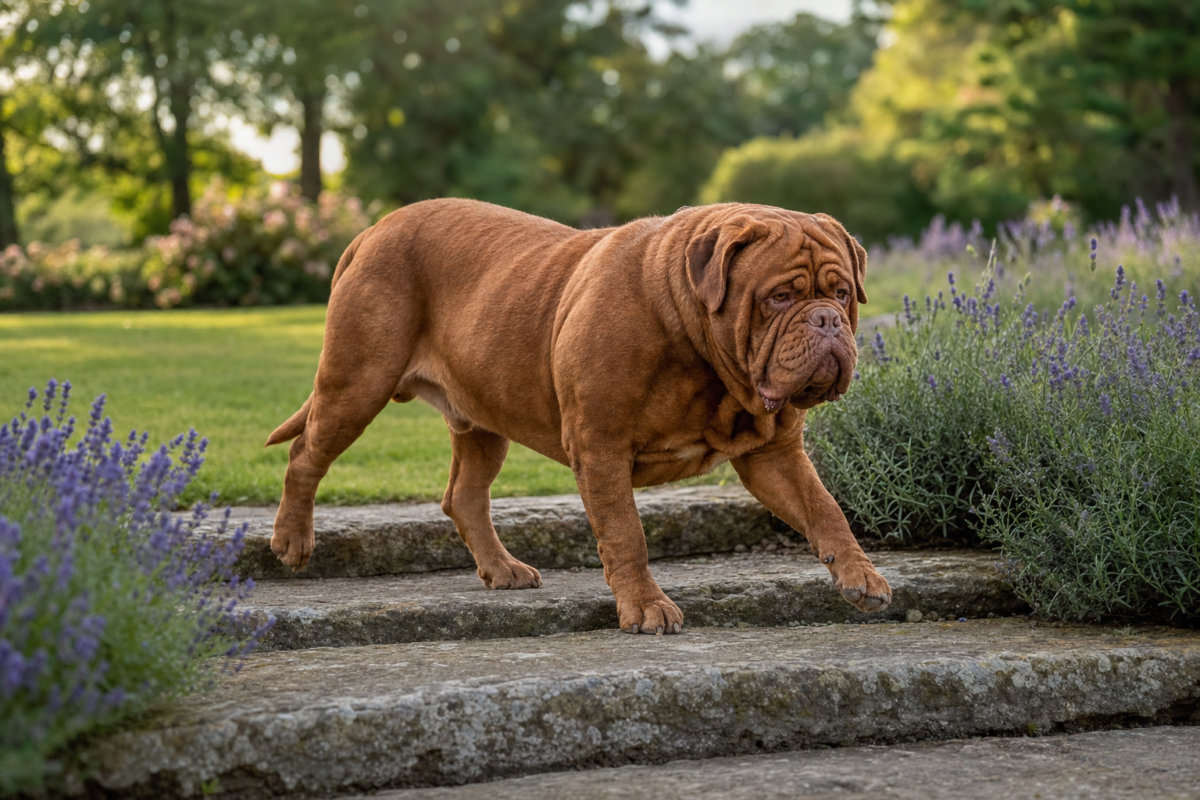
Hyaluronic acid is a naturally occurring molecule that gives joint fluid its slippery, cushioning texture. In a healthy dog joint it thickens the synovial fluid that lubricates the joint and helps the cartilage hold water, so bone surfaces glide smoothly under load. Dog joint chews include hyaluronic acid to support that lubrication and cushioning alongside structural builders such as glucosamine, chondroitin and green lipped mussel. For large and giant breeds that carry heavy frames on every stride, it is a supporting ingredient for comfortable everyday movement, best judged over two to three months of consistent daily use.
Most Dog Parents meet hyaluronic acid on a skincare shelf long before they find it on the back of a joint chew, which makes its appearance there feel a little odd. It is not a trend ingredient borrowed from a face serum. It is one of the oldest and most important molecules inside every moving joint your big dog owns. This guide explains what hyaluronic acid does in a dog joint, why formulators add it to chews for large breeds, what the evidence can and cannot tell you, and how to fit it into a routine that keeps a heavy dog moving comfortably for years.
What does hyaluronic acid do for dog joints?
Hyaluronic acid supports lubrication and cushioning inside the joint. It is the main ingredient that makes synovial fluid thick and slippery, which lets the cartilage on the ends of two bones glide past each other instead of grinding, and it helps cartilage hold the water that gives it spring under load. In a dog joint chew it is included to support healthy joint fluid and comfortable movement, working beside ingredients that support the structure of the cartilage itself.
Think of the joint as a hinge that must carry weight thousands of times a day. Glucosamine and chondroitin support the pads on the hinge. Hyaluronic acid supports the oil in it. A big dog needs both, because a heavy frame asks more of every surface and every drop of fluid than a small dog ever will.
What hyaluronic acid actually is, in plain terms
Hyaluronic acid, sometimes listed as hyaluronan or sodium hyaluronate, is a long chain sugar molecule made naturally by the body. It belongs to the same family of compounds as chondroitin, called glycosaminoglycans, and it is found throughout connective tissue, in the skin, in the fluid of the eye and, in especially high concentration, inside the joints.
Its superpower is water. A single hyaluronic acid molecule can hold many times its own weight in water, and when it does, it forms a gel that is both slippery and springy. That combination is exactly what a joint needs. When your dog stands still, the fluid is thick and cushioning. When your dog moves quickly, it thins slightly and flows, which is why a healthy joint stays smooth whether your dog is lying down or sprinting across the yard.
The body makes its own supply continuously, and cells in the joint lining keep topping it up. Production naturally changes with age, and the quality of the fluid in an older or heavily worked joint is not always what it was in a young dog. That gap is the reason joint formulas include it as a daily nutritional source.
The supplement form is usually made by fermentation or extracted from rooster comb, then purified. On a label it is listed by name with an amount per chew, and it is almost always a small figure measured in milligrams rather than the hundreds of milligrams you see for glucosamine. That is normal. Hyaluronic acid works in small amounts, and a low number on the panel is not a sign that a formula is thin.
Where hyaluronic acid works inside a big dog joint
A joint has several parts that all rely on hyaluronic acid in slightly different ways. This table shows where it sits and what it supports.
| Part of the joint | What it does | Role of hyaluronic acid |
|---|---|---|
| Synovial fluid | Lubricates the joint and feeds the cartilage | Gives the fluid its thick, slippery texture |
| Articular cartilage | Smooth pad covering the ends of the bones | Forms the backbone that holds cartilage molecules and water together |
| Joint capsule lining | Encloses the joint and produces the fluid | Made here continuously and released into the fluid |
| Surrounding connective tissue | Supports ligaments and tendons around the joint | Helps hold water in the tissue for flexibility |
The cartilage row is the one most people miss. Inside cartilage, hyaluronic acid acts like a long spine that other large molecules hang from, including the ones built from glucosamine and chondroitin. So it is not only the oil in the hinge. It is also part of the scaffold of the pad itself.
Not A Painkiller
Hyaluronic acid in a chew is a nutritional ingredient that supports normal joint fluid. It is not a medication and never replaces anything your veterinarian prescribes.
Not Instant
Daily support builds slowly. Judge any joint routine over eight to twelve weeks of consistent use, not over a weekend.
Not A Weight Fix
No ingredient offsets extra pounds. A lean body condition remains the single biggest lever you hold for a heavy dog.
Not A Diagnosis
New limping, swelling or stiffness is a veterinary conversation first. A supplement is a daily habit, not an answer to a symptom.
Does oral hyaluronic acid reach the joints?
This is the fair question to ask about any joint ingredient, and the honest answer is that the evidence is encouraging but still developing. Hyaluronic acid is a large molecule, and for years the assumption was that the gut would simply break it down. Laboratory and animal research, including studies in dogs and rats, has since shown that some orally given hyaluronic acid is absorbed and distributed to connective tissues, including the joints.
What that research does not yet provide is a large body of controlled canine studies measuring everyday comfort in pet dogs. Much of the published work comes from people, horses and laboratory animals. The sensible position, and the one most veterinarians take, is that hyaluronic acid has a well understood role in the joint, a plausible route to get there from the gut, a good safety record, and a place in a combined formula rather than as a standalone answer.
You may also hear about injectable hyaluronic acid. That is a veterinary product given in the clinic, and it is a completely separate decision from a daily chew. If you are curious about it, ask your veterinarian, who can explain whether it fits your dog.
Why joint formulas pair hyaluronic acid with other actives
No single ingredient covers a whole joint, which is why a good chew reads like a team sheet. Hyaluronic acid supports lubrication and water holding. Glucosamine and chondroitin support the building blocks of cartilage. MSM supplies sulfur for connective tissue. Green lipped mussel adds naturally occurring omega 3 fatty acids and glycosaminoglycans. Collagen sources and vitamin C support the collagen framework. Each covers a different corner of the same structure.
How to read hyaluronic acid on a joint chew label
Amounts vary between products, and the headline on the front of a tub is rarely the full story. A few habits make comparison far easier:
- Read per daily serving. Many labels list amounts per chew. Multiply by the number of chews your dog takes each day before comparing.
- Expect a small number. Hyaluronic acid is typically measured in tens of milligrams, not hundreds. A small figure is normal for this ingredient.
- Check the dosing tiers. A formula made for big dogs should step the serving up by weight, so a heavy dog receives more than a medium one.
- Look at the partners. The most useful panels pair hyaluronic acid with glucosamine, chondroitin, MSM and a whole food source.
- Check palatability. A chew only helps if your dog eats it every day, so flavour and texture matter more than most people think.
- Confirm with your veterinarian. Especially if your dog takes medication or other supplements.
If you would rather see the arithmetic for your own dog than trust a range, our joint support dose calculator works out the per serving numbers for you.
Is hyaluronic acid safe for large breed dogs?
Hyaluronic acid is generally regarded as very well tolerated in dogs at the amounts used in joint chews. It is a molecule the body already makes, which is one reason it has such a quiet safety profile. The sensible habits are the same as for any new supplement:
- Introduce one new supplement at a time so you know what caused any change.
- Give it with a meal, which suits most dogs better than an empty stomach.
- Watch for loose stool or a change in appetite over the first fortnight.
- Check the other ingredients in the chew for allergens your dog is sensitive to, such as shellfish, fish, egg or soy.
- Tell your veterinarian everything your dog takes, especially before any procedure.
- Take extra care with pregnant or nursing dogs and dogs on medication, where veterinary guidance comes first.
How to check body condition in ten seconds
Whatever is in the chew, weight does more for joint fluid and cartilage than any single ingredient. Every extra pound is carried by the same joints on every step. Check condition at home in seconds.
- Ribs. Run your hands along the sides. You should feel the ribs easily under a thin layer. If you have to press, ease back on portions.
- Waist. Look down from above. You want a clear waist that tucks in behind the ribs.
- Tuck. From the side, the belly should rise toward the back legs rather than hanging level.
Check every couple of weeks and adjust portions with your veterinarian.
Everyday habits that keep joint fluid working
Synovial fluid is not static. It circulates and nourishes cartilage when the joint moves, which is why regular gentle motion matters so much. A joint that moves a little every day is better fed than one that sits still all week and then works hard on Saturday.
- Regular moderate walks most days, on grass or soft trail rather than pavement where you can.
- Several shorter outings rather than one long weekend effort, which is where most strains happen.
- A gentle warm up at a slow walk before any fetch or running.
- Rugs or runners on slick floors, because a slide asks far more of a joint than a walk.
- A supportive bed thick enough that hips and elbows never rest on the hard floor.
- Fresh water always available, since good hydration supports every fluid in the body.
- A steady lean weight, checked by hand rather than by scale alone.
Daily habits that support comfortable movement
Once the free levers are in place, a daily joint chew is a simple way to keep supporting nutrients steady rather than occasional. The value is in the routine: the same serving, at the same time, every day, for long enough to matter.
MoveGuard Adult is a daily soft chew made for medium and large breed adult dogs. It carries hyaluronic acid alongside New Zealand Green Lipped Mussel, glucosamine, chondroitin, MSM, eggshell membrane collagen and vitamins C and E, so the ingredient that supports joint fluid arrives with the partners that support cartilage structure. The serving is set by weight: one chew a day for dogs of 25 to 50 pounds and two chews a day for dogs of 50 pounds and up, with seniors aged seven and older using the higher serving for their weight. It ships as 60 soft chews in a chicken liver flavour, is made in the USA in an NSF registered facility, and is backed by a 60 day guarantee.
Support Smooth, Comfortable Movement
Give your big dog daily joint support built for medium and large breeds. Explore MoveGuard Adult.
Signs a joint routine is working
Because joint support is gradual, the honest way to judge it is to watch behaviour over weeks. Before you start, note four things: how readily your dog stands up after a long sleep, whether the last ten minutes of a walk look like the first ten, how willing your dog is to jump into the car or take the stairs, and how the day after a big outing looks.
Write those down. Memory is generous, and slow change is invisible without a note. Look again at eight weeks and compare honestly. If instead you see new limping, reluctance to stand, swelling, or stiffness that lasts well into the day, stop guessing and call your veterinarian.
A simple plan, stage by stage
Week one. Introduce the chew with food at the labelled serving for your dog weight. Record your four starting markers. Change nothing else, so anything you notice has one clear cause.
Weeks two to four. Keep the serving identical and daily. Keep the tub beside the food bin so the routine is never forgotten. Do not expect visible change yet.
Months two and three. This is the window when many parents notice something, usually in ease of rising or willingness at the end of a walk. Review your markers against your notes.
Ongoing. If the routine is helping, keep it steady and pair it with weight control, good surfaces and gentle daily movement. If nothing has shifted by three months, take your notes to your veterinarian and review the whole picture rather than simply switching tubs.
Common mistakes with hyaluronic acid and joint chews
- Judging the ingredient by its milligrams. Hyaluronic acid is effective in small amounts. Comparing it to the glucosamine figure on the same panel is comparing apples to oranges.
- Stopping at three weeks. The most common error by far. Daily support needs months of consistency before a fair judgement is possible.
- Giving a human supplement. Human products are dosed for human weights and may contain sweeteners such as xylitol, which is dangerous to dogs. Use a product made for dogs.
- Doubling up by accident. Some large breed foods and treats already contain joint actives. Add up everything your dog gets in a day.
- Treating a chew as a response to a symptom. New pain or limping needs a veterinarian, not a bigger serving.
- Waiting for old age to start. Big dogs load their joints hard all adult life, and support works best as a maintenance habit.
Why big dogs benefit from understanding joint fluid
Large and giant breeds carry two or three times the weight of an average dog on joints built from the same materials. Every stride, turn and jump presses more load through the cartilage and the fluid between it. A Labrador, a Rottweiler or a Doberman takes tens of thousands of steps a week, and each one relies on that thin layer of slippery fluid doing its job.
Joint comfort in a heavy dog is a compound of lean weight, good surfaces, regular gentle movement and steady daily nutrition. Hyaluronic acid is a small, sensible part of that nutrition corner, and knowing exactly what it does lets you judge any label with confidence.
Frequently asked questions
What does hyaluronic acid do for dogs?
Hyaluronic acid supports the thick, slippery synovial fluid that lubricates the joint and helps cartilage hold water for cushioning. In a joint chew it supports healthy joint fluid and comfortable everyday movement alongside structural partners such as glucosamine, chondroitin and green lipped mussel. It is a nutritional ingredient, not a medication.
How long does hyaluronic acid take to work in dogs?
Give any joint routine eight to twelve weeks of consistent daily use before judging it. The fair test is comparing how your dog stands, walks and recovers at the start against the same markers two to three months later.
Is hyaluronic acid safe for large breed dogs?
Hyaluronic acid is generally regarded as very well tolerated in dogs at the amounts used in joint chews, and it is a molecule the body already makes. Start at the labelled serving, give it with food, and check with your veterinarian first if your dog is pregnant, nursing or taking medication.
Is hyaluronic acid better than glucosamine for dogs?
They do different jobs, so one does not replace the other. Glucosamine supports the building blocks of cartilage, while hyaluronic acid supports the joint fluid and water holding within cartilage. Most well designed joint chews for big dogs include both.
Can I give my dog a human hyaluronic acid supplement?
Use a product formulated for dogs. Human supplements are dosed for human body weights and may contain sweeteners such as xylitol, which is dangerous to dogs. A dog specific chew also pairs hyaluronic acid with the partners that support the rest of the joint.
The bottom line
Hyaluronic acid is the molecule that makes joint fluid slippery and helps cartilage stay springy, and it sits in dog joint chews to support that lubrication and cushioning. It works in small amounts, it builds quietly over months rather than days, and it does its best work beside glucosamine, chondroitin, MSM and a whole food source. Keep your big dog lean, keep the floors grippy, keep movement gentle and regular, and let a consistent daily chew handle the nutrition corner.
Want the simple roadmap in one place? Grab our free Big Dog Mobility Guide for the joint support checklist, mobility watchpoints and daily habits, all written for large and giant breeds.
This article is for general educational purposes only and is not veterinary advice. It is not intended to diagnose, treat, cure or prevent any disease. Always consult your veterinarian about your dog’s individual health, nutrition and supplement needs. These statements have not been evaluated by the Food and Drug Administration.
Support Big Breed Joints from Day One
Large and giant breeds carry more load through every growth stage. MoveGuard Growth supports developing joints in young big dogs (8 to 30 months); MoveGuard Adult keeps grown big dogs moving comfortably.
Leave a Reply