
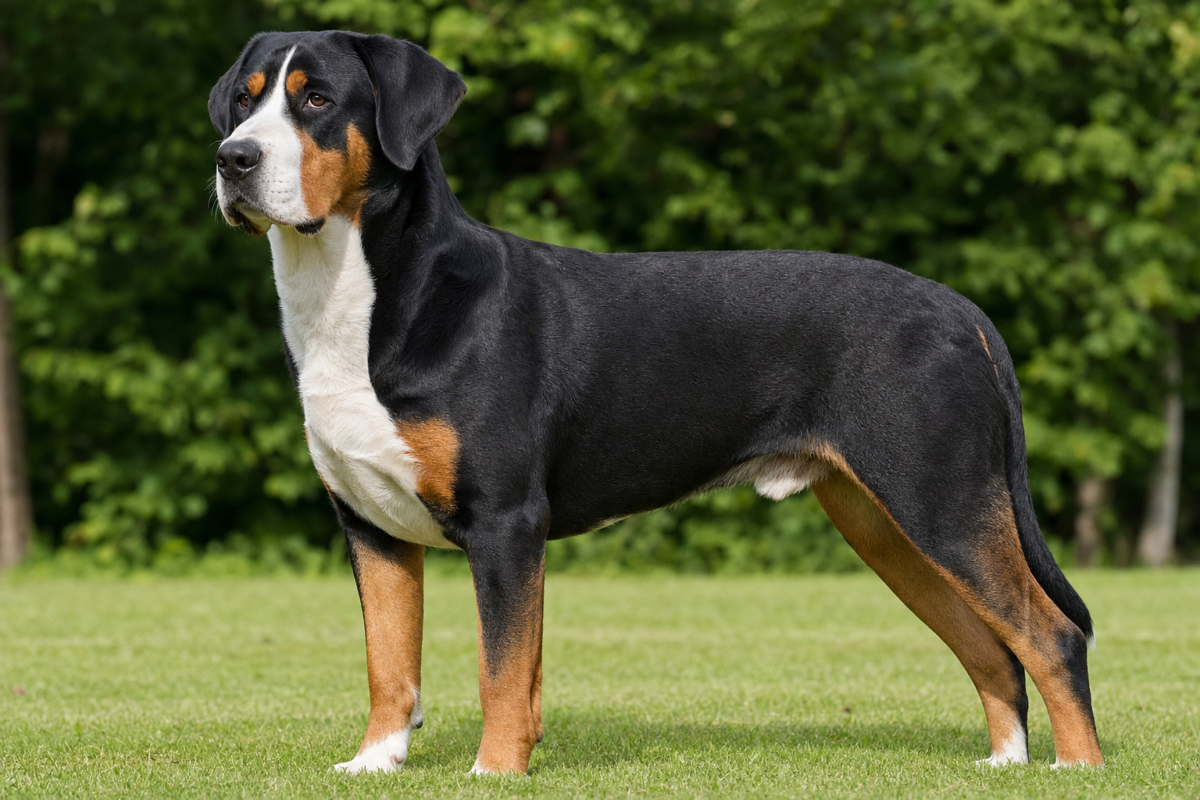
Krill oil is a marine source of the long chain omega 3 fatty acids EPA and DHA, which support healthy joint function, skin and coat condition, heart health and brain function in large breed dogs. What makes krill different from fish oil is the form: its omega 3 is carried as phospholipids rather than triglycerides, and it comes packaged with astaxanthin, a natural antioxidant. It is one of three good marine options for big dogs, alongside fish oil and New Zealand Green Lipped Mussel.
Omega 3 is one of the few supplement ingredients with a genuinely solid body of research behind it in dogs, and it turns up on the label of almost every joint product on the shelf. Krill oil is the version Dog Parents ask about most, usually because it costs more and the packaging implies it is better. This guide explains what krill oil actually is, how it compares with fish oil and green lipped mussel, how much a large breed dog needs, and how to tell a good product from an expensive one.
What does krill oil do for large breed dogs?
Krill oil supplies EPA and DHA, two long chain omega 3 fatty acids that the body uses to support healthy joint function, comfortable movement, skin and coat condition, heart health and normal brain function. In large breed dogs, who carry more weight through every joint than smaller dogs do, that joint support is usually the reason it ends up in the bowl.
Omega 3 fatty acids also help support a normal, healthy inflammatory response, which is the underlying reason they are so widely studied in canine joint nutrition. Krill oil is not a medicine and does not treat any condition. It is a nutrient that supports normal function, and the effect builds slowly over weeks rather than appearing overnight.
What EPA, DHA and ETA actually are
Omega 3 is not a single substance but a family of fatty acids. The three that matter for dogs are worth telling apart, because product labels rarely do it for you.
- EPA. The one most closely associated with joint comfort and a healthy inflammatory response. For joint support, this is usually the number you want to be highest.
- DHA. Most important for brain, eye and nervous system development and function, which is why it matters so much in puppies and again in older dogs.
- ETA. A rarer omega 3 found in New Zealand Green Lipped Mussel and very little else, which is part of why that ingredient appears in so many joint formulas.
There is a fourth you will see on labels: ALA, the plant based omega 3 in flaxseed and similar oils. Dogs convert ALA into EPA and DHA very inefficiently, so a product whose omega 3 comes from flax is not a real substitute for a marine source. If joint support is your goal, look for marine omega 3 and check the EPA figure.
Krill oil versus fish oil versus green lipped mussel
All three deliver marine omega 3. They differ in form, concentration, what else comes along with them, and price. None of them is the single right answer for every dog.
| Source | Strengths | Things to weigh |
|---|---|---|
| Krill oil | Phospholipid form, naturally contains astaxanthin, very low on the food chain, well managed fishery | Usually less EPA and DHA per gram than concentrated fish oil, and costs more per milligram of omega 3 |
| Fish oil | Highest concentration of EPA and DHA per gram, widely available, best value for larger doses | Quality varies a great deal, and it oxidises more readily once opened |
| Green lipped mussel | Supplies EPA, DHA and the rarer ETA, plus naturally occurring glycosaminoglycans | Lower total omega 3 per serving, so it works best as part of a broader joint formula |
| Flaxseed oil | Plant based and suitable where shellfish and fish are not an option | Supplies only ALA, which dogs convert to EPA and DHA very poorly |
Why the phospholipid form gets talked about
In fish oil, omega 3 is mostly bound into triglycerides. In krill oil it is largely bound into phospholipids, the same class of molecule that makes up cell membranes. The argument is that this form is more readily absorbed, so you need less of it for the same effect. The research is genuinely interesting but not settled, and the practical difference for most dogs is smaller than the price difference suggests.
The astaxanthin is a more straightforward advantage. It is the natural antioxidant that gives krill oil its deep red colour, and it helps protect those fragile fatty acids from going rancid in the bottle. For a big dog on a long term supplement, an oil that keeps better is a real practical benefit.
Too much
More is not better. High amounts of marine oil can loosen the stool and, at very high intakes, affect how readily the blood clots.
Hidden calories
Oil is calorie dense at roughly nine calories per gram. On a big dog taking a big dose, that adds up and can quietly drive weight gain.
Shellfish allergy
Krill and green lipped mussel are both shellfish. Any dog with a known shellfish or fish sensitivity needs veterinary guidance first.
Rancid oil
Omega 3 oxidises easily. An oil that smells sharp or sour has gone off and should be thrown away rather than fed.
How much omega 3 does a large breed dog need?
What matters is the amount of combined EPA and DHA, not the total weight of the oil or the size of the capsule. A one thousand milligram fish oil capsule might contain three hundred milligrams of EPA and DHA, or it might contain six hundred. The front of the pack rarely tells you, and the supplement facts panel always does.
For joint support, veterinary nutrition sources commonly cite somewhere in the region of 50 to 100 milligrams of combined EPA and DHA per kilogram of body weight daily. For a big dog that is a meaningful amount of oil, which is exactly why dose, calories and cost all matter more for large breeds than for small ones. Work out the right amount for your individual dog with your veterinarian rather than scaling a human dose or guessing from the tub, and build up to it gradually over a week or two to let the digestive system adjust.
It is also worth checking what your dog is already getting. Many complete foods, and most joint formulas, already contain marine omega 3. Stacking a joint chew, a skin and coat supplement and a separate fish oil on top of a food that is already supplemented is how dogs end up well past a sensible intake. Add up the EPA and DHA across everything in the bowl before you add anything new.
How to choose a quality omega 3 for a big dog
- Read the supplement facts panel for the actual EPA and DHA amounts, and ignore the headline oil weight on the front.
- Look for third party testing for purity and for heavy metals, and for a stated sourcing region.
- Check for a freshness or oxidation measure, or at minimum a clear expiry date and a sealed opaque container.
- Prefer sustainably certified sources. Antarctic krill and many fish oils carry recognised fishery certification.
- Choose a format you will genuinely use every day, whether that is a pump bottle, a capsule or a chew.
- Store it cool, dark and tightly closed, and refrigerate liquid oils once opened.
- Smell it every few weeks. Fresh marine oil smells mildly of the sea, not sharp or sour.
If you are comparing products more broadly, our guide to joint support ingredients walks through the rest of the label, and the guide on what to look for in a large breed joint supplement covers dosing by size.
Where marine omega 3 fits in a daily joint routine
Omega 3 works best as one part of a routine rather than as a single fix. Keeping your dog lean does more for their joints than any supplement, sensible daily movement keeps muscle on the frame, and good footing at home makes rising easier. Marine omega 3 sits alongside all of that as a steady daily habit, and a combined joint formula is usually a simpler way to deliver it than a separate oil.
MoveGuard Adult takes that combined approach for adult and senior dogs. It is a six ingredient joint formula built around clinically studied eggshell membrane and New Zealand Green Lipped Mussel, alongside glucosamine, chondroitin, MSM, hyaluronic acid and vitamins C and E, to support comfortable movement and help maintain healthy cartilage and connective tissue. Its marine omega 3 comes from green lipped mussel rather than krill, so it brings ETA as well as EPA and DHA. If you are feeding a dog still in the growth years, MoveGuard Growth is the one that carries krill oil, at 150 milligrams per chew. Both are made in the USA in an NSF facility and backed by a 60 day guarantee, and both contain shellfish, so check with your veterinarian if your dog has a known sensitivity.
Support Comfortable Movement
Give your adult big dog daily joint support built for large and giant breeds. Explore MoveGuard Adult.
What to expect, and when
Marine omega 3 is a slow build. It works by gradually changing the fatty acid composition of cell membranes throughout the body, and that takes time. Most sources suggest allowing six to eight weeks of consistent daily feeding before judging whether it is doing anything, and some effects continue to develop beyond that.
The first thing most Dog Parents notice has nothing to do with joints. Coat condition tends to change first, usually somewhere between three and six weeks, with a softer feel and more shine. Changes in how easily your dog rises, how willingly they take the stairs and how they move after a long rest come later and more gradually. Keep a short note of how your dog gets up in the morning before you start, because that is the comparison you will want in two months and the one you will otherwise forget.
Common mistakes to avoid
- Buying on the total oil weight rather than the combined EPA and DHA figure.
- Giving a plant based omega 3 and expecting it to do the job of a marine one.
- Stacking several supplements that each contain omega 3 without adding up the total.
- Forgetting the calories, particularly with a dog who is already carrying extra weight.
- Jumping to a full dose on day one instead of building up over a week or two.
- Leaving an opened bottle of oil in a warm, bright kitchen for months.
- Giving up after three weeks because nothing seems to have changed yet.
- Assuming an expensive krill product must be stronger than a cheaper fish oil without comparing the panels.
Safety and when to talk to your veterinarian
Marine omega 3 is well tolerated by most dogs, but it is not automatically appropriate for every dog, and there are a few situations where a conversation comes first. Speak to your veterinarian before starting if your dog has a known shellfish or fish sensitivity, has a bleeding or clotting disorder, takes any medication that affects clotting, has a history of pancreatitis or is prone to it, is due for surgery in the near future, or is pregnant or nursing.
Mild side effects are usually easy to spot: loose stool, a fishy smell on the breath or coat, and occasionally a reduced appetite. These often settle if you lower the amount and build back up more slowly. Anything more than mild, or anything that persists, is worth a call. As with any supplement, tell your veterinarian everything your dog is taking, including the ones that came from a pet shop shelf.
Frequently asked questions
Is krill oil better than fish oil for dogs?
Not necessarily better, just different. Krill oil delivers its omega 3 in phospholipid form and comes with natural astaxanthin, which may help absorption and definitely helps the oil keep. Fish oil delivers considerably more EPA and DHA per gram and costs less per milligram of omega 3, which matters for a large dog on a large daily dose. Compare the supplement panels rather than the marketing.
Can I give my dog human krill oil capsules?
Many Dog Parents do, but check with your veterinarian first and read the label carefully. The concern is not the oil itself but the extras: some human products contain added flavourings, sweeteners such as xylitol, or other active ingredients that are not appropriate for dogs. Work out the dose from the EPA and DHA figures rather than from the capsule count on the human pack.
How long does it take for omega 3 to work in dogs?
Allow six to eight weeks of consistent daily feeding before judging the effect. Coat condition often changes first, commonly around three to six weeks, while changes in how easily your dog moves build more gradually. It is worth noting how your dog rises in the morning before you begin, so you have something concrete to compare against later.
Can omega 3 cause diarrhoea in dogs?
Yes, loose stool is the most common side effect, and it usually means the amount is too high or was introduced too quickly. Start at roughly a quarter of the target amount and build up over one to two weeks. If the stool stays loose at a sensible dose, stop and speak to your veterinarian rather than pushing on.
Does my dog need omega 3 if the food already contains it?
Often not, and it depends entirely on the amounts. Many complete foods include marine omega 3, but the level varies widely and is frequently well below what is used for joint support. Check the guaranteed analysis or contact the manufacturer for the EPA and DHA figures, add up everything your dog already receives, and let your veterinarian advise on whether more is worthwhile.
The bottom line
Krill oil is a good marine omega 3 with two real advantages: the phospholipid form and the natural astaxanthin that keeps it fresh. It is not a category apart from fish oil or green lipped mussel, and for a large breed dog on a meaningful daily dose, concentration and cost deserve as much attention as the form. Read the panel, add up what your dog already gets, build up slowly, and give it two months before you decide.
Want the full picture on keeping a big dog moving comfortably? Grab our free Big Dog Mobility Guide for practical guidance on movement, home setup and daily joint support at every stage.
This article is for general educational purposes only and is not veterinary advice. It is not intended to diagnose, treat, cure or prevent any disease. Always consult your veterinarian about your dog’s individual health, nutrition and supplement needs. These statements have not been evaluated by the Food and Drug Administration.
Support Big Breed Joints from Day One
Large and giant breeds carry more load through every growth stage. MoveGuard Growth supports developing joints in young big dogs (8 to 30 months); MoveGuard Adult keeps grown big dogs moving comfortably.
Leave a Reply