
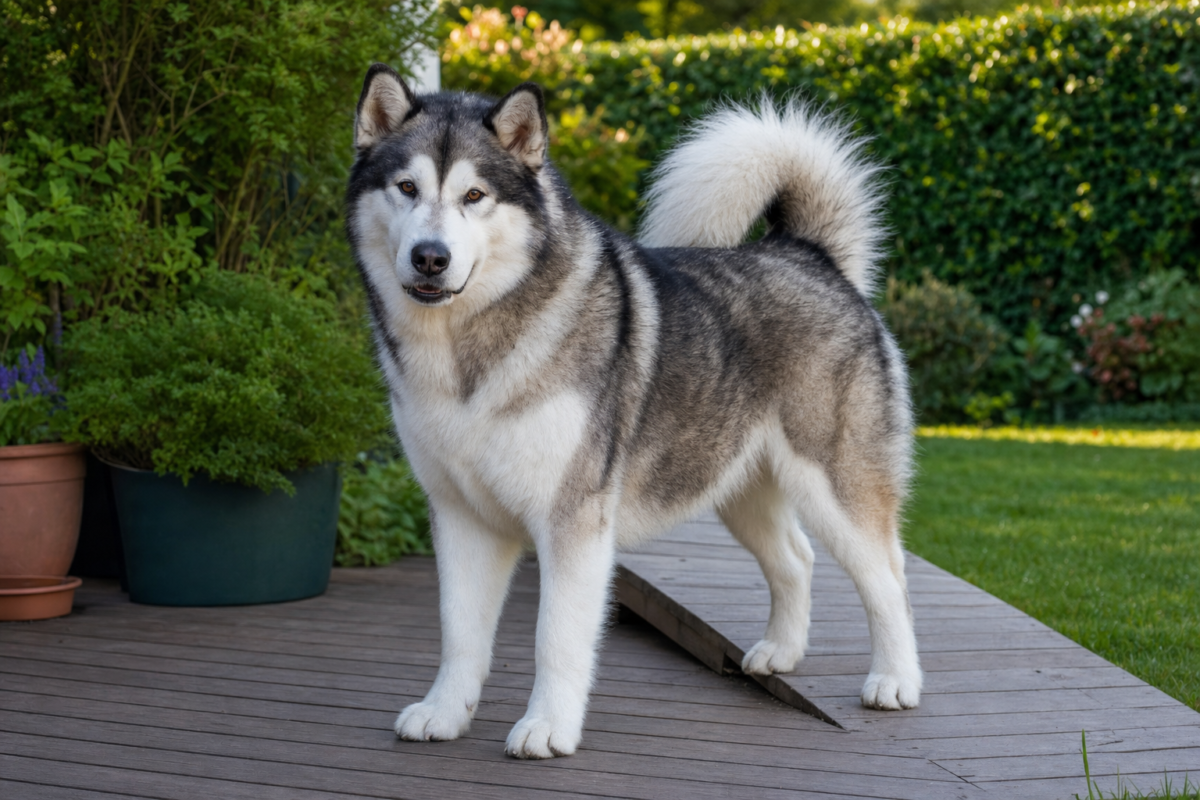
A joint support routine for a big dog has five parts: hold a lean body condition, feed a complete diet suited to a large breed, move every day at low impact rather than in weekend bursts, set the home up so your dog is not skidding or jumping, and add a daily joint supplement with ingredients that support cartilage and connective tissue. Add a twice yearly veterinary check and a simple monthly note of how your dog moves, and you have a routine you can hold for years.
Almost every big dog parent gets to a point of wondering what they should actually be doing, day to day, to keep their dog moving well. The advice online arrives in fragments: a supplement here, a warning about stairs there. This guide puts the whole thing in one order, so you can build a routine in an afternoon and then simply keep it going.
How do I build a joint support routine for my big dog?
Build it in five layers, in this order: body weight, food, daily movement, the home environment, and a daily joint supplement. Then add two habits on top, a veterinary check twice a year and a short monthly note on how your dog rises, walks and settles. The order matters, because the first two layers change more for a big dog than anything you can buy, and the last layer works best sitting on top of the others rather than standing in for them.
None of it is complicated. The whole routine takes about fifteen minutes a day once it is running, and most of that is the walk you were doing anyway.
Why a routine beats a reaction
Joints are working structures. They respond to what happens to them week after week, which means the useful interventions are the boring, repeatable ones rather than the dramatic ones. A big dog carries more weight through every stride than a small dog does, so the same daily habit compounds faster in either direction.
The other reason is timing. Most Dog Parents start thinking about joints when they notice something, and by then the routine has to work harder. Starting while your dog moves beautifully means you are supporting a healthy structure rather than reacting to a change, which is both easier and kinder.
Layer one: hold a lean body condition
This is the single most powerful thing on the list, and it is free. Extra weight travels through the hips, stifles, hocks and elbows on every step your dog takes, all day, for years. A big dog carrying even a few extra pounds is asking noticeably more of its own frame than a lean one.
- Measure food with a scoop or scale rather than pouring by eye. Portion creep is gradual and invisible.
- Count treats. For many big dogs treats are ten to twenty percent of daily calories.
- Weigh your dog every month or two. Most veterinary practices will let you use the scale in reception.
- Adjust in small steps. A five percent portion change held for a month does more than a dramatic cut.
How to check body condition in ten seconds
The scale gives you a number, but body condition tells you what it means.
- Ribs. Run your hands along the sides. You should feel the ribs easily under a thin layer. If you have to press, ease back on portions.
- Waist. Look down from above. You want a clear waist that tucks in behind the ribs.
- Tuck. From the side, the belly should rise toward the back legs rather than hanging level.
Layer two: feed for the frame
Food is the second lever, and for a growing dog it is nearly as powerful as weight itself.
- A puppy under about 18 months should be on a complete food formulated for large breed puppies, which controls calories and the calcium to phosphorus balance for steadier growth.
- An adult does well on a complete adult food appropriate to size and activity, fed in two meals rather than one.
- Omega 3 fatty acids from fish or algae are worth asking your veterinarian about, since they support normal joint function and skin and coat condition.
- Avoid supplementing calcium into a balanced puppy food. More is not better for a developing skeleton, and it is one of the most common well meant mistakes.
Layer three: move every day, at low impact
Daily, moderate movement does more for a big dog than occasional intense movement. Consistency builds the muscle that shares load with the joints, while the weekend hike model asks a deconditioned frame for a lot in one go.
- Two walks of 20 to 30 minutes on grass or trail is a good adult baseline.
- Add swimming, shallow water walking or gentle slope walking once or twice a week for strength.
- Roll a ball rather than throwing it, so your dog is not skidding into a turn at speed.
- Keep hard sprinting and repeated jumping moderate while a young dog still has open growth plates.
- Leave one genuinely easy day a week. Recovery is part of the plan.
Our guide to low impact exercise for big dogs covers the individual options and session lengths in detail.
Layer four: set the home up
Most of the hardest moments in a big dog day happen indoors, and they are the easiest ones to fix. This layer costs a little money once and then works forever.
- Traction. Runners or rugs across polished floors stop the scrabble and slide that loads a joint sideways.
- The car. A ramp removes the single highest landing most dogs do daily. Big dogs learn to use one in a few sessions.
- Stairs. Discourage racing up and down. A gate at the top is easier than retraining enthusiasm.
- The bed. A supportive, thick bed off a cold hard floor helps a heavy dog settle and rise comfortably.
- Nails. Long nails change how the foot loads. Keep them short enough that they do not touch the floor when your dog stands.
Weight Creep
The slowest and most damaging change. Weigh monthly rather than trusting your eye.
Slippery Floors
A skid loads a joint in a direction it was not built for. Rugs are cheap insurance.
All Or Nothing Exercise
Quiet weekdays then a long hike asks a lot of an unprepared frame. Spread it out.
Starting Late
A routine built while your dog moves well is easier to hold than one started after something changes.
Layer five: daily joint support
The last layer sits on top of the other four rather than replacing them. A daily joint chew is a simple way to deliver ingredients that support cartilage, connective tissue and comfortable movement, and the reason it is last on the list is that it works best alongside a lean, active, well set up dog.
MoveGuard Adult is made for adult medium and large breed dogs from 25 to 75 pounds. It combines New Zealand Green Lipped Mussel, glucosamine, chondroitin, MSM, eggshell membrane collagen, hyaluronic acid and vitamins C and E to support cartilage and connective tissue and to help maintain comfortable movement. The daily amount is printed on the label and set by weight, with 25 to 50 pound dogs on one chew and larger dogs on two, and dogs from seven years on the higher amount for their weight. It ships as 60 chews in chicken liver flavour, is made in the USA in an NSF registered facility, and carries a 60 day guarantee. Puppies still in the growth window are better served by the Growth formula, and our guide to joint support for large breeds explains which stage suits which.
Make It A Daily Habit
Add joint support built for big dogs to the routine you already keep. Explore MoveGuard Adult.
What the routine looks like in a week
Written out, the whole thing is smaller than it sounds.
| When | What | Time |
|---|---|---|
| Every day | Two measured meals and the daily chew | 2 minutes |
| Every day | Two steady walks on soft ground | 40 to 60 minutes |
| Twice a week | Strength session: swim, slope or pole work | 15 to 20 minutes |
| Twice a week | Balance and stretching at home | 5 minutes |
| Once a week | An easy recovery day | Short walk only |
| Every month | Weigh in, body condition check, nail check | 10 minutes |
| Twice a year | Veterinary check and mobility conversation | One visit |
Cornell University’s College of Veterinary Medicine covers how growth rate, nutrition, and exercise interact with joint development in large breed dogs. Read more from Cornell’s canine hip dysplasia overview.
Track it, simply
You do not need an app. Once a month, write three lines in a note on your phone: how your dog rose from its bed this morning, how it looked on the last ten minutes of a walk, and whether it settled easily afterwards. Add the weight.
Six of those notes will tell you more than memory ever will, and they turn a vague sense that something has changed into something specific you can bring to your veterinarian. If you notice limping, stiffness that lasts beyond the first few minutes of movement, reluctance on stairs, sitting down partway through a walk, or muscle loss down one side, book a check rather than adjusting the routine yourself.
The routine, stage by stage
The five layers stay the same. The emphasis moves.
Puppy and adolescent, to about 18 months. Food and restraint carry the weight here. A complete large breed puppy food, lean portions, free play on soft ground and moderate impact. This is also the stage where the home setup habits are easiest to teach.
Young adult, 18 months to 5 years. The building phase. Push conditioning gently upward with swimming and slope work, hold the lean body condition, and get the daily supplement habit properly established while it is easy.
Mature adult, 5 to 8 years. Keep the volume, soften the surfaces, and start paying closer attention to how long your dog takes to settle after activity. Monthly notes become genuinely useful around here.
Senior, 8 years and beyond. Shorter and more frequent movement, more traction indoors, warmth, and the higher labelled amount of joint support for the weight. Our guide to keeping a senior big dog moving comfortably goes further on this stage.
Common mistakes when building the routine
- Starting with the supplement and stopping there. It is the fifth layer for a reason. Weight and daily movement move the needle further.
- Stacking three products at once. Give one thing eight weeks before adding another, or you will never know what helped.
- Quitting at four weeks. Joint ingredients are cumulative. The label itself asks for six to eight weeks for full effect.
- Rewarding the routine with treats. The calories undo the weight work. Use praise, or take the treats out of the meal.
- Resting a stiff dog completely. Total rest without veterinary guidance usually leaves a big dog stiffer. Ask what the right amount is.
- Changing everything in one week. Add one layer at a time and let each become normal before the next.
Adjusting the routine to your breed
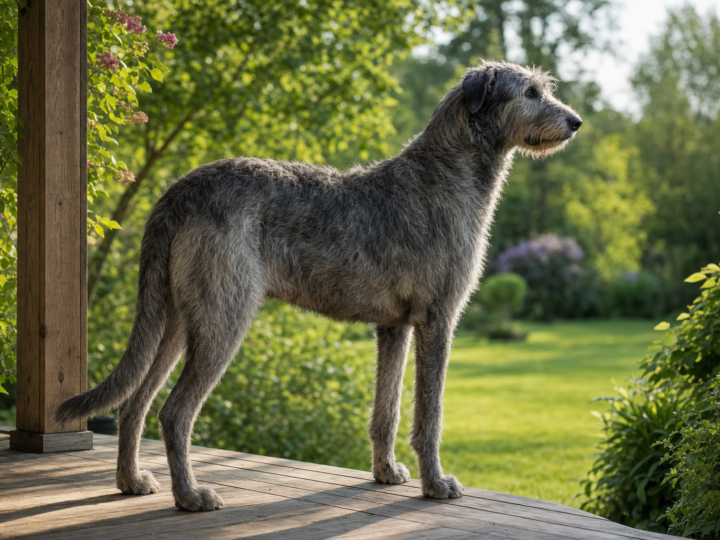
The five layers apply to every large breed, but the pressure points differ. Giant breeds such as the Great Dane, Irish Wolfhound and Newfoundland carry the most mass per stride and mature the slowest, so the restraint stage runs longer and traction indoors matters more.
Working and sporting breeds like the German Shepherd, Labrador Retriever and Doberman are usually keen enough to overdo activity given the chance, so the discipline for them is capping intensity rather than finding it. Heavy mastiff types including the Cane Corso and Bullmastiff overheat quickly and do best on unhurried movement in cool hours. Livestock guardians such as the Anatolian Shepherd and Great Pyrenees prefer long slow patrolling to anything structured, which suits a low impact routine perfectly.
Frequently asked questions
When should I start a joint support routine for a big dog?
Most of the routine belongs in place from puppyhood, because lean feeding, daily movement and a well set up home matter at every age. For a daily joint supplement, many big dog parents start in the first couple of years, since large and giant breeds put more load through their joints than smaller dogs do. Ask your veterinarian what suits your individual dog.
How long does a joint supplement take to work?
Joint ingredients build up over time rather than acting immediately. Allow six to eight weeks of daily feeding before judging it, and keep the rest of the routine steady over that period so you can tell what changed.
Does my dog need joint support if it seems perfectly fine?
A routine built while a dog moves well is the easiest kind to keep, and supporting healthy cartilage and connective tissue is a habit rather than a response. Talk to your veterinarian about the right approach for your dog age, breed and activity level.
What is the most important part of a joint support routine?
A lean body condition. Every extra pound travels through the joints on every stride, so weight management does more for a big dog than any other single habit, and it costs nothing.
Can I give a joint supplement alongside my dog regular food?
Joint chews are usually fed with or alongside meals. Follow the amount printed on the label for your dog weight, and check with your veterinarian before combining supplements or if your dog is on any medication.
The bottom line
A joint support routine is five ordinary habits stacked in the right order: keep your dog lean, feed a complete diet for its size and stage, move every day at low impact, make the home easy to move around, and add a daily joint supplement on top. Layer a twice yearly veterinary check and a short monthly note over the top and you have something you can genuinely hold for a decade. That consistency, far more than any single product, is what keeps a big dog moving well.
Want the simple roadmap in one place? Grab our free Big Dog Mobility Guide for the weekly movement plan, the home setup checklist and the joint safe exercise limits, all written for large and giant breeds.
This article is for general educational purposes only and is not veterinary advice. It is not intended to diagnose, treat, cure or prevent any disease. Always consult your veterinarian about your dog individual health, nutrition and supplement needs. These statements have not been evaluated by the Food and Drug Administration.
Support Big Breed Joints from Day One
Large and giant breeds carry more load through every growth stage. MoveGuard Growth supports developing joints in young big dogs (8 to 30 months); MoveGuard Adult keeps grown big dogs moving comfortably.

Leave a Reply