
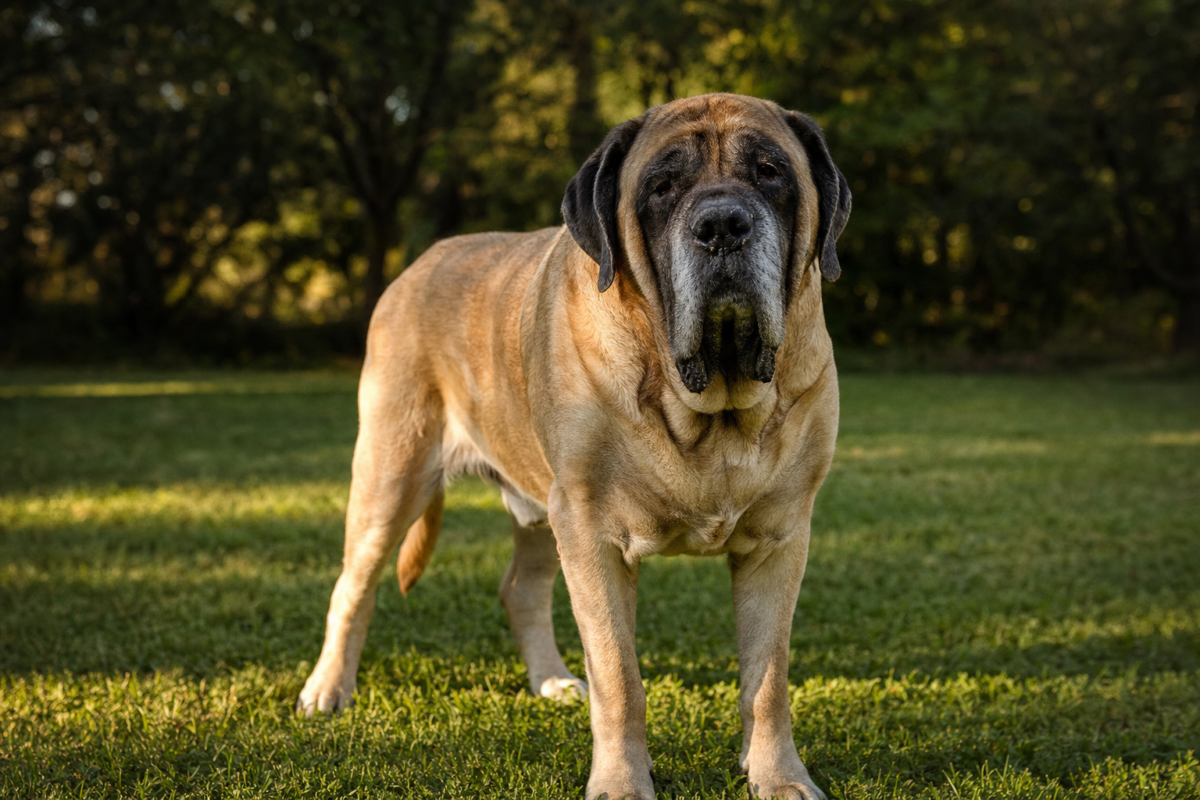
Caring for a senior big dog with mobility changes comes down to four things done consistently. Keep your dog lean, because every extra pound travels through the joints on every step. Keep movement gentle and daily rather than occasional and hard, since muscle is what holds an ageing frame together. Make the home easy to move around in with grip underfoot, ramps and raised bowls. And keep a joint support routine running year round alongside regular veterinary checkups. Large breeds reach senior status earlier than small ones, often from about six or seven, so the right time to build these habits is before you notice much at all.
Watching a big dog slow down is one of the quieter parts of loving a large breed. The bounding puppy who cleared the sofa in a single hop now thinks about the car boot for a moment first. It is a normal chapter, not a crisis, and there is a great deal you can do to help your companion keep moving comfortably through it. This guide walks through what actually changes, what to watch for, and the practical daily routine that supports an ageing big dog best.
How do I care for a senior big dog with mobility changes?
Care for a senior big dog with mobility changes by managing weight, movement, footing and nutrition together, with your veterinarian guiding the plan. Keep your dog at a lean body condition where you can feel the ribs under a light layer. Swap one long walk for two or three shorter ones on soft, level ground. Add rugs and runners on any smooth floor and use a ramp for the car and any raised surface. Keep a daily joint support routine going, and book a checkup twice a year once your dog reaches senior age so changes get noticed early.
None of that is dramatic, and that is rather the point. Comfortable movement in an older big dog is the sum of many small habits repeated daily, not one intervention made late.
What actually changes in an ageing big dog
Three things shift at once, and they feed into each other. Cartilage, the smooth cushion at the ends of the bones, becomes less resilient with the years. Muscle mass falls away if it is not used, and in a heavy breed that muscle was doing a real share of the work of holding joints steady. And activity drops, often because the dog finds movement less inviting, which then costs more muscle.
That loop is the reason gentle daily movement matters more than almost anything else. A senior big dog who keeps walking keeps the muscle that supports the frame. A senior big dog who rests for a fortnight because a walk felt like a lot loses condition surprisingly fast, and rebuilding it in an older body takes far longer than maintaining it would have.
Size makes all of this arrive sooner. A hundred pound dog puts far more load through each joint than a twenty pound one, which is part of why giant breeds live shorter lives and reach their senior years earlier.
When does a big dog become a senior?
Senior status arrives by weight rather than by breed reputation. Use this as a planning guide and confirm with your veterinarian, who sees the whole dog rather than the number.
| Adult weight | Considered senior from | What to start doing |
|---|---|---|
| 50 to 65 lb | About 8 years | Twice yearly checkups, keep walks daily and steady |
| 65 to 80 lb | About 7 years | Add floor traction, watch weight closely |
| 80 to 100 lb | About 6 to 7 years | Ramp for the car, shorter and more frequent walks |
| 100 to 130 lb | About 6 years | Raised bowls, orthopaedic bed, limit stairs |
| 130 lb and above | About 5 to 6 years | Full home setup early, monitor movement monthly |
The American Veterinary Medical Association notes that larger breeds are generally considered senior earlier than small breeds, given their shorter typical lifespans. Read more from the AVMA’s guidance on caring for senior pets.
If your dog sits near the top of a band, plan on the earlier date. There is no cost to starting the senior routine a year early and a real cost to starting it a year late. Our guide on when a big dog is considered a senior goes into more detail.
Early signs of mobility change
The first signs are rarely a limp. They are small changes in willingness, and they are easy to read as your dog simply growing older and calmer.
- Standing up more slowly, especially after a long nap or first thing in the morning.
- Hesitating at the car, the stairs or a favourite sofa rather than going straight up.
- Sitting down partway through a walk that used to be routine.
- Choosing the rug over the tiled floor when crossing a room.
- A change in gait, such as a shorter stride, a bunny hop on the back legs or a slight sway.
- Being slower to greet you at the door than they used to be.
Write down what you notice and when. A short note on your phone gives your veterinarian something concrete to work with, and it stops you second guessing whether last month was really any different. Anything that appears suddenly, or any reluctance to bear weight on a leg, is worth a call rather than a wait.
Extra Weight
The single biggest load on an ageing joint. Even a few pounds over lean changes how every step feels.
Slippery Floors
Smooth flooring makes a big senior brace and skid. Many dogs simply stop crossing those rooms.
Weekend Warrior Days
Long hikes after a quiet week ask an older frame for something it has not been kept ready for.
Doing Nothing
Rest feels kind, but lost muscle is what an ageing joint can least afford. Gentle and daily wins.
Setting up the home for an older big dog
Home setup is the highest value work you can do, because it helps on every trip across the kitchen without needing you to be there.
- Lay runners with grippy backing along every route your dog uses on hard flooring.
- Keep the fur between the paw pads trimmed and the nails short, since both change how the paw grips.
- Add a ramp for the car and for any step your dog has begun to hesitate at.
- Provide a thick, supportive bed rather than a thin mat, and put it somewhere warm and out of draughts.
- Raise the food and water bowls so your dog is not stretching down through the shoulders at every meal.
- Gate the stairs if your dog now takes them carefully, and carry or ramp where you safely can.
How to check body condition in ten seconds
Weight is where the biggest gains sit, and you do not need a scale to track it.
- Ribs. Run your hands along the sides. You should feel them easily under a thin layer. If you have to press, ease back on portions.
- Waist. Look down from above. There should be a clear waist behind the ribs.
- Tuck. From the side, the belly should rise toward the back legs rather than hanging level.
Check monthly and adjust gently with your veterinarian. Because older dogs move less, portions that were right at four often become too generous at nine. Our guide on how much to feed an adult large dog covers the arithmetic.
Gentle movement that keeps muscle on the frame
The aim is regular, moderate activity that maintains condition without asking for a hard effort. Little and often beats long and occasional at every stage of a senior life.
- Two or three shorter walks a day suit an older frame better than one long outing.
- Favour grass and soft trails over pavement, which is unforgiving under a heavy dog.
- Start slowly for the first few minutes rather than setting off at pace.
- Keep routes flat and skip repeated jumping and tight turns.
- Ask your veterinarian about swimming or hydrotherapy, which lets a big dog move without carrying its own weight.
- Watch the following morning. Stiffness the day after means the outing was too much, so shorten it rather than stopping altogether.
Daily habits that support joint comfort at any age
Comfortable movement in a big dog is the sum of small, repeated things. Lean feeding, steady activity, secure footing and consistent nutrition each carry part of the load, and they work best together and started early. Daily joint support belongs in that routine the same way a daily walk does.
Many big dog parents add a joint chew formulated for large breeds. MoveGuard Adult is built for adult dogs, combining clinically studied eggshell membrane with New Zealand Green Lipped Mussel, glucosamine, chondroitin, MSM and hyaluronic acid to support cartilage, connective tissue and comfortable movement. The daily amount is set by weight on the label, with 1 chew for dogs from 25 to 50 pounds and 2 chews for larger dogs, and the label asks senior dogs of 7 and older to use the higher amount for their weight and to allow 6 to 8 weeks. It ships as 60 soft chews in chicken liver flavour, is made in the USA in an NSF facility, and carries a 60 day guarantee. For a dog still growing, MoveGuard Growth is the version built for the growth window.
Keep The Routine Going
Daily joint support formulated for large and giant breeds. Explore MoveGuard Adult.
Working with your veterinarian
Once your dog is a senior, move to twice yearly visits. Older bodies change faster than annual appointments can follow, and a great deal of what matters shows up on a physical examination rather than at home.
Bring your notes and, if you can, a short video of your dog walking away from and back toward the camera on a level surface. Gait is far easier to assess on film than from a description, and dogs often move better in a clinic than they do at home. Ask what a healthy weight looks like for your individual dog, whether imaging would be useful, and how to adjust exercise as the year goes on. Your veterinarian is the right person to decide what any change means and what to do about it.
A stage by stage senior care plan
Approaching senior. Get the home setup in place before you need it, settle into a lean feeding routine and start a daily joint support habit while your dog still moves easily.
Early senior. Move to twice yearly checkups. Watch weight monthly, since activity is beginning to drop. Split the daily walk into two.
Mid senior. Add ramps wherever your dog hesitates, upgrade the bed, and keep walks short, frequent and flat. Expect good days and quieter days.
Late senior. Prioritise comfort and dignity. Keep movement going in whatever form your dog still enjoys, keep footing secure everywhere, and lean on your veterinary team for the bigger decisions.
Common mistakes with senior big dogs
- Waiting for a limp. Hesitation at the car comes long before a limp does, and it is the better moment to act.
- Letting weight creep. Portions that suited a five year old are usually too much for a nine year old doing half the mileage.
- Stopping exercise entirely. Complete rest costs muscle, and muscle is what an older joint depends on.
- Ignoring the floors. Many dogs described as reluctant are simply unwilling to cross a surface with no grip.
- Starting joint support late. A routine built while your dog is strong is worth far more than one started after things change.
- Skipping the checkups. Twice yearly is the standard for a reason once a big dog is a senior.
The senior big dog mind
Bodies age faster than personalities in large breeds. Your dog is still the same companion, and mental engagement matters as much now as physical activity does. Scent games, food puzzles, short training sessions and simply coming along in the car all give an older dog something to do that costs the joints nothing.
Watch for the small emotional changes too. A senior big dog who becomes clingy, restless at night or grumpy about being touched in a particular spot is telling you something. Dog Parents are usually the first to notice these shifts, long before anyone else, and mentioning them to your veterinarian is worthwhile even when they seem minor.
Frequently asked questions
At what age is a large breed dog considered a senior?
Most large breeds are considered senior from about seven, and giant breeds from about six or even five. Weight matters more than breed name, so a heavier dog reaches senior status earlier. Ask your veterinarian when to switch to twice yearly checkups.
Should I stop walking my senior big dog?
No. Gentle daily movement maintains the muscle that supports an ageing frame, and stopping altogether usually makes things harder. Shorten the walks, split them across the day, choose soft level ground and let your veterinarian guide the amount.
Why does my old dog struggle on wooden floors?
Smooth flooring gives a heavy dog very little grip, so an older dog braces and skids and often begins avoiding those rooms. Runners with grippy backing, trimmed paw fur and short nails usually make an immediate difference.
Does losing weight help an older big dog move better?
Keeping a dog at a lean body condition reduces the load carried through every joint on every step, which supports comfortable movement. It is the change with the largest effect for most senior big dogs. Agree a target weight with your veterinarian.
When should I call the vet about mobility changes?
Call promptly for anything sudden, for reluctance to bear weight on a leg, for a change that worsens over days, or for signs of discomfort such as panting at rest or restlessness at night. For gradual changes, raise them at the next checkup with your notes.
The bottom line
A senior big dog does not need a complicated plan. Keep your dog lean, keep movement gentle and daily, give every floor some grip, keep a joint support routine running year round, and see your veterinarian twice a year. Large breeds arrive at this stage earlier than small ones, so the best moment to build these habits is before you notice anything at all. Get them in place while your dog is strong and you give your companion the best chance of moving comfortably for as long as possible.
Want the simple roadmap in one place? Grab our free Big Dog Mobility Guide for the home setup checklist, the weight framework and gentle movement routines, all written for large and giant breeds.
This article is for general educational purposes only and is not veterinary advice. It is not intended to diagnose, treat, cure or prevent any disease. Always consult your veterinarian about your dog’s individual health, nutrition and supplement needs. These statements have not been evaluated by the Food and Drug Administration.
Support Big Breed Joints from Day One
Large and giant breeds carry more load through every growth stage. MoveGuard Growth supports developing joints in young big dogs (8 to 30 months); MoveGuard Adult keeps grown big dogs moving comfortably.

Leave a Reply