
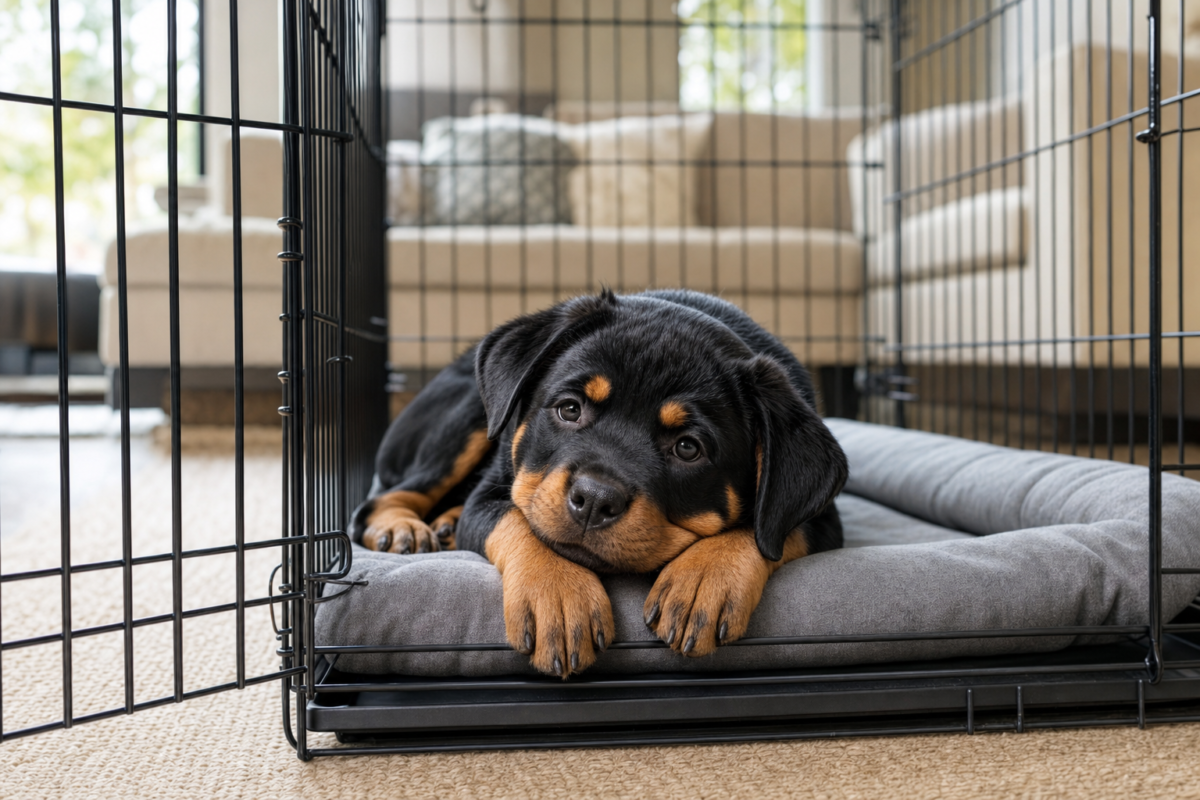
To crate train a large breed puppy, choose a crate sized for the adult dog with a divider fitted for now, place it where the family actually spends time, and build the association slowly. Feed every meal inside with the door open for the first few days, then close the door for seconds at a time and build up. Never use the crate as punishment, and never let a puppy out while it is crying. Most large breed puppies settle within one to three weeks. Expect a young puppy to manage roughly one hour per month of age between toilet breaks during the day.
A crate is one of the most useful things you can give a large breed puppy, and one of the easiest to get wrong. Done well, it becomes the place your dog chooses to go when the house gets busy, and it makes house training, safe rest and calm travel far simpler. Done in a rush, it becomes a box the puppy fights. The difference is almost entirely down to pace. This guide walks through crate size, placement, the first night, a realistic week by week plan, and the specific things that matter more when the puppy in the crate is going to grow into a very large dog.
How do I crate train a large breed puppy?
You crate train a large breed puppy by making the crate the best place in the house before you ever ask the puppy to stay in it. Start with the door open and every meal served inside. Once the puppy walks in happily, close the door for a few seconds while it eats, then open it before there is any complaint. Extend the closed time gradually across several days, always finishing while the puppy is still relaxed. Add short absences, then longer ones, then the first nights.
The rule that makes all of it work is simple. Never let the puppy out while it is crying, or you teach that crying opens the door. Wait for two or three seconds of quiet, then release. Most large breed puppies are comfortably crate trained within one to three weeks when the steps are taken in that order, and rushed within days when they are not.
Why crate training matters more with a big puppy
Every puppy benefits from a crate, but the case is stronger when the puppy is going to weigh 100 pounds or more. A large breed puppy grows fast, and a great deal of that growth happens while the dog sleeps. Giving a big puppy a quiet place where nothing is expected of it protects the long naps that a rapidly growing body genuinely needs, especially in a busy household with children coming and going.
There is a practical safety argument too. A bored giant breed adolescent left loose in a house finds things to chew that cost far more than a crate. And there is a joint argument that people rarely think about at eight weeks. A crate keeps a young dog off slippery floors and staircases during the hours you cannot supervise, which is a meaningful reduction in the daily slipping and scrambling that a heavy puppy would otherwise do.
Finally, there is the future. Nearly every big dog will at some point need to rest quietly after a veterinary procedure, travel in a car, or stay somewhere unfamiliar. A dog that already loves its crate finds all of that easy. A dog meeting a crate for the first time under stress does not.
Choosing the right crate size
Buy for the adult dog, not the puppy in front of you, and use a divider panel to shrink the usable space for now. A crate that is too big undermines house training, because a puppy will happily toilet in one end and sleep in the other. The right amount of room is enough to stand up fully, turn around comfortably and lie out flat on one side, and no more.
| Expected adult weight | Crate length | Typical breeds |
|---|---|---|
| 50 to 70 lb | 36 inches | Boxer, Standard Poodle |
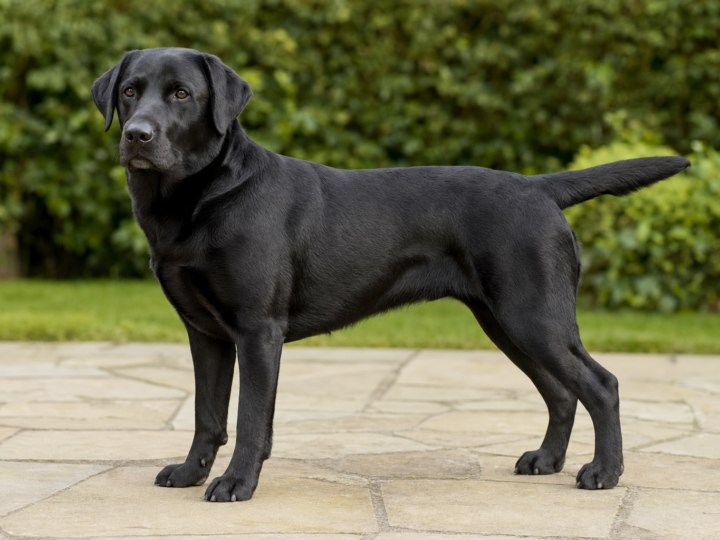
| 70 to 90 lb | 42 inches | Labrador Retriever, German Shepherd |
| 90 to 110 lb | 48 inches | Rottweiler, Doberman, Cane Corso |
| 110 to 150 lb | 54 inches | Newfoundland, Leonberger, Bullmastiff |
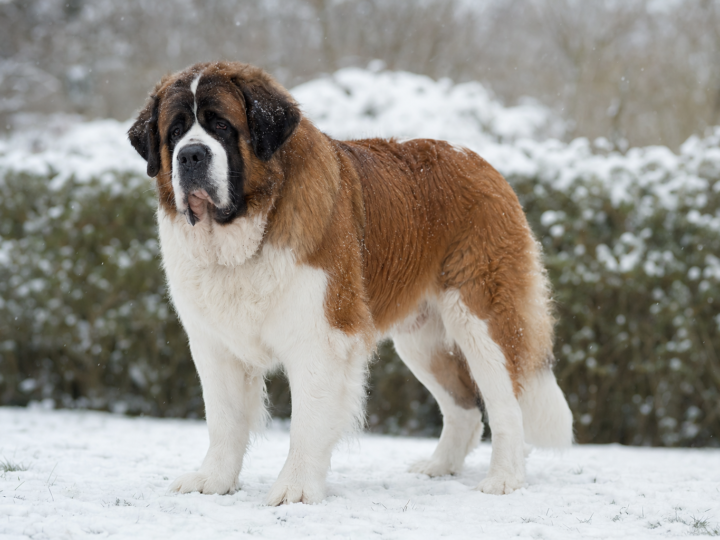
| 150 lb and above | 54 inches or a custom crate | Great Dane, Saint Bernard, Irish Wolfhound |
The American Kennel Club’s Chief Veterinary Officer, Dr. Jerry Klein, DVM, has written extensively on the slower growth and development timeline of large and giant breeds. Read more from the AKC’s guidance on caring for large-breed dogs.
Measure rather than guess. Take the expected adult height at the shoulder and add about four inches for the crate height, and take the expected length from nose to base of tail and add about four inches for the crate length. For the largest breeds, check the crate is rated to hold the weight and that the door latch is genuinely solid, because a determined adolescent giant will find any weakness.
Where to put the crate
Put the crate where your family actually is. A puppy that can see and hear the household relaxes far faster than one shut away in a spare room, and the whole point of the first fortnight is to teach that the crate is a normal part of life rather than exile.
- Choose a quiet corner of a living room or kitchen, out of the main walking route but within sight of people.
- Avoid direct sunlight, radiators and draughty doorways. Big dogs overheat easily and a crate in a sunny spot gets warm fast.
- Put a non slip mat under the crate on hard flooring so it does not slide when a heavy puppy moves inside.
- For the first week or two of nights, a second crate or a moveable crate in the bedroom makes everything easier, then relocate gradually once the puppy is settled.
Going Too Fast
Most crate problems are a pace problem. Add seconds, not minutes, and always end while the puppy is still calm.
Crate As Punishment
Sending a puppy to the crate in anger undoes weeks of work. It is a bedroom, never a consequence.
Too Much Space
An oversized crate lets a puppy toilet at one end. Use the divider and move it out as the puppy grows.
Thin Bedding
A heavy puppy on a hard crate floor is uncomfortable. Use a firm supportive mat that fits the full base.
The step by step plan
This plan assumes a puppy that arrived at eight or nine weeks. Move faster or slower based on the dog rather than the calendar, and repeat any stage that produces stress.
Days 1 to 3. Make it good. Leave the door open or removed. Serve every meal inside, starting with the bowl just inside the entrance and moving it further back each meal. Scatter a few treats in there throughout the day so the puppy discovers them alone. Say nothing and ask for nothing. At this stage you want the puppy wandering in of its own accord.
Days 4 to 7. Close the door. While the puppy eats, close the door for five seconds and open it before the bowl is empty. Build to thirty seconds, then to the length of the meal. Stay in the room. Add a settled chew or a stuffed toy given only in the crate, which quickly becomes the puppy’s favourite part of the day.
Week 2. Add distance and duration. With the door closed, step away for a minute, then five, then ten. Leave the room. Come back before the puppy gets worried rather than after. Start using a quiet cue such as bed or crate as the puppy walks in, so the word attaches to a behaviour it already offers.
Weeks 3 to 4. Real life. Use the crate for genuine short absences, for calm time when the house is busy, and for naps after activity. By now most puppies take themselves in to sleep. Keep the good associations going with the special chew, and keep the door open whenever the crate is not in use.
How long can a large breed puppy stay in a crate?
Use one hour per month of age as the daytime working limit for toilet needs, with a hard ceiling of about four hours for any puppy regardless of the arithmetic. Nights are different, because a sleeping puppy can hold on longer than an awake one, though very young puppies will still need one or two trips outside.
| Age | Daytime stretch | Night |
|---|---|---|
| 8 to 10 weeks | Up to 1 hour | 2 to 3 hours between toilet trips |
| 11 to 14 weeks | Up to 2 hours | 3 to 4 hours between toilet trips |
| 15 to 16 weeks | Up to 3 hours | 4 to 6 hours |
| 17 weeks to 6 months | Up to 4 hours | Usually through the night |
| 6 months plus | 4 hours maximum | Through the night |
These are ceilings, not targets. A crate is a tool for sleep, safety and short absences, not a place for a dog to spend a working day. If your household needs longer cover, a puppy pen, a dog sitter or a midday visit is the answer rather than a longer stretch in the crate.
The first night, honestly
The first night is usually the hardest, and knowing that in advance helps. Your puppy has just left its litter and everything it knows. Put the crate beside your bed for the first few nights so the puppy can hear and smell you, which settles most puppies far faster than any other technique.
- Take the puppy out to toilet immediately before bed, and again the moment it wakes and cries in the night.
- Keep night trips boring. Outside, toilet, praise quietly, straight back to the crate. No play and no chat.
- Lift the water bowl an hour or so before bed for young puppies, and take the puppy out last thing so the bladder is empty.
- Expect one or two wakings for the first couple of weeks, then a gradual stretch to a full night.
- Move the crate a little further from the bed every few nights once the puppy is sleeping soundly, until it reaches its permanent spot.
What to do about crying
There is an important distinction to make. A puppy that needs the toilet should be taken out. A puppy that is protesting should be waited out. Most people can tell the difference within a week, because the toilet cry is usually urgent, restless and accompanied by circling, while the protest cry is rhythmic and settles if ignored.
The rule that protects all your work is to open the door during quiet, never during noise. If you must go in, wait for two or three seconds of silence first. Even that short pause teaches the right lesson. If crying is escalating rather than settling over several nights, the pace has been too fast. Go back a stage, shorten the durations, and rebuild. That is a normal part of the process rather than a failure.
Comfort, flooring and growing joints
A large breed puppy spends a great deal of its first year asleep, and where it sleeps matters for a heavy frame. Give the crate a firm, supportive mat that covers the entire base rather than a thin blanket, so shoulders, hips and elbows are cushioned. Just as importantly, put non slip runners on the route between the crate and the door. Repeated scrambling on smooth floors is a real daily load on growth plates that are still open.
Those daily habits sit alongside the other basics of the growth window: a complete food formulated for large breed puppies, a lean body condition, moderate exercise, and steady joint support. Many big dog parents add a daily joint chew during the years the frame is being built. MoveGuard Growth is made for exactly that stage, combining nine actives including New Zealand Green Lipped Mussel, glucosamine, chondroitin, MSM and hyaluronic acid to support the developing joints of young large breed dogs across the roughly 8 to 30 month growth window. Dosing follows expected adult weight, so most large breed puppies take two chews a day and the biggest take three. It ships as 90 chews in a chicken liver flavour, is made in the USA in an NSF facility, and carries a 60 day guarantee. A chew given in the crate also doubles neatly as one more reason your puppy likes going in.
Support The Growing Years
Give your large breed puppy daily joint support built for big frames. Explore MoveGuard Growth.
Common crate training mistakes
- Buying a puppy sized crate. You will replace it twice. Buy the adult size and fit the divider.
- Letting the puppy out mid cry. The single most common reason crate training stalls, because it rewards exactly the behaviour you want to fade.
- Using the crate as a consequence. A place associated with being told off will never become a place of rest.
- Leaving a collar on inside. Tags and collars can catch on crate bars. Take them off before the door closes.
- Skipping the exercise and toilet break first. A puppy with a full bladder and unspent energy cannot settle. Empty and tire first, then crate.
- Long stretches too early. Duration is built in small increments. Jumping to three hours in week one usually undoes the first fortnight.
- Giving up after a bad night. Progress is rarely linear. One difficult night after five good ones is normal, not a signal to abandon the crate.
When can you stop using the crate?
Many large breed dogs are reliably trustworthy loose in the house somewhere between twelve and eighteen months, though plenty of giant breeds take longer because adolescence runs late. The test is behavioural rather than a birthday. Start with short unsupervised periods with the crate door open, extend gradually, and go back a step if you come home to chewing or accidents.
Even when the crate is no longer needed, most Dog Parents leave it up with the door open and the bedding in. Dogs that were crate trained well usually keep choosing it for years, and having a dog that walks into a crate willingly is genuinely valuable the first time you need to travel or your veterinarian asks for quiet rest after a procedure.
Frequently asked questions
What size crate does a large breed puppy need?
Buy the crate for the adult dog and use a divider to shrink it for now. That usually means 42 inches for a dog expected to reach 70 to 90 pounds, 48 inches for 90 to 110 pounds, and 54 inches or a custom crate for the giant breeds. The puppy should be able to stand, turn around and lie flat, and no more.
How long does crate training take?
Most large breed puppies are comfortably crate trained within one to three weeks when each stage is built gradually. The pace depends far more on how slowly you increase the closed door time than on the breed or the age of the puppy.
Should I ignore my puppy crying in the crate at night?
Take the puppy out if it genuinely needs the toilet, and keep that trip quiet and boring. If the crying is protest rather than need, wait for two or three seconds of quiet before opening the door, so the door never opens in response to noise. Crying that escalates over several nights means the pace has been too fast.
Can I put a bed and water in the crate?
Use a firm supportive mat that fits the whole base, which is kinder to a heavy puppy than a thin blanket. A spill proof clip on bowl is fine for longer daytime stretches, but most people lift water an hour before bed for very young puppies to help them get through the night.
Is crate training cruel for a giant breed dog?
Not when it is introduced properly and used for sleep, safety and short absences rather than long confinement. A correctly sized crate gives a big dog a quiet place to rest undisturbed, and most well trained dogs choose to use it long after the door stops being closed.
The bottom line
Crate training a large breed puppy is mostly an exercise in patience. Buy for the adult size, fit the divider, put the crate where the family lives, and spend the first few days doing nothing but making it a good place to be. Build the closed door time in seconds rather than minutes, keep night trips quiet, and only ever open the door during calm. Add a supportive mat and non slip flooring for the sake of that fast growing frame, and within a few weeks you will have a big dog that takes itself off to bed.
Want the Simple Roadmap in One Place?
Grab our free Big Dog Growth Blueprint for the growth window checklist, feeding framework and joint safe exercise limits, all written for large and giant breeds.
This article is for general educational purposes only and is not veterinary advice. It is not intended to diagnose, treat, cure or prevent any disease. Always consult your veterinarian about your dog’s individual health, nutrition and supplement needs. These statements have not been evaluated by the Food and Drug Administration.
Support Big Breed Joints from Day One
Large and giant breeds carry more load through every growth stage. MoveGuard Growth supports developing joints in young big dogs (8 to 30 months); MoveGuard Adult keeps grown big dogs moving comfortably.
Leave a Reply