Body condition score is a hands on rating of how much fat your dog carries, scored from 1 to 9. A score of 4 to 5 is ideal for a large breed dog, and a lean 4 is what most veterinarians want to see on a growing puppy. You score it with three checks that take ten seconds: feel the ribs, look down for a waist, and look from the side for an abdominal tuck. Every point above 5 represents roughly 10 to 15 percent over ideal body weight, which on a 120 pound dog is a lot of extra load.
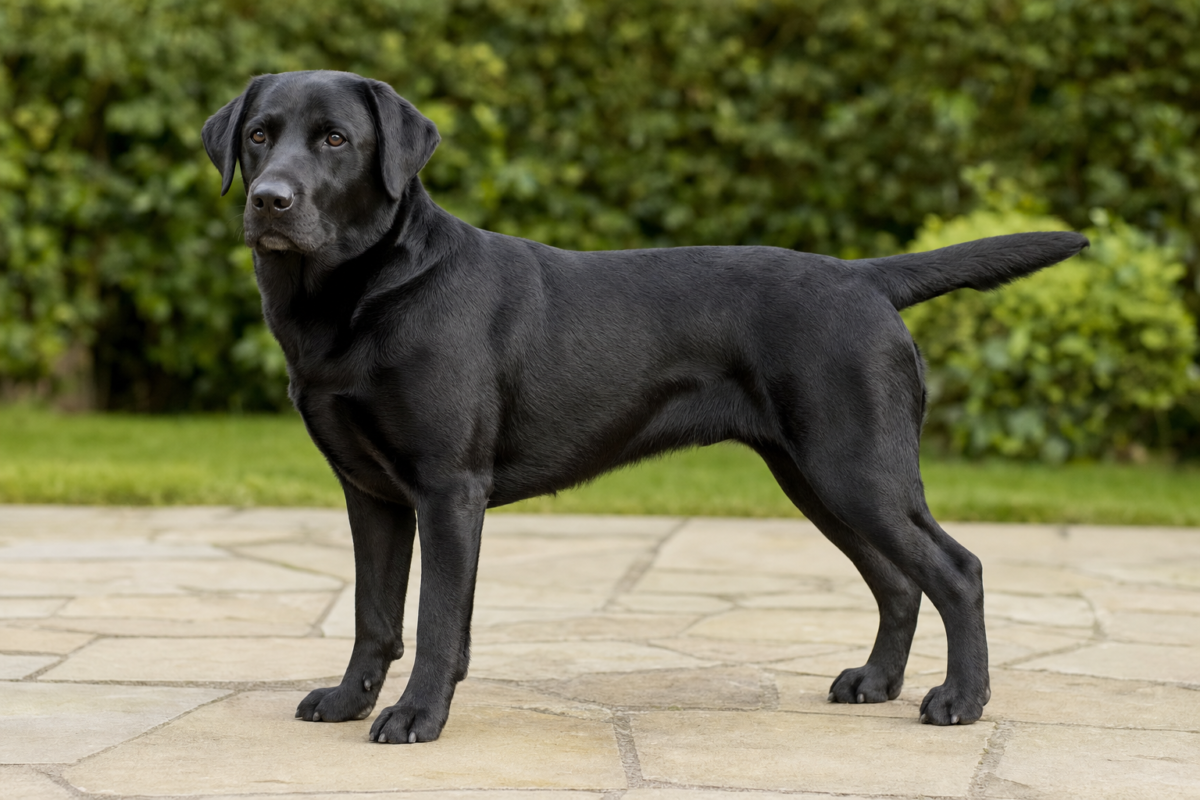
The scale in your bathroom tells you what your dog weighs. It does not tell you whether that weight is right, and on a large breed dog the difference between those two things is the whole game. A 95 pound Labrador and a 95 pound Labrador can be two completely different dogs, one lean and athletic and one carrying an extra fifteen pounds their joints never asked for. Body condition scoring is the simple, free, hands on method that settles the question, and once you have done it twice you will never need a chart again. Here is how to run the check and exactly what to do with the answer.
What is my big dog’s body condition score?
Your dog’s body condition score is a number from 1 to 9 that describes how much body fat they carry, judged by feel rather than by weight. A 1 is emaciated, a 9 is severely overweight, and 4 to 5 is the healthy target for a large or giant breed. At a 4 to 5 you can feel the ribs easily under a thin layer of fat without pressing, you can see a waist when you look down from above, and the belly rises toward the back legs when you look from the side.
The score is deliberately independent of the scale, which is why veterinarians use it. It works on a Great Dane and a Beagle, on a lean working line and a heavier show line, and it works even when you have no idea what your particular dog should weigh. That makes it the single most useful home health check a big dog parent can learn.
The nine point body condition scale, explained
Run your hands over your dog while you read this table. The description that matches what you are feeling is your score.
| Score | What you feel and see | What it means |
|---|---|---|
| 1 to 2 | Ribs, spine and hip bones visible from a distance with no fat cover at all | Underweight. Speak with your veterinarian promptly |
| 3 | Ribs easily visible, obvious waist, very little fat over the spine | Slightly thin. A modest increase in food is usually enough |
| 4 | Ribs easy to feel with a very thin cover, clear waist, obvious tuck | Lean and ideal, especially for a growing puppy |
| 5 | Ribs felt without pressing, visible waist behind the ribs, belly tucked up | Ideal adult condition. This is the target |
| 6 | Ribs felt with slight pressure, waist softening, tuck still present | A little heavy. Trim portions before it becomes a habit |
| 7 | Ribs hard to feel under fat, waist barely visible, tuck flattening | Overweight. Time for a plan with your veterinarian |
| 8 | Ribs only felt with firm pressure, no waist, belly hangs level | Clearly overweight. Extra load on every joint |
| 9 | Ribs not palpable, fat over spine and tail base, abdomen distended | Severely overweight. Veterinary guidance needed |
A quick way to hold the scale in your head: each point above 5 is roughly 10 to 15 percent over ideal weight. A 120 pound dog sitting at a 7 is therefore carrying somewhere near 25 to 35 extra pounds. Put that way, the number stops feeling abstract.
The three checks, in ten seconds
You do not need to memorise the table. You need three checks, always in the same order, always with your hands rather than your eyes.
- Ribs. Run both flat hands along the sides of the chest with light pressure, the way you would feel the back of your own hand. You should feel each rib easily under a thin layer. If you have to push to find them, the score is 6 or higher. If they feel sharp and uncovered, it is 3 or lower.
- Waist. Stand over your dog and look straight down. You want to see a clear narrowing behind the ribs, an hourglass rather than a loaf of bread. A straight line from chest to hip means the waist has filled in.
- Tuck. Crouch to the side at your dog’s level. The underline should rise from the bottom of the ribcage toward the back legs. A belly that hangs level, or drops, is a sign of excess.
Two out of three agreeing is your answer. When the ribs say 6 but the waist still looks reasonable, trust the ribs, because fat sits over the ribcage before it changes the outline enough to see.
Why body condition matters more on a big dog
Every extra pound a dog carries travels through the joints with every step, every turn and every jump down from the sofa. On a small dog a couple of extra pounds is a small absolute load. On a large or giant breed, the same percentage becomes fifteen or twenty five pounds of additional load on a frame that is already carrying more than most.
That is why veterinarians tend to be stricter about condition on big dogs than on small ones, and why lifelong lean body condition is one of the most consistently supported habits in canine health. Keeping a big dog at a 4 to 5 is not about looks. It is about how comfortably they move at eight years old.
Why the growth window makes this urgent
Large and giant breed puppies keep developing across a growth window of roughly 8 to 30 months, depending on expected adult weight. Through that whole window, cartilage, bone and connective tissue are still forming, and growth plates at the ends of the long bones stay open for much of the first year.
A heavy puppy is not a healthier puppy. Extra weight during the growth window asks more of a frame that is still being built, and fast growth is the thing to avoid rather than the thing to aim for. This is why a lean 4 is the target on a growing big dog, slightly leaner than the adult ideal. If your puppy scores a 6 or 7, that is a conversation to have with your veterinarian this month rather than next year.
Scoring By Eye Only
A double coat hides a multitude. Always use your hands, not a glance across the room.
Trusting The Bag
Feeding guides are population averages. Body condition is what tells you your dog.
Forgetting The Extras
Treats, chews and table food can quietly supply a fifth of daily calories.
Drifting Slowly
A pound a month is invisible day to day and twelve pounds by next Christmas.
What to do at each score
A score on its own changes nothing. Here is the action that follows each range.
- Score 1 to 3. Do not simply pile on food. Book a veterinary appointment, because a thin big dog may be under fed, may have parasites, or may have something else going on. A stool check and a weight history give your veterinarian what they need.
- Score 4. Ideal for a growing puppy and perfectly acceptable for a lean, athletic adult. Hold the current plan and keep checking monthly.
- Score 5. The adult target. Keep portions and activity as they are, and recheck at every weigh in.
- Score 6. Reduce the daily amount by about 10 percent, cut the treats first rather than the meals, and recheck in four weeks. Most dogs at a 6 come back to a 5 without any drama.
- Score 7 to 9. Work with your veterinarian rather than alone. Rapid weight loss is not the goal and can cause its own problems. A structured plan aiming at roughly 1 to 2 percent of body weight per week is the usual approach, alongside gentle low impact activity.
Whatever the score, weigh food rather than scooping it. A kitchen scale is the cheapest accuracy upgrade available, because a heaped cup and a level cup can differ by a quarter, and on a big dog eating six cups a day that gap is enormous. Our guide to daily portions for an adult large dog gives you the starting number to adjust from.
Scoring a puppy versus scoring an adult
The three checks are identical, but you read them differently at different ages.
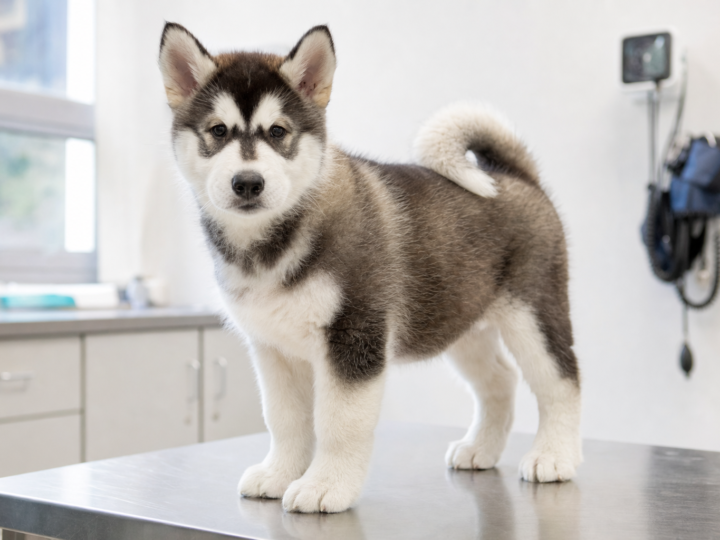
A growing puppy should look lean and a little unfinished. Between roughly four and ten months, big breed puppies often go through a leggy, gangly stage where the frame has arrived and the muscle has not. That is normal and it is not a reason to add food. What you are checking is whether the ribs are easy to feel and the waist is clear, not whether your puppy looks impressive.
An adult carries more muscle over the same frame, so the ribs sit under slightly more cover and the outline is broader through the chest and shoulders. Muscle and fat feel different under the hand: muscle is firm and follows the body, fat is soft and moves. Learning that difference is the real skill, and a couple of minutes with your veterinarian showing you hands on is worth more than any article.
A senior may lose muscle over the topline and hindquarters while still carrying fat around the ribs, which can produce a confusing middling score. If your older dog feels bony along the spine but soft over the ribs, mention it, because muscle loss and fat gain are different problems with different answers. Meanwhile keeping a close eye on how much they are eating and how they are moving is exactly what our signs of overfeeding checklist is designed to catch early.
Supporting the joints that carry the load
Lean body condition is the first and best thing you can do for a big dog’s joints, because it directly reduces what those joints carry every day. Alongside it, many big dog parents add a daily joint support chew made specifically for large and giant breeds, so the habit runs continuously from puppyhood into adulthood.
MoveGuard Growth is built for the growing years. It combines nine actives, including New Zealand Green Lipped Mussel, glucosamine, chondroitin, MSM and hyaluronic acid, to support the developing joints of young large breed dogs across the roughly 8 to 30 month growth window. You dose by expected adult weight, so puppies headed for 50 to 80 pounds take two chews a day and those headed for 80 to 100 pounds or more take three. It ships as 90 chicken liver flavour chews, is made in the USA in an NSF registered facility, and is backed by a 60 day guarantee. Once your dog is fully grown, MoveGuard Adult carries the same daily routine forward. Either way, it sits alongside lean feeding and sensible exercise rather than replacing them, and you can read more about joint support for big dogs whenever you want the longer picture.
Support The Frame You Are Keeping Lean
Daily joint support built for large and giant breeds, from puppy through adult. Explore MoveGuard Growth.
What can fool the score
Body condition scoring is reliable, but a handful of things trip people up on large breeds in particular.
- A thick double coat. Newfoundlands, Great Pyrenees, Malamutes and Leonbergers can look substantial and score a lean 4 underneath. Hands only, every time.
- A deep chest. Great Danes, Dobermans and other deep chested breeds have a dramatic natural tuck that can read as thin. Use the ribs as the deciding check.
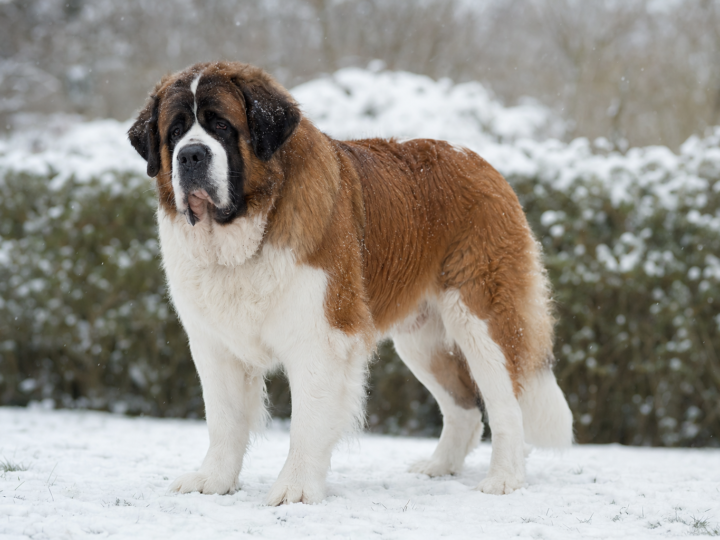
- A heavy build. Mastiffs, Saint Bernards and Bullmastiffs are broad by design. Broad is not the same as fat, and the ribs will tell you which you have.
- Recent clipping or seasonal shedding. A dog can appear to have changed shape in a week when only the coat changed.
- A full belly. Score before a meal, not twenty minutes after one, or a normal dog can read heavy.
When in doubt, photograph your dog from above and from the side in the same spot each month. Comparing two photographs four weeks apart reveals drift that your eye simply will not catch day to day.
A simple monthly routine
Make this a habit rather than a project and it takes almost no time at all.
Every month. Run the three checks before the morning meal, note the score in your phone, and take the two photographs. Thirty seconds in total.
Every three months. Weigh your dog. Many veterinary practices are happy for you to use the waiting room scale without an appointment, and it doubles as a positive, low pressure clinic visit.
At every veterinary visit. Ask what score they give, and compare it with yours. Two or three of those conversations and your hand will be calibrated to a professional standard.
Whenever anything changes. After neutering, after a change of food, after an injury, or when activity drops for a season. These are the moments condition quietly moves, and a check catches it inside a month instead of a year.
Common scoring mistakes to avoid
Most errors come from the same few habits.
- Scoring with your eyes. The single most common mistake, and the reason coated breeds drift heavy for years unnoticed.
- Comparing against other dogs. The dog park is full of overweight dogs. It is a terrible reference point.
- Adjusting food by cups rather than calories. Foods range from roughly 300 to 500 calories per cup, so the same cup means different things on different bags.
- Cutting food sharply. A big drop leaves a dog genuinely hungry and rarely lasts. Ten percent, held for four weeks, works far better.
- Feeding a growing puppy for size. Choose a complete food formulated for large breed puppies and let the size arrive on its own timeline.
- Checking once and never again. Condition is a trend, not a snapshot. One reading tells you very little.
Frequently asked questions
What is a healthy body condition score for a large breed dog?
A score of 4 to 5 on the 9 point scale is the healthy target for a large or giant breed adult, and a lean 4 is what most veterinarians prefer on a growing puppy. At that score you can feel the ribs easily under a thin layer, see a waist from above, and see the belly rise toward the back legs from the side.
How do I check my big dog for ribs, waist and tuck?
Run both flat hands along the ribcage with light pressure and count how easily you find the ribs. Then stand over your dog and look for a narrowing behind the ribs. Finally crouch to the side and check that the underline rises toward the back legs. Two of the three agreeing gives you your score.
Can a thick coat hide body condition on a large breed dog?
Yes, and this is the most common reason big coated breeds drift heavy unnoticed. Newfoundlands, Great Pyrenees, Alaskan Malamutes and Leonbergers can look substantial while scoring a lean 4 underneath, or look fine while carrying extra. Always score with your hands rather than by eye.
How often should body condition be checked on a big dog?
Once a month is plenty for most dogs, with a weight check every three months and a professional score at each veterinary visit. Check more often after neutering, a food change, an injury or a seasonal drop in activity, since those are the moments condition tends to move.
Is a lean large breed puppy a problem?
A lean puppy at a score of 4 is exactly what you want during the growth window, and a leggy, unfinished look between four and ten months is normal. A puppy at 3 or below, or one losing condition rather than simply growing tall, is worth a veterinary appointment.
The bottom line
Your big dog’s body condition score is a number from 1 to 9, and 4 to 5 is where you want it, with a lean 4 through the growing years. Feel the ribs, look for the waist, check the tuck, and trust your hands over the scale and over the bag. Score once a month, photograph from above and from the side, and act on a 6 before it becomes a 7. It costs thirty seconds and it is the closest thing to a free health upgrade a large breed dog parent can give.
Want the simple roadmap in one place? Grab our free Big Dog Growth Guide for the growth window checklist, feeding framework and joint safe exercise limits, all written for large and giant breeds.
This article is for general educational purposes only and is not veterinary advice. It is not intended to diagnose, treat, cure or prevent any disease. Always consult your veterinarian about your dog’s individual health, nutrition and supplement needs. These statements have not been evaluated by the Food and Drug Administration.
Support Big Breed Joints from Day One
Large and giant breeds carry more load through every growth stage. MoveGuard Growth supports developing joints in young big dogs (8 to 30 months); MoveGuard Adult keeps grown big dogs moving comfortably.
Leave a Reply