
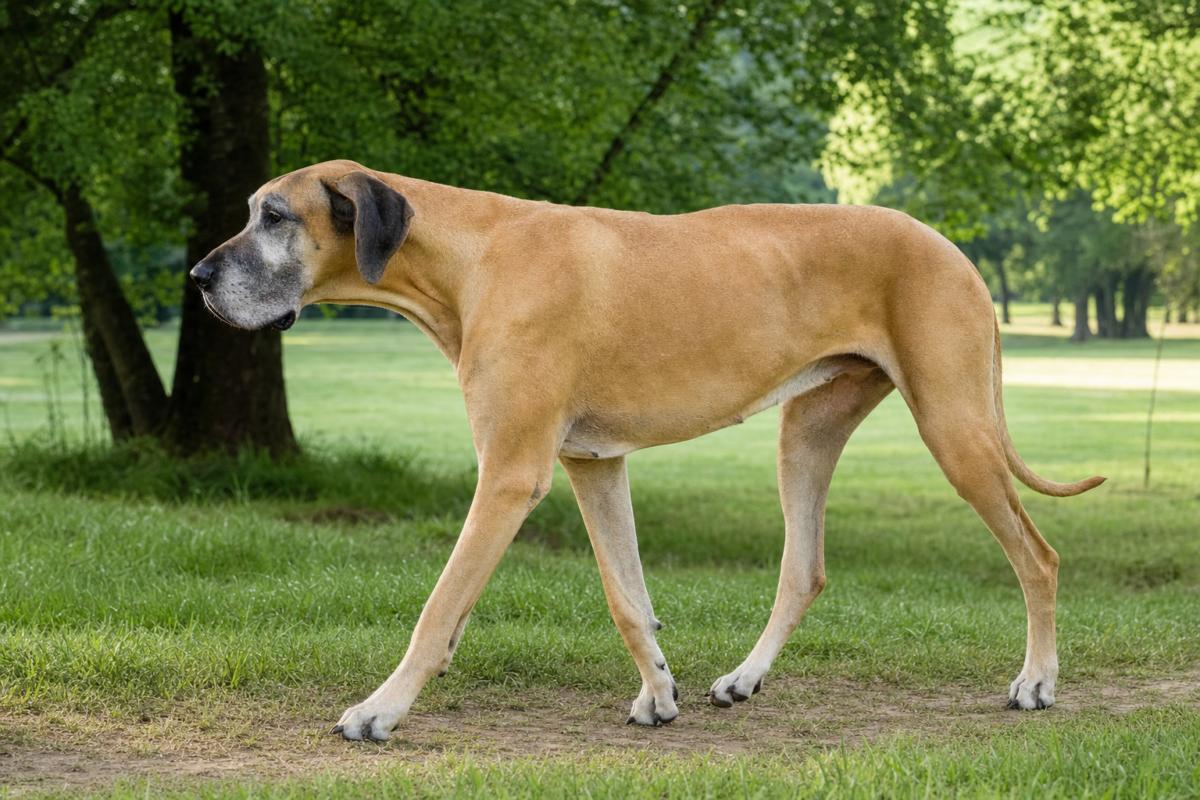
Help a senior big dog stay active by trading intensity for frequency. Several shorter, gentler outings each day beat one long walk. Favour soft, level ground, warm the body up before activity, and keep a lean body condition so every step carries less load. Add traction on slippery floors, a ramp instead of a jump, and a supportive bed for real rest. Keep the mind busy with scent work and training, support the joints daily, and review the plan with your veterinarian as your dog changes.
The hardest part of loving a big dog is how quickly they get to the grey muzzle stage. A seven year old giant breed can already be a senior while a small dog the same age is barely middle aged. The good news is that slowing down is not the same as stopping, and a well built routine keeps a big senior moving happily for years. What changes is not whether your dog is active. It is how you shape the activity.
How can I help my senior big dog stay active?
Help your senior big dog stay active by keeping movement frequent, gentle and consistent rather than long and hard. Aim for two to four short outings a day on soft, level ground instead of one big walk. Warm up with a few slow minutes before anything brisk. Hold a lean body condition, since every extra pound is carried through ageing joints all day. Fix the home surfaces that make movement harder, add a ramp for the car, keep the mind engaged, and build a steady daily joint support routine. Then adjust the whole plan with your veterinarian as the years go on.
What actually changes as a big dog ages
Ageing in a large or giant breed shows up in the parts that carry the most load. Muscle mass falls away first, particularly across the back end, and less muscle means less support for the joints underneath. Cartilage becomes less resilient. Movement gets stiffer after rest and looser once the body warms up. Sleep gets deeper and longer, hearing and eyesight soften, and recovery from a big day takes longer than it used to.
None of that means retirement. Muscle responds to use at any age, and a senior who keeps moving gently holds condition far better than one who is allowed to settle into the sofa. The goal is a routine that keeps the body working without ever overdrawing it.
It helps to think of your dog as having a daily budget rather than a fixed capacity. A young dog can overspend and be fine by morning. A senior big dog cannot, so the skill is spending the budget evenly across the day and across the week instead of blowing it in one go. Once you start planning that way, most of the decisions below make themselves.
When does a big dog become a senior?
Size drives the timeline. The bigger the breed, the earlier the senior years arrive, which is why a Labrador and a Great Dane of the same age are at very different life stages. Use this as a guide to when your dog is considered a senior.
| Adult weight | Senior from about | What tends to show first |
|---|---|---|
| 50 to 65 lb | 8 to 9 years | Slower starts after a nap |
| 65 to 80 lb | 7 to 8 years | Less enthusiasm for stairs |
| 80 to 100 lb | 6 to 7 years | Shorter stride, more rest breaks |
| 100 to 130 lb | 6 years | Muscle loss over the hips |
| Over 130 lb | 5 to 6 years | Hesitation getting up from the floor |
These are guides, not verdicts. Plenty of dogs cross the line on paper years before they act like it.
Why frequency beats intensity
An ageing joint copes far better with regular gentle loading than with a long session after two quiet days. Short, frequent movement keeps the tissue supplied and the muscle switched on without ever asking for a big effort. It is the difference between four fifteen minute walks and one exhausting hour, and for a senior big dog the four short ones win every time.
Warming up and cooling down
Two small habits protect a senior more than any equipment. Start every outing with three to five slow minutes on the lead before you let the pace pick up, so muscle and joint fluid have a chance to respond. Finish the same way, with a slow last few minutes rather than arriving home at speed. On cold mornings give the warm up longer, and think about a coat for a short coated dog, because stiff joints are noticeably worse in the cold. It takes ten extra minutes a day and it is the cheapest thing on this list.
Weekend Warrior Days
Quiet weekdays then a huge Saturday hike is the pattern most likely to leave a senior sore. Keep the load even.
Extra Weight
Every additional pound travels through ageing joints all day. Lean seniors move more freely and tire less.
Slippery Floors
Hard flooring makes standing up a struggle. Runners and mats restore confidence more than almost anything else.
Too Much Rest
Complete rest costs muscle quickly, and lost muscle means less support for the joints. Gentle daily movement matters.
Building the weekly activity plan
A senior plan is built from small, repeatable pieces rather than one headline walk. A workable week looks like this:
- Two to four short outings a day, ten to twenty minutes each, on grass, packed dirt or sand rather than pavement.
- A slow first five minutes every time. Warm muscle moves better and tolerates more.
- One or two sessions a week of low impact exercise such as swimming or level lead work, if your dog enjoys it and your veterinarian agrees.
- Gentle hill work rather than stairs when you want to build back end muscle, since a slope loads the hips more kindly than a step does.
- Sniffing time built into every walk. It costs nothing physically and tires a dog beautifully.
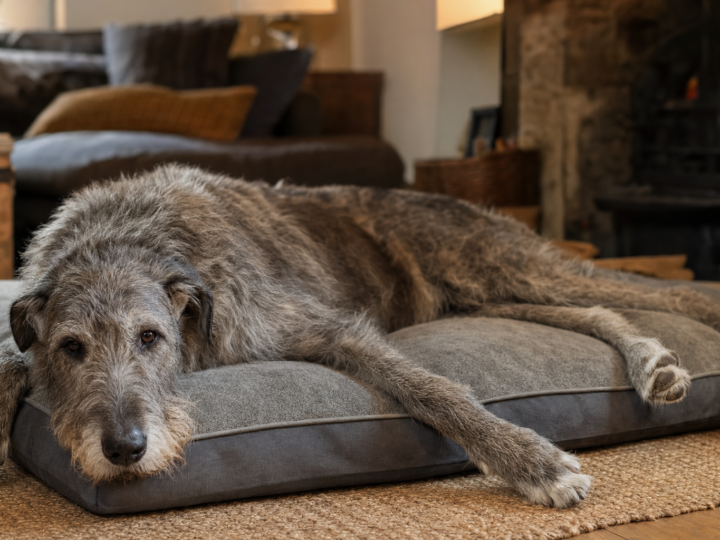
- A genuine rest day pattern, with soft bedding and no expectation to perform.
Watch the day after, not just the walk itself. If your dog is stiff the following morning, the previous day asked too much. Scale back a little and rebuild slowly.
Feeding an active senior big dog
Weight is the cheapest mobility tool you own, and it becomes more powerful as a dog ages. A senior carrying extra pounds works harder for every step, which shortens walks, which costs more muscle, which makes the next walk harder still. Breaking that loop starts in the bowl.
- Measure every meal rather than free feeding, and adjust portions as activity changes.
- Feed for a lean body condition instead of matching the number on the bag.
- Keep protein generous unless your veterinarian advises otherwise, since ageing muscle needs the raw material.
- Use treats as training currency and subtract them from meals rather than adding them on top.
How to check body condition in ten seconds
- Ribs. Run your hands along the sides. You should feel the ribs easily under a thin layer, without pressing.
- Waist. Look down from above. There should be a clear waist behind the ribs.
- Tuck. From the side, the belly should rise toward the back legs rather than hanging level.
Check monthly and note it down. Weight creeps up quietly in seniors because the walks get shorter before the portions do.
Setting up a home that supports movement
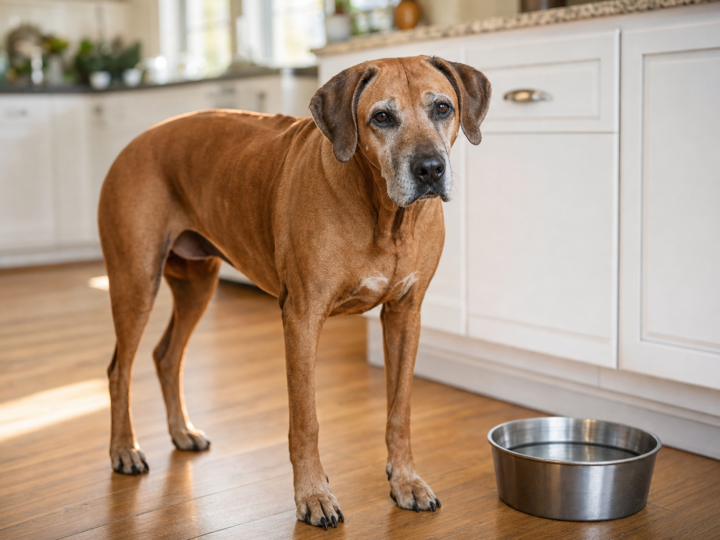
Most of a senior big dog’s day happens indoors, so the house does more for mobility than any single walk. Put runners or rugs along every route your dog uses, especially the path from the bed to the door and around the food bowl. A ramp into the car removes a jump that a hundred pound senior repeats every trip. Raise the food bowl if your dog reaches down awkwardly, keep nails short so the feet grip properly, and give your dog a thick supportive bed in a warm, quiet spot away from draughts.
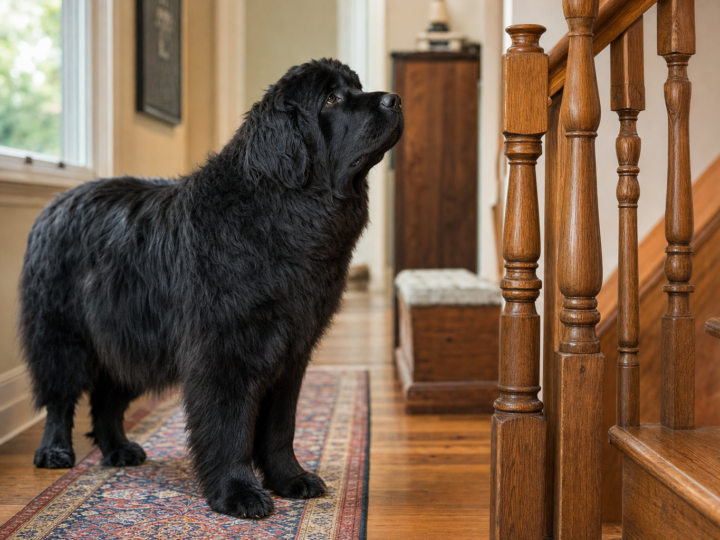
Stairs deserve a fresh look as well. A senior who has used the same staircase for years may now be managing rather than enjoying it, and the way down is harder than the way up. If your dog hesitates at the top, a gate and a ground floor bed solve the problem more kindly than encouragement does. The same goes for the sofa: a small set of steps keeps the habit without the landing.
Daily habits that support comfortable movement
Alongside the walks and the weight, a set of daily habits that support joint comfort does quiet work in the background. Gentle warm ups, consistent movement, a lean frame, good footing and daily joint support all pull in the same direction, which is a dog who finds it easy to get up and go.
Many big dog parents add a daily joint support chew made for adult and senior dogs. MoveGuard Adult is built for this stage. It combines clinically studied eggshell membrane with New Zealand Green Lipped Mussel, glucosamine, chondroitin, MSM, hyaluronic acid and vitamins C and E to support joint comfort, cartilage and healthy mobility in medium and large breed adults. It ships as 60 chicken liver flavour soft chews, is made in the USA in an NSF facility, and is backed by a 60 day guarantee. Talk to your veterinarian about what suits your individual dog.
Keep The Good Years Moving
Daily joint support built for medium and large breed adults. Explore MoveGuard Adult.
Signs the plan is working
You will see it in the small moments rather than on a stopwatch. A senior on a routine that suits them gets up without a long negotiation, keeps a steady stride to the end of the walk, settles calmly afterwards rather than crashing, and still offers you the odd ridiculous burst of enthusiasm. Muscle over the hips holds its shape, and the morning after a good day looks like any other morning.
Speak with your veterinarian if you notice limping, a reluctance to rise, stiffness that lasts well past the warm up, sudden weight change, or a dog who stops wanting to go out at all. Those are worth a conversation rather than a wait and see.
Keeping the mind active too
Physical capacity shrinks a little with age. Curiosity does not. Scent games, food puzzles, short training sessions and new routes give a senior the sense of a full day without asking anything of the joints, and mental work is genuinely tiring in the best way. Teaching an old dog something new is one of the great pleasures of this stage, because a senior who already knows how to learn picks things up fast.
Ten minutes of nose work in the garden can leave a big dog as content as a mile of walking, and on a stiff day it is the better choice. Scatter a handful of the daily food in the grass and let your dog work it out. Hide a favourite toy in another room. Practise a couple of easy known behaviours for a reward, which builds confidence rather than testing it. Enrichment also protects the routine on the days when the weather or the joints rule out a proper walk, so your dog still gets a day worth having.
Common mistakes to avoid
- Stopping exercise altogether. Rest feels kind but costs muscle, and lost muscle leaves the joints with less support.
- Saving it all for the weekend. Uneven loading is what leaves seniors sore. Little and often is the rule.
- Letting weight drift. Portions rarely shrink when the walks do, and the difference shows up in how easily your dog rises.
- Ignoring the floors. A dog who slips once becomes a dog who hesitates, and hesitation costs movement every day.
- Reading slowing down as just old age. Changes in movement are worth a veterinary conversation rather than an assumption.
- Waiting to support the joints. A daily routine started while your dog is still moving well is easier to keep than one begun in a hurry.
Frequently asked questions
How much exercise does a senior big dog need?
Most senior large breeds do well on two to four short outings a day, roughly ten to twenty minutes each, on soft level ground. Frequency matters more than distance, and the honest test is how your dog moves the next morning rather than how far you got.
Should I stop walking my senior dog if they seem stiff?
Usually the answer is to shorten and soften the walks rather than stop them, because complete rest costs muscle that the joints rely on. Persistent stiffness deserves a veterinary check first, so you are adjusting the plan with good information.
Is swimming good for older large breed dogs?
Swimming is one of the kindest forms of movement for a big senior, since the water carries much of the body weight while the muscles still work. Keep sessions short at first, watch for tiredness, and check with your veterinarian before starting.
At what age is a large breed dog a senior?
Larger dogs reach the senior stage earlier. Breeds around 50 to 65 pounds are often considered senior at 8 to 9 years, those between 80 and 100 pounds at 6 to 7 years, and giant breeds above 130 pounds as early as 5 to 6 years.
When should I start joint support for a big dog?
Earlier is easier than later. A daily routine begun while your dog is still moving comfortably runs alongside the years when mobility matters most, rather than starting once habits have already changed. Discuss any supplement with your veterinarian.
The bottom line
A senior big dog does not need to do less of everything. They need the same amount of movement arranged differently: shorter, softer, more often, on ground that is kind to the feet, in a home that makes getting up easy. Keep the weight lean, keep the mind busy, support the joints daily, and treat any real change in movement as a reason to call your veterinarian rather than a fact of ageing. Get that right and the grey muzzle years turn out to be some of the best ones you have together.
Want the simple roadmap in one place? Grab our free Big Dog Mobility Guide for the mobility checklist, weight framework and low impact activity ideas, all written for large and giant breeds.
This article is for general educational purposes only and is not veterinary advice. It is not intended to diagnose, treat, cure or prevent any disease. Always consult your veterinarian about your dog’s individual health, nutrition and supplement needs. These statements have not been evaluated by the Food and Drug Administration.
Support Big Breed Joints from Day One
Large and giant breeds carry more load through every growth stage. MoveGuard Growth supports developing joints in young big dogs (8 to 30 months); MoveGuard Adult keeps grown big dogs moving comfortably.
Leave a Reply