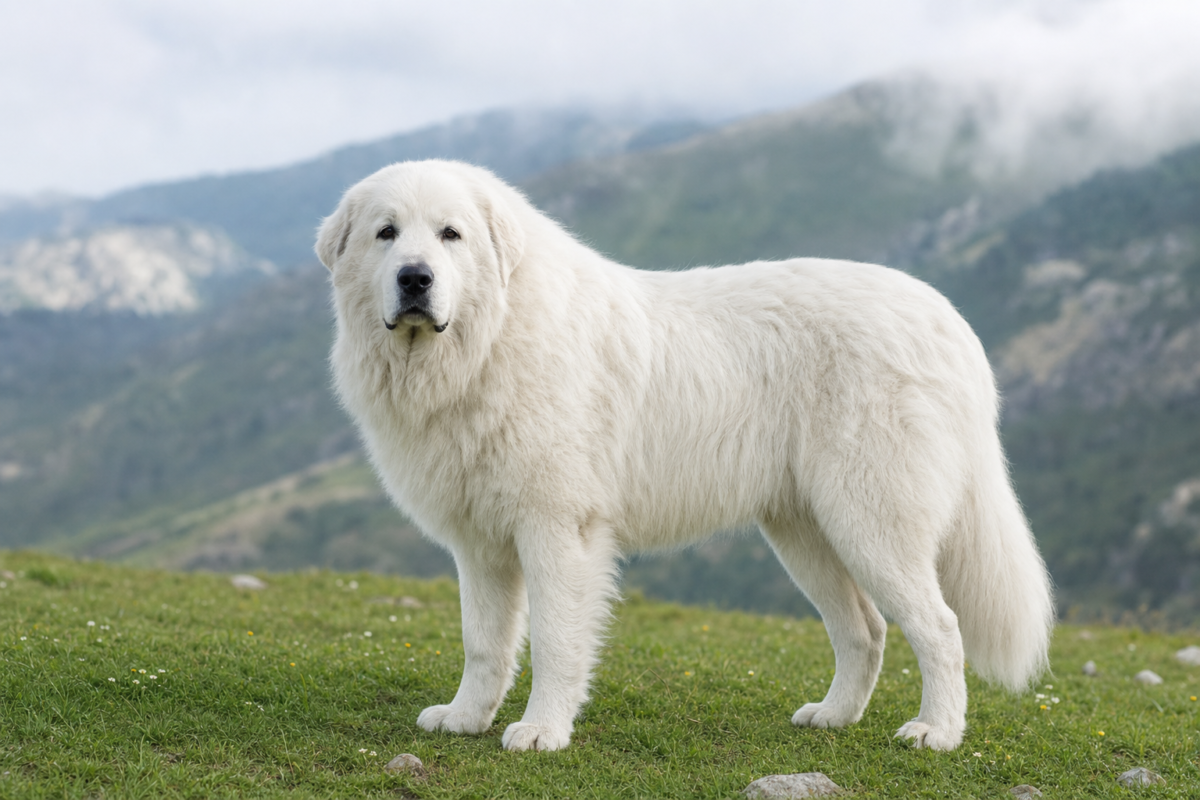
A fully grown male Great Pyrenees usually stands 27 to 32 inches at the shoulder and weighs 100 to 160 pounds. Females typically reach 25 to 29 inches and 85 to 115 pounds. Most Great Pyrenees reach close to their adult height by around 18 months, then keep adding chest, muscle and coat until roughly two to three years of age.
If you are looking at a fluffy white puppy with enormous paws and wondering just how much dog is coming, you are asking exactly the right question at exactly the right time. The Great Pyrenees is a true giant breed, bred over centuries to guard flocks in the mountains, and the way you support those first two or three years shapes the calm, sound adult your puppy becomes. This guide gives you a clear month by month weight picture, an honest timeline for when growth finishes, and the daily habits that help a Pyr grow into a comfortable, confident guardian.
How big will a Great Pyrenees get?
A fully grown male Great Pyrenees usually weighs 100 to 160 pounds and stands 27 to 32 inches at the shoulder. Females typically weigh 85 to 115 pounds and stand 25 to 29 inches. As a giant guardian breed, a Pyr reaches most of its height by around 18 months and then continues to broaden through the chest and shoulders until roughly two to three years of age.
Genetics, sex, lines and nutrition all shape the final size, so treat these ranges as a dependable guide rather than a fixed rule. That thick double coat also makes a Pyr look larger than the scale says, which is why hands on body checks matter more with this breed than with almost any other.
What makes a Great Pyrenees grow the way it does
Great Pyrenees were developed to live alongside livestock in the mountains of France and Spain, working independently for long stretches without direction. That job shaped the breed. A Pyr is built for endurance and steady patrolling rather than sprinting, with a deep chest, heavy bone and a weatherproof coat that adds visual bulk on top of real substance.
Because there is so much frame to build, growth happens over years rather than months. A young Pyr often looks tall and rangy through the middle of the first year, with a narrow chest, oversized paws and a coat that has not yet grown in fully. That is exactly what you want to see. The broad, powerful outline of an adult Pyrenees arrives gradually across the second year.
Great Pyrenees growth chart, month by month
Use this chart as a friendly guide, not a report card. A Pyr who tracks a little above or below these numbers while looking lean and moving smoothly is usually doing just fine. Always pair the number with a hands on body check.
| Age | Male weight | Female weight |
|---|---|---|
| 2 months | 20 to 28 lb | 16 to 24 lb |
| 3 months | 35 to 45 lb | 30 to 40 lb |
| 4 months | 45 to 58 lb | 40 to 50 lb |
| 6 months | 65 to 80 lb | 55 to 68 lb |
| 9 months | 85 to 100 lb | 70 to 85 lb |
| 12 months | 95 to 115 lb | 78 to 95 lb |
| 18 months | 100 to 135 lb | 82 to 105 lb |
| 2 years plus | 100 to 160 lb | 85 to 115 lb |
The American Kennel Club’s Chief Veterinary Officer, Dr. Jerry Klein, DVM, has written extensively on the slower growth and development timeline of large and giant breeds. Read more from the AKC’s guidance on caring for large-breed dogs.
When do Great Pyrenees stop growing?
Great Pyrenees reach most of their adult height by around 18 months. After that, the change is all about substance. Your Pyr fills out through the chest, shoulders and neck and gains the quiet power the breed is known for, usually until two to three years of age. The full adult coat often arrives on a similar timeline, so a tall, lightly coated eighteen month old is right on schedule rather than behind.
As a rough guide, dogs with an expected adult weight of 100 to 130 pounds keep developing for roughly 22 to 26 months, with muscle and coat filling in beyond that. Because the frame is largely set in the first eighteen months, that window is your prime time to build strong habits around food, movement and joint support.
Why the growth window matters for a giant guardian
During this window your Pyrenees is building the cartilage, bone and connective tissue that will carry well over a hundred pounds for the rest of its life. Growth plates, the soft areas at the ends of long bones, stay open through much of the first year and close later in giant breeds than in smaller dogs. While they are open, hard impact and excess weight ask more of a frame that is still forming, which is why the roughly 8 to 30 month growth window is the stretch that deserves your attention.
Growing Too Fast
Rapid growth asks a great deal of developing giant breed joints. Aim for a steady, even curve rather than a fast one.
Excess Weight
Every extra pound rides on young joints. A lean Pyr moves more comfortably now and years from now.
Too Much Impact
Long runs, stair marathons and repeated jumping on open growth plates are best kept moderate while young.
Heat And Heavy Coat
That double coat holds heat. Exercise in the cool parts of the day and let your Pyr set the pace.
How much should a Great Pyrenees eat while growing?
Giant breed puppies do best with steady, moderate growth rather than fast growth. Pyrenees are also famously moderate eaters for their size, so do not be alarmed if your puppy eats less than the bag suggests while still gaining well. A few practical habits make a real difference:
- Choose a complete food formulated for large breed puppies, which balances calories, calcium and phosphorus for slower, steadier growth.
- Split the daily amount into three meals while young, then two as an adult, to keep portions manageable.
- Feed to a lean body condition. You should feel the ribs easily under the coat with light pressure. If you cannot, ease back on portions.
- Go easy on calcium rich extras and supplements that add minerals on top of a balanced puppy food, and check any additions with your veterinarian first.
- Ask your veterinarian to confirm the right daily amount at each checkup, since the correct portion changes quickly.
How to check your Pyrenees body condition in ten seconds
The scale tells you weight, but body condition tells you health. With a coat this thick, your eyes will mislead you and your hands will not.
- Ribs. Push gently through the coat along the sides. You should feel the ribs easily under a thin layer. If you have to press hard, ease back on food.
- Waist. Run both hands down the body from above. You want a clear narrowing behind the ribs rather than a straight line.
- Tuck. From the side, the belly should rise toward the back legs rather than hanging level.
Check every couple of weeks through the growth years and adjust portions gently with your veterinarian’s guidance.
Growth safe exercise for a Great Pyrenees puppy
Pyrenees puppies are surprisingly low key compared with most working breeds, and that instinct works in your favour. During the fast growth months the goal is regular, moderate activity rather than repeated hard impact.
- Favour free play, calm exploring and short walks on soft ground such as grass or dirt trails.
- Keep long runs, hard sprints and repeated jumping moderate while the growth plates are still open.
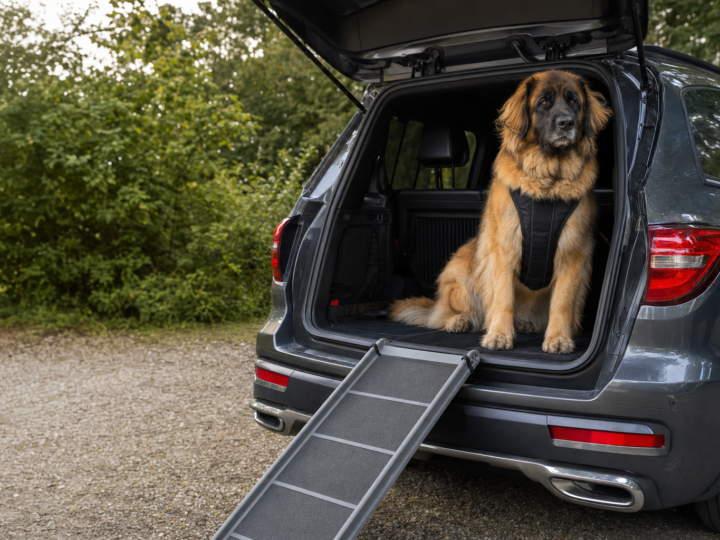
- Manage stairs and car entry deliberately. Lift smaller puppies, use a ramp as they grow, and avoid daily repeated stair climbing.
- Give this breed a patrol route rather than a workout. A secure yard to survey satisfies a Pyr more than a jog will.
- Let your puppy rest fully between bursts of activity, and expect plenty of napping. Rest is when growing happens.
Protecting a giant frame
A Great Pyrenees carries more weight than almost any dog in the neighbourhood, and every pound of it travels through the joints with each step and each rise from the floor. Supporting healthy joint development while your Pyr is still building that frame is a simple habit that pays off across a long guardian life.
Alongside lean feeding and sensible exercise, many big dog parents add a daily joint support chew made for large and giant breeds. MoveGuard Growth is built for exactly this stage. It combines nine actives, including New Zealand Green Lipped Mussel, glucosamine, chondroitin, MSM, krill oil and hyaluronic acid, to support the developing joints of young large and giant breed dogs across the roughly 8 to 30 month growth window. You dose by expected adult weight, so almost every Great Pyrenees sits at three chews a day. It is made in the USA, ships as 90 chews, and is backed by a 60 day guarantee.
Support A Giant Frame
Give your growing Pyrenees daily joint support built for large and giant breeds. Explore MoveGuard Growth.
Signs your Great Pyrenees is growing on track
You do not need a daily scale reading to know things are going well. Look for a bright, settled puppy with ribs you can feel under light pressure, a clear narrowing behind the ribs, smooth easy movement and steady interest in food. Even, unhurried growth is what you want, even if your Pyr looks lanky next to an adult.
If you ever notice limping, stiffness after rest, reluctance to rise, or growth that seems very rapid, a quick chat with your veterinarian brings peace of mind and lets you adjust food or activity early.
A simple growth game plan, stage by stage
You do not need a complicated program to raise a sound Pyrenees. You need the right emphasis at the right time.
8 weeks to 4 months. Foundation stage. Focus on a complete large breed puppy food, three calm meals a day, wide social exposure, and short bursts of free play on soft ground. Start grooming and handling now, because a hundred pound dog that dislikes brushing is a very different problem than a twenty pound one.
4 to 8 months. Growth is quick and your Pyr may look tall, narrow and all legs. Keep feeding lean, keep exercise moderate, and build careful habits around stairs and car entry. This is a natural point to begin a daily joint support routine.
8 to 18 months. Height nears its peak while the chest broadens and the adult coat comes in. Match portions to a lean body condition, since a big frame and a slow metabolism make weight easy to gain.
18 months to 3 years. The lanky adolescent becomes a broad, dignified adult. Growth in height slows while substance and coat continue to arrive. Build activity up as your veterinarian advises, and many parents keep a joint support routine going into adulthood.
Common growth mistakes to avoid
Most growth problems in giant breeds come from a few avoidable habits. Steer clear of these and you are already ahead.
- Overfeeding for size. A heavy young Pyr is not a healthier one. Extra weight loads developing joints. Feed lean and let the size arrive on its own timeline.
- Skipping large breed puppy food. These formulas control calcium and calories for steady growth. Confirm the right food with your veterinarian.
- Too much hard exercise, too young. Long runs, agility work and repeated jumping on hard ground are a lot to ask of open growth plates on a frame this heavy.
- Judging condition by eye. That coat hides everything. Use your hands every two weeks and trust what you feel.
- Waiting for a problem before supporting joints. The growth window is the ideal time to support developing joints, not after signs appear.
The Great Pyrenees temperament and the growth years
A Great Pyrenees is as much a temperament as a size, and the two develop together. This is a calm, watchful, deeply independent breed that was bred to make its own decisions alone on a hillside. In the home that translates into a gentle, patient companion who is also perfectly willing to disagree with you, and who takes longer than most breeds to grow up mentally.
During the growth years, that independence is the thing to work with rather than against. Short, positive training sessions suit a Pyr far better than long drilling. Expect mental maturity to arrive as slowly as the physical kind, and expect the guardian instincts, including night barking and a strong urge to patrol, to switch on somewhere in the second year. A secure fence matters here, because a Pyr that decides to expand its territory will cover ground.
The good news for growing joints is that this breed asks for less physical intensity than most working dogs of its size. Give a Pyr a job it understands, a space to survey and calm, steady routines, and you get a relaxed adolescent who is easy on a developing frame.
How the Great Pyrenees compares with similar breeds
Two comparisons matter here, and neither is really about size. The Anatolian Shepherd does the same livestock guarding job but is taller, leaner and far more athletic, with a short coat and more stamina, where the Pyrenees is heavier, softer indoors and famous for barking at night. The Saint Bernard is heavier again and wants to be with its people rather than patrolling alone. See Great Pyrenees vs Anatolian Shepherd and Saint Bernard vs Great Pyrenees, or our big dog breed comparisons page.
Frequently asked questions
At what age is a Great Pyrenees full grown?
Most Great Pyrenees reach their adult height by around 18 months, then keep filling out through the chest, shoulders and coat until roughly two to three years of age. Height comes first and substance comes later, so a lanky adolescent is completely normal.
How much does a full grown Great Pyrenees weigh?
A fully grown male Great Pyrenees usually weighs 100 to 160 pounds and a female weighs 85 to 115 pounds, though individual dogs vary with genetics, sex, lines and body condition.
How big is a Great Pyrenees at 6 months?
At 6 months a male Great Pyrenees often weighs around 65 to 80 pounds and a female around 55 to 68 pounds. They still have a great deal of chest, muscle and coat to build, so a tall and narrow look at this age is expected.
Are Great Pyrenees prone to joint issues?
As a giant breed carrying significant weight, Great Pyrenees place real demand on their joints, so steady growth, a lean body condition, sensible exercise and daily joint support during the growth window are all sensible ways to support long term comfort. Speak with your veterinarian about your individual dog.
How much exercise does a Great Pyrenees puppy need?
Less than most working breeds of similar size. Regular short walks on soft ground, free play in a secure yard and plenty of rest suit a growing Pyr far better than long runs or repeated jumping while the growth plates are still open.
The bottom line
Your Great Pyrenees will most likely mature into an 85 to 160 pound guardian who reaches adult height by around 18 months and finishes building chest, muscle and coat between two and three years. Feed for lean, steady growth, keep exercise moderate while that giant frame develops, check body condition with your hands rather than your eyes, and support the growth window with the right daily habits.
Want the Simple Roadmap in One Place?
Grab our free Big Dog Growth Blueprint for the growth window checklist, feeding framework and joint safe exercise limits, all written for large and giant breeds.
This article is for general educational purposes only and is not veterinary advice. It is not intended to diagnose, treat, cure or prevent any disease. Always consult your veterinarian about your dog’s individual health, nutrition and supplement needs. These statements have not been evaluated by the Food and Drug Administration.
Support Big Breed Joints from Day One
Large and giant breeds carry more load through every growth stage. MoveGuard Growth supports developing joints in young big dogs (8 to 30 months); MoveGuard Adult keeps grown big dogs moving comfortably.
Leave a Reply