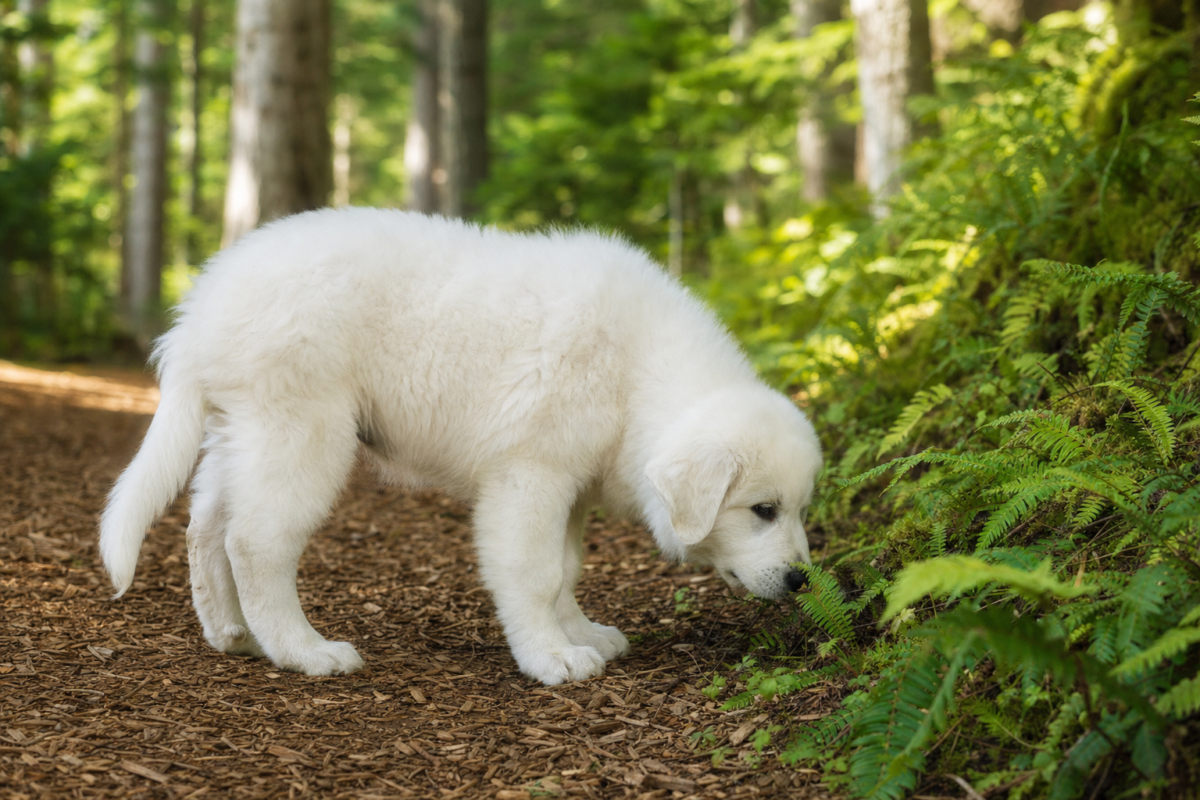
A large breed puppy usually does well on about five minutes of structured walking per month of age, up to twice a day, plus free play on soft ground and short training sessions. So a four month old puppy gets roughly two 20 minute walks. Giant breeds sit a little lower, around four minutes per month. Hold any single walk to about 45 minutes until the growth plates close, somewhere between 12 and 24 months depending on adult size, and build up gradually with your veterinarian’s input.
Planning exercise for a big puppy can feel like guesswork. Too little and you have a bored, bouncy youngster chewing the skirting boards. Too much and you worry about the joints that are still forming. The good news is that a simple, age based plan takes almost all of that worry away. This planner turns your puppy’s age and expected size into a daily outline of walking, play, training and rest, so you can stop second guessing and simply enjoy raising a calm, sound, happy big dog.
How much exercise time does my large breed puppy need?
Most large breed puppies need about five minutes of structured exercise, such as a calm walk on lead, for every month of age, given up to twice a day. A three month old gets two walks of around 15 minutes, a six month old gets two walks of around 30 minutes. On top of that, puppies benefit from free play they choose for themselves on soft ground, two or three short training sessions, and plenty of sleep.
Giant breeds such as Great Danes, Mastiffs and Newfoundlands grow for longer and carry more weight on a developing frame, so a slightly gentler pace of about four minutes per month of age is a sensible starting point. Treat every number here as a ceiling to build toward, not a target to hit on day one. Your puppy’s energy, body condition and your veterinarian’s advice always come first.
Why big puppies need their own exercise plan
A small breed puppy finishes growing in under a year. A large breed puppy keeps building bone, cartilage and connective tissue for 18 months or more, and a giant breed can still be developing at two and a half. Through much of that time the growth plates, the soft zones near the ends of the long bones, are still open and more delicate than mature bone.
That does not mean a big puppy should be wrapped in cotton wool. Regular, varied movement builds muscle, coordination and confidence, and muscle is what holds joints steady. What changes is the type of exercise. Gentle, self paced activity spread through the day suits a growing frame far better than one long, hard outing. A planner simply helps you get that balance right without counting every step.
Use the exercise time planner
Choose your puppy’s age, expected size class and energy level, and the planner builds a daily outline. If you are unsure of the size class, run your puppy through our growth calculator first to estimate their expected adult weight.
Large Breed Puppy Exercise Time Planner
Pick an age, a size class and an energy level to see a suggested daily exercise outline.
This planner is general guidance for healthy puppies, not veterinary advice. Always confirm an exercise plan with your veterinarian, especially for giant breeds or any puppy showing stiffness or limping.
Exercise time by age: the planner table
The planner runs on the reference table below, so you can work it out by hand too. Walk times are per session, given up to twice a day, and the training column is the daily total split into short bursts.
| Age | Large breed walk | Giant breed walk | Training and brain games |
|---|---|---|---|
| 2 months | 10 minutes | 8 minutes | 3 sessions of 5 minutes |
| 3 months | 15 minutes | 12 minutes | 3 sessions of 5 minutes |
| 4 months | 20 minutes | 16 minutes | 3 sessions of 10 minutes |
| 5 months | 25 minutes | 20 minutes | 3 sessions of 10 minutes |
| 6 months | 30 minutes | 24 minutes | 3 sessions of 10 minutes |
| 8 months | 40 minutes | 32 minutes | 3 sessions of 10 minutes |
| 10 months | 45 minutes | 40 minutes | 3 sessions of 10 minutes |
| 12 to 18 months | 45 minutes, then build with your vet | 40 minutes | 3 sessions of 10 minutes |
| 18 months to 2 years plus | Adult routine as advised | Build gradually once cleared | Daily, ongoing |
The five minute guide is a widely used rule of thumb, not a strict scientific limit, and it applies to structured, owner led exercise. A puppy pottering around the garden at their own pace is not counted against it.
When can a large breed puppy exercise like an adult?
Most large breeds finish the bulk of their growth between 14 and 20 months, and giant breeds keep developing until roughly 24 to 30 months. Growth plates close gradually across that window. Until your veterinarian confirms your puppy has finished growing, keep long runs, extended hikes and repeated jumping on hold, even if your puppy seems to have endless energy.
As a rough guide, dogs with an expected adult weight of 50 to 80 pounds usually reach adult exercise levels between 16 and 22 months, while dogs heading past 100 pounds often need until 24 months or later. If you would like a dedicated look at jogging, our guide on when a big puppy can start running covers it step by step.
Why the growth window matters for exercise
The months between 8 and 30 are when a large or giant breed puppy builds the frame it will carry for life. Muscle, tendon and cartilage are all adapting to the load you give them. Gentle, consistent movement helps that adaptation along. Sudden jumps in distance, intensity or impact ask a developing frame to do more than it is ready for, which is exactly why a gradual, age based plan is so useful.
Too Much Too Soon
A big weekend hike after a quiet week is a sudden spike. Increase walk length gradually, a few minutes at a time.
Hard Surfaces
Concrete and tarmac add impact with every stride. Favor grass, woodland trails and other soft, varied ground.
Repeated Impact
Endless ball chasing, stair laps and jumping in and out of the car repeat the same jolt again and again.
Heat and Overtiredness
Big puppies overheat quickly and rarely stop on their own. Walk in the cool of the day and end before they flag.
Building a day: how to split the minutes
A planner is only useful if it fits real life. Here is how a typical day might look for a five month old large breed puppy on the 25 minute guide:
- Morning. A 25 minute calm walk on grass or a quiet trail, letting your puppy sniff along the way.
- Late morning. A five to ten minute training session, then a long nap.
- Midday. A scatter feed or puzzle toy for lunch, plus a short garden potter.
- Afternoon. Free play on the lawn, stopping when your puppy lies down, followed by another nap.
- Evening. A second 25 minute walk, then a short training game before bed.
Notice that the plan is spread out. Two shorter walks with rest in between suit a growing body much better than a single long outing, and the training and brain games keep a clever puppy satisfied without adding impact.
How to check body condition in ten seconds
Exercise and weight work together. A lean puppy moves more easily and puts less load through growing joints, so check body condition alongside the exercise plan.
- Ribs. Run your hands along the sides. You should feel the ribs easily under a thin layer.
- Waist. Look down from above. You want a clear waist behind the ribs.
- Tuck. From the side, the belly should rise toward the back legs rather than hanging level.
If your puppy is getting heavy, the answer is usually a gentle adjustment to food, not more exercise. Ask your veterinarian to confirm portions at each checkup.
Growth safe activities that count toward the minutes
Exercise is more than walking. These activities all help burn energy and build a strong, coordinated body while keeping impact low:
- Slow sniff walks on soft, varied ground, which tire the brain as much as the legs.
- Short, positive training sessions for sit, down, settle and loose lead walking.
- Scatter feeding, snuffle mats and puzzle feeders at mealtimes.
- Gentle balance work, such as walking over a low, flat ladder laid on grass.
- Calm play with a well matched, gentle dog of a similar size.
- Shallow, calm water paddling where it is safe, once your veterinarian is happy.
Keep repeated fetch, tug with a lot of twisting, stair laps and agility jumps for later, once growth has finished.
Supporting growing joints alongside exercise
A sensible exercise plan is one of the kindest things you can do for a big puppy’s joints, and it works best as part of a wider routine of lean feeding, good rest and steady, even growth.
Alongside those habits, many big dog parents add a daily joint support chew made for large and giant breeds. MoveGuard Growth is built for exactly this stage. It combines nine actives, including New Zealand Green Lipped Mussel, glucosamine, chondroitin, MSM and hyaluronic acid, to support the developing joints of young large breed dogs across the roughly 8 to 30 month growth window. You dose by expected adult weight, so puppies heading for 50 to 80 pounds take two chews a day and those heading for 80 pounds and beyond take three. It ships as 90 chews, is made in the USA in an NSF facility, and is backed by a 60 day guarantee.
Support Every Step of the Growth Years
Pair your puppy’s exercise plan with daily joint support built for large and giant breeds. Explore MoveGuard Growth.
Signs your puppy is getting the right amount of exercise
The best measure of any plan is your puppy. A puppy on the right amount of exercise comes home pleasantly tired, settles to sleep within a short while, wakes up bright and keen, and moves smoothly the next morning. Good manners at home are another clue, because a puppy whose needs are met is calmer and easier to live with.
Ease back if you notice lagging behind on walks, lying down mid walk, stiffness after rest, a change in gait, or unusual crankiness. If stiffness or limping lasts more than a day or keeps coming back, check in with your veterinarian rather than waiting.
A simple exercise game plan, stage by stage
You do not need a complicated program. You need the right emphasis at the right age.
8 weeks to 4 months. Exploration stage. Short garden potters, gentle socialisation trips, and walks of 10 to 20 minutes on soft ground. Begin name, sit and recall games in short, happy bursts. Sleep is part of the plan, so protect it.
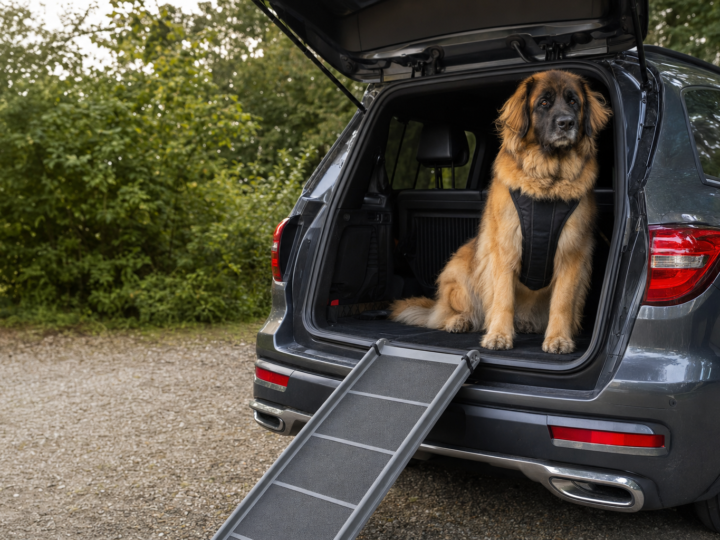
4 to 8 months. Growth is fast and confidence grows with it. Build walks toward the planner times, add sniff walks and puzzle feeding, and practise calm car entry with a ramp or a lift. This is a natural point to start a daily joint support routine.
8 to 18 months. The adolescent stage. Energy peaks while the frame is still forming, so lean on training and brain games to meet that energy rather than longer, harder walks. Keep the 45 minute cap for large breeds and 40 for giants.
18 months to 3 years. With your veterinarian’s go ahead, build gradually toward an adult routine. Add longer walks, gentle hiking and, for suitable breeds, short jogs. Many dog parents continue joint support into adulthood.
Common exercise mistakes to avoid
- The weekend warrior pattern. Quiet weekdays followed by a huge Saturday outing is harder on a puppy than the same total spread evenly.
- Exercising to tire out a mouthy puppy. More walking often builds a fitter, busier puppy. Training and calm settling work solve mouthiness better.
- Repetitive ball throwing. Sprinting, braking and twisting for the same ball fifty times is a lot of repeated impact.
- Ignoring the surface. Long walks on pavement add up. Choose grass and trails where you can.
- Following an older dog’s pace. A young puppy will try to keep up with an adult companion long after they should stop.
Matching the plan to your puppy’s temperament
Breed and personality shape how a puppy uses the planner. Working and sporting breeds such as Labradors, German Shepherds, Dobermans and Boxers often have energy to spare, and they thrive when the extra is channelled into training, scent work and problem solving rather than extra miles. Giant guardian and companion breeds such as Mastiffs, Newfoundlands, Great Pyrenees and Saint Bernards tend to be more laid back and may happily stop well short of the planner times.
Both are normal. The planner gives you a sensible ceiling. Your puppy’s own signals tell you where in that range they belong on any given day. A busy puppy needs more mental work, a mellow one needs gentle encouragement and never a forced march. Watch, adjust and keep it fun, and you will build a big dog who loves moving with you for years.
Frequently asked questions
How long should I walk a 4 month old large breed puppy?
Using the five minute guide, a 4 month old large breed puppy can enjoy about 20 minutes of calm walking, up to twice a day, plus free play and short training sessions. A giant breed puppy of the same age sits a little lower, at around 16 minutes.
Does free play in the garden count toward exercise time?
Not really. The five minute guide applies to structured, owner led exercise such as walks. Gentle, self paced play on soft ground, where your puppy can stop whenever they like, is a healthy extra and does not need to be counted.
Can too much exercise harm a large breed puppy?
Repeated hard impact and sudden increases in distance ask a lot of a frame that is still developing. Steady, moderate, age appropriate exercise on soft ground is a sensible way to support healthy joint development. Speak with your veterinarian about your individual puppy.
When can my large breed puppy go jogging with me?
Most large breeds should wait until growth is complete, usually around 14 to 20 months, and giant breeds until roughly 24 months or later. Ask your veterinarian to confirm your puppy is ready before you start, then build up slowly.
How much should a large breed puppy sleep?
Growing big puppies often sleep 16 to 20 hours a day. Plenty of rest between short bursts of activity is part of a healthy exercise plan, so protect nap time and give your puppy a quiet place to settle.
The bottom line
Most large breed puppies do well on about five minutes of calm, structured walking per month of age, up to twice a day, while giant breeds sit closer to four. Hold walks to around 45 minutes until the growth plates close, keep impact low, spread activity through the day, and fill the rest with free play, training and brain games. Watch your puppy, adjust with your veterinarian, and you will raise a strong, sound big dog who loves moving with you.
Want the simple roadmap in one place? Grab our free Big Dog Growth Guide for the growth window checklist, feeding framework and joint safe exercise limits, all written for large and giant breeds.
This article is for general educational purposes only and is not veterinary advice. It is not intended to diagnose, treat, cure or prevent any disease. Always consult your veterinarian about your dog’s individual health, nutrition and supplement needs. These statements have not been evaluated by the Food and Drug Administration.
Support Big Breed Joints from Day One
Large and giant breeds carry more load through every growth stage. MoveGuard Growth supports developing joints in young big dogs (8 to 30 months); MoveGuard Adult keeps grown big dogs moving comfortably.
Leave a Reply