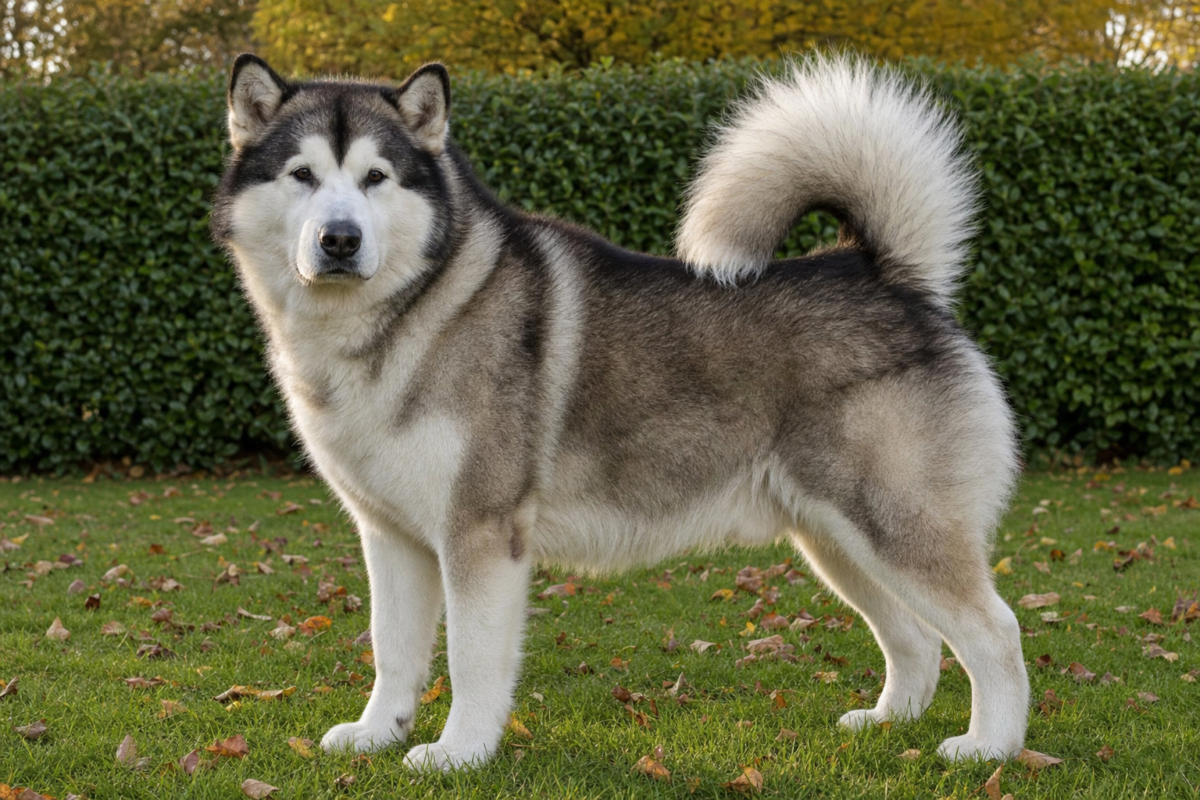
A large breed dog of 51 to 100 pounds is roughly 15 human years old at 12 months, about 24 at two years, and then adds around 5 human years for every further calendar year, reaching about 60 at ten years old. Giant breeds over 100 pounds age faster still, landing near 79 human years at ten. The old rule of multiplying by seven is wrong in both directions: it badly understates the first two years and understates the later ones for big dogs. Size is the single biggest factor, which is why a seven year old Great Dane is closer to a retirement age human than a seven year old spaniel.
Every big dog parent does this calculation at some point, usually on a birthday, and usually while watching a dog who does not look anything like the number on the chart. It is a question worth asking properly, because getting the answer right changes what you do next. A dog you think of as middle aged and a dog you understand to be entering its senior years get different food portions, different exercise plans and different veterinary conversations. This guide gives you the conversion table for both large and giant breeds, explains why size drives it, and sets out what actually changes at each stage.
How old is my big dog in human years?
To convert a big dog’s age into human years, count the first year as about 15 human years, the second year as about 9 more, and every year after that as roughly 5 human years for a large breed or 7 for a giant breed. So a five year old large breed dog is around 36 in human terms, and a five year old giant breed is around 45. A ten year old large breed sits near 60, while a ten year old giant breed is closer to 79.
The reason the first two years count for so much is that a dog does all its growing, all its sexual maturing and most of its skeletal development inside them. A one year old dog is not a one year old child. It is much closer to a teenager who has finished growing in height but has not finished filling out, which is exactly what a large breed dog looks like at twelve months.
Why big dogs age faster than small dogs
Across almost every species, larger animals live longer than smaller ones. Dogs are the striking exception. Within the single species, size runs the other way: a small terrier may see sixteen years while a giant breed is doing well to reach ten. Several things appear to be at work at once.
Growth rate. A giant breed puppy can multiply its birth weight a hundred times in a year. That pace of cell division is thought to come at a cost, and it is the leading explanation for why big dogs appear to age on a faster clock from the very beginning.
Mechanical load. More body weight travels through the same basic joint architecture with every step of a long life, which is why comfortable movement becomes a central topic for big dogs earlier than it does for small ones.
Cardiac and metabolic demand. A larger body asks more of the heart and of every system supporting it, year after year.
None of this is a reason for gloom, and it is worth saying plainly. It is a reason to start good habits earlier than a small dog parent would. We look at the biology in more depth in our guide to why giant breeds live shorter lives.
Big dog age chart in human years
Use the column that matches your dog’s adult weight. These figures follow the widely published veterinary conversion tables and are approximations rather than precise measurements, so treat a year either side as normal.
| Dog age | Large breed, 51 to 100 lb | Giant breed, over 100 lb |
|---|---|---|
| 1 year | About 15 | About 15 |
| 2 years | About 24 | About 22 |
| 3 years | About 28 | About 31 |
| 4 years | About 32 | About 38 |
| 5 years | About 36 | About 45 |
| 6 years | About 42 | About 49 |
| 7 years | About 47 | About 56 |
| 8 years | About 51 | About 64 |
| 9 years | About 56 | About 71 |
| 10 years | About 60 | About 79 |
| 11 years | About 65 | About 86 |
| 12 years | About 69 | About 93 |
| 13 years | About 74 | About 100 |
| 14 years | About 78 | About 107 |
Calculate Your Dog’s Age
The American Veterinary Medical Association notes that larger breeds are generally considered senior earlier than small breeds, given their shorter typical lifespans. Read more from the AVMA’s guidance on caring for senior pets.
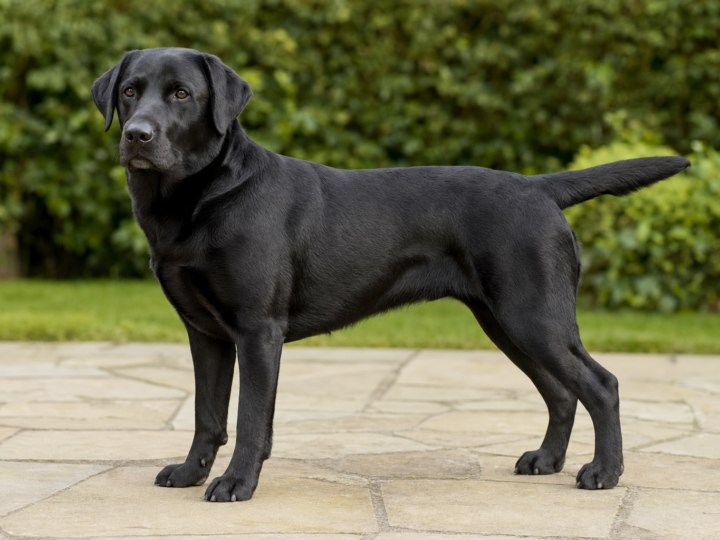
Notice where the two columns separate. They are the same at one year and almost the same at two, then they fan apart quickly. By eight years old there are thirteen human years between a Labrador and a Mastiff of the same birthday, and that gap is the whole reason giant breed care looks different.
When does a big dog become a senior?
A large breed dog is generally considered senior at around seven years, and a giant breed at five to six. That is noticeably earlier than the eight to ten years often quoted for small dogs, and it is a veterinary classification rather than a judgement about how your dog is doing. It simply changes the questions worth asking at a checkup. Our guide on when a big dog is considered a senior goes through what that reclassification means in practice.
The newer science, and why the chart still holds
Researchers have moved past simple multiplication. A widely cited 2020 study looked at chemical marks on dog DNA, a process called methylation, and compared them with the equivalent human pattern. The resulting formula was 16 multiplied by the natural logarithm of the dog age, plus 31, which produces a steep curve early and a gentler one later.
That work was carried out on Labrador Retrievers, so it does not by itself account for the difference between a Labrador and a Newfoundland. For practical purposes the size based table above remains the more useful tool for big dog parents, because it captures the one variable that matters most to us. The value of the newer research is the shape it confirms: dogs age very fast at the start and more steadily later, which is the opposite of a flat multiplier.
Carrying Extra Weight
The most controllable factor in how well a big dog ages. Every spare pound is loaded onto joints across a whole lifetime.
Growing Too Fast
How a big dog is raised during the growth window shapes the frame it lives in for the following decade.
Sudden Bursts Of Activity
A sedentary week followed by a hard weekend asks the most of a mature frame. Steady beats occasional.
Waiting For Visible Signs
Big dogs are stoic and mask discomfort well. Habits started early do more than habits started late.
What changes at each stage of a big dog life
Knowing the human number is only useful if it tells you what to do differently. Here is what each stage actually asks of you.
- Puppy and adolescent, birth to 2 years. Everything is construction. Steady growth, a lean body, controlled exercise and large breed puppy food.
- Young adult, 2 to 4 years. Peak physical condition. This is the window to build fitness and establish a daily routine that can last.
- Mature adult, 4 to 6 years. Nothing looks different yet, but metabolism is slowing. Portions usually need to come down before the waistline says so.
- Senior, 6 to 9 years. Movement becomes the headline topic. Shorter and more frequent activity, good footing indoors, twice yearly veterinary checks.
- Geriatric, 9 years plus. Comfort and access. Beds, ramps, traction and gentle, predictable daily movement matter more than anything ambitious.
How to check where your dog really is in ten seconds
The calendar gives you a number. Your hands give you the truth, and the two do not always agree. Four quick checks tell you more than a birthday does.
- Body condition. Run your hands over the ribs. You should feel them easily under a thin layer. Check the waist from above and the tuck from the side. Confirm portions against a feeding guide for adult large dogs if the answer surprises you.
- The rise. Watch your dog get up from lying flat. A smooth, single movement is what you want. A pause, a shuffle or a push off the front end is worth noting.
- The first thirty seconds of a walk. Stiffness that clears after a minute or two is one of the earliest and most commonly missed signals.
- Stairs and the car. Hesitation at a step your dog used to take without thinking is information, not stubbornness.
Exercise as the years add up
Activity should change shape as a big dog ages rather than simply shrinking. The aim is to keep muscle on the frame, because muscle is what supports the joints underneath, while reducing impact.
- Favour more walks of moderate length over one long outing a day.
- Choose soft, even ground where you can. Grass and packed earth are kinder than pavement.
- Keep jumping in and out of cars to a minimum and use a ramp once your dog is mature.
- Add swimming or level walking if your veterinarian agrees it suits your dog, since both build condition without pounding.
- Warm up. Two or three minutes of slow walking before anything brisk matters more at eight than it did at two.
Daily habits that support comfortable movement
A big dog does not get to choose how fast its clock runs, but a great deal of how comfortably those years pass is down to ordinary daily habits. A lean body condition, steady movement, good traction indoors and consistent joint support are the four levers most within your control, and all four work better when started before you see a reason for them.
For an adult dog, MoveGuard Adult is built for exactly that daily role. It is a six ingredient joint formula for adult medium and large breed dogs, built around clinically studied eggshell membrane and New Zealand Green Lipped Mussel alongside glucosamine, chondroitin, MSM and hyaluronic acid, to support comfortable movement and help maintain healthy joints and cartilage. It ships as 60 soft chews in a chicken liver flavour, is made in the USA in an NSF registered facility, and carries a 60 day guarantee. If your dog is still inside its growth window, MoveGuard Growth is the version written for a developing frame.
Support The Years Ahead
Daily joint support built for adult large and giant breeds. Explore MoveGuard Adult.
Signs your big dog is ageing well
A big dog in good shape for its age rises without ceremony, keeps a waist you can see from above, shows interest in its surroundings on a walk rather than only in getting home, holds weight steadily rather than drifting up or down, and sleeps well without restlessness. Grey around the muzzle is cosmetic and tells you nothing about the state of the frame underneath.
Things worth raising with your veterinarian rather than watching are a change in how your dog rises or climbs, weight moving without a change in food, drinking noticeably more, new reluctance to be touched in a particular place, or a dog who stops partway through a familiar walk. Caught early, most of these are easier conversations than they are later. Our guide to keeping a senior big dog moving comfortably covers the practical side.
A simple game plan by life stage
Year one and two. Feed for steady growth on a complete large breed puppy food, keep exercise moderate while the frame develops, and establish a daily routine now that you can keep for a decade.
Two to four years. Build fitness properly. Annual veterinary visits, a consistent weight you can recite from memory, and a body condition check every month.
Four to six years. Adjust portions down before the waistline changes rather than after. Keep activity regular rather than occasional, and start paying attention to the rise from lying flat.
Six to nine years. Move to twice yearly veterinary checks. Shorten and multiply the walks, put runners on slick floors, add a car ramp, and take any change in movement seriously and early.
Nine years and beyond. Comfort first. A supportive bed out of draughts, water within easy reach, gentle daily movement even on quiet days, and a close eye on weight in both directions.
Common mistakes when thinking about a big dog age
- Using the multiply by seven rule. It gets the first two years badly wrong and flattens the difference between a Labrador and a Mastiff to nothing.
- Treating a large breed and a giant breed as the same. Thirteen human years separate them by age eight. They are different plans.
- Reading the number instead of the dog. A lean, fit nine year old Rottweiler and a heavy, inactive six year old are not in the same place, whatever the chart says.
- Assuming slowing down is simply age. It often has a specific, addressable cause, and age is the least useful explanation available.
- Cutting exercise instead of reshaping it. Losing muscle takes support away from the joints it protects. Change the shape, keep the movement.
- Starting joint habits at the first limp. The growth window and the young adult years are when those habits do the most work.
Why the number matters less than the plan
There is a temptation, once you see that a seven year old Great Dane is somewhere in its fifties in human terms, to feel that the clock is against you. It is worth resisting. The chart is a planning tool, not a verdict. Two dogs of the same breed and the same birthday can sit years apart in how comfortably they move, and the distance between them is made up almost entirely of things a Dog Parent controls: weight, daily movement, footing at home, and how early the supportive habits started.
Big dogs also age with a particular grace that anyone who has lived with one will recognise. The busy adolescent becomes a steady, deeply companionable adult, and the senior years of a large breed are often the warmest part of the whole relationship. Knowing roughly where your dog sits in human terms helps you meet those years with the right routine rather than with a surprise. That is the entire point of doing the sum, and it is worth doing on every birthday.
Frequently asked questions
How old is a 7 year old large breed dog in human years?
A seven year old large breed dog of 51 to 100 pounds is roughly 47 in human years, while a giant breed over 100 pounds is closer to 56. Seven years is also the point at which most large breeds are formally classed as senior, and giant breeds reach that classification a year or two earlier.
Is one dog year really seven human years?
No. The multiply by seven rule is a rough average from decades ago and it is wrong at both ends. The first year of a dog life is worth about 15 human years and the second about 9 more, after which each further year adds roughly 5 human years for a large breed and 7 for a giant breed.
Do giant breeds age faster than large breeds?
Yes. The two are close at one and two years old, then the gap widens quickly. By eight years old a giant breed is around 64 in human terms compared with about 51 for a large breed, which is why giant breeds are considered senior at five to six years rather than seven.
At what age is a big dog considered senior?
Large breeds are generally considered senior from about seven years and giant breeds from five to six. It is a veterinary classification that changes the screening and the questions worth asking at a checkup, not a statement about how well any individual dog is doing.
What is the most accurate way to tell how my dog is ageing?
Combine the size based chart with a hands on check. Look at body condition, how smoothly your dog rises from lying flat, how the first minute of a walk looks, and whether familiar steps have become a hesitation. Those four observations tell you more about your individual dog than any birthday does.
The bottom line
Count your big dog’s first year as about 15 human years, the second as about 9 more, and each year after that as roughly 5 for a large breed or 7 for a giant breed. That puts a five year old large breed near 36 and a ten year old giant breed near 79, and it explains why big dogs are classed as senior years earlier than small ones. Use the number to set the plan, then check the dog in front of you: body condition, the rise from the floor, the first minute of a walk and the steps that used to be easy. Those four things, plus habits started early, do more for the years ahead than any birthday maths.
Want the simple roadmap in one place? Grab our free Big Dog Mobility Guide for the life stage checklist, feeding framework and joint safe exercise limits, all written for large and giant breeds.
This article is for general educational purposes only and is not veterinary advice. It is not intended to diagnose, treat, cure or prevent any disease. Always consult your veterinarian about your dog’s individual health, nutrition and supplement needs. These statements have not been evaluated by the Food and Drug Administration.
Support Big Breed Joints from Day One
Large and giant breeds carry more load through every growth stage. MoveGuard Growth supports developing joints in young big dogs (8 to 30 months); MoveGuard Adult keeps grown big dogs moving comfortably.
Leave a Reply