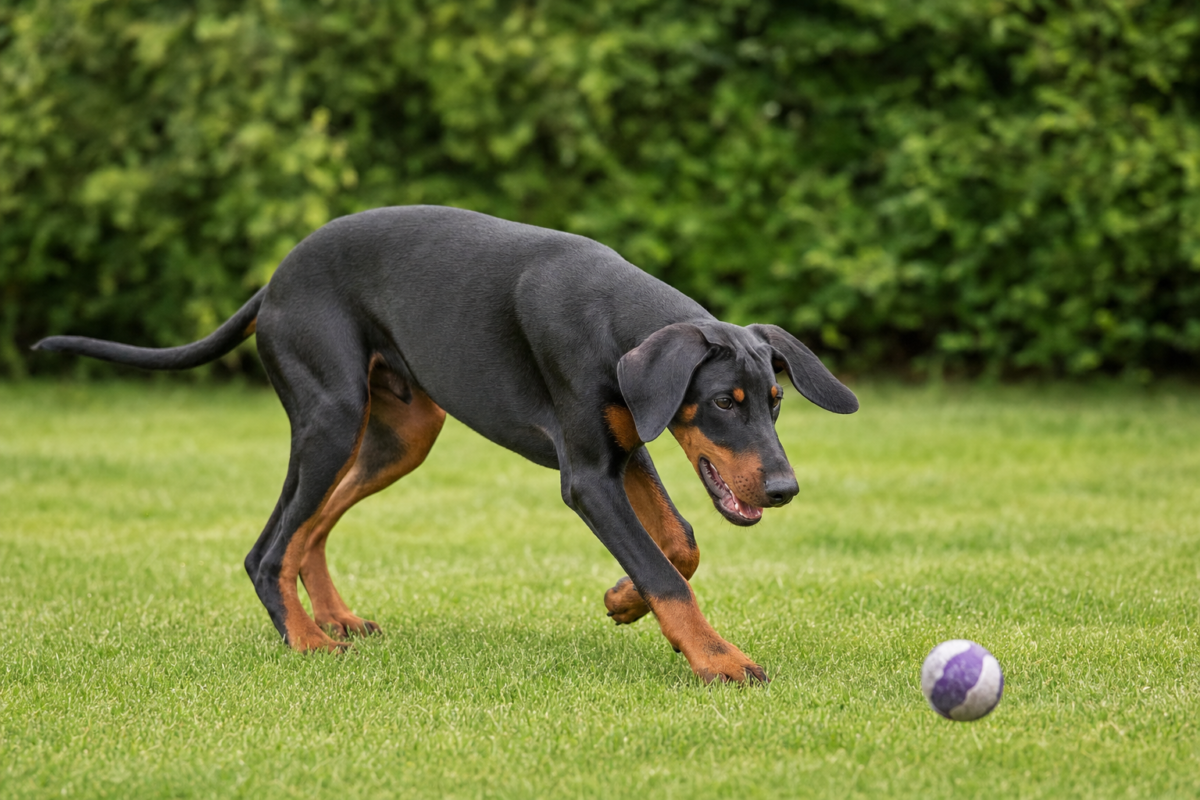
You protect a large breed puppy’s joints during play by keeping impact low, sessions short and surfaces soft. Free play on grass, gentle chase, tug at a low angle and puzzle games all suit a growing frame. Repeated jumping, hard sprinting on pavement, running beside a bicycle and long stair sessions ask a great deal of growth plates that stay open through much of the first year and, in giant breeds, well beyond it. Aim for several short bursts of play a day with real rest between them, keep your puppy lean, and let high impact activity wait until your veterinarian confirms the growth plates have closed.
Play is not a problem to be managed. It is how a big dog puppy learns balance, builds muscle and bonds with you. The goal is never to slow your puppy down, it is to shape play so the joy lands on a frame that can carry it. Large and giant breeds grow for far longer than small dogs, and across that window a few simple choices about surface, impact and session length quietly protect the joints your dog will rely on for the next decade.
How can I protect my large breed puppy joints during play?
Protect them by controlling three things: the surface underfoot, the amount of impact, and how long each session runs. Grass, sand, forest floor and carpet absorb force that concrete and tile send straight back up the leg. Impact means landing, twisting and stopping hard, so a puppy chasing a rolled ball on the flat is doing something very different from a puppy leaping for a thrown frisbee. Length matters because a tired puppy loses coordination, and a puppy with no coordination lands badly. Several short sessions beat one long one every time.
Everything else follows from those three levers. Keep your puppy lean so the frame is not carrying extra load, make rest part of the plan, and give the mind a job, because a puppy that is mentally satisfied does not need to run itself into the ground to settle.
What is actually happening inside a growing joint
At each end of a young dog’s long bones sits a soft band of cartilage called a growth plate. That band is where new bone is laid down and where all the lengthening happens, and because it is cartilage rather than finished bone it stays softer than the material around it until growth finishes and the plate closes over.
While those plates are open the whole joint is a work in progress. Cartilage surfaces are still thickening, ligaments are still tightening around a frame that keeps changing shape, and the muscles that stabilise the shoulder, elbow, hip and stifle are still catching up to how long the legs have become. That is why an adolescent big dog looks gangly and moves loosely. None of it means a puppy is fragile. It means force simply lands differently than it will in an adult: a grown dog absorbs a hard landing through settled bone and developed muscle, while a seven month old absorbs the same landing through open plates and a body still assembling itself.
Play by age, and what suits each stage
Use this as a guide rather than a rulebook. Breeds finish at different times, and a Labrador at fourteen months sits at a very different point than a Great Dane.
| Age | Play that suits the stage | Keep moderate for now |
|---|---|---|
| 8 weeks to 4 months | Short free play on grass, gentle exploring, soft toys, name and recall games | Stairs, slippery floors, long walks, jumping down from furniture |
| 4 to 6 months | Free play with a calm adult dog, sniffing walks, low tug, puzzle feeders | Fetch with hard stops, repeated jumping, running on pavement |
| 6 to 9 months | Longer sniffing walks, swimming where safe, gentle hill walking, training games | Frisbee, agility jumps, bike running, rough play with much bigger dogs |
| 9 to 14 months | Steady walks, controlled play, scent work, balance games | Sustained jogging on hard ground, high jumping, fetch marathons |
| 14 to 20 months | Building distance gradually, varied terrain, structured training | Competition level impact until a veterinarian confirms plates have closed |
| 20 to 30 months | Full adult activity for most breeds, built up over weeks | Sudden jumps in workload after a quiet period |
The American Kennel Club’s Chief Veterinary Officer, Dr. Jerry Klein, DVM, has written extensively on the slower growth and development timeline of large and giant breeds. Read more from the AKC’s guidance on caring for large-breed dogs.
When do growing joints finish developing?
Most large breeds close their growth plates between 14 and 20 months. Giant breeds run later, often 20 to 24 months, and the very biggest can still be finishing at around 30 months. A rough guide by expected adult weight: 50 to 65 pounds finishes near 16 to 18 months, 65 to 80 pounds near 18 to 22 months, 80 to 100 pounds near 20 to 24 months, and above 130 pounds can run to 30 months.
Plate closure is the milestone that matters for impact, because once the plates convert to solid bone the frame handles force the way an adult frame does. Muscle and chest keep filling in for another year after that, which is why a two year old giant breed can look narrow and still be normal.
Why the growth window is the moment to build habits
This long stretch is the window in which habits get set. The way you feed, the surfaces you choose, the way you handle stairs and car doors, and the daily joint support routine you start now are all far easier to establish in a young dog than to introduce in a stiff older one.
Hard Landings
Jumping down from a couch, tailgate or bed sends force through open growth plates. A ramp or a lift solves it in seconds.
Slippery Floors
Tile and laminate let big paws skate out sideways. Runners along the routes your puppy sprints make a real difference.
Repetitive Impact
Fetch with hard stops and turns repeats the same force hundreds of times. Roll the ball instead of throwing it high.
Playing Past Tired
Coordination fades before enthusiasm does. Most bad landings happen in the last five minutes of a session.
How feeding supports joints during the play years
Nothing you do at the park matters as much as what goes in the bowl. Every extra pound is carried by the same developing joints you are trying to protect, and steady growth is kinder to a young frame than fast growth. A few habits carry most of the benefit:
- Feed a complete food formulated for large breed puppies, which controls calories, calcium and phosphorus for a slower, evener growth curve.
- Feed to a lean body condition rather than to the number on the bag. The bag does not know your dog.
- Confirm portions with your veterinarian at every checkup, because the right amount changes month to month during the first year.
How to check body condition in ten seconds
Body condition tells you whether that number is right for your dog.
- Ribs. Run a flat hand along the side. You should feel each rib under a thin covering without pressing. If you have to dig, trim the portions.
- Waist. Stand above and look down. There should be a visible narrowing behind the ribcage.
- Tuck. From the side, the belly line should rise toward the back legs rather than running flat.
Check every couple of weeks through the growth years. Small adjustments early beat large corrections late.
Growth safe play, session by session
A good play session for a growing big dog looks calmer than most people expect, and satisfies the puppy more than a frantic one does. Build sessions around these ideas:
- Choose grass, sand, packed dirt or forest floor over concrete, asphalt and tile whenever you have the option.
- Roll or bowl the ball along the ground instead of throwing it high, so your puppy runs rather than leaps and lands.
- Keep tug low and horizontal, with no lifting and no shaking your puppy off the ground.
- Cap sessions at ten to fifteen minutes for a young puppy and stop while there is still energy in the tank.
Our guide to how much exercise a large breed puppy needs breaks the daily amounts down by age.
Daily habits that support joint comfort at every age
Alongside lean feeding and thoughtful play, many big dog parents add a daily joint support chew during the growth years and keep it going into adulthood. It sits beside the other habits on this page rather than replacing any of them.
MoveGuard Growth is formulated for this exact stage of life. It brings together nine actives, including 250mg of New Zealand Green Lipped Mussel, 400mg of glucosamine HCl, 300mg of chondroitin, 250mg of MSM and 15mg of hyaluronic acid, to support healthy joint development and help maintain the cartilage and connective tissue of large and giant breed dogs across the roughly 8 to 30 month growth window. You dose by expected adult weight, so a dog headed for 50 to 80 pounds takes two chews a day and one headed for 80 to 100 pounds or more takes three. It arrives as 90 chicken liver flavour chews, is made in the USA in an NSF registered, GMP facility, and carries a 60 day guarantee. It contains shellfish, fish and soy.
Support The Frame While It Grows
Give your growing big dog daily joint support built for large and giant breeds. Explore MoveGuard Growth.
Signs your puppy is handling play well
Watch how your puppy moves the morning after a bigger day. A dog who bounces up, stretches and trots off level and loose has handled it. A dog who takes a few stiff steps out of the bed, sits down early on the walk, or seems reluctant to use the stairs is telling you something about yesterday.
Other good signs are an even, flowing gait, a willingness to be handled around the hips and shoulders, and settled sleep after activity. If you notice limping, stiffness that lasts more than a day, or a sudden drop in enthusiasm for walks, book a veterinary visit rather than waiting to see.
A simple play plan, stage by stage
You do not need a program. You need the right emphasis at the right age.
8 weeks to 4 months. Everything is short and soft. Free play in the garden, gentle handling, name games and calm introductions to the world. Put runners down on slippery floors and ramp your puppy in and out of the car.
4 to 8 months. Energy climbs and coordination lags behind it. Keep sessions short and frequent, lean on sniffing walks, and start training in earnest, because a five minute game tires a big puppy more than people expect. This is the natural point to begin a daily joint routine.
8 to 18 months. Your adolescent looks adult and is not one, so resist the urge to match activity to appearance. Build distance slowly, keep impact moderate, and add variety through terrain and scent rather than speed.
18 months to 3 years. Growth plates close and muscle keeps arriving. Introduce running, hiking or sport in gradual steps with your veterinarian’s blessing, giving the body weeks rather than days to adapt.
Common play mistakes to avoid
Most joint trouble in young big dogs traces back to a handful of habits that are easy to change.
- Treating a big adolescent like an adult. A ten month old Great Dane is the size of an adult dog and nowhere near the maturity of one.
- Long fetch sessions on hard ground. The stopping and turning does more than the running, and pavement gives nothing back.
- Letting the puppy jump out of the car. It is the most repeated hard landing in most big dogs’ lives, and a ramp removes it entirely.
- Waiting for a limp before supporting joints. The growth window is the moment for daily support, not the aftermath.
Different big dogs, different play styles
Breed shapes how a puppy wants to play. The retrieving breeds will fetch until they fall over, so with a Labrador or Golden Retriever the job is usually to end the game rather than start it. Keep throws low, count repetitions, and put the ball away before your dog decides otherwise.
The working and guardian breeds play in bursts with body contact. A Rottweiler, Cane Corso or Boxer will happily body slam a playmate, and the risk sits in the twisting and sudden stops rather than distance. A soft surface and a well matched playmate remove much of it.
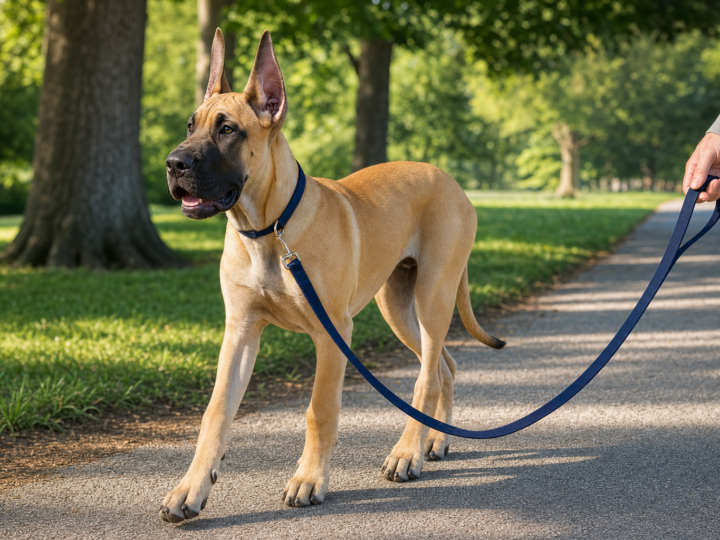
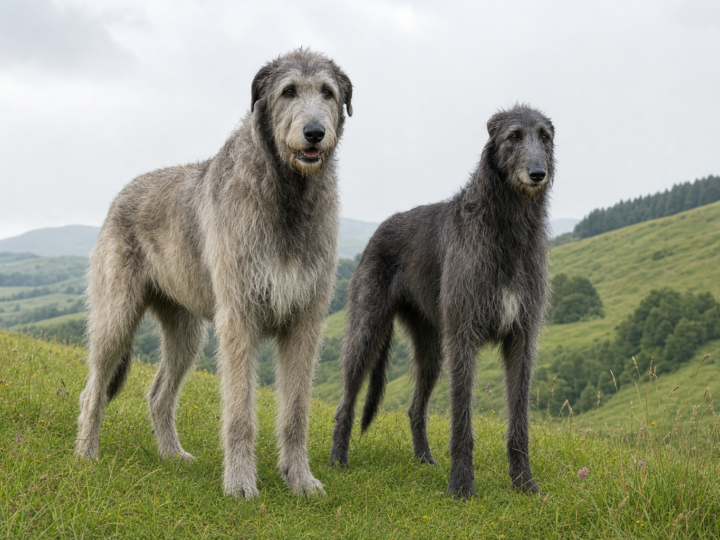
The giant breeds are a category of their own. A Great Dane, Newfoundland or Irish Wolfhound carries enormous leverage on legs that stay immature for a very long time, so short sessions, soft ground and patience matter most here. Our guide to safe play for giant breed puppies covers that group.
Frequently asked questions
Can large breed puppies play fetch?
Yes, with adjustments. Roll or bowl the ball along the ground rather than throwing it high, keep the surface soft, and cap the number of repetitions. It is the hard stops, turns and landings that ask the most of open growth plates, not the running itself.
How long should a large breed puppy play at one time?
Ten to fifteen minutes of active play at a time suits most large breed puppies, repeated a few times through the day with real rest in between. Coordination fades as a puppy tires, and most awkward landings happen in the final minutes of a long session.
Are stairs bad for a growing big dog?
Repeated stair use is worth limiting while the growth plates are still open, especially the descent, which loads the front end. Use a gate, carry small puppies, and teach older ones to take stairs slowly rather than at a run. Occasional careful use is generally fine.
When can my large breed puppy start running with me?
Most large breeds are ready to build up to sustained running somewhere between 14 and 20 months, and giant breeds later still, once your veterinarian confirms the growth plates have closed. Build distance over weeks rather than days and favour soft ground.
Does a joint supplement help a growing puppy?
A daily joint support chew formulated for large and giant breeds supports healthy joint development and helps maintain cartilage and connective tissue during the growth window. It sits alongside lean feeding and sensible play rather than replacing either. Speak with your veterinarian about your individual dog.
The bottom line
Protecting a growing big dog’s joints during play is not about doing less. It is about doing the right things at the right time. Choose soft surfaces, keep impact low, stop before your puppy is worn out, feed for a lean growth curve, and start a daily joint routine while the frame is still being built. Do that through the long window large and giant breeds need, and you give your dog the best chance of moving comfortably for years after the growing is done.
Want the Simple Roadmap in One Place?
Grab our free Big Dog Growth Blueprint for the growth window checklist, feeding framework and joint safe exercise limits, all written for large and giant breeds.
This article is for general educational purposes only and is not veterinary advice. It is not intended to diagnose, treat, cure or prevent any disease. Always consult your veterinarian about your dog’s individual health, nutrition and supplement needs. These statements have not been evaluated by the Food and Drug Administration.
Support Big Breed Joints from Day One
Large and giant breeds carry more load through every growth stage. MoveGuard Growth supports developing joints in young big dogs (8 to 30 months); MoveGuard Adult keeps grown big dogs moving comfortably.
Leave a Reply