
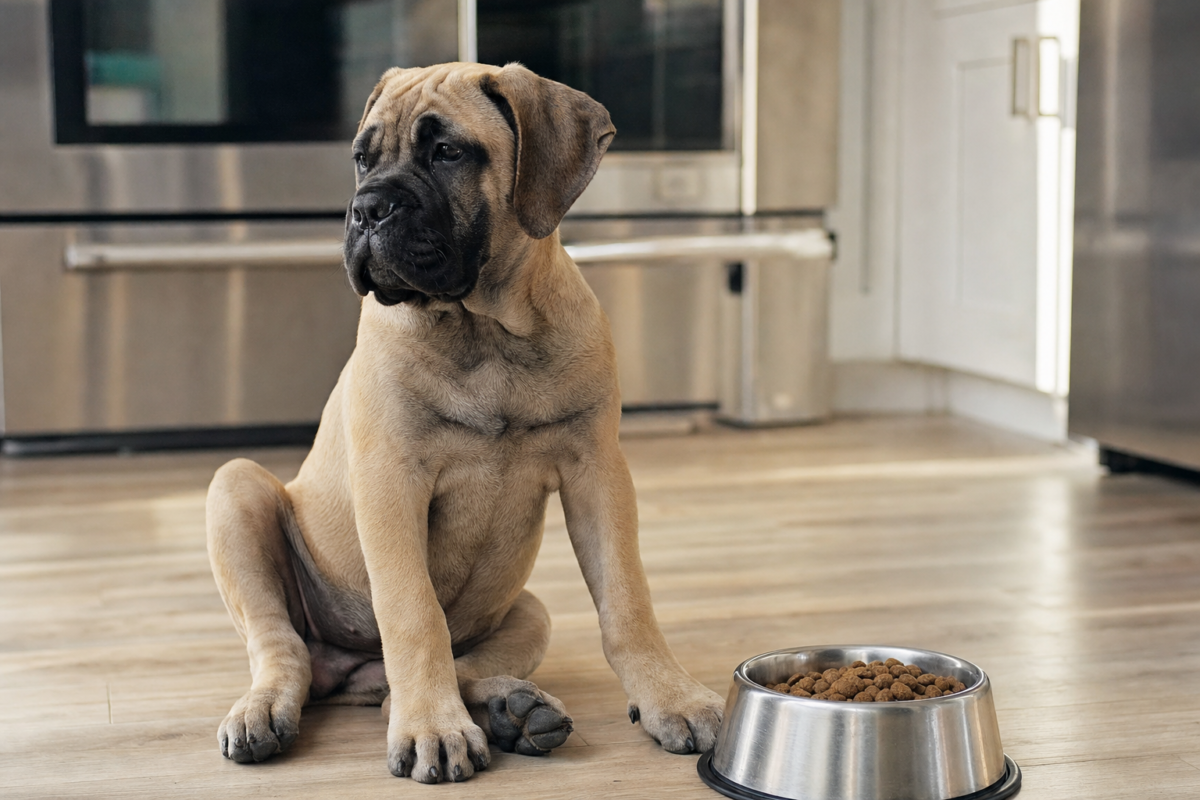
If your large breed puppy is a fussy eater, start by ruling out anything medical with your veterinarian, then build a calm and consistent mealtime routine that offers food for fifteen to twenty minutes and picks it up without fuss if the puppy walks away. Most fussy large breed puppies respond well to scheduled meals, a quiet feeding spot, gentle toppers like warm water or a spoonful of plain pumpkin, and a household rule that treats and table scraps stay out of the picture between meals so hunger does the persuading for you.
Watching a big puppy push food around the bowl and walk away is one of the most frustrating things a Dog Parent can face, especially when everything you have read says your large breed puppy needs steady nutrition to support months of rapid skeletal growth. The good news is that fussy eating in large breed puppies is almost always a behaviour that can be shaped rather than a medical problem, and the practical fixes are surprisingly simple once you understand why a puppy with so much growing to do would ever turn its nose up at a full bowl. This guide walks you through the most common reasons behind the fussiness, gives you a clear step by step plan for turning mealtimes around, and shows you how to make sure your growing puppy gets the nutrition it needs even while you are working through the picky phase.
What do I do if my large breed puppy is a fussy eater
The most effective approach is to build a calm and predictable mealtime routine, remove the snacking and treat habits that kill appetite between meals, and give your puppy a clear signal that food is available now and will not be available later. Put the meal down for fifteen to twenty minutes in a quiet spot, and if the puppy walks away, pick the bowl up without making a fuss and offer nothing else until the next scheduled meal. Most healthy large breed puppies begin eating reliably within three to five days of this approach because hunger is a powerful teacher when no other food sources are competing for attention.
That said, the very first step is always a quick check with your veterinarian. A puppy that was eating well and suddenly stops may be dealing with teething pain, a mild stomach upset or something that genuinely needs attention, and ruling out anything medical gives you the confidence to address the behaviour calmly rather than worrying about whether something is wrong. Once your veterinarian gives the all clear, the strategies below will do the rest.
Why large breed puppies can be fussy eaters
It is tempting to think a growing puppy should be ravenous all the time, but large breed puppies actually have a few built in reasons for going through picky phases that smaller breeds rarely deal with in quite the same way.
Teething is one of the biggest culprits and it can stretch across a surprisingly long window in large breeds, usually from around four months through seven months or so, because those bigger jaws take longer to finish the process. A puppy whose gums are sore may eat more slowly or skip meals entirely for a day, and this is perfectly normal behaviour that resolves on its own once the adult teeth settle in.
Growth spurts play a role as well, because a large breed puppy going through a rapid stretch of skeletal development sometimes has a temporarily suppressed appetite while the body redirects energy toward building bone and connective tissue. You might notice your puppy eating less for a few days and then suddenly eating everything in sight once the spurt passes, and that pattern is nothing to worry about as long as the puppy stays bright and active.
Environmental factors matter more than many Dog Parents realise. A feeding spot that is noisy, near a doorway with foot traffic, or shared with another pet can make a sensitive young dog reluctant to settle into a meal. Large breed puppies in particular can be surprisingly aware of their surroundings during the adolescent months when the world still feels new and a bit overwhelming.
And then there is the most common reason of all, which is that someone in the household is offering something tastier. Table scraps, training treats between meals, and the well meaning habit of doctoring the bowl with too many toppers can all teach a puppy that refusing the regular food eventually produces something better. Once that pattern is established, the puppy is not really fussy at all but simply making a rational choice to hold out for the upgrade.
A step by step plan for turning mealtimes around
The strategy below works for the vast majority of healthy large breed puppies who have been cleared by a veterinarian, and it usually produces noticeable improvement within the first week.
- Set a schedule. Offer meals at the same times each day, typically three meals for puppies under six months and two meals from six months onward. A predictable rhythm trains the digestive system and builds genuine hunger at the right moments because the body learns when food is coming.
- Use the fifteen minute rule. Put the bowl down in a calm spot, give the puppy fifteen to twenty minutes, and then pick the bowl up regardless of how much was eaten. Do not coax, hover, hand feed or add extras to the bowl once it is down, because all of those responses reward the fussiness and teach the puppy that refusing food gets it more attention.
- Offer nothing between meals. No treats, no table scraps, no dental chews and no sneaky bites from other family members until the mealtime eating is consistent. This is often the hardest step for Dog Parents because it feels unkind, but a healthy puppy that skips a meal will not come to any harm and will arrive at the next meal genuinely hungry.
- Keep the feeding spot quiet. Choose a corner away from foot traffic, other pets and household commotion so your puppy can focus on eating rather than monitoring the environment. Some large breed puppies do better with a slightly elevated bowl stand as well, because bending all the way to the floor is less comfortable during growth spurts when the legs are long and the coordination is still catching up.
- Warm the food gently. Adding a splash of warm water to kibble releases aroma and softens the texture, which can make a real difference for a teething puppy whose gums are tender. This is one of the simplest and least problematic toppers you can use because it adds no extra calories and does not create a dependency on anything fancy.
Inconsistent Meals
Changing foods, times or locations too often confuses the routine. Pick a setup and stick with it for at least two weeks before making adjustments.
Too Many Treats
Treats and scraps between meals are the single most common reason a puppy refuses dinner, because the appetite is already partly satisfied before the bowl ever hits the floor.
Slow Growth Risk
A large breed puppy that consistently eats too little can miss the steady growth window that supports comfortable joint development and sound skeletal structure.
Rewarding Refusal
Swapping food, adding toppers or hand feeding every time the puppy walks away teaches it that refusing works, and the fussiness gets worse rather than better over time.
Toppers and mix ins that help without creating new problems
Sometimes a gentle nudge is all a fussy puppy needs, and used wisely, a simple topper can bridge the gap between refusing meals and eating reliably without creating a long term dependency on something you do not want to keep adding forever. The key is to choose toppers that enhance the existing food rather than replacing it, and to fade them out gradually once eating is consistent.
- Warm water or low sodium bone broth. A splash of warm liquid over kibble softens the texture and releases the smell, which is especially helpful for teething puppies between four and seven months. It adds no significant calories and washes out easily if you need to stop using it later.
- Plain pumpkin puree. A spoonful of plain canned pumpkin (not pie filling) adds fibre, moisture and a mild sweetness that many puppies find appealing. It also supports digestive regularity, which can be a bonus during the growth months when the gut is still maturing alongside everything else.
- A small amount of wet food. Mixing a tablespoon of a quality wet food through the kibble adds aroma and variety without overhauling the entire diet. Keep the amount small so the nutritional balance of the complete large breed puppy food stays intact.
- Lightly scrambled egg. A plain scrambled egg broken through the kibble once or twice a week provides protein, healthy fat and a flavour that very few puppies can resist. It works well as a short term bridge while the mealtime routine takes hold.
Whatever topper you choose, the goal is to use it at the same small amount each time rather than escalating, and to phase it out once the puppy is eating regularly. If the fussiness returns when you remove the topper, go back to the fifteen minute rule without it and let the routine do the work.
How to check whether your fussy puppy is still growing well
A puppy that skips the occasional meal or eats lightly for a few days can still be growing just fine, and the body condition check is a much better indicator of health than counting every kibble. You can do this at home in seconds and it gives you real information rather than guesswork about whether your puppy is getting what it needs.
- Ribs. Run your hands along your puppy’s sides and you should feel the ribs easily under a thin layer of covering. If you have to press hard to find them the puppy is carrying too much weight, and if they are very prominent without any covering the puppy may genuinely be underweight.
- Waist. Look down from above and you should see a clear waist that tucks in behind the ribs. A straight or barrel shaped outline suggests the puppy is heavier than ideal, even if the scale number looks normal for the breed.
- Energy and coat. A puppy that is bright, playful, alert and carrying a healthy coat is almost certainly getting enough nutrition even if it skips a meal here and there. Lethargy, a dull coat, or a sudden change in energy level is a sign to see your veterinarian rather than just adjusting the food.
Check body condition every couple of weeks and share the results with your veterinarian at each checkup. A growing large breed puppy should be lean and athletic rather than round, because extra weight loads developing joints during the months when the skeletal frame is still forming and the growth plates are still open.
When fussy eating is a veterinary concern
Most fussy eating in large breed puppies is behavioural, but there are situations where a visit to the veterinarian is the right call rather than a mealtime strategy adjustment. See your veterinarian if the puppy has refused all food for more than 24 hours and seems lethargic or uncomfortable, if the fussiness appeared suddenly in a puppy that was previously eating well, if there is vomiting, diarrhoea, weight loss or a change in stool quality alongside the food refusal, or if the puppy seems interested in food but drops it or cries while chewing, which can point to dental pain or a mouth issue that needs attention.
Teething pain by itself is rarely a reason for concern as long as the puppy is still drinking water and stays active, but if the pain seems severe or the gums look red and swollen beyond what you would expect during a normal teething phase, your veterinarian can check for retained baby teeth or other dental issues that might need help.
Supporting steady growth through the fussy phase
Even while you are working through mealtime behaviour, your large breed puppy still needs the right nutritional foundation to support all that bone, cartilage and connective tissue development. The growth window for large breeds typically runs from 8 to 30 months and the frame your puppy is building during this time is the frame it carries for life, so keeping nutrition on track matters even when the eating pattern is not perfect.
Alongside a complete food formulated for large breed puppies, many Dog Parents add a daily joint support chew to help cover the nutritional bases during the growth window. MoveGuard Growth is built for exactly this stage of development. It combines nine actives, including 250 mg New Zealand Green Lipped Mussel, 400 mg Glucosamine HCl, 300 mg Chondroitin, 250 mg MSM, 150 mg Krill Oil and 15 mg Hyaluronic Acid, to support the developing joints of young large breed dogs during the growth window. You dose by expected adult weight, it ships as 90 chicken liver flavoured chews, is made in the USA in an NSF certified facility, and comes with a 60 day guarantee so you can see the difference before committing. Most fussy puppies actually look forward to their daily chew because the chicken liver flavour makes it feel like a treat, which means joint support is one of the easiest nutritional boxes to tick even on days when the kibble bowl gets a lukewarm reception.
Steady Growth Starts Here
Give your growing large breed puppy daily joint support built for the 8 to 30 month growth window. Explore MoveGuard Growth.
Common feeding mistakes that make fussiness worse
Most of the habits that deepen fussy eating are well intentioned, which is exactly why they are so easy to fall into. Knowing what to avoid is just as useful as knowing what to do, and a few simple changes often produce faster results than any single new strategy.
- Rotating foods too quickly. Changing brands or flavours every few days in an attempt to find something the puppy likes teaches it that refusing one food produces a different and potentially tastier option. If you need to switch foods, do so gradually over seven to ten days and then commit to the new choice for at least a few weeks before evaluating.
- Free feeding. Leaving food down all day removes the urgency of mealtimes and makes it impossible to track how much the puppy is actually eating. Scheduled meals with a clear start and end build a routine that drives appetite naturally.
- Overfeeding treats. Training treats are essential for a large breed puppy learning the basics, but they need to come from the daily calorie budget rather than on top of it. If your puppy is getting a lot of treats during training sessions, reduce the meal portion slightly to compensate and make sure treat sessions end well before the next meal.
- Making mealtimes stressful. Hovering over the bowl, adding food mid meal, picking the bowl up and putting it back down repeatedly, or scolding the puppy for not eating all create anxiety around food. The calmer and more matter of fact you are about the whole process, the faster the fussiness resolves.
- Ignoring the household. Every person in the home needs to follow the same rules. One family member sneaking scraps under the table can undo a week of consistent work, so get everyone on board before you start and make the plan clear to anyone who spends time with the puppy.
A week by week plan for fussy puppy recovery
You do not need a complicated programme to turn mealtime behaviour around, and most healthy large breed puppies respond within the first two weeks once the household is consistent. Here is a simple timeline that works for the majority of cases.
Days 1 to 3. Set the schedule, enforce the fifteen minute rule, and cut all treats and scraps between meals. Expect the puppy to test you by refusing one or two meals entirely, which is normal and not a reason to change course. Stay calm, pick the bowl up, and wait for the next scheduled meal without offering anything else in the gap.
Days 4 to 7. Most puppies start eating more reliably as genuine hunger takes over. You may see the puppy eat quickly and enthusiastically for the first time in weeks, which is a sign the routine is working. Continue with no treats between meals and keep the feeding spot quiet and consistent.
Week 2. Eating should be fairly consistent by now. Begin reintroducing small training treats if needed for ongoing puppy training, but keep them small, low calorie and well spaced from meals. If you have been using a topper, begin reducing the amount gradually over several days to see whether the puppy will eat the kibble on its own.
Week 3 and beyond. Maintain the schedule and the fifteen minute rule as a permanent habit rather than a temporary fix. Consistent mealtimes support digestion, make it easy to spot genuine appetite changes that might need veterinary attention, and give your puppy a predictable daily rhythm that large breed dogs thrive on throughout their lives.
Frequently asked questions
Why is my large breed puppy refusing to eat
The most common reasons are teething discomfort, too many treats between meals, a noisy or stressful feeding environment, and the learned habit of holding out for something tastier. Rule out anything medical with your veterinarian first and then address the behaviour with a consistent mealtime routine and the fifteen minute rule.
Should I switch food if my large breed puppy refuses to eat
Not right away. Switching foods too quickly can reinforce the fussiness by teaching the puppy that refusing one food produces a different option. Try the mealtime routine adjustments first and give them at least two weeks before considering a food change, and always transition gradually over seven to ten days if you do switch.
How long can a large breed puppy go without eating
A healthy large breed puppy can safely skip a meal or even eat lightly for a day without harm, but if the puppy refuses all food for more than 24 hours and seems lethargic or unwell you should see your veterinarian. Brief appetite dips during teething or growth spurts are normal and usually resolve on their own within a day or two.
Is it okay to add toppers to large breed puppy food
Simple toppers like warm water, a spoonful of plain pumpkin or a small amount of wet food can help bridge the gap while you establish a mealtime routine. Keep the amount small and consistent, and plan to fade the topper out once eating is reliable so you do not create a long term dependency.
When should I see a veterinarian about a fussy large breed puppy
See your veterinarian if the puppy has refused all food for more than 24 hours, if there is vomiting or diarrhoea alongside the food refusal, if the puppy seems to want food but drops it or cries while chewing, or if the fussiness appeared suddenly in a puppy that was previously eating well.
The bottom line
A fussy large breed puppy is almost always a puppy that has learned it can hold out for something better, and the fix is a consistent mealtime routine that makes the regular food the only option on the table. Set a schedule, use the fifteen minute rule, cut the treats between meals, keep the feeding spot calm, and give your puppy a couple of weeks to discover that eating when the bowl is down is the simplest and most rewarding choice. Support that growing frame with a complete large breed puppy food and a daily joint support routine, and you will have a puppy that eats well and grows steadily through the entire 8 to 30 month window.
Want the simple roadmap in one place? Grab our free Big Dog Growth Guide for the growth window checklist, feeding framework and joint safe exercise limits, all written for large and giant breeds.
This article is for general educational purposes only and is not veterinary advice. It is not intended to diagnose, treat, cure or prevent any disease. Always consult your veterinarian about your individual dog’s health, nutrition and supplement needs. These statements have not been evaluated by the Food and Drug Administration.
Support Big Breed Joints from Day One
Large and giant breeds carry more load through every growth stage. MoveGuard Growth supports developing joints in young big dogs (8 to 30 months); MoveGuard Adult keeps grown big dogs moving comfortably.
Leave a Reply