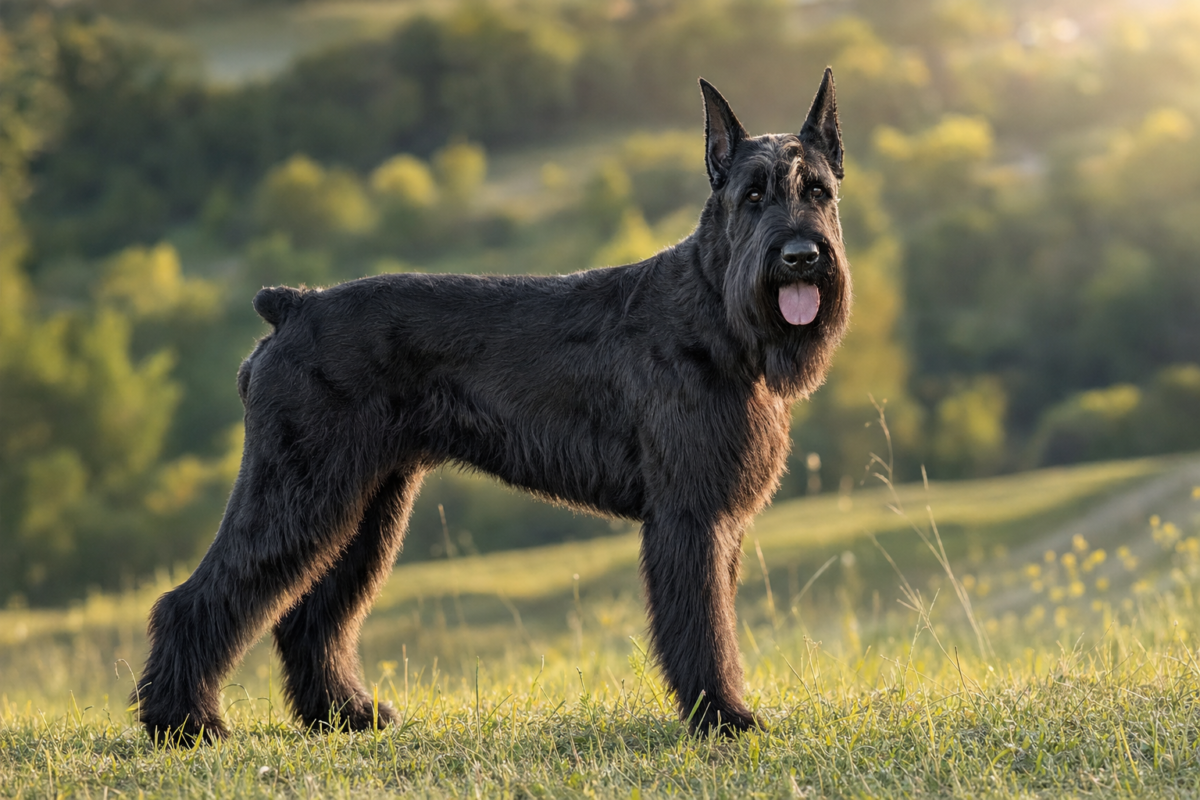
A fully grown male Giant Schnauzer usually stands 25.5 to 27.5 inches at the shoulder and weighs 60 to 85 pounds, while females typically reach 23.5 to 25.5 inches and 55 to 75 pounds. Most Giant Schnauzers reach close to their adult height by around 18 months and then keep filling out in muscle and chest depth until roughly two to two and a half years of age.
If you are watching your Giant Schnauzer puppy grow and wondering just how large that wiry, powerful frame is going to become, you are asking a question that matters more right now than it ever will later. The Giant Schnauzer is a bold, driven working breed built for endurance and purpose, and the way you support those first couple of years shapes the strong, confident adult your puppy becomes. This guide gives you a clear month by month weight picture, the timeline for when growth actually finishes, and the practical daily habits that help your Giant Schnauzer develop into a sound, capable companion who moves well for years to come.
How much should a Giant Schnauzer weigh by month
A fully grown male Giant Schnauzer usually weighs 60 to 85 pounds and stands 25.5 to 27.5 inches at the shoulder, while females typically weigh 55 to 75 pounds and stand 23.5 to 25.5 inches. As a large working breed originally developed for cattle driving and guarding in the Bavarian highlands, the Giant Schnauzer reaches most of its height by around 18 months and then continues to add muscle, chest depth and that characteristic dense wiry coat substance until roughly two to two and a half years of age.
Genetics, sex, working line versus show line and overall nutrition all influence the final size, so treat these ranges as a dependable guide rather than a fixed rule. What matters most with any large breed is how your dog reaches its adult size, because steady and even growth protects a frame that is built to work hard for years.
What makes a Giant Schnauzer grow the way it does
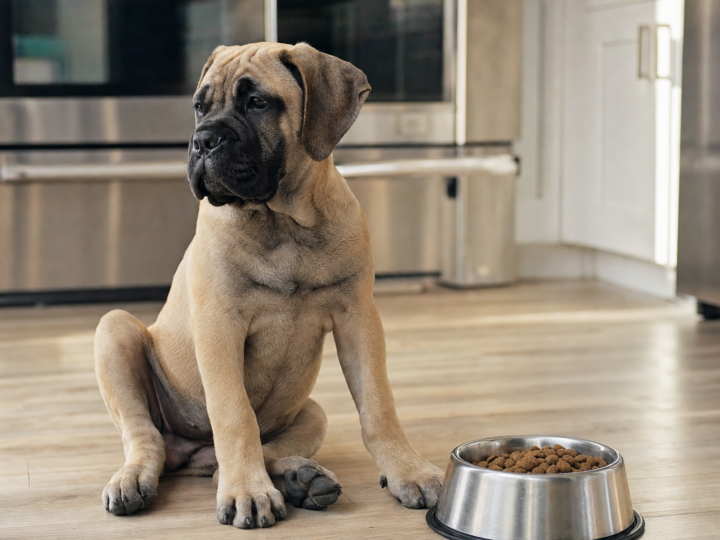
Giant Schnauzers were developed in the Bavarian highlands to drive cattle and guard property, and that heritage shows in every line of the adult body. They are tall, square and powerfully built without being bulky, carrying dense muscle under a coarse weather resistant double coat that gives them a distinctive bearded and dignified outline. A young Giant Schnauzer often looks tall and a bit rangy through the middle of the first year, with legs that seem too long and a body that has not quite filled in behind the shoulders, and that is completely normal for the breed.
The powerful and balanced silhouette of a mature Giant Schnauzer comes together gradually as the chest deepens and muscle develops across the second year. Because this breed combines size with athleticism and an intensely active temperament, matching that developing frame with steady growth and sensible exercise is one of the most important things you can do during the growth window. Understanding what your puppy is building beneath that wiry coat helps you stay patient through the leggy adolescent stage and give the body exactly what it needs at each point along the way.
Giant Schnauzer growth chart month by month
Use this chart as a friendly guide rather than a report card. A Giant Schnauzer who tracks a little above or below these numbers while looking lean and well muscled is usually doing just fine, and the individual variation within this breed can be significant depending on whether your dog comes from working lines or show lines.
| Age | Male weight | Female weight |
|---|---|---|
| 2 months | 14 to 18 lb | 12 to 16 lb |
| 3 months | 22 to 28 lb | 18 to 24 lb |
| 4 months | 30 to 38 lb | 26 to 33 lb |
| 5 months | 36 to 46 lb | 32 to 40 lb |
| 6 months | 42 to 55 lb | 37 to 48 lb |
| 7 months | 46 to 60 lb | 40 to 53 lb |
| 8 months | 50 to 65 lb | 43 to 57 lb |
| 9 months | 52 to 68 lb | 45 to 60 lb |
| 10 months | 55 to 72 lb | 48 to 63 lb |
| 12 months | 57 to 75 lb | 50 to 65 lb |
| 18 months | 60 to 82 lb | 53 to 72 lb |
| 2 years and beyond | 60 to 85 lb | 55 to 75 lb |
When do Giant Schnauzers stop growing
Giant Schnauzers reach most of their adult height by around 18 months of age. After that point the visible change is all about substance and maturity as your Giant Schnauzer fills out through the chest, shoulders and hindquarters and gains the dense muscle and coat that give the breed its commanding presence, usually until two to two and a half years of age. So a tall and lean eighteen month old who still looks a bit adolescent is right on schedule and simply needs time to finish building that powerful frame.
As a rough guide, dogs with an expected adult weight of 60 to 85 pounds keep developing for roughly 18 to 22 months in terms of skeletal height, with muscle and substance continuing to fill in beyond that window. Because the frame is largely set in the first year and a half, that period is your prime time to build strong habits around food, movement and joint support that will serve the dog for the rest of its life.
Why the growth window matters for a working breed
During this window your Giant Schnauzer is building the cartilage, bone and connective tissue that will support a demanding and active life for years to come. Growth plates, which are the soft areas at the ends of long bones, stay open through much of the first year. While they are open, hard impact and excess weight ask more of a frame that is still forming, which is why lean feeding and sensible exercise carry extra weight for a breed that was built to work all day and still stand guard at night. Protecting this window is one of the simplest and most important investments you can make in your Giant Schnauzer’s long term soundness.
Growing Too Fast
Rapid growth puts extra demand on developing joints and connective tissue. Aim for a steady and even curve rather than a fast one, because a Giant Schnauzer should earn its size gradually over months rather than weeks.
Excess Weight
Extra pounds load young joints and mask the lean athletic outline this breed should carry at every age. A trim Giant Schnauzer moves with more comfort and confidence whether it is six months old or six years old.
Too Much Impact
Long runs on hard surfaces, hard repeated sprints and jumping on open growth plates are best kept moderate while the skeletal frame is still forming, even though this breed seems tireless.
Under Stimulation
Giant Schnauzers are intensely intelligent working dogs who need mental outlets every single day. Without enough challenge that energy turns inward, so train the mind just as seriously as the body during the growth years.
How much should a Giant Schnauzer eat while growing
Large breed puppies do best with steady and moderate growth rather than fast growth, and the Giant Schnauzer is no exception. An even growth curve supports comfortable movement now and for years to come, and the right feeding habits make that curve much easier to maintain. A few practical steps make a real difference through the growth window:
- Choose a complete food formulated for large breed puppies, which balances calories, calcium and phosphorus for slower and steadier skeletal development.
- Split the daily amount into three meals while young and then move to two meals as an adult, because this helps keep energy even and reduces the risk of bloat in a deep chested breed like the Giant Schnauzer.
- Feed to a lean and athletic body condition rather than targeting a specific weight number on the scale, and you should be able to feel the ribs easily under a light layer without having to press hard.
- Ask your veterinarian to confirm the right daily amount at each checkup, because the correct portion changes quickly during the first year as your Giant Schnauzer grows.
How to check your Giant Schnauzer body condition in ten seconds
The scale tells you weight, but body condition tells you health, and you can check it at home in seconds even through that dense wiry coat. This quick hands on check is worth building into a regular habit every couple of weeks throughout the growth years.
- Ribs. Run your hands along the sides beneath the coat and you should feel the ribs easily under a thin layer of covering. If you have to press hard to find them, ease back on food and check again in a week or two.
- Waist. Look down from above and you want a clear waist that tucks in behind the ribs, which should be visible even under the furnishings that are characteristic of the breed.
- Tuck. From the side, the belly should rise noticeably toward the back legs rather than hanging level or sagging, because a Giant Schnauzer should always carry a clean athletic line through the underside.
Check every couple of weeks through the growth years and adjust portions gently with your veterinarian’s guidance. The dense coat of a Giant Schnauzer can hide gradual weight gain more easily than a short coated breed, which is exactly why hands on checks matter so much.
Growth safe exercise for a Giant Schnauzer puppy
Giant Schnauzers have tremendous energy and drive that needs an outlet every single day, but during the fast growth months the goal is regular and moderate activity rather than repeated hard impact. The good news is that this exceptionally clever breed tires as much from thinking as from running, so mental work is a genuine and valuable exercise tool during the months when you need to protect the developing skeletal frame.
- Favor free play, exploring varied terrain and short walks on soft ground over long road runs, because these activities build coordination and confidence without pounding on young joints.
- Keep long runs, hard sprints and repeated jumping moderate while the growth plates are still open, which is usually through most of the first year for a breed of this size.
- Add early training, scent games and puzzle work because a Giant Schnauzer that learns to solve problems young becomes a calmer and steadier adult who is genuinely easier to live with at full size.
- Let your puppy rest fully between bursts of activity, because growing bones recover and strengthen during downtime and this breed sometimes needs to be encouraged to take a break.
Supporting healthy joints in a powerful breed
Giant Schnauzers live to move with purpose, and that active driven life travels through the joints with every stride, turn and leap across years of work and play. Supporting healthy joint development while your Giant Schnauzer is still building its frame is a simple and caring daily habit that pays off across an active lifetime of companionship.
Alongside lean feeding and sensible exercise, many big Dog Parents add a daily joint support chew made specifically for large and giant breeds. MoveGuard Growth is built for exactly this stage of development. It combines nine actives, including 250 mg New Zealand Green Lipped Mussel, 400 mg Glucosamine HCl, 300 mg Chondroitin, 250 mg MSM and 15 mg Hyaluronic Acid, to support the developing joints of young large breed dogs across the roughly 8 to 30 month growth window. You dose by expected adult weight, so most Giant Schnauzers sit at two chews a day with larger males at three. It ships as 90 chews, is made in the USA in an NSF certified facility, and is backed by a 60 day guarantee so you can see the difference before committing.
Support a Powerful Frame
Give your growing Giant Schnauzer daily joint support built for large and giant breeds. Explore MoveGuard Growth.
Signs your Giant Schnauzer is growing on track
You do not need a daily scale reading to know things are going well with your Giant Schnauzer’s development. Look for a bright and alert puppy with a lean waist you can see from above, ribs you can feel with light pressure beneath the coat, smooth and flowing movement with no hitching or stiffness, and a healthy appetite paired with sharp eager energy. Even and unhurried growth with good muscle tone is exactly what you want to see in a working breed that needs a sound frame to do what it was bred for.
If you ever notice limping, stiffness after rest, reluctance to move or growth that seems suddenly very fast, a quick chat with your veterinarian brings peace of mind and lets you adjust food or activity early before a small concern becomes a bigger one. Giant Schnauzers are stoic dogs that do not always show discomfort clearly, so routine body checks and veterinary visits matter even more with this breed than with some others.
A simple growth game plan stage by stage
You do not need a complicated program to raise a sound Giant Schnauzer. You need the right emphasis at the right time, and a willingness to stay patient through the stages when that leggy adolescent body has not yet caught up with the powerful adult it is becoming.
8 weeks to 4 months. Foundation stage where you set the habits that carry through the whole growth window. Focus on a complete large breed puppy food served in three calm meals a day, early socialization with a wide range of people and settings, and short bursts of free play on soft ground. Begin gentle positive training now because a Giant Schnauzer that learns to think and cooperate early becomes a far easier adult to live with, and this breed bonds deeply with its handler from the very start.
4 to 8 months. Growth is quick during this stretch and your Giant Schnauzer may look leggy and adolescent, with a body that has not caught up to those long and rapidly growing legs. Keep feeding lean, keep exercise moderate, and build steady habits around stairs and car entry to protect those developing joints. This is a natural point to begin a daily joint support routine that carries through the whole growth window, because the frame is laying down the connective tissue it will rely on for years to come.
8 to 18 months. Height nears its peak while muscle starts to arrive and the chest begins to deepen into the shape of the adult dog. Match portions to a lean body condition rather than a number on the scale, because an enthusiastic appetite can easily outpace actual need during this period. Add structured activity and training gradually while always favoring soft surfaces over hard impact, and begin introducing the grooming routine this breed needs for its coat to stay healthy and functional.
18 months to 2.5 years. The lean adolescent becomes a powerful and commanding adult as muscle, substance and coat density continue to build even though height has largely finished. Build physical activity up gradually as your veterinarian advises, and many Dog Parents keep a joint support routine going well into adulthood for a breed that stays active and driven for years and never quite stops needing that foundation of care.
Common growth mistakes to avoid
Most growth problems in powerful working breeds come from a handful of avoidable habits rather than bad luck. Steer clear of these and you are already well ahead of many Dog Parents navigating the same growth window with a large breed puppy.
- Overfeeding for size. A heavy young Giant Schnauzer is not a healthier one, and in fact the opposite is true because extra weight loads developing joints and hides the athletic build this breed should carry. Feed lean and let the size come on its own natural timeline rather than trying to push it along.
- Skipping large breed puppy food. These formulas specifically control calcium and calorie levels for steady growth, which matters particularly in a breed that grows quickly in the first year. Confirm the right food with your veterinarian and stick with it through the growth window.
- Too much hard exercise too young. Long runs on pavement, agility jumps and repeated impact on hard ground are a lot to ask of open growth plates, even in a breed that seems tireless and constantly ready for more activity.
- Neglecting the mind. A bored Giant Schnauzer is a destructive Giant Schnauzer, and this breed needs mental outlets every single day because training and scent work protect both the body and the household furniture.
- Waiting for a problem before supporting joints. The growth window is the ideal time to support developing joints with good nutrition and targeted supplements, not after signs of discomfort appear. Starting early is the simplest way to set up a frame that stays comfortable for the long haul.
The Giant Schnauzer temperament and the growth years
A Giant Schnauzer is as much personality as it is physicality, and the two mature together in ways that shape the adult dog profoundly. This is a loyal, bold and highly intelligent breed that was developed to think independently while working alongside its handler, and that combination of drive and devotion makes the growth years a critical window for building the relationship and the bond as well as the body.
Short and positive training sessions tire a young Giant Schnauzer as much as a long walk, and they build the focus and self control that this powerful breed genuinely needs as it approaches its adult size. Puzzle feeders, scent work and structured obedience give your puppy an outlet that does not pound on growing joints, which is a real advantage when you are managing a breed that would otherwise channel all that intelligence into rearranging your home and finding creative ways to entertain itself.
Socialization matters deeply here as well, because a confident and well handled Giant Schnauzer carries that steadiness into a powerful adulthood while a poorly socialized one can become wary and genuinely difficult to manage at full size. Build the mind and the frame together and you end up with the devoted and capable companion this remarkable breed is known for, a dog that is both a working partner and a deeply bonded family member.
Coat care during the growth years
The Giant Schnauzer wears a dense wiry double coat that needs regular attention even during the puppy and adolescent months, and establishing the grooming routine early makes everything easier once the coat reaches full adult density. Hand stripping is the traditional method for maintaining the hard outer coat and keeping the proper wire texture, but many pet Dog Parents work with a professional groomer to find a routine that balances coat health with practical daily life.
During the growth years the coat changes texture as the adult wire develops beneath the softer puppy fur, and regular brushing prevents mats from forming in the beard, legs and underbody where the furnishings grow thickest. A well maintained coat also makes your weekly body condition checks easier because you can feel the ribs and waist clearly without fighting through tangles, and it gives you a regular opportunity to check for any lumps, skin irritation or soreness that might otherwise go unnoticed beneath all that wiry hair.
Frequently asked questions
At what age is a Giant Schnauzer full grown
Most Giant Schnauzers reach their adult height by around 18 months and then keep filling out in muscle, chest depth and coat substance until roughly two to two and a half years of age. Height comes first and substance comes later, so patience through the adolescent stage is completely normal.
How much does a full grown Giant Schnauzer weigh
A fully grown male Giant Schnauzer usually weighs 60 to 85 pounds and a female weighs 55 to 75 pounds, though individual dogs vary with genetics, sex, line type and body condition.
How big is a Giant Schnauzer at 6 months
At 6 months a male Giant Schnauzer often weighs around 42 to 55 pounds and a female around 37 to 48 pounds. They still have considerable muscle and chest depth to build, so a tall and lean look at this age is perfectly normal and expected.
Do Giant Schnauzers need a lot of exercise
Giant Schnauzers are a high energy working breed that needs both physical activity and mental stimulation every day, but during the growth months the priority is moderate exercise on soft surfaces paired with training and puzzle work to protect developing joints while satisfying that active and intelligent mind.
What should I feed a Giant Schnauzer puppy
A complete food formulated for large breed puppies is the safest choice because it balances calories and minerals for slow and steady growth. Feed to a lean body condition, split meals to reduce bloat risk, and confirm portions with your veterinarian at each visit.
The bottom line
Your Giant Schnauzer will most likely mature into a 55 to 85 pound powerhouse who reaches adult height by around 18 months and finishes building muscle and substance by two to two and a half years. Feed for lean and steady growth, keep exercise sensible while those joints develop, support the growth window with the right daily habits, and give that brilliant driven mind plenty of meaningful work to do every single day. That is how you raise a strong and confident Giant Schnauzer who moves with comfort and purpose for years to come.
Want the simple roadmap in one place? Grab our free Big Dog Growth Guide for the growth window checklist, feeding framework and joint safe exercise limits, all written for large and giant breeds.
This article is for general educational purposes only and is not veterinary advice. It is not intended to diagnose, treat, cure or prevent any disease. Always consult your veterinarian about your individual dog’s health, nutrition and supplement needs. These statements have not been evaluated by the Food and Drug Administration.
Support Big Breed Joints from Day One
Large and giant breeds carry more load through every growth stage. MoveGuard Growth supports developing joints in young big dogs (8 to 30 months); MoveGuard Adult keeps grown big dogs moving comfortably.
Leave a Reply