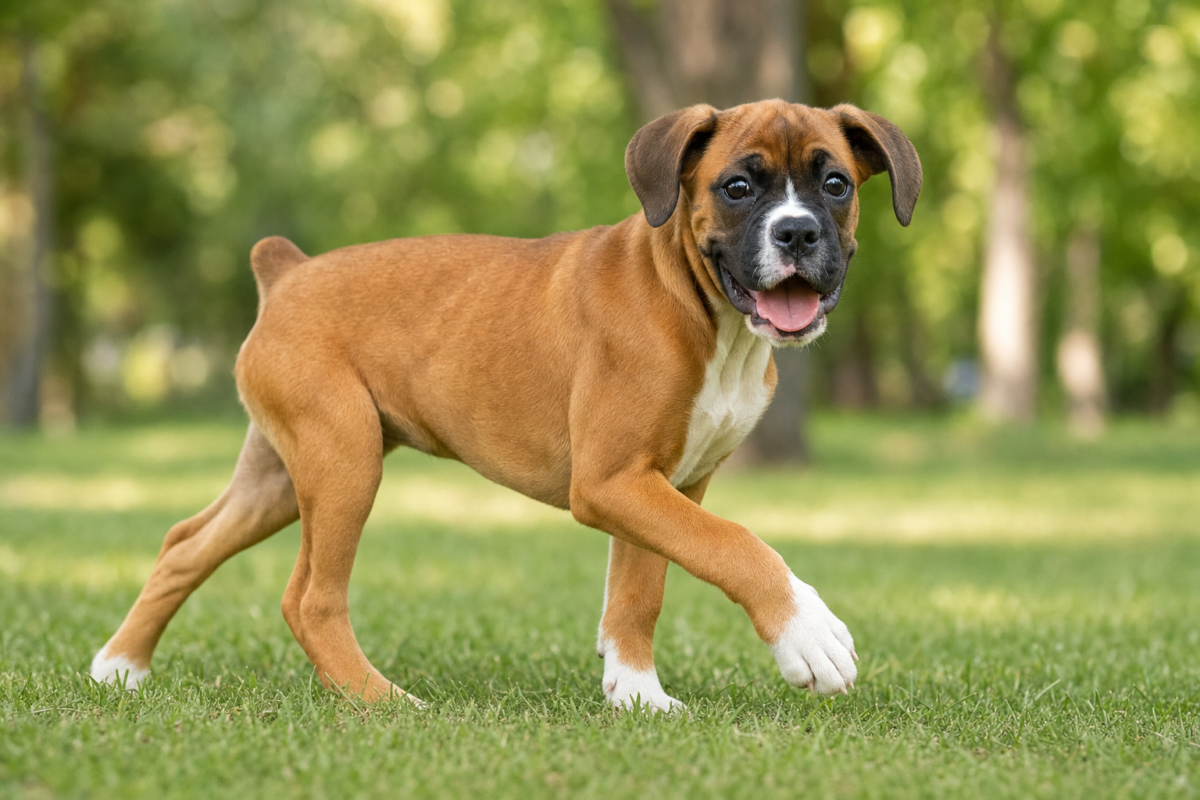
A useful starting point for a large breed puppy is roughly five minutes of structured walking per month of age, once or twice a day. That means about ten minutes at two months, twenty minutes at four months and thirty minutes at six months. On top of that, free play on soft ground, where your puppy sets the pace and stops when tired, is genuinely good for a growing body. Build up gradually and add real rest, because sleep is where a big puppy actually grows.
If you have a large breed puppy who seems to have two settings, full speed and fast asleep, you are probably wondering how much running around is enough. It is one of the best questions a big dog parent can ask. Large and giant breeds spend far longer building their frames than small dogs do, and the way you handle movement in those first two years shapes the comfortable, capable adult your puppy becomes. This guide gives you clear daily numbers by age and the habits that keep a growing body sound.
How much exercise does a large breed puppy need?
As a general rule, give a large breed puppy about five minutes of structured exercise per month of age, once or twice a day, and let free play happen on top of that. A four month old puppy therefore does well with two walks of roughly twenty minutes, while a six month old can handle two walks of about thirty minutes. Structured means the parts you control, such as leash walks and training sessions. Free play means sniffing, pottering, gentle games in the garden and short bursts of zoomies that your puppy starts and stops on their own.
Treat that formula as a guide rather than a target you must hit every day. What matters far more than the exact minutes is the shape of the activity: frequent, moderate and varied beats occasional, long and hard at every age under about eighteen months.
What makes exercise different for a large breed puppy
A small dog is close to fully grown at a year old. A large or giant breed is not. Big puppies carry more weight on a skeleton that is still forming, and they carry it for far longer, which is why the advice you read for a terrier does not transfer to a mastiff.
The reason sits at the ends of the long bones. Growth plates are soft areas of developing tissue that let bone lengthen, and they stay open through much of the first year and sometimes well into the second in the biggest breeds. While they are open, repeated hard impact asks a great deal of a frame that has not finished building, and a big puppy gaining two or three pounds a week lands harder every week.
Large breed puppy exercise chart, month by month
Use this chart as a friendly guide, not a report card. Adjust down for the giant breeds, which mature slowest, and always let the individual dog in front of you have the final word.
| Age | Structured walk, per session | Sessions per day | Focus |
|---|---|---|---|
| 2 months | 10 minutes | 1 to 2 | Garden pottering, carrying to new places, gentle handling |
| 3 months | 15 minutes | 2 | Short lead walks on soft ground, first training games |
| 4 months | 20 minutes | 2 | Sniffing walks, recall practice, calm greetings |
| 6 months | 30 minutes | 2 | Longer sniffing walks, gentle hills, still no repeated jumping |
| 9 months | 35 to 40 minutes | 2 | Varied terrain, swimming if your dog enjoys it, steady pace |
| 12 months | 40 to 50 minutes | 2 | Build stamina slowly, keep hard sprints occasional |
| 18 months | 45 to 60 minutes | 2 | Most large breeds can begin adult style activity |
| 2 years plus | Adult routine | 2 | Giant breeds reach this point last, often nearer 24 to 30 months |
The American Kennel Club’s Chief Veterinary Officer, Dr. Jerry Klein, DVM, has written extensively on the slower growth and development timeline of large and giant breeds. Read more from the AKC’s guidance on caring for large-breed dogs.
When can a large breed puppy exercise like an adult?
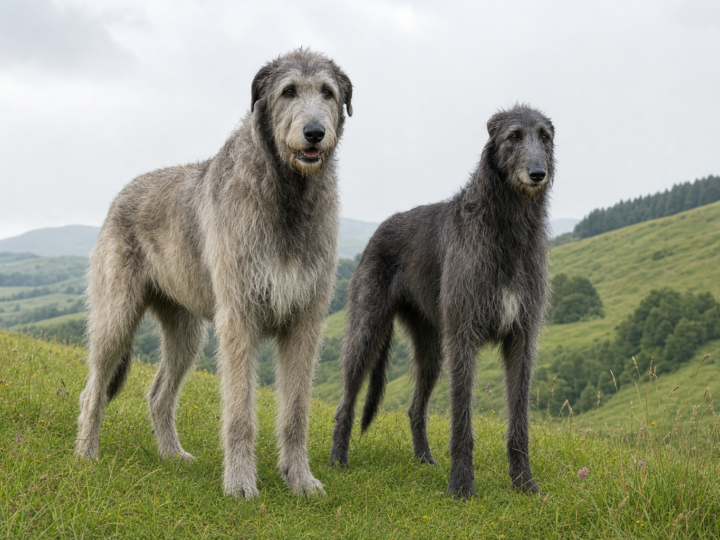
Most large breeds are ready for adult style activity somewhere between eighteen months and two years, and the biggest giant breeds later still. A dog with an expected adult weight of 50 to 65 pounds usually finishes its main growth by around 16 to 18 months. Between 65 and 80 pounds the window runs roughly 18 to 22 months. From 80 to 100 pounds it stretches to about 20 to 24 months, and above 100 pounds you are looking at 22 to 30 months before the frame is truly finished.
Height arrives before substance in every one of those groups, so a tall fifteen month old who looks grown up is often still filling out through the chest and shoulders. The move to running, hiking and sport should be a gradual ramp over months rather than a switch you flip on a birthday.
Why the growth window matters for movement
Through this window your puppy is laying down the cartilage, bone and connective tissue that will carry an adult body for the next decade. Steady, moderate loading helps that tissue develop, while repeated high impact on open growth plates asks more than the structure is ready to give. Walk often, play freely, and save long runs and agility jumps until your veterinarian agrees the frame is ready.
Repeated Jumping
In and out of the car, off the sofa, over and over after a ball. Occasional is fine. Repeated is the pattern to break.
Forced Distance
Jogging or cycling beside a bike sets a pace your puppy cannot choose to leave. Save both for a finished frame.
Hard Surfaces
Long stretches on pavement transmit more shock than grass, sand or woodland trails. Vary the ground you walk on.
Too Little Rest
Big puppies need a great deal of sleep. An overtired puppy gets clumsy and mouthy, which is a signal, not misbehaviour.
How feeding and body weight change the exercise question
Every extra pound your puppy carries travels through the joints on every stride, so food and movement are really one subject.
- Choose a complete food formulated for large breed puppies, which balances calories, calcium and phosphorus for slower, steadier growth.
- Split the daily amount into three meals while young, then two meals as an adult, so energy stays even across the day.
- Feed to a lean body condition rather than to the number on the bag, and adjust as activity changes through the seasons.
How to check body condition in ten seconds
The scale tells you weight, but body condition tells you whether that weight is right for the dog. You can check it at home in seconds.
- Ribs. Run your hands along the sides. You should feel the ribs easily under a thin layer. If you have to press, ease back on food.
- Waist. Look down from above. You want a clear waist that tucks in behind the ribs.
- Tuck. From the side, the belly should rise toward the back legs rather than hanging level.
Check every couple of weeks through the growth years and adjust portions gently with your veterinarian’s guidance.
Growth safe activities that actually tire a big puppy
A puppy who thinks hard gets just as sleepy as a puppy who runs hard, and thinking costs the joints nothing. Build your week around these.
- Sniffing walks. Let your puppy choose the route and pace for part of every walk. Twenty minutes of scent work settles a big puppy more than twenty minutes of heeling.
- Short training games. Three sessions of five minutes across a day teach manners and drain energy without a single hard landing.
- Free play on grass. Self selected zoomies on a soft surface are healthy. Your puppy naturally stops before doing too much.
- Puzzle feeders and scatter feeding. Turning a meal into a search is one of the cheapest ways to tire a young dog.
- Gentle swimming. Where your dog enjoys water and can get in and out safely, swimming builds muscle with almost no impact.
Supporting the joints your puppy is building
Movement is exactly how a young body learns to be strong, and every walk, turn and landing travels through joints that are still forming. Supporting healthy joint development while your puppy is still building that frame is a simple, caring habit that pays off across an active lifetime.
Alongside lean feeding and sensible activity, many big dog parents add a daily joint support chew made for large and giant breeds. MoveGuard Growth is built for exactly this stage. It combines nine actives, including New Zealand Green Lipped Mussel, glucosamine, chondroitin, MSM and hyaluronic acid, to support the developing joints of young large breed dogs across the roughly 8 to 30 month growth window. You dose by expected adult weight, so a puppy heading for 50 to 80 pounds takes two chews a day and one heading for 80 pounds or more takes three. It ships as 90 chews, is made in the USA in an NSF facility, and is backed by a 60 day guarantee.
Support Every Stride
Give your growing puppy daily joint support built for large and giant breeds. Explore MoveGuard Growth.
Signs your puppy is getting the right amount of exercise
You do not need a stopwatch to know the balance is right. A well exercised big puppy settles within a few minutes of coming home, sleeps deeply, moves smoothly the next morning and eats steadily. Bright eyes and a puppy who can switch off indoors are the signals you want.
The signs of too much are just as readable. Watch for stiffness getting up the day after activity, lagging on the way home, lying down mid walk, or a puppy who becomes frantic and mouthy rather than sleepy. Limping, reluctance to use a leg, or stiffness lasting more than a few hours always deserves a call to your veterinarian.
A simple exercise game plan, stage by stage
You need the right emphasis at the right time rather than a complicated programme.
8 weeks to 4 months. Foundation stage. Keep sessions very short and focus on new sights, sounds and surfaces rather than distance. Begin gentle, positive training now, because early thinking work sets up everything that follows.
4 to 8 months. Growth is rapid and your puppy may look leggy and uncoordinated. Hold the five minutes per month formula, keep surfaces soft, and start teaching a calm routine for stairs and car entry. This is a natural point to begin a daily joint support routine that carries through the whole growth window.
8 to 18 months. Adolescence arrives, energy climbs and your dog will look ready for far more than the frame can comfortably give. Extend duration slowly rather than intensity. Keep joint support and lean feeding steady, and expect a wobble in training focus that has nothing to do with your ability.
18 months to 3 years. The adolescent becomes an adult. With your veterinarian in agreement, build toward running, hiking or sport over a period of months. Giant breeds reach this point last, so give them the extra time.
Common exercise mistakes to avoid
Most trouble in big puppies comes from a few avoidable habits.
- Trying to tire out a puppy with distance. A long walk creates a fitter puppy who needs an even longer walk. Use brain work instead.
- Endless ball throwing. The sprint and skid stop is one of the highest impact things a young dog can do, and dogs will do it past the point of sense.
- Ignoring rest. Big puppies need sixteen to eighteen hours of sleep a day. Protect naps as carefully as you plan walks.
- Letting the puppy set the whole agenda. A big adolescent will happily go all day. Part of your job is calling time before they would.
Energy levels vary more than size does
Large breed is a category, not a temperament. Two puppies of the same weight can need completely different days, and matching the plan to the dog matters.
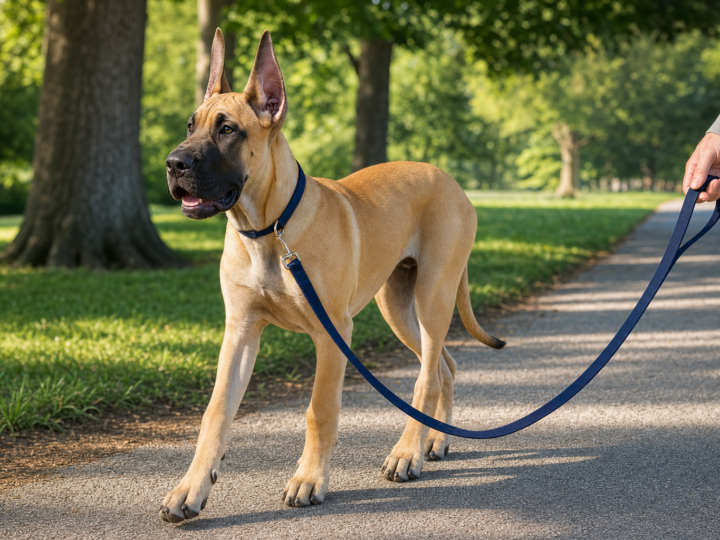
Working and sporting breeds such as German Shepherds, Labradors and Boxers want more mental work and variety, and get restless long before they get physically tired. The livestock guardians and heavy giants, including Great Pyrenees, Newfoundlands and English Mastiffs, are often content with far less and do better on calm, unhurried outings. A Great Dane grows so fast that even moderate activity should stay gentle well past the first birthday.
Whatever the breed, read the dog in front of you. A puppy who cannot settle indoors usually needs more to think about, not more distance. A puppy who is stiff the day after a big outing needs less.
Frequently asked questions
What is the five minute rule for puppy exercise?
It is a simple guideline suggesting about five minutes of structured exercise per month of age, once or twice a day. A three month old puppy gets around fifteen minutes per session and a six month old around thirty. It is a starting point rather than a strict limit, and free play at your puppy’s own pace sits on top of it.
Can a large breed puppy go for long walks?
Not while the frame is still growing. Long walks set a distance and pace your puppy cannot opt out of, which is very different from free play. Build duration gradually and save genuinely long outings for eighteen months and beyond, or later for giant breeds, with your veterinarian in agreement.
Is it bad for a big puppy to run and play in the garden?
Self directed play on soft ground is healthy and useful. Puppies naturally rest when they need to. The activities worth limiting are the ones you drive, such as repeated ball throwing, jogging alongside you, or jumping in and out of the car many times a day.
When can I start running with my large breed dog?
Most large breeds are ready to begin building up to running somewhere between eighteen months and two years, and giant breeds later still. Ask your veterinarian to confirm the frame is finished, then increase distance slowly over several months rather than starting at your own usual pace.
How do I tire out a large breed puppy without over exercising?
Use the brain. Sniffing walks, short training games, puzzle feeders and scatter feeding tire a young dog as effectively as running and cost the joints nothing. A puppy who has worked something out will usually sleep more deeply than one who has simply run further.
The bottom line
A large breed puppy needs roughly five minutes of structured exercise per month of age, once or twice a day, with free play and plenty of sleep around it. Keep activity frequent, moderate and varied while the growth window is open, favour soft ground, limit repeated jumping and forced distance, feed for a lean body condition, and use brain work on an energetic adolescent. Do that consistently and you hand your dog the best chance of a long, comfortable, active life.
Want the Simple Roadmap in One Place?
Grab our free Big Dog Growth Blueprint for the growth window checklist, feeding framework and joint safe exercise limits, all written for large and giant breeds.
This article is for general educational purposes only and is not veterinary advice. It is not intended to diagnose, treat, cure or prevent any disease. Always consult your veterinarian about your dog’s individual health, nutrition and supplement needs. These statements have not been evaluated by the Food and Drug Administration.
Support Big Breed Joints from Day One
Large and giant breeds carry more load through every growth stage. MoveGuard Growth supports developing joints in young big dogs (8 to 30 months); MoveGuard Adult keeps grown big dogs moving comfortably.
Leave a Reply