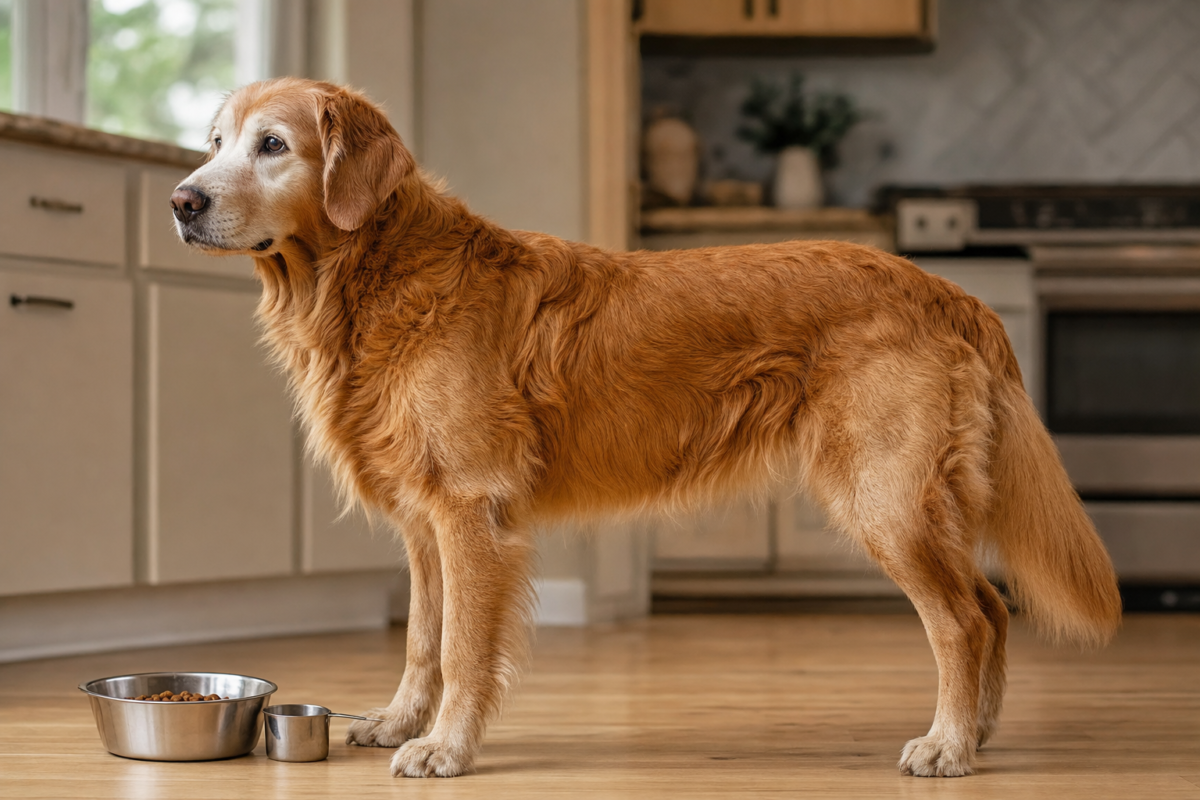
A senior big dog stays at a healthy weight when food is matched to a slower metabolism, movement stays gentle but daily, and body condition is checked by hand every two weeks. Most older large and giant breeds need fewer calories than they did at their peak, often around a fifth less, yet still need good quality protein to hold on to muscle. Aim for ribs you can feel under a light layer, a visible waist from above, and a steady number on the scale, and talk to your veterinarian about any change you cannot explain.
If your big dog has started to look a little rounder through the middle, or a little bonier over the hips, you are noticing exactly the kind of change that matters most in the senior years. Weight is one of the few things in an older dog’s life you can genuinely steer, and a lean senior moves more easily and stays keen for its walks. This guide explains why weight drifts as a big dog ages, how to read your dog’s body in ten seconds, and the simple daily habits that keep an older large breed light on its feet.
How do I keep my senior big dog at a healthy weight?
Keep a senior big dog at a healthy weight by feeding a measured amount of a complete food suited to its age, counting every snack and chew toward the daily total, keeping gentle exercise going every single day, and checking body condition by hand every two weeks rather than relying on the scale alone. Adjust portions in small steps of around ten percent, give each change a few weeks to show, and ask your veterinarian to confirm the target at every checkup.
Why senior big dogs gain or lose weight
As a big dog moves into its senior years, the body quietly changes the rules. Metabolism slows, so the same bowl of food that kept a five year old lean can slowly add pounds to an eight year old. Activity usually drops at the same time, because walks get shorter and play gets gentler. Put those two shifts together and weight gain is the default outcome unless you adjust on purpose.
The less obvious change is muscle. Older dogs naturally lose some muscle mass, especially over the back legs and along the spine. A dog can hold the same number on the scale while trading muscle for fat, which means the scale says everything is fine while the body is actually getting softer and weaker.
Large and giant breeds also count as senior earlier than small dogs. Many big dogs are treated as seniors from around six to eight years of age, and giant breeds sooner still. If you are not sure where your dog sits, our guide to when a large breed dog is considered senior walks through it by size.
Weight can move the other way too. Dental discomfort, a reduced sense of smell, changes in digestion and many other age related shifts can all nudge an older dog to eat less. Gradual, unplanned weight loss in a senior big dog is always worth a conversation with your veterinarian, even when the dog seems otherwise happy.
Senior big dog body condition at a glance
Most veterinarians score body condition on a nine point scale, where four to five is ideal. Use this table as a friendly guide to what each range looks and feels like on an older large breed, and what to do about it.
| Body condition | What you see and feel | What to do |
|---|---|---|
| 1 to 3, too thin | Ribs, spine and hip bones easy to see, little muscle over the back legs | Book a veterinary visit before changing food |
| 4, lean ideal | Ribs easy to feel under a thin layer, clear waist, belly tucks up | Hold portions steady and keep checking |
| 5, ideal | Ribs felt with light pressure, waist visible from above | Hold portions steady and keep checking |
| 6, slightly heavy | Ribs felt with firm pressure, waist faint, little tuck | Trim the daily amount by about ten percent |
| 7, heavy | Ribs hard to find, no waist, fat over the base of the tail | Trim portions, cut snacks, plan with your veterinarian |
| 8 to 9, very heavy | Ribs cannot be felt, rounded belly, fat over the neck and hips | Build a supervised weight plan with your veterinarian |
A senior dog that sits at a four or five is in the sweet spot. Many veterinarians are happy to see older large breeds on the lean side of that range, because every pound saved is a pound the joints do not have to carry.
What is a healthy weight for an older large breed?
There is no single number, because a healthy weight depends on breed, frame and sex. A healthy weight for your senior dog is usually close to what it weighed as a lean, fit young adult, once its frame had finished filling out. If you have records from around age two to four, that weight is a useful anchor to discuss with your veterinarian.
Breed ranges help as a rough guide. A Labrador Retriever typically sits around 55 to 80 pounds, a Golden Retriever around 55 to 75 pounds, a German Shepherd around 50 to 90 pounds and a Great Dane anywhere from about 110 to 175 pounds. Within those ranges, your dog’s own build matters far more than where it lands on a chart, so the hands on check below is the one to trust.
Why weight matters more for a big frame
A big dog’s joints already carry a heavy load. Extra pounds add to the work done by the hips, elbows, knees and spine with every step, every turn and every effort to stand up from a nap. A lean body condition sits right alongside joint support as one of the simplest, most reliable ways to support comfortable movement through the senior years, and it costs nothing but attention.
Joint Load
Every extra pound travels through older hips, elbows and knees. Lean dogs tend to rise and walk more comfortably.
Hidden Muscle Loss
A steady scale can hide muscle traded for fat. Feel the back legs and spine, not just the number.
Snack Creep
Chews, table scraps and pill pockets add up quickly. Count them all toward the daily total.
Unplanned Weight Loss
Gradual loss in an older dog is a signal, not a win. Mention it to your veterinarian early.
How much should a senior big dog eat?
Many senior large breeds need fewer calories than they did at their peak, often around twenty percent less, but the right amount depends on the individual dog, the food and the activity level. The goal is a measured portion that holds a lean body condition, with enough good quality protein to help maintain muscle. A few habits make a real difference:
- Measure every meal with a proper cup or, better still, a kitchen scale. Scooping by eye is the most common way weight creeps on.
- Use the feeding guide on the bag as a starting point only, then adjust to your dog’s body condition. Our guide to how many calories a big dog needs shows how to work out a sensible starting figure.
- Ask your veterinarian whether a senior or weight management formula suits your dog. Many keep protein higher while trimming calories, which helps support muscle as the dog ages.
- Split the daily amount into two meals so energy stays even through the day.
- Count snacks honestly. Keep rewards to roughly ten percent of daily calories and take them out of the meal allowance.
- Swap some biscuits for low calorie options your veterinarian is happy with, such as plain green beans or a few pieces of carrot.
- Keep fresh water available at all times, and notice if your dog starts drinking far more or far less than usual.
When you change portions, change them in small steps of about ten percent and wait two to three weeks before judging the result. Older bodies respond slowly, and a gentle, steady adjustment is kinder and easier to read than a sudden cut.
How to check your senior dog’s body condition in ten seconds
Your hands tell you more than the scale, and this is the most useful habit in the whole guide.
- Ribs. Run your flat hands along the sides of the chest. You should feel the ribs under a thin layer, like the back of your hand. If you have to press hard, ease back on food.
- Waist. Stand over your dog and look down. You want a gentle inward curve behind the ribs rather than a straight line.
- Tuck. From the side, the belly should rise toward the back legs rather than hanging level.
- Muscle. Run a hand along the spine and over the back of the thighs. Sharp bones with little padding over them can point to muscle loss, even in a dog that feels soft elsewhere.
Check every two weeks and jot the result down alongside a monthly weigh in. Our body condition score checker can help you put a number on what your hands are telling you.
Weighing a big dog at home
Most big dogs are too large for a bathroom scale on their own, so weigh yourself, then weigh yourself holding your dog if that is safe for your back and the dog is small enough, and subtract the difference. For larger dogs, many veterinary practices are happy for you to pop in and use their floor scale between appointments. Weigh at the same time of day, before a meal, so the numbers are comparable.
Gentle exercise that helps a senior big dog stay lean
Exercise in the senior years is less about burning calories and more about keeping muscle, keeping joints moving and keeping the mind engaged. Little and often beats long and occasional, because consistent movement supports muscle without leaving an older frame sore the next day.
- Swap one long walk for two or three shorter ones spread through the day.
- Choose soft, even ground such as grass or packed trails over hard pavement where you can.
- Let your dog sniff. Scent work tires the brain in the best way and asks nothing of the joints.
- Include gentle hills or slow walking on a shallow slope if your veterinarian agrees, because it supports hind leg muscle.
- Try swimming or other gentle exercise if your dog enjoys water and has a safe way in and out.
- Watch the morning after. A dog that is stiffer the next day was asked for slightly too much, so shorten the outing rather than stop it.
Everyday habits that support joint comfort
Lean feeding and daily movement work hand in hand with a third habit many Dog Parents keep running through the senior years: daily joint support. Consistency is the point, because joint support ingredients work with time rather than overnight, and a lighter dog with comfortable joints is a dog that keeps wanting to walk.
Many big dog parents add a daily chew made for adult dogs. MoveGuard Adult is built for this stage of life. It brings together New Zealand Green Lipped Mussel, eggshell membrane, glucosamine, chondroitin, MSM, hyaluronic acid and vitamins C and E to support healthy joints, cartilage and connective tissue in adult medium and large breed dogs. Dose by weight following the label, and remember that each chew counts toward the daily snack allowance like anything else your dog eats. It ships as 60 chicken liver flavoured chews, is made in the USA in an NSF registered facility, and is backed by a 60 day guarantee. Check with your veterinarian first if your dog already takes other supplements or medication.
Keep A Lighter Frame Moving
Pair lean feeding with daily joint support made for adult medium and large breeds. Explore MoveGuard Adult.
Signs your senior big dog is at a healthy weight
You do not need a daily weigh in to know things are going well. Look for ribs you can feel with light pressure, a waist you can see from above, a belly that tucks up, firm muscle over the back legs and a weight that holds steady from month to month. Just as telling are the everyday signs: a dog that gets up from the floor without a long struggle, keeps pace on familiar walks and still shows interest in meals and play.
If you notice weight loss you did not plan, weight gain despite careful portions, a sudden change in appetite or thirst, or more stiffness than usual, book a check with your veterinarian. These changes are common in older dogs and are always easier to discuss early.
A simple weight game plan, stage by stage
Early senior, around 6 to 8 years for most large breeds. This is when weight starts to creep. Take a baseline weight and body condition score, start measuring meals properly if you have not already, and ask your veterinarian whether it is time to move to a senior formula. Keep daily walks going, just with more sniffing and less sprinting. Many parents begin a daily joint support routine at this stage so it becomes part of breakfast.
Established senior, around 8 to 10 years. Activity usually drops further, so portions often need another small trim. Check body condition every two weeks, weigh monthly and watch the muscle over the back legs. Split walks into shorter outings and add gentle hill work if your veterinarian agrees.
Late senior, 10 years and beyond, or earlier for giant breeds. The focus shifts toward holding muscle and noticing change. Some very old dogs lose weight rather than gain it, so protein quality and appetite matter more than ever. Keep meals measured, keep movement daily and short, and plan senior wellness visits as often as your veterinarian recommends.
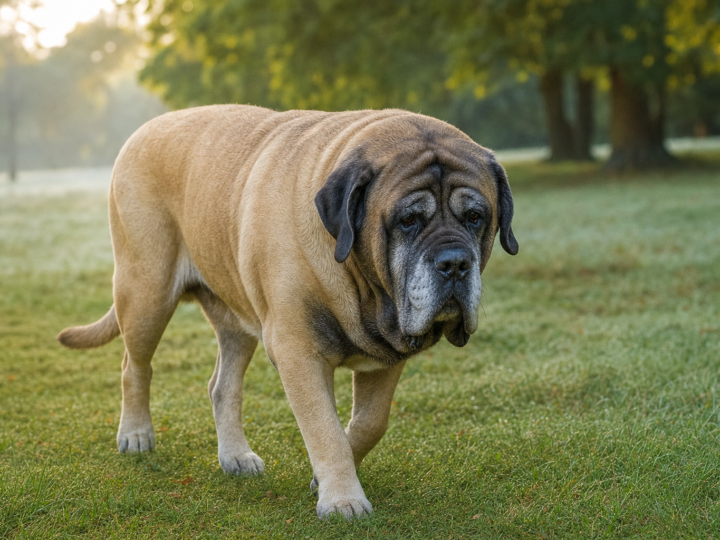
Giant breeds such as Great Danes, Mastiffs and Irish Wolfhounds often reach each of these stages a year or two earlier, so start the habits sooner rather than later.
Common weight mistakes to avoid
Most weight problems in older big dogs come from a few gentle, well meaning habits.
- Feeding the same amount as always. A slower metabolism and less activity mean the old portion is usually too much now.
- Forgetting the extras. Dental chews, table scraps, pill pockets and training rewards can add up to a full extra meal across a day.
- Trusting the scale alone. A steady number can hide muscle loss. Use your hands as well as the scale.
- Cutting food too fast. Big, sudden cuts can leave a dog hungry and unsettled. Small steps of about ten percent work better.
- Stopping walks altogether. Rest feels kind, but it costs muscle. Shorter, gentler outings keep the body working.
- Ignoring unplanned weight loss. It is easy to feel pleased when a heavy dog slims down without trying, but it deserves a veterinary check.
Food motivation, begging and the older big dog
Many big dogs grow more food focused with age, not less, and those soulful eyes at the dinner table are hard to resist. Part of this is simple routine: an older dog has fewer exciting events in the day, so meals become the highlight. The kindest response is to give food the attention without giving the extra calories.
Puzzle feeders and snuffle mats turn a measured meal into a ten minute activity, which satisfies the brain and slows down fast eaters. Scatter part of the daily ration across the lawn for a gentle sniffing game. Set aside a few pieces of the daily kibble as rewards so training and affection never cost extra calories. And agree as a household on the feeding rules, because one family member slipping crusts under the table can quietly undo everyone else’s good work. A senior big dog that feels engaged and loved does not need extra food to know it, and it will move more comfortably for every pound you help it avoid.
Frequently asked questions
How many calories does a senior big dog need?
Many senior large breeds need around twenty percent fewer calories than they did as active younger adults, but the right amount depends on the dog, the food and the activity level. Start from the feeding guide, adjust by body condition and confirm the target with your veterinarian.
Should I switch my older large breed dog to senior food?
Many older big dogs do well on a senior or weight management formula that trims calories while keeping protein high to help maintain muscle. It is not essential for every dog, so ask your veterinarian which food suits your dog at its next checkup.
Why is my senior big dog losing weight?
Older dogs can lose weight for many reasons, including dental discomfort, changes in appetite or digestion and other age related changes. Gradual, unplanned weight loss is always worth a veterinary check, even if your dog seems happy otherwise.
How often should I weigh my senior big dog?
Weigh your senior big dog about once a month, at the same time of day and before a meal, and check body condition by hand every two weeks. Together those two habits catch changes early.
Can a senior big dog lose weight safely?
Yes. Most overweight seniors slim down safely with small portion trims of about ten percent, fewer extras and gentle daily walks, aiming for slow, steady loss over several months. Plan any weight loss with your veterinarian so muscle is protected along the way.
The bottom line
Keeping a senior big dog at a healthy weight comes down to a handful of steady habits: measure every meal, count every extra, keep gentle walks going every day, and check body condition with your hands every two weeks. Aim for ribs you can feel, a waist you can see and muscle you can still find over the back legs, and treat any unexplained change as a reason to call your veterinarian.
Want the senior comfort roadmap in one place? Grab our free Big Dog Mobility Guide for the daily movement checklist, home comfort setup and joint friendly routines, all written for large and giant breeds.
This article is for general educational purposes only and is not veterinary advice. It is not intended to diagnose, treat, cure or prevent any disease. Always consult your veterinarian about your dog’s individual health, nutrition and supplement needs. These statements have not been evaluated by the Food and Drug Administration.
Support Big Breed Joints from Day One
Large and giant breeds carry more load through every growth stage. MoveGuard Growth supports developing joints in young big dogs (8 to 30 months); MoveGuard Adult keeps grown big dogs moving comfortably.
Leave a Reply