
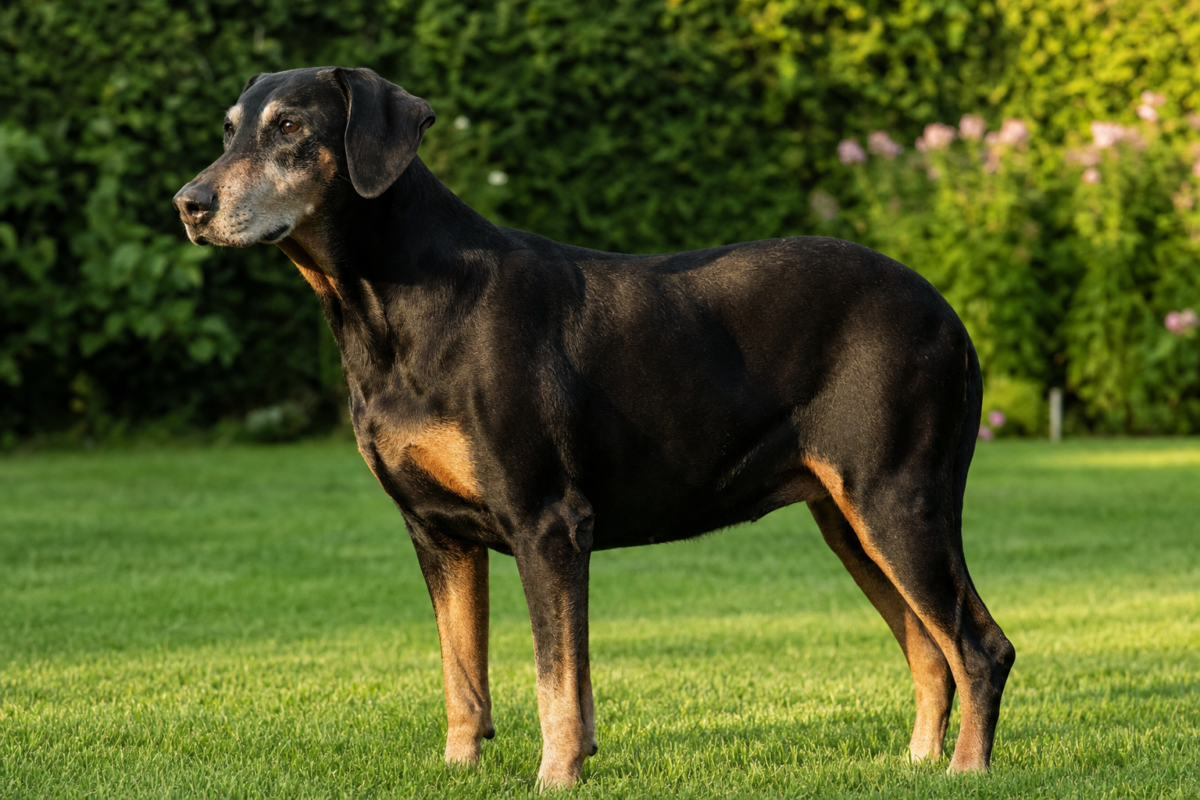
A large breed dog is generally considered senior at about 7 years of age, and a giant breed at about 5 to 6 years. Size sets the clock. A dog with an adult weight of 50 to 80 pounds usually enters the senior stage around 7, an 80 to 100 pound dog around 6 to 7, and a dog over 100 pounds around 5. Senior is a care label rather than a health verdict. It simply means your dog has earned closer monitoring, an adjusted routine and more frequent veterinary checkups.
One day your big dog takes the stairs a little slower, sleeps a little deeper, and you find yourself wondering whether the word senior applies yet. It is a question every large and giant breed parent reaches sooner than they expect, because big dogs cross that line years before the little dog down the street. Knowing where the line sits for your dog’s size is genuinely useful, because it tells you when to change what you do rather than simply how to feel. This guide gives you the age thresholds by adult weight, what actually changes at that point, and the daily habits that keep an older big dog comfortable, mobile and very much themselves.
At what age is a large breed dog considered senior?
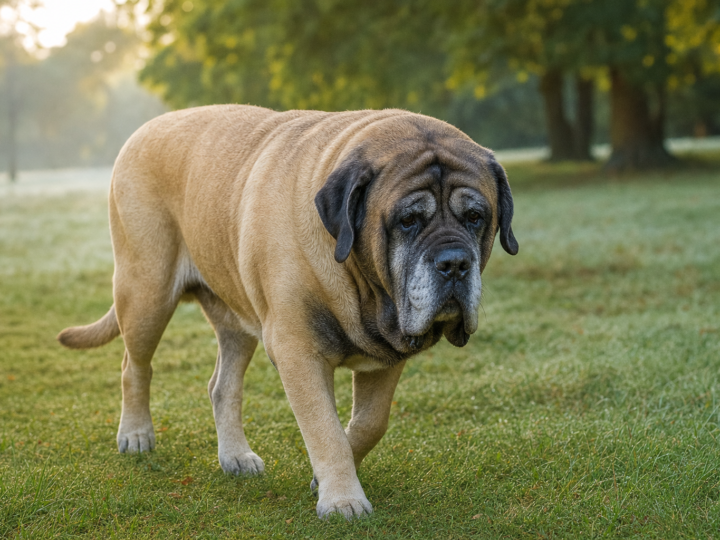
Most veterinarians consider a large breed dog senior at around 7 years of age, and a giant breed dog senior at around 5 to 6 years. The threshold moves earlier as adult weight goes up, because larger dogs mature faster, age faster and have shorter average lifespans than small breeds. A 60 pound Labrador Retriever is usually treated as senior at about 7, a 90 pound Rottweiler at about 6, and a 140 pound Great Dane or English Mastiff at about 5.
These are care thresholds, not health predictions. Reaching the senior stage does not mean your dog is unwell or slowing down, and plenty of big dogs sail past the mark with no visible change at all. What the label really does is tell you and your veterinarian when to start looking more closely, more often, so that anything worth catching gets caught while it is still small.
Why size sets the senior clock
Large and giant breeds compress a whole lifetime into fewer years. A giant breed puppy can grow from under two pounds at birth to well over a hundred pounds within two years, which is an extraordinary amount of building in a very short window. That accelerated start is matched by an accelerated finish, and researchers studying why giant breeds live shorter lives point to that rapid early growth as a central reason.
The practical result is that the familiar idea of one dog year equalling seven human years falls apart at the top of the size range. A 10 year old Beagle is an older dog with years still ahead. A 10 year old Irish Wolfhound is already remarkable. Two dogs of the same age can be at completely different life stages purely because of adult weight, which is why the senior threshold has to be read against your dog’s size rather than a single number applied to every dog.
Senior age by adult weight, at a glance
Use this table as a practical guide to when your dog moves into the senior care bracket. Individual dogs vary, and your veterinarian may move the line either way based on what they see.
| Adult weight | Considered senior at | Typical lifespan |
|---|---|---|
| 50 to 65 lb | About 7 to 8 years | 10 to 13 years |
| 65 to 80 lb | About 7 years | 10 to 12 years |
| 80 to 100 lb | About 6 to 7 years | 9 to 12 years |
| 100 to 130 lb | About 5 to 6 years | 8 to 11 years |
| 130 lb and above | About 5 years | 7 to 10 years |
The American Veterinary Medical Association notes that larger breeds are generally considered senior earlier than small breeds, given their shorter typical lifespans. Read more from the AVMA’s guidance on caring for senior pets.
If your dog sits on a boundary, take the earlier age. Starting senior monitoring a year early costs nothing beyond an extra veterinary visit. Starting a year late can mean missing the first quiet signs of a change that was easier to manage when it was small.
What actually changes when a big dog becomes senior
The date on the calendar changes nothing on its own. What changes is your routine, and the shift is smaller than most parents fear. Six things move.
- Veterinary visits go from yearly to twice yearly. This is the single most valuable change, because six months is a long time in a big dog’s life and twice yearly visits catch drift early.
- Baseline bloodwork becomes routine. Your veterinarian will often suggest annual or twice yearly blood and urine panels so there is a personal baseline to compare against later.
- Weight gets watched more closely. Metabolism slows while appetite frequently does not, and even a few extra pounds ask more of older joints.
- Exercise changes shape rather than disappearing. Shorter and more frequent replaces long and hard, and soft ground replaces pavement wherever you can manage it.
- Joint support becomes a daily habit. Most big dog parents who start a routine start it here, though earlier is genuinely better.
- You start watching for small differences. Stiffness after a nap, a pause at the bottom of the stairs, a slower turn on a walk. These are the things worth mentioning at the next visit.
The middle years matter more than the label
Here is the part that is easy to miss. The habits that make a comfortable senior big dog are largely built before the senior label arrives. Keeping a lean body condition through the adult years, protecting joints from repeated hard impact, and starting a joint support routine in the middle years all shape how the later ones feel. If your dog is five and healthy, that is not too early to think about this. It is exactly the right time, and our guide on when to start joint support walks through the timing in detail.
Extra Weight
Every additional pound travels through the joints on every step. Lean is the cheapest comfort measure there is.
Doing Nothing
Rest feels kind but muscle loss makes joints work harder. Gentle daily movement protects the frame that supports them.
Slippery Floors
Hard smooth flooring is a real hazard for an older big dog. Runners and rugs on the main routes make a visible difference.
Waiting To Ask
Big dogs hide discomfort well. Mention small changes at the next checkup rather than waiting for something obvious.
How should you feed a senior large breed dog?
Feeding an older big dog is mostly about portion honesty. Activity usually drops before appetite does, so the same scoop that kept your dog lean at four can quietly add weight at eight. A few habits keep it simple:
- Measure meals with a proper cup or a kitchen scale rather than judging by eye, and recheck the amount whenever activity changes.
- Feed to a lean body condition rather than to a number on the bag, because the right portion is the one that keeps your individual dog trim.
- Split the daily amount into two meals rather than one large one, which suits deep chested breeds and keeps energy steadier.
- Count treats and chews in the daily total. They add up faster than most of us like to admit.
- Keep water easily reachable, and if your dog is reluctant to walk to the bowl, add a second one nearer to where they rest.
- Ask your veterinarian whether a senior formula suits your dog. Some older big dogs do well on one, others do better staying on a good adult food with the portion adjusted.
How to check body condition in ten seconds
The scale tells you weight. Body condition tells you whether that weight is right for your dog. You can check it at home in seconds, and doing it monthly catches gain long before it looks obvious.
- Ribs. Run your hands along the sides. You should feel the ribs easily under a thin layer. If you have to press to find them, ease back on portions.
- Waist. Look down from above. There should be a clear waist that tucks in behind the ribs rather than a straight line from chest to hip.
- Tuck. From the side, the belly should rise toward the back legs rather than hanging level.
Check every few weeks and adjust portions gently, in small steps, with your veterinarian’s guidance.
Exercise for a senior big dog
The instinct when a dog gets older is to do less. The better answer is usually the same total in smaller pieces. Regular gentle movement keeps joints mobile and holds the muscle that supports them, while one long hard outing followed by two sore days does the opposite.
- Two or three short walks a day suit almost every senior big dog better than a single long one.
- Choose grass, soft trails or sand over concrete whenever you have the option.
- Give an older dog a few minutes of easy walking to warm up before asking for anything more.
- Add sniffing time and gentle scent games, which tire a dog beautifully and cost the joints nothing.
- Consider swimming and other low impact exercise if your dog enjoys water.
- Watch the morning after, not just the walk itself. A dog that is stiffer the next day was asked for slightly too much.
Daily joint support in the senior years
Everything above serves one goal, which is keeping an older big dog comfortable enough to keep moving. A daily joint support routine sits alongside lean feeding, sensible walks and good footing as one more habit anchored to breakfast, and habits that attach to something you already do every day are the ones that actually last.
Many big dog parents add a daily chew made for adult large breeds. MoveGuard Adult is built for this stage of life. It brings together clinically studied eggshell membrane and New Zealand green lipped mussel alongside glucosamine, chondroitin, MSM and hyaluronic acid to support healthy joints, cartilage and connective tissue in adult medium and large breed dogs. It comes as 60 soft chews in chicken liver flavour, is made in the USA in an NSF facility, and is backed by a 60 day guarantee. Dose by weight following the label, and check with your veterinarian first if your dog is already taking other supplements or medication.
Daily Support For Older Big Dogs
Give your senior big dog daily joint support built for adult large breeds. Explore MoveGuard Adult.
Signs your big dog is ageing well
You do not need a checklist to know a comfortable dog, but it helps to know what you are looking for. A senior big dog who is doing well holds a steady lean weight, gets up from a lie down without visible effort, keeps a normal appetite and thirst, moves smoothly on the first walk of the day, and still wants the things they always wanted, whether that is the door, the ball or the sofa.
Worth mentioning to your veterinarian: stiffness that lasts more than a few minutes after rest, reluctance on stairs or getting into the car, a change in appetite or thirst, new lumps, a change in toilet habits, laboured breathing, disorientation, or a dog who stops greeting you at the door. None of these mean something is wrong. All of them are worth a conversation, and our guide to the signs a large dog is slowing down covers what each one can point to.
A simple senior care plan, stage by stage
You do not need a complicated program. You need the right emphasis at the right time.
The approach years, one to two years before the threshold. This is the highest value window and almost nobody uses it. Lock in a lean body condition, put runners on slippery floors before they are needed, and start a daily joint support routine while your dog is still moving beautifully. Ask your veterinarian to record a baseline at the annual visit.
Early senior, the first two years past the threshold. Move to twice yearly checkups and add baseline bloodwork. Reshape walks into shorter, more frequent outings. Keep the same activities your dog loves, just in smaller portions. Most dogs look and behave exactly as they did the year before, and that is the point.
Middle senior. Small changes usually start showing here. A slower first walk, more deliberate stairs, longer naps. Adjust the environment rather than the dog: raised bowls if your veterinarian suggests them, a supportive bed out of draughts, a ramp for the car. Keep two or three gentle outings a day going.
Late senior. Comfort leads every decision. Keep movement gentle and frequent, keep the floors safe, keep weight down, and keep the veterinary conversation open and regular. This is the stage where knowing your own dog is worth more than any general rule, because you are the one who notices the difference between a quiet day and a change.
Common senior care mistakes to avoid
Most of what goes wrong in the senior years comes from a handful of well meant habits. Avoid these and you are already ahead.
- Treating slowing down as just getting old. It often is. It is also the most common way a manageable change goes unmentioned for a year.
- Letting weight creep. A few extra pounds on an older big dog is the heaviest tax you can put on ageing joints, and the easiest one to avoid.
- Stopping exercise entirely. Muscle protects joints. Rest without movement loses that protection quickly.
- Skipping the second annual checkup. Twice yearly visits exist precisely because big dogs change faster than the calendar suggests.
- Ignoring the floors. Slipping on smooth flooring frightens an older dog and makes them reluctant to move, which compounds everything else.
- Waiting for a problem before supporting joints. The best time to start a daily routine is while your dog still moves well.
- Forgetting the teeth. Dental discomfort quietly changes eating, mood and weight in older dogs, and it is easy to overlook when you are focused on the legs.
How ageing changes behaviour, and what is normal
The senior years change more than the body. Many big dogs become noticeably softer company. They settle faster, seek contact more, follow you from room to room, and choose the sofa over the garden more often than they used to. That is a normal and rather lovely part of getting older, and it is one of the reasons so many parents describe the senior years as their favourite.
Some changes deserve a closer look. Sleeping through the day and pacing at night, standing in corners, getting stuck behind furniture, forgetting a familiar routine, or new anxiety when left alone can all point to changes worth discussing with your veterinarian rather than accepting as inevitable. Hearing and eyesight often fade gradually too, and a dog who has stopped responding to their name may simply not be hearing it. Hand signals, a bit more warning before you touch a sleeping dog, and keeping furniture where it has always been all help enormously.
What almost never changes is the bond. An older big dog still wants the same things they always wanted, in slightly smaller doses, and meeting them there is most of the job.
Frequently asked questions
At what age is a large breed dog considered senior?
Most large breed dogs are considered senior at around 7 years of age, and giant breeds at around 5 to 6 years. The threshold moves earlier as adult weight increases, so a 60 pound dog is usually treated as senior later than a 130 pound dog. Your veterinarian may adjust the line for your individual dog.
Is a 7 year old big dog considered old?
For most large breeds, yes, 7 is the point where senior care begins. For giant breeds a 7 year old is already well into the senior stage. That does not mean an unwell dog. It means twice yearly checkups, closer weight monitoring and a routine adjusted for an older frame.
Do giant breeds become senior earlier than large breeds?
Yes. Giant breeds over roughly 100 pounds are usually considered senior at about 5 to 6 years, compared with about 7 for large breeds. Faster early growth and shorter average lifespans move the whole timeline forward for the biggest dogs.
What changes when my big dog becomes a senior?
Mainly your routine. Veterinary visits move from yearly to twice yearly, baseline bloodwork becomes standard, weight gets watched more closely, walks become shorter and more frequent, and most parents start a daily joint support habit if they have not already.
Should I switch my senior big dog to senior dog food?
Not automatically. Some older big dogs do well on a senior formula, while others do better on a good adult food with the portion adjusted for lower activity. Body condition matters more than the label on the bag, so ask your veterinarian what suits your individual dog.
The bottom line
Your large breed dog is generally senior at about 7, and your giant breed dog at about 5 to 6, with the exact line moving earlier as adult weight goes up. Treat it as a prompt rather than a verdict. Book the second checkup of the year, get a baseline on record, keep your dog lean, swap one long walk for two short ones, make the floors safe, and keep a daily joint support routine going. Do those things and the senior years become what they should be, which is the easy, affectionate stretch you get to enjoy with a dog who knows you completely.
Want the simple roadmap in one place? Grab our free Big Dog Mobility Guide for the daily comfort checklist, feeding framework and low impact movement limits, all written for large and giant breeds.
This article is for general educational purposes only and is not veterinary advice. It is not intended to diagnose, treat, cure or prevent any disease. Always consult your veterinarian about your dog’s individual health, nutrition and supplement needs. These statements have not been evaluated by the Food and Drug Administration.
Support Big Breed Joints from Day One
Large and giant breeds carry more load through every growth stage. MoveGuard Growth supports developing joints in young big dogs (8 to 30 months); MoveGuard Adult keeps grown big dogs moving comfortably.
Leave a Reply