
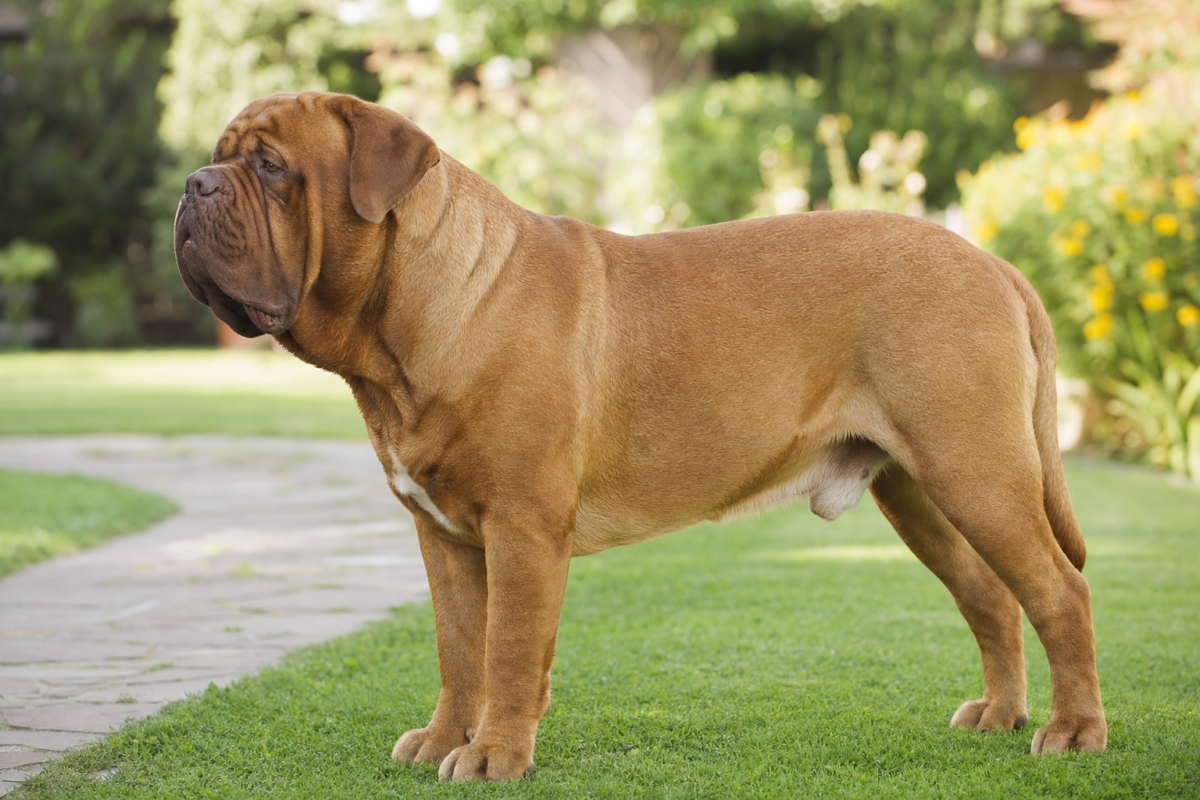
Your big dog probably needs more mobility support if you can answer yes to two or more of these: it takes longer to stand up after a nap, it hesitates at stairs or the car, it slows or lags on walks it used to enjoy, it lies down sooner during play, or it has started avoiding slick floors. Score the ten question quiz below out of twenty. Zero to three means keep doing what you are doing, four to nine means tighten the daily habits now, and ten or more means book a veterinary check before anything else.
Big dogs do not announce that something has changed. They keep meeting you at the door, keep eating with enthusiasm, and keep trying to do everything they did last year. The shifts show up in small physical moments instead: a pause before the stairs, a slower rise from the rug, one less lap of the garden. This quiz turns those moments into something you can actually measure, so you know whether to relax, adjust the routine, or pick up the phone to your veterinarian.
Does my big dog need more mobility support?
Your big dog needs more mobility support when everyday movements have started to cost visible effort. The clearest early markers are a slower rise from rest, hesitation before stairs or jumping into the car, a shorter tolerance for the usual walk, and a preference for carpet over hard flooring. One of those on its own is often nothing. Two or three appearing together, or any one of them getting steadily worse over a few weeks, is your signal to act.
Age alone is not the answer. A seven year old Great Dane and a seven year old Labrador are at different points of life, and plenty of dogs slow down for reasons that have nothing to do with joints, including weight gain, a quiet winter, or simply losing fitness. The quiz below is built to separate a dog who needs better daily habits from a dog who needs a veterinary appointment.
How to use this quiz
Watch your dog over three ordinary days rather than answering from memory. Memory smooths things out, and mobility changes are exactly the sort of thing memory smooths away. Score each of the ten questions as 0 for never, 1 for sometimes, and 2 for usually or always, then add them up.
Answer for how your dog is now, not how it was at its best. Watching after rest is especially useful, because stiffness shows up most clearly in the first minute after a long sleep and then fades as the dog warms up.
It also helps to pick three ordinary days rather than three interesting ones. A weekend of long hikes tells you how your dog copes with an unusual demand. A normal Tuesday tells you how it copes with life, and life is what you are trying to make comfortable. If someone else in the household walks your dog too, ask them the same ten questions separately and compare. Two observers catch more than one, and a difference of opinion is usually a sign that a change is real but still intermittent.
The big dog mobility check quiz
| # | Question | 0 / 1 / 2 |
|---|---|---|
| 1 | Does your dog take longer than a few seconds to stand up after a nap? | Never / Sometimes / Usually |
| 2 | Does it look stiff for the first minute of walking, then loosen up? | Never / Sometimes / Usually |
| 3 | Does it hesitate, pause or need help at stairs? | Never / Sometimes / Usually |
| 4 | Does it avoid jumping into the car or onto furniture it used to manage? | Never / Sometimes / Usually |
| 5 | Does it lag behind or want to turn home earlier than it used to? | Never / Sometimes / Usually |
| 6 | Does it lie down sooner during play than it did a year ago? | Never / Sometimes / Usually |
| 7 | Does it pick its way carefully across hard or slippery floors? | Never / Sometimes / Usually |
| 8 | Does it shift position often while resting, or settle with difficulty? | Never / Sometimes / Usually |
| 9 | Has it lost visible muscle across the back legs or shoulders? | Never / Sometimes / Usually |
| 10 | Is it carrying more weight than it did last year? | Never / Sometimes / Usually |
Take the Quiz
The American Kennel Club's Chief Veterinary Officer, Dr. Jerry Klein, DVM, has written extensively on the slower growth and development timeline of large and giant breeds. Read more from the AKC's guidance on caring for large-breed dogs.
What your score means
0 to 3: comfortable. Your dog is moving well for its size and age. Keep the weight lean, keep walks regular, and run the quiz again in three months so you have a baseline to compare against.
4 to 9: worth acting on now. This is the range where daily habits do the most good and where most big dogs sit once they pass middle age. Tighten portions, split exercise into shorter and more frequent outings, sort out the floors, add a supportive bed, and start a daily joint support routine. Mention the score at your next veterinary visit.
10 or more: book a veterinary check. A score this high means effort is showing up across several ordinary movements. That deserves a proper assessment rather than a home adjustment, because the cause matters and only your veterinarian can identify it. Take your answers with you.
Any single answer of 2 on questions 3, 4 or 9 is worth a conversation on its own, whatever the total says. A sudden change of any kind, especially limping that appears overnight, means calling your veterinarian rather than waiting for three days of observation.
Write the score and the date somewhere you will find it again, along with which questions carried the points. Two dogs can reach the same total by very different routes, and knowing that your eight came mostly from stairs and rising rather than from weight and walk length is what makes the next comparison meaningful.
Slow Rise From Rest
The single most reported early sign. Watch the first ten seconds after a long nap, not the walk that follows.
Stair Hesitation
A pause at the top or bottom of the stairs is a decision, and decisions mean your dog is weighing the cost.
Shrinking Walk
Turning for home earlier than usual is easy to explain away as weather or mood. Track it for a week instead.
Muscle Loss
Thinner back legs while overall weight holds steady is a quiet change worth mentioning to your veterinarian.
Scoring the weight question honestly
Question ten carries more weight than its two points suggest, because weight is the one factor you fully control. Every extra pound on a big dog travels through the same joints on every step of every day.
Check body condition rather than trusting the scale alone:
- Ribs. You should feel them easily under a thin layer. If you have to press, ease back on portions.
- Waist. From above, look for a clear narrowing behind the ribs.
- Tuck. From the side, the belly should rise toward the back legs.
- Muscle. Feel across the thighs and shoulders. Losing muscle while holding weight is worth reporting.
Measure meals rather than pouring them, count treats inside the daily total, and confirm portions with your veterinarian at each visit. Weight tends to creep upward in the same season that activity falls away, so the two questions at the end of the quiz usually move together. Catching that pattern early is far easier than reversing it a year later.
If you scored 4 to 9: what to change this week
Most big dogs land in this band, and most of them improve when the routine changes rather than when anything dramatic happens. Four adjustments do the heavy lifting.
- Split the exercise. Two or three short walks beat one long one. Choose grass or soft trails over concrete, and turn for home before you see the pace drop. Swimming and other low impact exercise suits older frames well.
- Fix the footing. Runners and rugs along the routes your dog uses most remove the slips that cost confidence. A ramp into the car removes the impact entirely.
- Upgrade the bed. Long enough to stretch out fully, thick enough to keep elbows and hips off the floor, and away from cold hard surfaces.
- Anchor a daily habit. Attach joint support to breakfast so it never gets skipped, and run a two minute hands on check over hips, knees, shoulders and paws while you are there.
- Keep the warm up. Give your dog a couple of minutes of easy indoor movement before the first walk of the day rather than going from a deep sleep straight onto cold ground and a set of steps.
Give the changes three or four weeks, then score the quiz again. A falling score tells you the routine is working. A rising one tells you it is time to call your veterinarian.
Daily joint support as part of the routine
Everything above serves one goal: keeping a big dog comfortable enough to keep moving, because movement is what maintains the muscle that supports the joints in the first place. A daily joint support chew is a simple habit to layer on top of lean feeding, sensible walks and good footing.
MoveGuard Adult is built for adult medium and large breed dogs at exactly this stage. It combines clinically studied eggshell membrane and New Zealand green lipped mussel with glucosamine, chondroitin, MSM and hyaluronic acid to support healthy joints, cartilage and connective tissue. It ships as 60 soft chews in chicken liver flavour, is made in the USA in an NSF facility, and comes with a 60 day guarantee. Dose by weight following the label, and check with your veterinarian if your dog already takes other supplements. If you want to understand the ingredients before choosing anything, our guide to joint support ingredients works through them one at a time.
Support Comfortable Movement
Give your big dog daily joint support built for adult large breeds. Explore MoveGuard Adult.
What to bring to the veterinary appointment
If your score sends you to the clinic, a few minutes of preparation makes the visit far more useful. Your veterinarian sees your dog for twenty minutes in a strange room. You see it every day.
- Your quiz answers, with the questions that scored 2 marked clearly.
- Roughly when you first noticed each change, and whether it is getting worse, staying level or coming and going.
- A short phone video of your dog rising from rest and walking away from the camera on a flat surface.
- Current weight, food brand, daily portion, treat habit and anything else your dog takes.
- Whether stiffness is worse in the cold, after rest, or after a long walk.
Common mistakes when scoring a big dog
The quiz only works if the answers are honest, and there are a few predictable ways they drift.
- Scoring the best day. Watch three ordinary days, including a cold morning after a long sleep.
- Blaming age for everything. Age explains a slower pace. It does not explain a sudden change.
- Cutting all exercise after a high score. Doing nothing accelerates muscle loss. Do the same amount, gently, in smaller pieces.
- Skipping the weight question. It is the least comfortable one and the most useful.
- Running it once. A single score is a snapshot. Two scores three months apart is information.
Reading your dog beyond the score
A number is a prompt, not a verdict. The dogs that do best are the ones whose parents notice small things early and adjust without panic. That means paying attention to how your dog moves rather than only how far it walks, and treating a changed habit as data rather than as a personality quirk.
Big dogs are stoic by nature. A breed built to work through discomfort will keep showing up at the door with the same enthusiasm long after something has started to feel different, which is exactly why a structured check beats a general impression. Our guide to the signs your large dog is slowing down covers what usually appears first, and in what order.
Frequently asked questions
How often should I run this mobility quiz?
Every three months is a sensible rhythm for an adult big dog, and monthly once your dog is in its senior years. The value comes from comparing scores over time rather than from any single result.
At what age do large dogs start to lose mobility?
Large breeds often show the first small changes from around seven or eight years old, and giant breeds sometimes a year or two earlier. Size matters more than age alone, which is why a big dog needs watching sooner than a small one.
Is stiffness after resting normal in a big dog?
Brief stiffness that eases within a minute of moving is common in older large dogs, but it is still worth tracking. Stiffness that is getting worse week by week, or that does not ease with gentle movement, deserves a veterinary opinion.
Can a young large breed dog score high on this quiz?
Yes, and that is worth taking seriously. A young dog showing effort in everyday movement should be seen by a veterinarian rather than managed at home, since the causes at that age are different from those in an older dog.
Will losing weight improve my big dog mobility?
Reaching and holding a lean body condition reduces the load on every joint with every step, and it is one of the most useful things any big dog parent can do. Agree a target and a plan with your veterinarian rather than cutting food sharply on your own.
The bottom line
The point of this quiz is not the number. It is the habit of looking closely at how your big dog rises, climbs, walks and settles, and doing it often enough to notice change while it is still small. Score it today, act on the band you land in, and score it again in three months. That single loop of watching, adjusting and watching again is what keeps a big dog moving comfortably for longer.
Want the simple roadmap in one place? Grab our free Big Dog Mobility Guide for the daily comfort checklist, feeding framework and low impact movement limits, all written for large and giant breeds.
This article is for general educational purposes only and is not veterinary advice. It is not intended to diagnose, treat, cure or prevent any disease. Always consult your veterinarian about your dog's individual health, nutrition and supplement needs. These statements have not been evaluated by the Food and Drug Administration.
Support Big Breed Joints from Day One
Large and giant breeds carry more load through every growth stage. MoveGuard Growth supports developing joints in young big dogs (8 to 30 months); MoveGuard Adult keeps grown big dogs moving comfortably.
Leave a Reply