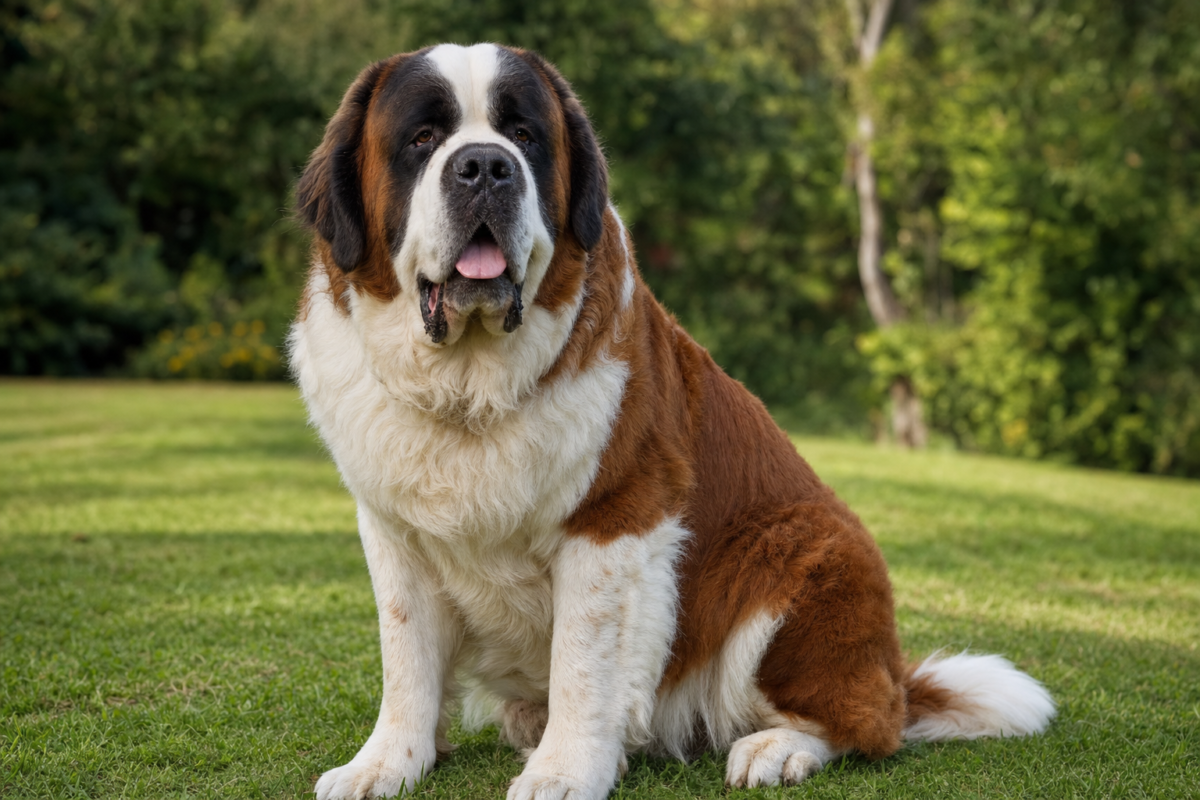
Some big dogs drool a great deal and others stay almost completely dry, so size alone is a poor predictor. Drool volume is set by the shape of the mouth, especially the loose upper lips known as flews and the pockets they create. Breeds built with heavy jowls, such as the Saint Bernard, English Mastiff and Newfoundland, simply cannot hold the saliva they produce. Tight lipped big dogs such as the German Shepherd, Doberman and Rhodesian Ridgeback rarely leave a mark. Every dog, whatever the lip shape, drools more around food, heat, excitement and car travel.
If you are weighing up a big dog and quietly wondering whether your sofa is about to become a towel, this is a fair question to ask before the puppy comes home rather than after. The honest answer is more encouraging than the internet suggests. Drool is not a tax that every big dog charges. It is a feature of certain builds, it is predictable once you know what to look at, and it is easy to live with when you plan for it. This guide covers what creates drool, which big breeds produce the most, when a wet chin is worth a word with your veterinarian, and the household habits that keep it in its place.
Do big dogs drool a lot?
Some do and many do not. Drooling tracks the structure of a dog’s mouth far more closely than it tracks body weight. A dog with long, loose upper lips carries saliva in folds that cannot form a tight seal, so it spills whenever the head moves, dips or shakes. A dog with a close fitting lip line keeps the same saliva inside the mouth and swallows it without you ever noticing.
That is why a 150 pound Saint Bernard can leave a puddle by the water bowl while a 90 pound German Shepherd beside it leaves nothing at all. So many of the famous giants share a heavy jowled, broad muzzled build that drool and size have become linked in the public imagination. The link is real, but it runs through anatomy rather than through the number on the scale.
What actually makes a big dog drool
Every healthy dog makes saliva continuously. It keeps the mouth comfortable, helps food move and starts the work of digestion. The question is never how much a dog produces, but how much of it stays in.
Three parts of the build decide that. The first is the flews, the fleshy upper lips that hang along the sides of the jaw. Long, pendulous flews create a loose, open reservoir, and the deeper the fold the more saliva collects before it escapes. The second is muzzle length, since a shorter, broader muzzle leaves less room for the tongue and lips to form a seal. The third is the lower lip line, which in some big dogs sits slightly away from the jaw and acts like a small open cup.
On top of the build sit the everyday triggers that raise saliva in every dog. Food anticipation is the biggest, and the smell of a meal being prepared starts a wet chin in the driest mouthed breed on earth. Heat and hard panting carry saliva out with each breath. Excitement, greetings, the sight of a lead and car travel all do the same. None of that is unusual.
Big dog drool levels, breed by breed
Use this comparison as a guide rather than a promise. Individual dogs vary, and lines within a breed vary too, since a tighter or looser head can run in a family. Still, the pattern below holds up well across the big breeds.
| Breed | Typical adult weight | Usual drool level | Why |
|---|---|---|---|
| Saint Bernard | 120 to 180 lb | Heavy | Deep flews and loose lips hold saliva until it spills |
| English Mastiff | 120 to 230 lb | Heavy | Very pendulous flews on a short, wide jaw |
| Newfoundland | 100 to 150 lb | Heavy | Broad muzzle with soft, loose lip edges |
| Dogue de Bordeaux | 99 to 145 lb | Heavy | Short muzzle with deep hanging lips |
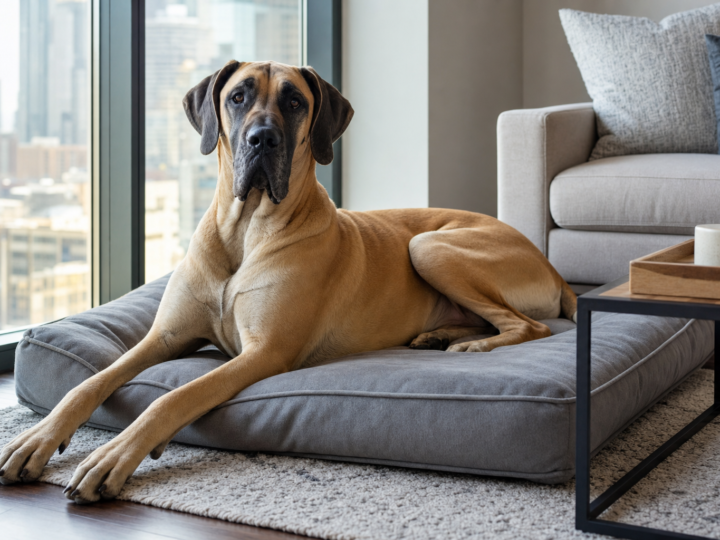
| Great Dane | 110 to 175 lb | Moderate | Loose lower lips, wettest around food and water |
| Boxer | 55 to 80 lb | Moderate | Short muzzle and a lip line that traps water |
| Cane Corso | 88 to 120 lb | Light to moderate | Tighter flews than most of the mastiff family |
| Great Pyrenees | 85 to 115 lb | Light | Fairly tight lip line for such a large head |
| Labrador Retriever | 55 to 80 lb | Light | Clean lip line, wet only in anticipation |
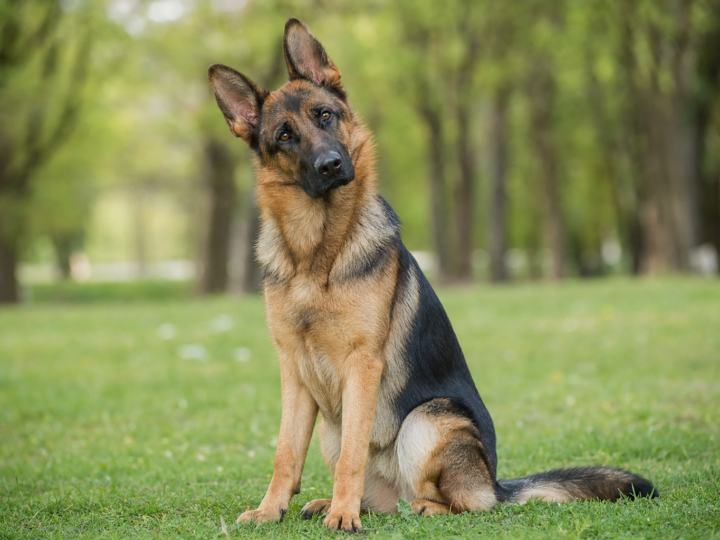
| German Shepherd | 50 to 90 lb | Light | Tight lips and an efficient seal |
| Doberman | 60 to 100 lb | Very light | Close fitting lips on a long muzzle |
| Rhodesian Ridgeback | 70 to 85 lb | Very light | Tight, dry mouth and a lean head |
The American Kennel Club’s Chief Veterinary Officer, Dr. Jerry Klein, DVM, has written extensively on the slower growth and development timeline of large and giant breeds. Read more from the AKC’s guidance on caring for large-breed dogs.
When does a big dog drool the most?
Even in the wettest breeds, drool is not constant. It arrives in predictable waves, and once you see the pattern you can plan around it.
The half hour before a meal is the peak for almost every dog. Water is second, because a heavy jowled dog carries a mouthful out of the bowl and delivers it several steps away. Warm afternoons come third. Then come the emotional moments: the greeting at the door, a visitor arriving, and the car journey to somewhere new. A dog unsettled by movement often arrives with a soaked chest and is perfectly cheerful about it.
Why the first two years change the picture
A heavy jowled puppy is usually far drier than the adult it becomes. Puppy lips are shorter and neater, and the deep folds that define an adult mastiff head simply have not formed yet. Across the growth window, roughly 8 to 30 months in the biggest breeds, the head broadens, the flews lengthen and the drool arrives with them. So a nine month old Saint Bernard who seems reassuringly tidy is not proof of a dry adult, and Dog Parents who chose a giant breed partly on that early impression are sometimes surprised in the second year. Once you know the adult head is coming, you can build the towel habit early and never think about it again.
A Sudden Change
A dog who is normally dry and starts drooling heavily deserves a call to your veterinarian rather than a wait and see.
Heat And Panting
Saliva thins and spills when a big dog pants hard. Shade, fresh water and a real rest are the answer.
Mouth Comfort
Pawing at the face, dropping food or a strong smell from the mouth are all worth a professional look.
Motion And Nerves
Car travel and unfamiliar places raise saliva. Short, calm practice journeys usually settle it over time.
How to live with drool without constant clean up
Households that manage drool well are not scrubbing all day. They have made a few small changes that catch it at the source, and every one of them becomes automatic within about a week.
- Keep a drool towel where the dog actually is. One by the food bowl, one by the door and one on the sofa arm removes almost all of the work.
- Raise and contain the water station. A wide, heavy bowl on a washable mat catches the mouthful that travels out with your dog.
- Wipe the folds of the lips after meals and after water. A soft cloth along the flews keeps the skin dry and comfortable.
- Choose washable covers for the furniture your dog uses, and pick fabrics that shrug off a shake rather than absorbing it.
- Learn the head shake. A big dog shaking off after a drink sends drool a surprising distance, so step aside rather than mop later.
How to check your dog’s mouth in ten seconds
A quick routine check tells you whether today’s wet chin is ordinary or worth a mention at the next visit.
- Look. Lift the flews gently. Gums should look healthy and even, and the folds underneath should be clean and dry rather than sore.
- Smell. A normal mouth smells of very little. A strong or sour smell is the clearest signal to book a veterinary check.
- Compare. Drool that suddenly runs from one side only, or that arrives with a change in appetite, is a change worth reporting.
Do this once a week while you are already sitting together and it takes no time at all.
Drool, heat and exercise
Warm weather is when even a light drooling big dog turns damp, and it is also the moment to pay closest attention. Large and giant breeds carry a lot of body mass relative to their ability to shed heat, so they pant harder and longer than a small dog doing the same work, and saliva goes with the airflow.
Walk in the cooler hours, carry water on any longer outing and build in real rest rather than pushing through. Treat panting that does not settle within a few minutes of stopping as a signal to end the session and cool down in the shade. Keeping your dog at a lean body condition helps here too, because a lean big dog handles warm days far more comfortably than a heavy one.
Signs the drooling is perfectly normal
Most drool in a big dog is simply plumbing. It is normal when it follows the pattern you already know: the meal, the water bowl, the greeting, the warm afternoon and the car. It is normal when it looks the same today as it did last month, and when your dog is bright, eating well and moving comfortably.
What is worth a conversation with your veterinarian is change. A jump in volume with no obvious trigger, drool that arrives with reluctance to eat, pawing at the mouth, a strong smell, a swollen face or any sign of distress all deserve a professional opinion rather than a home guess. The same goes for any suspicion that your dog has picked something up on a walk.
A simple drool game plan, room by room
You do not need a strategy so much as a few decisions made once.
The kitchen. Peak drool territory, so keep the bowls on a hard, washable floor with a mat underneath. Ask your dog to settle on a bed a short distance from where you cook, which keeps the puddle in one predictable place.
The living room. Choose one piece of furniture your dog is welcome on and cover it with something you can throw in the wash. Keep a cloth within arm’s reach so a wipe takes two seconds.
The hallway. Greetings and departures are emotional, and emotion is wet. A towel by the door and a calm, low key hello take most of the heat out of the moment.
The car. Use a fitted cover, crack a window for airflow and build up to longer journeys with short practice trips. Many big dogs who soak the back seat at six months travel dry by two years.
Common drool mistakes to avoid
The frustration that some Dog Parents feel about drool usually comes from a handful of avoidable habits.
- Choosing a breed on looks alone. If a dry house genuinely matters to you, read the head before you fall for the coat. A heavy jowled build will drool, and no training changes that.
- Restricting water to reduce mess. Never do this. Free access to fresh water matters far more than a clean floor, and a big dog on a warm day needs it constantly.
- Leaving the lip folds damp. Skin that stays wet gets uncomfortable. A quick daily wipe keeps the folds fresh and takes seconds.
- Ignoring a real change. The most useful thing you know about your dog is what normal looks like. When drool stops matching that picture, ask your veterinarian early.
The drooly breeds and the temperament that comes with them
Here is the trade many big dog households happily make. The heaviest drooling breeds are, as a group, some of the most gentle and companionable dogs you can live with. The mastiff types, the Saint Bernard and the Newfoundland were all shaped for steady, patient work close to people, and the calm, low reactivity that came with that job is the same temperament that makes them such easy housemates today. If you would like the wider story of how those heads and temperaments developed together, our guide to the mastiff family tree traces the whole line.
That matters when you are deciding. A dog who greets visitors with a wet chin then lies down quietly for the evening is a different proposition from a dry mouthed breed that needs a job every hour. The same steadiness is a large part of why big dogs so often do well with children. The drier breeds in the table tend to be the more driven working types, so you are rarely choosing between drool and nothing. You are choosing between drool and drive.
Frequently asked questions
Which big dog breed drools the most?
The English Mastiff, Saint Bernard, Newfoundland and Dogue de Bordeaux are usually named as the heaviest droolers among the large and giant breeds. All four share long, pendulous upper lips on a broad muzzle, which is the build that holds the least saliva in.
Do all giant breeds drool?
No. Height and weight do not create drool. Giant breeds with a tighter lip line, such as the Great Pyrenees and the Irish Wolfhound, stay far drier than a mastiff type of the same size. Look at the shape of the mouth rather than the size of the dog.
Why does my big dog drool more in the car?
Motion and novelty both raise saliva, so many dogs travel with a wet chin, especially when young. Short, cheerful practice journeys, good airflow and a washable cover usually improve things a great deal over the first couple of years.
When should I call my veterinarian about drooling?
Call when the pattern changes. A sudden increase with no obvious trigger, drool from one side only, a strong smell, pawing at the face, reluctance to eat or any sign of distress all deserve a professional opinion rather than a home guess.
How do I keep drool off my floors and furniture?
Keep a towel wherever your dog spends time, feed and water on a washable mat over a hard floor, use covers you can throw in the wash, and wipe the lip folds after meals. Those four habits handle almost all of it.
The bottom line
Big dogs as a group do not drool a lot. Certain big dogs drool a great deal, and you can tell which by looking at the lips rather than the scale. If you are drawn to a Saint Bernard, a Newfoundland or one of the mastiff family, expect a wet chin and set your home up for it in advance. If a dry house is the priority, the tighter mouthed big breeds barely leave a mark. Either way, know what normal looks like for your dog, keep water freely available, wipe the folds and speak to your veterinarian whenever the pattern shifts.
Want the simple roadmap in one place? Grab our free Big Dog Mobility Guide for the daily habits, body condition checks and movement friendly routines that keep large and giant breeds comfortable at every age.
This article is for general educational purposes only and is not veterinary advice. It is not intended to diagnose, treat, cure or prevent any disease. Always consult your veterinarian about your dog’s individual health, nutrition and supplement needs. These statements have not been evaluated by the Food and Drug Administration.
Support Big Breed Joints from Day One
Large and giant breeds carry more load through every growth stage. MoveGuard Growth supports developing joints in young big dogs (8 to 30 months); MoveGuard Adult keeps grown big dogs moving comfortably.
Leave a Reply