
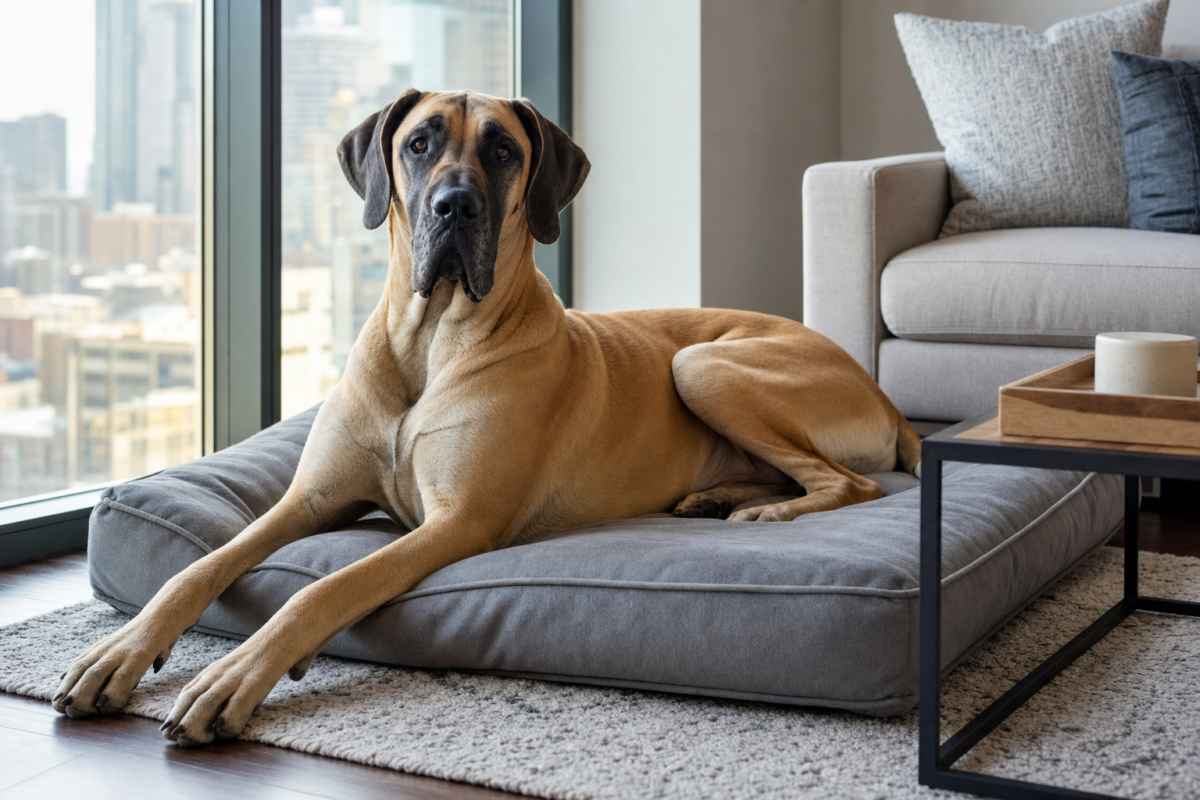
Yes. A large breed dog can live very happily in an apartment, and thousands already do. Square footage matters far less than daily exercise, mental stimulation, calm indoor manners and a routine that gets your dog outside often enough. Many giant breeds are famously low energy indoors and settle into a small home better than a busy terrier ever would. The real questions are whether you can meet the walking schedule, whether your building allows the size and weight, and whether your dog can travel through shared corridors and lifts politely.
If you have fallen in love with a big dog but live in a flat, you have probably been told it cannot work. It absolutely can. Some of the calmest, most contented big dogs live in city apartments, and some of the most frustrated ones live on large properties with nobody to walk them. What your dog actually needs is a predictable rhythm of activity, rest and connection with you. This guide walks through what apartment life really asks of a large breed dog, which breeds tend to settle in most easily, and the practical habits that make a small home feel spacious to a dog that weighs as much as you do.
Can a large breed dog live in an apartment?
Yes, a large breed dog can live in an apartment, provided the dog gets enough daily exercise, mental engagement and outdoor time, and the household can manage the practical realities of size in shared spaces. Floor area is one of the least important factors. A dog spends most of the day sleeping, and a hundred pound dog asleep takes up roughly the same space whether the room around it is small or enormous.
What matters is what happens during the waking hours. A big dog with two or three proper outings a day, something to think about, and a comfortable place to rest will settle beautifully in a one bedroom flat. The same dog left alone for ten hours with no outlet would struggle in a mansion. Match the routine to the dog and the home becomes a detail rather than a dealbreaker.
What actually determines whether a big dog fits apartment life
Dog Parents tend to assume that body size is the deciding factor. In practice, four other things matter more.
Energy level. A Greyhound is enormous and famously happy to sleep eighteen hours a day. A Belgian Malinois of half the weight will dismantle a flat out of sheer frustration. Drive predicts apartment success far better than the number on the scale.
Noise tolerance. Apartment living means footsteps in the corridor, lifts, deliveries and neighbours through the wall. A dog that barks at every sound makes life difficult for everyone.
Your schedule. There is no garden door to open at seven in the morning. Every toilet break is a trip down in the lift and out to the street, in whatever weather the day brings.
Building rules. Many buildings set weight limits, breed restrictions or a cap on the number of pets. Confirm this in writing before you commit to a dog.
Which large breeds tend to adapt best to a flat
Use this as a starting point rather than a verdict on any individual dog. Temperament varies enormously within every breed, and a calm dog from a busy breed will always beat an anxious one from a quiet breed.
| Breed | Typical adult weight | Daily exercise need | Apartment outlook |
|---|---|---|---|
| Greyhound | 60 to 88 lb | Low to moderate | Excellent. Sprints briefly, then sleeps for hours |
| Great Dane | 110 to 175 lb | Moderate | Very good. Calm indoors once past adolescence |
| English Mastiff | 120 to 230 lb | Low to moderate | Very good, if lifts and stairs are manageable |
| Newfoundland | 100 to 150 lb | Moderate | Good. Gentle and quiet, but sheds and drools heavily |
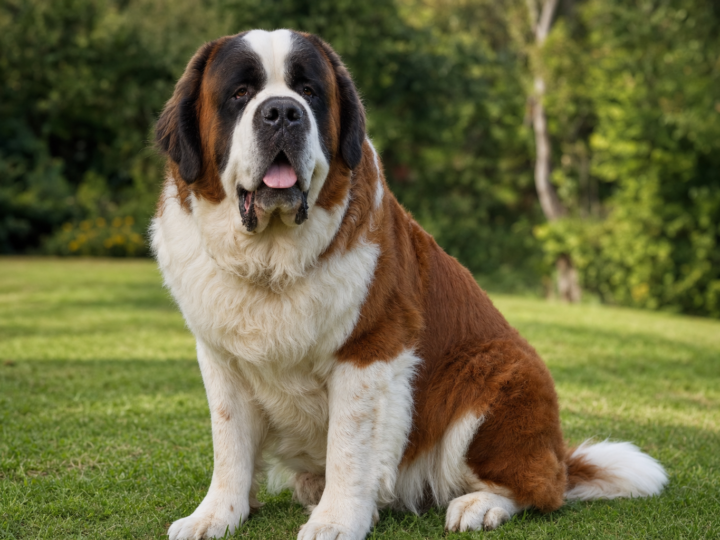
| Saint Bernard | 120 to 180 lb | Moderate | Good in cooler climates, harder in a warm building |
| Bernese Mountain Dog | 70 to 115 lb | Moderate | Good. Sociable and settled, needs cool spaces |
| Labrador Retriever | 55 to 80 lb | High | Workable with two solid outings and real training |
| Rottweiler | 80 to 135 lb | Moderate to high | Workable. Needs a job and confident handling |
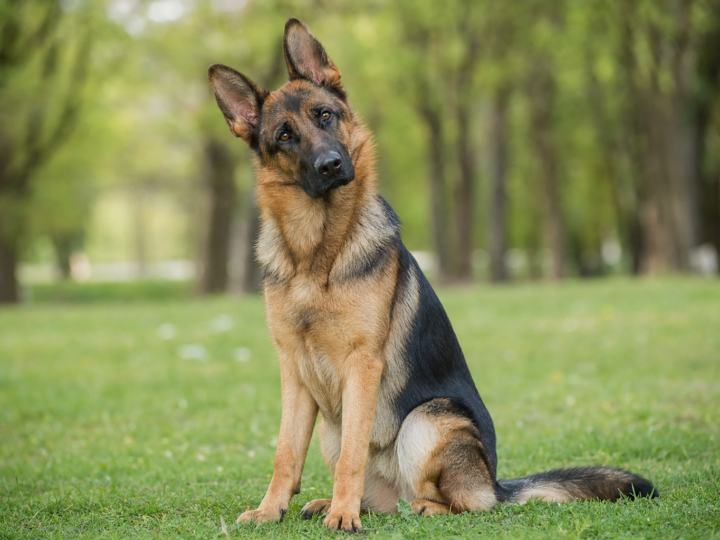
| German Shepherd | 50 to 90 lb | High | Demanding. Thrives only with daily mental work |
| Alaskan Malamute | 75 to 100 lb | Very high | Challenging. Vocal, powerful and built to travel |
The American Kennel Club’s Chief Veterinary Officer, Dr. Jerry Klein, DVM, has written extensively on the slower growth and development timeline of large and giant breeds. Read more from the AKC’s guidance on caring for large-breed dogs.
Notice the pattern. The heaviest breeds on that list are often the easiest indoors, while the athletic working breeds ask the most of a small home.
How much space does a large dog really need indoors?
Less than most people expect, and in a very specific shape. Your dog does not need floor area to roam. Your dog needs one uncluttered resting spot that belongs entirely to it, a clear path from that spot to the door, and enough room to turn around and stretch out flat without knocking anything over.
Setting up a small home for a big body
A few adjustments turn a modest flat into a comfortable big dog home.
- Give the bed a proper corner. Choose a spot away from the front door and the main walkway. A large orthopaedic bed with real support helps a heavy frame rest properly.
- Clear the runway. A wagging tail at coffee table height rearranges a room quickly. Keep low surfaces sparse and choose sturdy furniture.
- Mind the floors. Smooth laminate and tile give heavy dogs almost no grip, and a leg that slides out from under a big dog puts real strain on the joints. Rugs along the main routes make a genuine difference.
- Watch the temperature. Heavy coated breeds overheat in warm flats. Cooling mats, good airflow and a shaded resting place matter more than extra floor space.
- Plan for water and food. Raised bowls on a washable mat, out of the walkway, save daily irritation.
Under Exercised Days
With no garden, a skipped walk means a dog with nowhere to put its energy. Protect the routine on busy days.
Stairs And Slippery Floors
Repeated stair use and low traction surfaces load a heavy frame. Rugs, ramps and lifts help protect comfortable movement.
Noise And Neighbours
Barking travels through walls. Build calm responses to corridor sounds early rather than after complaints arrive.
Corridor Manners
A hundred pound dog lunging in a narrow hallway frightens people. Loose lead walking is a safety skill in shared buildings.
The daily routine that makes apartment life work
The routine, not the address, is what your dog experiences. Big dogs are creatures of rhythm, and a predictable day settles them faster than any amount of extra room.
- Three outings minimum. Morning, midday or afternoon, and evening. At least one of them should be a proper walk rather than a quick toilet trip.
- Aim for sixty minutes of movement a day for a settled adult, adjusted upward for the working breeds and downward on the advice of your veterinarian for very young, very old or recovering dogs.
- Add thinking work. Fifteen minutes of scent games, a puzzle feeder or a short training session tires a big dog more than an extra lap of the block.
- Protect the rest. Adult dogs sleep fourteen hours or more. A quiet flat with a settled routine is genuinely good for them.
- Keep meal times fixed. Consistency supports calm digestion and a predictable toilet schedule, which matters enormously when the nearest grass is four floors down.
If you are raising a puppy in a flat, the exercise picture is different again. Young large breeds have open growth plates and need moderate, low impact activity rather than long walks, so build the routine around short, frequent outings while the frame is still forming.
Stairs, lifts and protecting a heavy frame
This is the part of apartment living that genuinely deserves attention. A large dog carries a lot of weight through every step, and a home on the fourth floor turns stairs into a daily repeated load rather than an occasional one.
Use the lift whenever one exists, and teach your dog to enter and exit calmly on a loose lead. Where stairs are unavoidable, keep the pace steady rather than allowing a charge up or a bounding descent, and never let a young puppy take flights repeatedly during the fast growth months. Traction underfoot matters just as much, since a slip on a polished landing asks far more of a joint than a controlled step.
Alongside sensible surfaces and a steady pace, the everyday habits that support comfortable movement in any big dog apply doubly in a flat: keeping your dog lean, keeping activity regular rather than sporadic, and giving thought to joint support as part of a long term routine. Speak with your veterinarian about what suits your individual dog and your building.
Signs your big dog is thriving in a flat
You will know quickly whether the arrangement is working, because a content big dog is unmistakable. Look for a dog that settles within a few minutes of coming home, sleeps deeply, greets you calmly rather than frantically, walks politely through the corridor, and shows curiosity rather than tension when it hears the lift.
The warning signs are just as clear. Pacing, whining, destructive chewing, barking at every hallway sound or an inability to relax while you sit still usually mean the dog is under exercised rather than short of floor space. That is good news, because a routine is far easier to change than an address. If restlessness persists after you increase activity and mental work, ask your veterinarian to rule out discomfort.
A simple apartment game plan, stage by stage
What your dog needs from a small home changes across a lifetime.
Puppy, eight weeks to six months. Toilet training is harder without a garden, so build a strict schedule of frequent trips and reward heavily outside. Introduce the lift and the corridor as ordinary, boring places. Keep exercise short and low impact.
Adolescence, six to eighteen months. The demanding stretch. Your dog is now large, strong and full of opinions, and lead manners in shared spaces become a genuine safety matter. Increase mental work sharply and keep exercise moderate while the frame finishes developing.
Adult, eighteen months to seven years. The easy years. Your dog knows the routine, settles quickly and moves calmly through the building. Hold the exercise standard steady and keep your dog lean.
Senior, seven years and beyond. Stairs and slippery floors matter more with every year. Add traction, shorten and soften the walks rather than dropping them, and keep the resting place warm and supportive.
Common apartment mistakes to avoid
Most difficulties with a big dog in a flat trace back to a handful of habits.
- Assuming a garden equals exercise. Dogs with gardens are often walked less, not more. The walk is what matters.
- Skipping mental work. Physical tiredness alone rarely settles a clever big dog. Scent work and training fill the gap that a small home leaves.
- Ignoring the lead. A big dog that pulls is manageable in a park and dangerous in a narrow corridor with a child coming the other way.
- Letting weight creep up. Extra pounds load joints that are already carrying stairs every day. Feed to a lean body condition and check it regularly.
- Not reading the tenancy agreement. Weight caps and breed clauses are common. Get written permission before you bring a dog home.
- Rushing the greeting. An excited hundred pound dog at the front door is a lot in a small hallway. Teach a calm arrival routine from the first week.
Temperament, neighbours and the shared life of a building
A flat means your dog has a social life whether you planned one or not. Every trip outside involves passing strangers at close range in a confined space, and how your dog handles that shapes your entire experience of the building.
The good news is that large breeds are, as a group, well suited to this. Most of the giant breeds were developed to be steady and tolerant around people, and the same calm that makes big dogs reliable around children serves you every time the lift doors open onto a stranger.
Invest early in the specific skills that shared living demands. A solid sit while the lift arrives, a loose lead past a pushchair, a settle at the door when a delivery comes, and a quiet response to footsteps in the hallway are worth more than any trick. It also helps to be honest about the practical side of certain breeds. Knowing in advance that some big dogs drool a great deal or shed a coat twice a year saves a lot of surprise later.
Frequently asked questions
What is the best large dog breed for apartment living?
The Greyhound is often called the ideal apartment dog, because it sprints briefly and then sleeps for most of the day. Great Danes, English Mastiffs and Newfoundlands also settle well indoors. The common thread is a calm, low arousal temperament rather than a small body.
How much exercise does a large dog in an apartment need?
Most settled adult large breeds do well on around sixty minutes of movement a day spread across three outings, plus daily mental work such as scent games or training. Working breeds need more, and puppies need shorter, lower impact activity. Confirm the right amount for your dog with your veterinarian.
Are stairs bad for large breed dogs?
Occasional, steady stair use is a normal part of life for most healthy adult dogs. What deserves care is repeated hard use, charging up or down, and stairs for very young puppies whose growth plates are still open. Use the lift where one exists and add traction to slippery landings.
Will a big dog bark too much in an apartment?
Barking is usually about boredom or a startling sound rather than breed size. Meeting exercise and mental needs, plus teaching a calm response to corridor noise from the first week, prevents most of it. Some breeds are naturally more vocal, so factor that into your choice.
Can a puppy be house trained in an apartment?
Yes, though it takes more planning without a garden. Take your puppy out on a strict schedule, reward heavily the moment it toilets outside, and keep a consistent route to the same spot. Expect the process to take a little longer than it would in a house with a garden door.
The bottom line
A large breed dog can live a full, comfortable, happy life in an apartment. Choose a breed whose energy suits the routine you can genuinely offer, protect the walks even on the days you would rather not, feed a lean body condition, give that big mind something to do, and pay attention to stairs and floor traction so your dog moves confidently for years. Do those things and your dog will never notice the square footage. It will only notice that you are there.
Want the simple roadmap in one place? Grab our free Big Dog Mobility Guide for the everyday habits, movement checklist and joint safe activity limits that keep big dogs comfortable, all written for large and giant breeds.
This article is for general educational purposes only and is not veterinary advice. It is not intended to diagnose, treat, cure or prevent any disease. Always consult your veterinarian about your dog’s individual health, nutrition and supplement needs. These statements have not been evaluated by the Food and Drug Administration.
Support Big Breed Joints from Day One
Large and giant breeds carry more load through every growth stage. MoveGuard Growth supports developing joints in young big dogs (8 to 30 months); MoveGuard Adult keeps grown big dogs moving comfortably.
Leave a Reply