No. Size does not predict temperament, and the large owner surveys that researchers use to measure canine behaviour have repeatedly found that several small breeds score higher for aggression toward strangers and toward their own families than most large breeds do. What size does change is consequence. A reactive dog weighing 110 pounds can do far more damage than a reactive dog weighing 11, which is why big dogs dominate the reporting and why the responsibility of raising one is genuinely greater.
It is one of the first things people say when they hear you have brought home a giant breed puppy, usually with a nervous laugh. Are they not aggressive? It is worth answering properly, because the honest answer is more interesting than either of the slogans. The research does not support the idea that big dogs are the aggressive ones, and it also does not let big dog parents off the hook. Here is what the evidence actually shows, why the reputation persists anyway, and what genuinely predicts how any dog turns out.
Are large breed dogs more aggressive than small dogs?
No, and the pattern often runs the other way. When researchers measure canine behaviour at scale they do it with standardised owner questionnaires covering thousands of dogs across dozens of breeds, scoring things like growling, snapping and biting toward strangers, toward family members and toward other dogs. Across those datasets, several small breeds consistently sit at the top for aggression toward strangers and toward their own people, while many of the giant guarding and working breeds sit mid table or lower.
The catch is that a questionnaire measures reported behaviour, not harm. A small dog who growls and snaps is often described as feisty and the behaviour goes unrecorded. The same behaviour in a Mastiff gets logged, reported and remembered. Both dogs behaved identically. Only one of them made the statistics.
What the research actually measures
Behaviour research on dogs relies mostly on owner reported surveys rather than laboratory testing, for the obvious reason that you cannot ethically provoke thousands of dogs to find out what they would do. That method is genuinely useful at scale, and it also carries limits worth understanding before anyone quotes a league table at you.
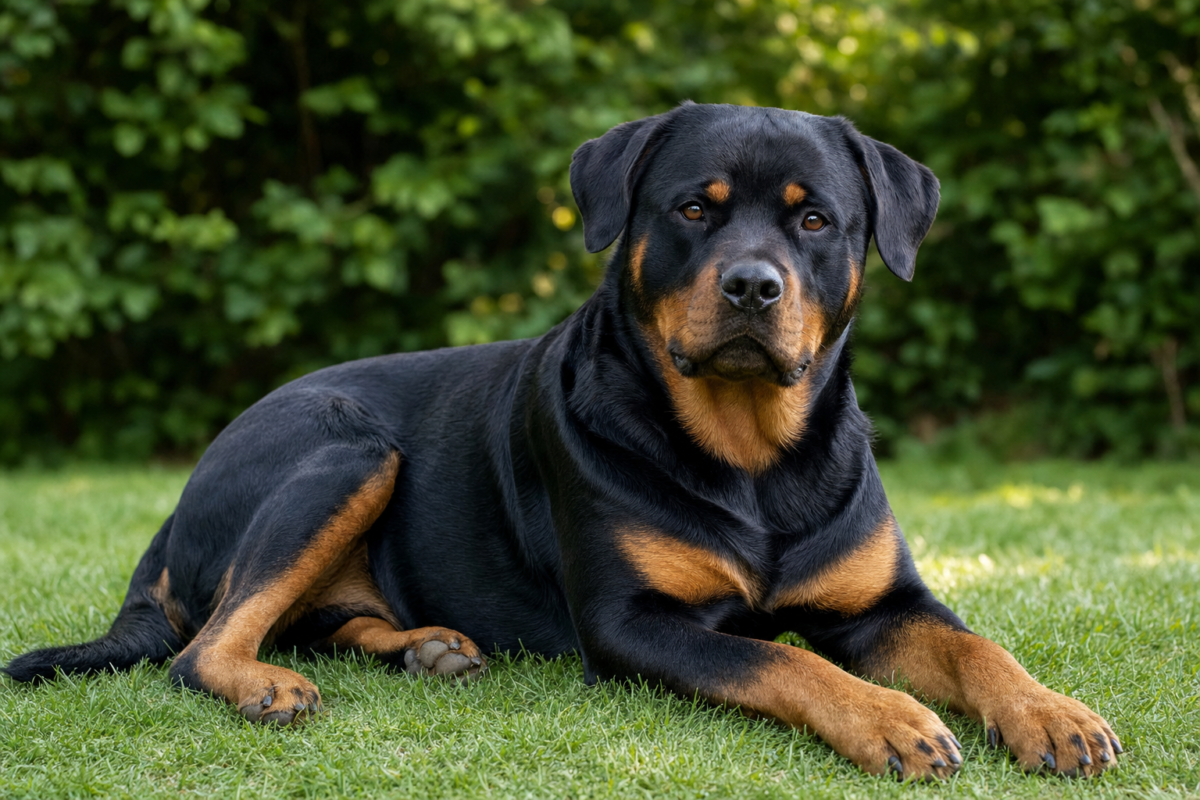
Owners rate their own dogs, so the same behaviour gets described differently depending on who is holding the lead and how worried they are about the answer. Breed averages also hide enormous individual variation. The spread inside any one breed is far wider than the gap between most breeds, which means a breed average tells you very little about the puppy in front of you. Two Rottweilers from different lines, different litters and different homes can be further apart in temperament than a Rottweiler and a Labrador.
Official bite records carry their own distortions on top of that. They capture incidents serious enough to reach a hospital or a council, they frequently rely on a bystander guessing the breed, and they never record how many dogs of that breed live in the area. Without that denominator a raw count tells you which breeds are common and which bites hurt, not which dogs are most likely to bite.
Why big dogs get the reputation
Three things drive the perception, and none of them is a measurement of temperament.
The first is consequence. Bite severity scales with jaw size and body weight, so an incident involving a giant breed is more likely to need medical attention, and injuries needing medical attention are the ones that enter official records. That reporting gradient alone reshapes the picture.
The second is appearance. A deep bark, a broad head and a hundred pounds of dog reads as threatening whether or not the dog is doing anything threatening. Many guarding breeds also carry an alert, watchful stillness that people misread as menace when it is simply the breed observing.
The third is coverage. An incident involving a large guarding breed makes the news. An identical incident involving a terrier does not. Over years that asymmetry becomes what everyone believes they know.
Breed As A Shortcut
Breed averages hide huge individual variation. The dog in front of you is not a statistic.
Excusing Small Dogs
Behaviour tolerated in a small dog because it is harmless is still rehearsed behaviour, and it still escalates.
Skipping Early Work
The socialisation window closes at the same age regardless of adult size. A big dog gets no extra time.
Missing Discomfort
A sudden change in tolerance often reflects how a dog feels rather than who they are. Ask your veterinarian.
What size changes and what it does not
It helps to separate the two questions that usually get merged into one. Likelihood and consequence are not the same thing, and almost all of the confusion in this debate comes from treating them as though they were.
| Factor | Small dogs | Large and giant dogs |
|---|---|---|
| Reported aggression scores | Often higher | Often mid table or lower |
| Likelihood of a warning being noticed | Frequently dismissed | Taken seriously |
| Severity if an incident happens | Usually minor | Can be significant |
| Chance of entering official records | Low | High |
| Physical control by the handler | Straightforward | Training must do the work |
| Effect of early socialisation | Important | Important and harder to skip |
The American Kennel Club’s Chief Veterinary Officer, Dr. Jerry Klein, DVM, has written extensively on the slower growth and development timeline of large and giant breeds. Read more from the AKC’s guidance on caring for large-breed dogs.
Read down that table and the picture resolves. Big dogs are not the problem the headlines describe, and they are also not a breed of dog you can raise casually. Both things are true at once.
What actually predicts how a dog behaves
Study after study lands on the same short list, and breed is a modest entry on it rather than the headline.
- The individual dog. Genetics operate at the level of the dog and the line, not the label on the pedigree. Ask a breeder about the temperament of the parents, not the reputation of the breed.
- Early experience. Calm, varied exposure during the first months shapes an adult more than almost anything that follows. This is the single biggest lever any parent has.
- Training and handling. Reward based training builds a dog who offers behaviour. Punishment based handling suppresses warnings, and a dog who has learned not to growl is a genuinely less safe dog.
- Health and comfort. Discomfort lowers tolerance in any animal. Behaviour changes in a previously easy dog deserve a veterinary conversation before a behavioural one.
- Management. Most incidents trace back to a situation the dog was placed in rather than a decision the dog made.
Guarding is not the same as aggression
A lot of the confusion around big dogs comes from collapsing two different things into one word. Many large breeds were developed to watch, to announce and to interpose themselves between their family and a stranger. That is a job description, and a well bred guarding dog performs it with judgement rather than with teeth.
A stable livestock guardian sleeps beside the animals it protects for weeks and reacts only when something genuinely changes. A sound Rottweiler notices the delivery driver, thinks, and settles. The instinct is discrimination, not hostility. What turns a guarding breed into a problem is not the instinct itself but a dog who never learned which situations are ordinary, which is a socialisation failure rather than a breed trait.
The big breeds with the calmest reputations
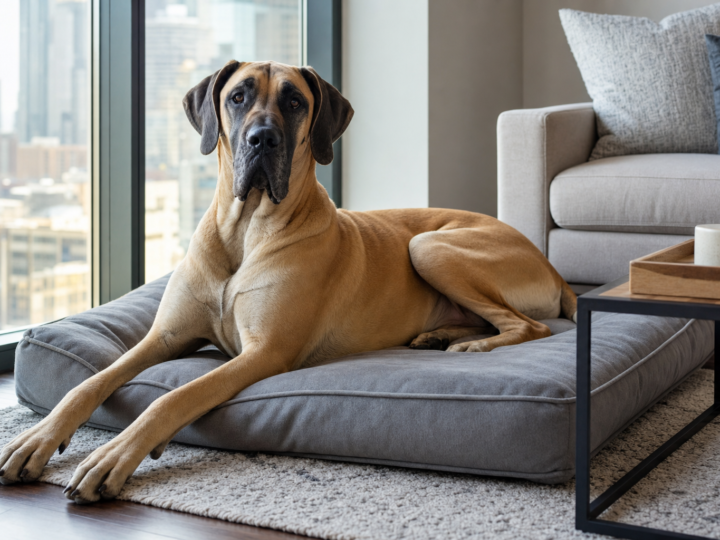
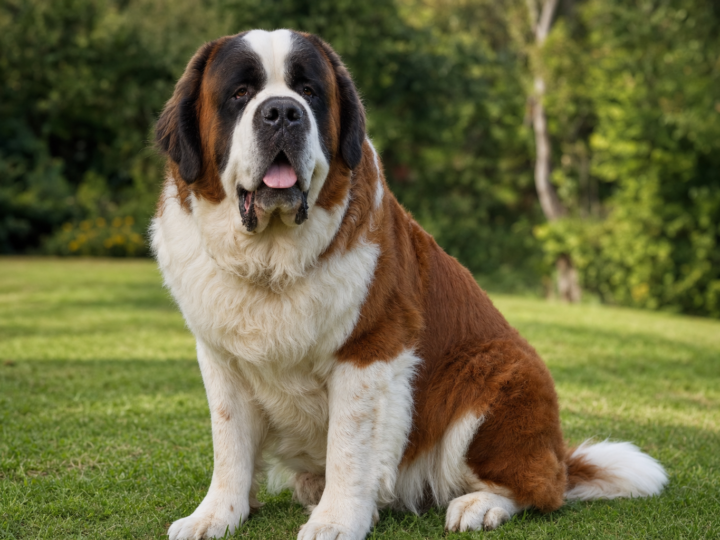
If temperament rather than size is what you are actually shopping for, several of the largest breeds are famous for being the steadiest company in the room. Newfoundlands were bred to work alongside people and are known for tolerance. Great Danes are affectionate, sociable and famously convinced they are lap dogs. Bernese Mountain Dogs, Greater Swiss Mountain Dogs, Saint Bernards and Leonbergers all carry reputations for patience with children and for a general reluctance to make a fuss about anything.
That is a starting point rather than a guarantee. Every one of those breeds contains individuals who are nervous, pushy or poorly socialised, and a gentle reputation has never raised a puppy on its own. It does tell you something useful though. If someone believes the largest dogs are the dangerous ones, the list of breeds most often described as gentle giants is a fair place to start the conversation.
Signs worth taking seriously in any size of dog
Whatever a dog weighs, the early signals are the same, and they are easy to miss because they are quiet.
- Stiffening, freezing or holding a hard stare when approached, especially around food or a resting place
- Turning the head away, lip licking or repeated yawning when a person or dog comes close
- Growling, which is information and should never be punished out of a dog
- Guarding objects, doorways or a particular person
- A clear change in tolerance in a dog who used to be easy
Any of these is a reason to speak with your veterinarian first, since discomfort is a common driver, and then with a qualified behaviourist who works with reward based methods. Early is easier than late, and that is doubly true when the dog will finish at 120 pounds.
Raising an easy big dog, stage by stage
None of this needs a complicated programme. It needs the right emphasis at the right time.
8 weeks to 4 months. The window that matters most. Calm, positive exposure to surfaces, sounds, people and other dogs, in small doses, always with the choice to retreat. Handling practice now is what makes nail trims possible later at 100 pounds. The early socialisation work you do here outlasts everything else.
4 to 12 months. Adolescence arrives and confidence wobbles. A puppy who was fine with everything may suddenly find the bin frightening. Keep exposure going, keep it gentle, and resist the urge to flood a nervous dog. Build recall on a long line while your dog is still liftable.
12 months to 3 years. Physical maturity outruns mental maturity in big breeds, so you are handling an adult body with an adolescent brain. Keep training short and frequent, and keep daily exercise steady, because an under stimulated giant is a stressed giant.
Common mistakes to avoid
- Choosing on reputation. Picking a breed for how gentle or how tough it sounds, rather than for the energy and handling it needs, is how mismatches happen.
- Punishing a growl. Removing the warning does not remove the feeling. It removes your notice period.
- Letting size do the training. A dog who is manageable because you can physically move them is not trained, and that stops working at 100 pounds.
- Waiting out adolescence. Behaviour rehearsed for a year is harder to change than behaviour interrupted in a week.
- Assuming friendly means safe. A joyful 120 pound dog who greets by jumping is a hazard to a child or an older visitor, however sweet the intent.
The responsibility that comes with size
Here is where the reassuring version of this article stops. Big dogs are not more aggressive, and that fact changes nothing about the duty of care you take on. The consequence gradient is real. A small dog who lunges on lead is an inconvenience, and a giant dog who lunges on lead can pull a person over. Neither dog is bad. Only one of them can cause harm on a bad day.
In practice that means solid recall and lead manners are not optional extras for a big dog, a securely fenced garden matters more, greetings need managing rather than hoping, and liability insurance is worth understanding before you need it. Some regions also apply restrictions by breed or size that affect housing and travel, so it pays to know where you stand.
Handled properly, none of this is heavy going. The reason so many people who live with giant breeds never go back is that a well raised big dog is famously easy company: steady, tolerant, hard to ruffle, and content to spend most of the day being enormous and asleep.
Frequently asked questions
Are large breed dogs more aggressive than small dogs?
No. Standardised owner surveys covering thousands of dogs have repeatedly found several small breeds scoring higher for aggression toward strangers and family than most large breeds. Size changes the consequence of an incident rather than the likelihood of one.
Why do big dogs appear more often in bite statistics?
Because severity scales with size. Injuries from large dogs are far more likely to need medical attention, and medically treated injuries are the ones that enter official records. Identical behaviour from a small dog often goes unreported entirely.
Are guarding breeds safe as family dogs?
A well bred, well socialised guarding breed is a discriminating dog rather than a hostile one. The instinct is to watch and announce. What matters is early exposure so the dog learns which everyday situations are ordinary, plus honest matching of the breed to your household.
What is the biggest predictor of how a dog will behave?
Early experience, followed by training methods, health and how the dog is managed day to day. Breed sits well below these, and individual variation within any breed is far wider than the average difference between breeds.
Should I worry if my big dog growls?
Take it seriously but never punish it. A growl is information telling you the dog is uncomfortable. Note what happened, remove the pressure, and speak with your veterinarian to rule out discomfort before consulting a reward based behaviourist.
The bottom line
Large breed dogs are not the aggressive ones, and the data has said so for years. What they are is consequential, which makes early socialisation, reward based training and honest management matter more rather than less. Raise the dog in front of you rather than the reputation attached to the breed, take quiet warning signals seriously at any size, and you will end up with what big dog parents keep coming back for.
Want the simple roadmap in one place? Grab our free Big Dog Mobility Guide for the body condition check, home setup and movement framework, all written for large and giant breeds.
This article is for general educational purposes only and is not veterinary or behavioural advice. It is not intended to diagnose, treat, cure or prevent any disease. Always consult your veterinarian or a qualified behaviourist about your dog’s individual health and behaviour. These statements have not been evaluated by the Food and Drug Administration.
Support Big Breed Joints from Day One
Large and giant breeds carry more load through every growth stage. MoveGuard Growth supports developing joints in young big dogs (8 to 30 months); MoveGuard Adult keeps grown big dogs moving comfortably.
Leave a Reply