
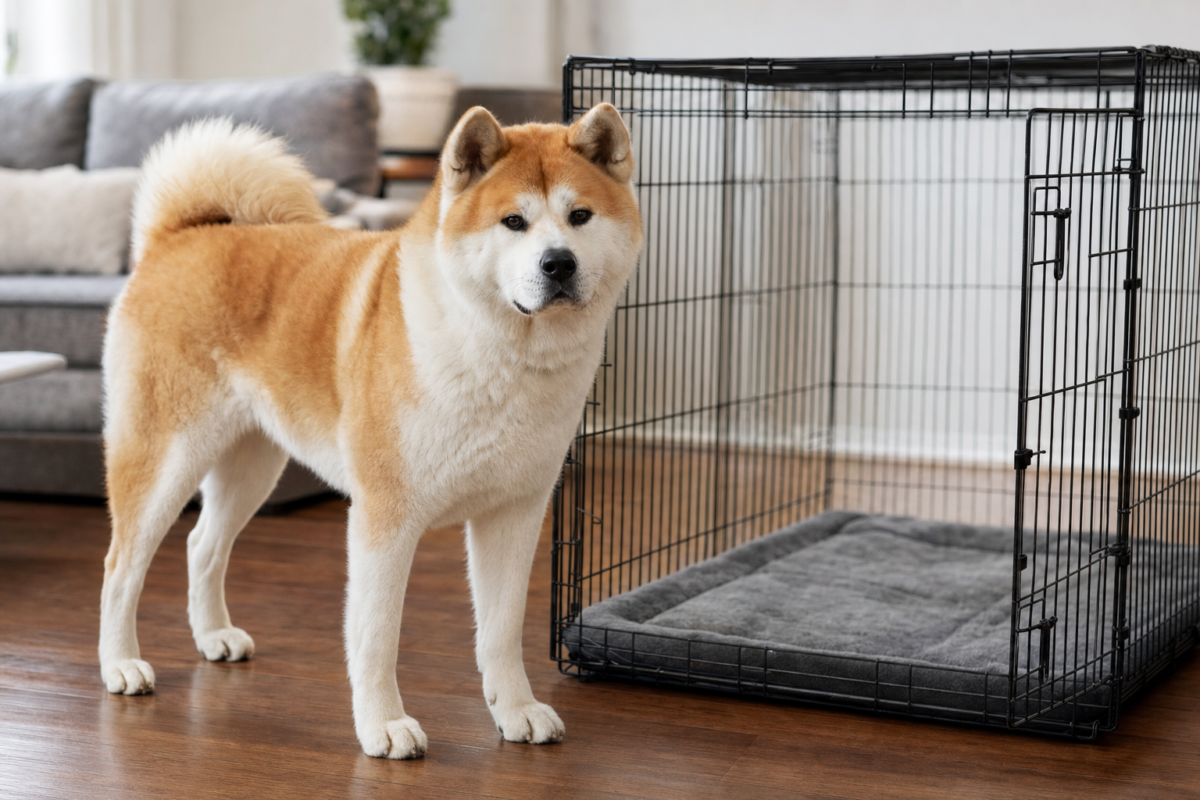
Your large breed dog needs a crate about four inches longer than their body measured from nose to the base of the tail, and about four inches taller than their height measured from the floor to the top of the head while sitting. In practice that puts most 60 to 85 pound dogs in a 42 inch crate, most 85 to 110 pound dogs in a 48 inch crate, and giant breeds over about 110 pounds in a 54 inch crate. Buy for the adult size your puppy will reach and use a divider panel in the meantime.
Crate shopping for a big dog is the moment many Dog Parents realise they are not buying pet furniture, they are buying room sized equipment. Get it right and the crate becomes the calmest place in your house for the next decade. Get it wrong and you have an expensive metal box that your dog cannot stand up in, or one so large it undoes the housetraining you are working on. This guide gives you the measurements, a finder that does the arithmetic, and a size chart you can check against your breed.
What size crate does my large breed dog need?
Measure your dog from the tip of the nose to the base of the tail and add four inches. That is the crate length. Then measure from the floor to the top of the head while your dog sits and add four inches. That is the crate height. Choose the smallest standard crate that meets both numbers. For most large breeds that lands on a 42 or 48 inch crate, and for giant breeds on a 54 inch crate. If you are buying for a puppy, size the crate for the adult weight your dog is expected to reach and block off the extra space with a divider panel until they grow into it.
How crate sizing actually works
A crate is the right size when your dog can do three things comfortably: stand up without ducking, turn around without shuffling, and lie fully stretched out on their side. That last one is what catches big dog parents out, because a crate that looks enormous next to the sofa can still be too short for a dog who sleeps flat on their flank with all four legs extended.
The four inch allowance on each measurement covers exactly that. It gives clearance above the ears when your dog sits, and enough floor length that a stretched out sleeping position fits inside without a foot pressing against the bars. Anything much beyond that allowance is wasted space, and with a young dog it is space that works against you.
Measure your dog standing on a flat floor, ignore the tail itself, and measure the height with your dog sitting rather than standing, since a sitting dog with the head up is the tallest position they will hold inside a crate. If your dog has upright ears, measure to the top of the ears instead of the skull.
Crate size finder
Enter the two measurements and the finder converts them into a standard crate size. If you have a puppy and no adult measurements yet, use the chart below the finder and size for expected adult weight.
Find The Right Crate Size
Large breed crate size chart
If you are buying ahead for a puppy, size by the adult weight your dog is expected to reach rather than by what they weigh today. Our adult weight predictor gives you a working number to shop with.
| Crate size | Typical dimensions | Adult weight | Example breeds |
|---|---|---|---|
| 36 inch | 36 by 23 by 25 inches | 40 to 60 lb | Smaller Boxers, Border Collies, Springers |
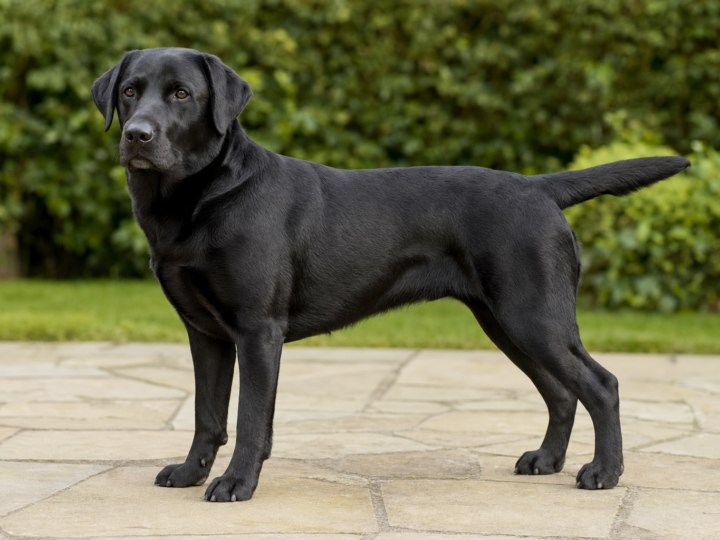
| 42 inch | 42 by 28 by 30 inches | 60 to 85 lb | Labrador, Golden Retriever, German Shepherd, Boxer |
| 48 inch | 48 by 30 by 33 inches | 85 to 110 lb | Rottweiler, Doberman, Akita, Cane Corso, Newfoundland |
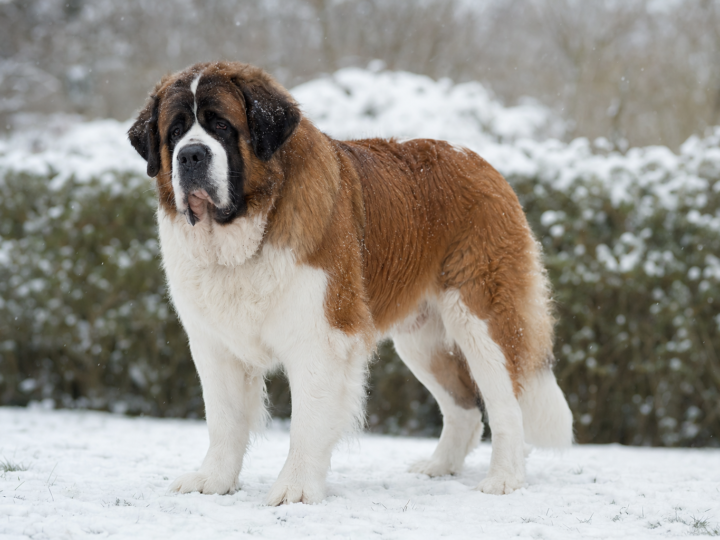
| 54 inch | 54 by 37 by 45 inches | 110 lb and above | Great Dane, English Mastiff, Irish Wolfhound, Saint Bernard |
Dimensions vary a little between manufacturers, so check the listed internal measurements rather than trusting the size label alone. Two crates both sold as 48 inch models can differ by three or four inches in height, which is exactly the margin that decides whether your dog can sit up straight.
Sizing a crate for a growing puppy
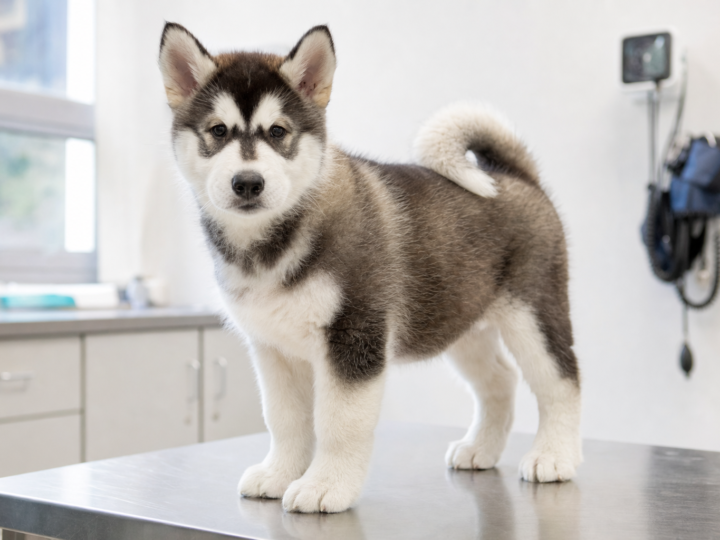
Buying three crates as your puppy grows is an expensive way to solve a problem that a ten dollar divider panel solves. Buy the adult size now, fit the divider so that the usable space is just big enough to stand, turn and lie down in, and move the panel back every few weeks as your puppy grows.
The reason the space has to stay snug matters. A puppy will not usually soil the area they sleep in, but give a young dog a whole adult crate and they will happily use one end as a bedroom and the other as a bathroom, which sets your house training back by weeks. The divider is the whole trick, and it is why sizing ahead is safe rather than reckless.
Too Short
A dog who cannot lie fully stretched on their side will sleep curled every night. Length is the measurement most often underbought.
Too Low
If your dog ducks to sit up, the crate is too short in height. Upright ears need the extra clearance measured in.
Too Big, Too Young
A puppy in an undivided adult crate learns to use one end as a bathroom. Fit the divider from day one.
Flimsy Build
A big dog leaning on thin wire bends a door out of alignment. Check gauge, latches and floor pan on any giant size crate.
How to measure your dog in ten seconds
You need a soft tape measure and a treat. Two measurements, and a third if your dog is broad.
- Length. With your dog standing squarely, run the tape from the tip of the nose to the base of the tail where it meets the body. Do not include the tail itself.
- Height. Ask your dog to sit, then measure from the floor to the highest point of the head, or to the ear tips on a breed with upright ears.
- Width. For broad chested breeds such as Mastiffs and Bullmastiffs, measure across the widest point of the shoulders and check that against the crate width, since a wide dog can struggle to turn in a narrow model.
Add four inches to the length and the height, then take those numbers to the finder above or the chart. If your dog sits between two sizes, go up rather than down.
Choosing the right type of crate
Once the size is settled, the style is mostly about your household and your dog.
- Wire crates. The default for large breeds. They fold down, ventilate well, come with divider panels and are easy to clean. Look for a heavy gauge and a slide out pan.
- Heavy duty steel. Worth it for a powerful dog who has tested a wire crate. Expensive and heavy, but sized properly it lasts a lifetime.
- Plastic travel crates. Better for the car and for flying, and generally darker and more den like, though harder to size up for a giant breed.
- Soft crates. Fine for a calm adult on a trip, not for a puppy or a chewer, and not for any dog left alone.
- Furniture crates. Attractive and increasingly available in big sizes. Check the internal dimensions carefully, since the outer frame hides several inches.
Whatever the style, put the crate where your family spends time rather than in a spare room, and pair the right size with a proper introduction. A correctly sized crate that your dog dislikes is still a problem, so take the time on crate training a large breed puppy rather than only on the shopping.
Comfort inside the crate
Big dogs have bony elbows, hocks and hips, and a bare plastic pan is a hard surface to spend a night on. A supportive mat that covers the whole floor of the crate spreads the weight, keeps joints off a cold pan and makes the crate somewhere your dog chooses rather than tolerates. Check it regularly for flattening, since a mat that has compressed under a hundred pound dog is doing very little.
Alongside a comfortable surface, steady feeding and sensible activity, many big dog parents support healthy joints daily through the growth years. MoveGuard Growth is built for that stage. It combines nine actives, including New Zealand Green Lipped Mussel, glucosamine, chondroitin, MSM and hyaluronic acid, to support healthy joint development, cartilage and connective tissue across the roughly 8 to 30 month growth window. You dose by expected adult weight, the same number you used to size the crate, so most large breed puppies sit at two chews a day with the biggest at three. It ships as 90 chews, is made in the USA in an NSF facility, and carries a 60 day guarantee.
Support The Growing Years
Daily joint support built for large and giant breed puppies. Explore MoveGuard Growth.
Signs the crate fits properly
Watch your dog use it for a week and the fit tells you itself. A crate that is right produces a dog who walks in without hesitating, turns around in one smooth movement, sleeps fully stretched on their side at least some of the time, and sits up without tipping the head or flattening the ears against the roof.
Signs the crate is too small are just as clear: a dog who always sleeps curled tight, who backs in rather than turning, who rests the nose or paws through the bars, or who sits with a lowered head. If you see any of those, measure again and move up a size rather than waiting to see whether your dog adjusts.
A crate plan, stage by stage
8 weeks to 4 months. Adult size crate with the divider set small, positioned in the living area. Short sessions with food and chews inside, door open at first. Expect to move the divider back roughly every three to four weeks.
4 to 8 months. Growth is fast and the divider moves often. Measure your puppy every month and keep the usable space just generous enough to stand, turn and stretch out. Check that the mat still covers the whole floor.
8 to 18 months. Most large breeds reach adult height in this window, so the divider usually comes out for good. Take the measurements one final time to confirm the crate you bought is genuinely the right size for the dog your puppy became.
18 months onwards. Maintenance. Check latches and the floor pan twice a year, replace a flattened mat, and keep the crate available with the door open. Most adult big dogs carry on using it as their preferred bed long after they are trusted loose in the house.
Common crate sizing mistakes
- Buying for today’s puppy. A 36 inch crate fits a four month old Great Dane and is useless six months later. Buy the adult size and divide it.
- Measuring the tail. Including the tail adds several inches of crate you do not need and pushes you into an oversized model.
- Measuring height while standing. A sitting dog is taller inside a crate. Standing height understates what you need.
- Trusting the size label. Internal dimensions vary between brands. Read the actual numbers before ordering.
- Forgetting the room. A 54 inch crate is more than four feet long. Measure the space where it will live before it arrives.
- Skipping the floor. A bare pan is uncomfortable for a heavy dog. Cover the whole base with a supportive mat.
Breed notes for the biggest sizes
Some breeds sit awkwardly between standard sizes, and knowing which ones saves a return. Great Danes and Irish Wolfhounds are long and tall, so height is usually the constraint rather than length, and the 54 inch crate exists largely for them. English Mastiffs and Saint Bernards are shorter than a Dane but far broader, so check crate width against shoulder width before ordering. Newfoundlands and Leonbergers need a little extra room because a thick coat adds bulk to the sleeping position. Akitas and Rottweilers are compact for their weight and usually fit a 48 inch crate comfortably. Greyhounds and other long bodied sighthounds often need a longer crate than their weight suggests, because they sleep fully extended.
If your dog genuinely measures beyond the 54 inch standard, a fenced pen area with a supportive bed inside is a better answer than a crate that does not fit. The goal was never the crate itself. It was a safe, comfortable space your dog can use properly.
Frequently asked questions
What size crate does a Great Dane need?
Most adult Great Danes need a 54 inch crate, typically around 54 by 37 by 45 inches, because height rather than length is the limiting measurement for the breed. Measure from the floor to the top of the head while your Dane sits, add four inches, and confirm the crate you are buying meets that number.
Is it better to have a crate too big or too small?
For an adult dog, slightly too big is the safer error, since comfort matters most. For a puppy, too big causes problems, because a young dog will use the spare end as a bathroom. Buy the adult size and fit a divider panel so the usable space stays snug while your puppy grows.
How do I measure my dog for a crate?
Measure from the tip of the nose to the base of the tail with your dog standing, and from the floor to the top of the head or ears with your dog sitting. Add four inches to each number, then choose the smallest standard crate that meets both. Broad chested breeds should also have shoulder width checked against crate width.
Do I need a divider panel for a large breed puppy?
Yes, if you are buying the adult size crate up front, which is the sensible approach for a big dog. The divider keeps the usable space just large enough to stand, turn and stretch out, which supports house training. Move it back every few weeks as your puppy grows.
How long can a big dog stay in a crate?
A crate is a resting place, not a housing solution. Puppies manage roughly one hour per month of age up to about four hours, and adult dogs should not be crated for long stretches during the day. Speak with your veterinarian or a trainer if your routine means longer periods than that.
The bottom line
Crate sizing for a large breed comes down to two measurements and one habit. Measure nose to tail base and floor to head while sitting, add four inches to each, and buy the smallest standard crate that clears both numbers. For a puppy, buy the adult size now and divide it down. That gives you a crate your dog can stand, turn and stretch out in from the first night to the last, and one place in the house that is always, reliably theirs.
Want the simple roadmap in one place? Grab our free Big Dog Growth Guide for the growth window checklist, feeding framework and joint safe exercise limits, all written for large and giant breeds.
This article is for general educational purposes only and is not veterinary advice. It is not intended to diagnose, treat, cure or prevent any disease. Always consult your veterinarian about your dog’s individual health, nutrition and supplement needs. These statements have not been evaluated by the Food and Drug Administration.
Support Big Breed Joints from Day One
Large and giant breeds carry more load through every growth stage. MoveGuard Growth supports developing joints in young big dogs (8 to 30 months); MoveGuard Adult keeps grown big dogs moving comfortably.
Leave a Reply