To keep a large breed dog safe in hot weather, move all walks to early morning and late evening, test the pavement with the back of your hand before you step out, offer cool water constantly, and give your dog deep shade and moving air whenever the temperature climbs past the mid seventies Fahrenheit. Big dogs carry more body mass per square inch of skin than small dogs, so they build heat faster and shed it slower. Never leave a large dog in a parked car, and call your veterinarian straight away if you see heavy roaring breath, bright red gums, wobbling or vomiting.
Summer is harder on big dogs than most Dog Parents expect. A hundred pound dog in a thick coat is doing the thermal equivalent of wearing a winter jacket at noon, and the tools nature gave them for cooling down are modest: panting, a little sweating through the paw pads, and finding somewhere cool to lie. The good news is that hot weather safety is almost entirely about planning rather than equipment. Shift the day around the heat, keep water and shade close, and read your dog honestly, and your big companion can enjoy summer as much as you do.
How do I keep a large breed dog safe in hot weather?
Keep a large breed dog safe in hot weather by walking only in the cool hours, checking the ground temperature before every outing, providing unlimited cool water and deep shade, keeping activity short and low effort, and watching your dog closely for the early signs of overheating. Large and giant breeds hold more heat and lose it more slowly than small dogs, so the safe window on a warm day is narrower for them than for the neighbourhood terrier.
Why big dogs overheat faster than small dogs
A dog cools itself mainly by panting, which moves air across the wet surfaces of the mouth and airway and carries heat away as moisture evaporates. That system works well until two things stack up: a large body producing a lot of heat, and a relatively small surface area for shedding it.
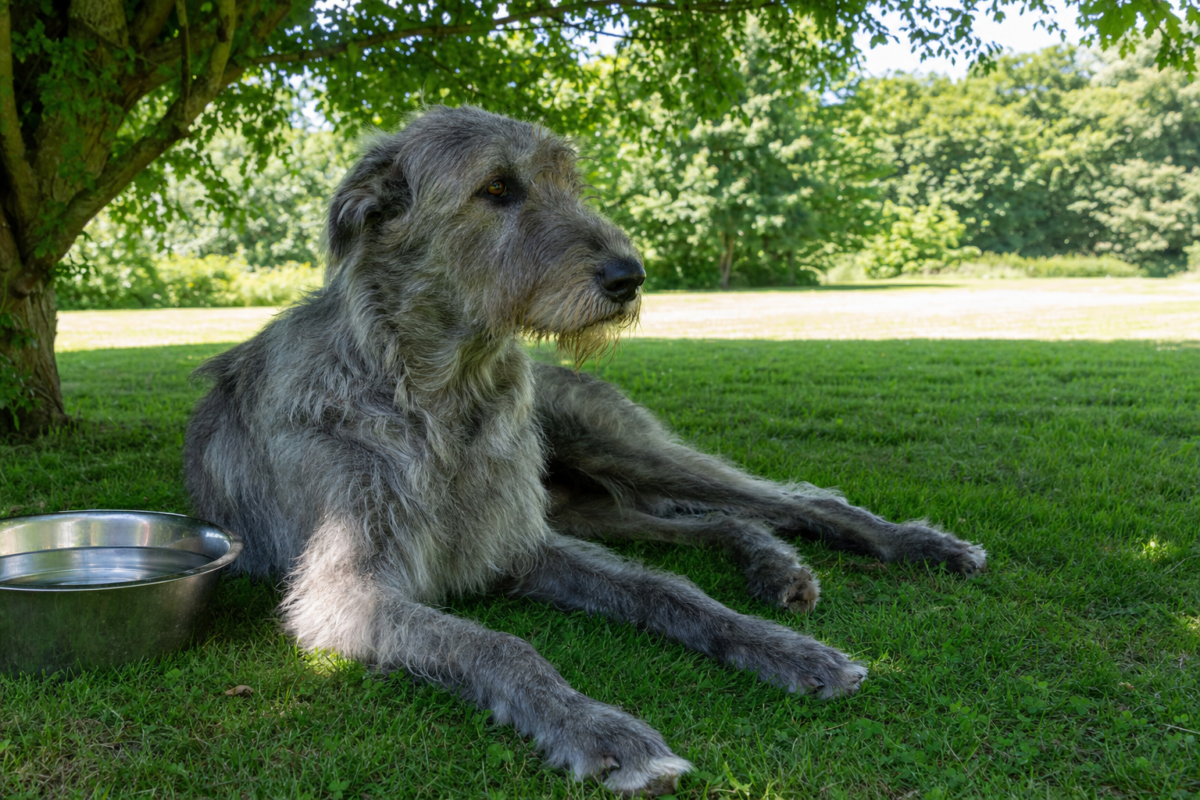
Every big dog lives with that maths. A giant breed has far more muscle generating warmth than a small dog, but not proportionally more skin and airway to release it. Add a dense double coat and the insulation works in both directions, holding warmth in on a summer afternoon just as it holds it in during a winter storm. Short muzzled breeds such as Bullmastiffs and Boxers have less airway to work with, which narrows the margin further.
Age and condition matter too. Puppies are still learning to pace themselves and will happily run past the point of sense. Seniors regulate temperature less efficiently and often carry stiffer joints that make lying down on cool tile less appealing. Dogs carrying extra weight generate more heat and insulate more, which is one more reason a lean body condition serves a big dog well in every season.
A simple temperature guide for large breeds
Air temperature is only half the story, because humidity decides how well panting actually works. When the air is already saturated, evaporation slows down and your dog cools poorly even at a temperature that sounds mild. Use this as a planning guide and always let your own dog and the humidity move you one row more cautious.
| Temperature | What it means for a big dog | Sensible plan |
|---|---|---|
| Below 68 F | Comfortable for most large breeds, including heavy coats | Normal walks and play, water available |
| 68 to 77 F | Fine for short coats, warm work for thick coated giants | Walk in shade, moderate pace, offer water often |
| 77 to 84 F | Caution for every large breed, real risk for heavy or short muzzled dogs | Early morning and late evening only, keep it short and flat |
| 84 to 90 F | High risk, especially with humidity above 60 percent | Brief toilet trips only, enrichment and rest indoors |
| Above 90 F | Dangerous for large and giant breeds | Stay in cool air, no exercise, watch closely |
Two practical notes. Pavement runs far hotter than the air above it, so an 84 degree afternoon can leave asphalt hot enough to hurt paw pads within seconds. And a parked car climbs past dangerous temperatures within minutes even with the windows cracked, which is why the rule for big dogs is simply never.
The warning signs to watch for
Learning what early overheating looks like is the single most useful skill a big dog parent can carry into summer, because the early stage is quiet and the late stage is not. Watch for panting that turns heavy and noisy, a tongue that widens and hangs lower than usual, thick drool, bright red or dark gums, and a dog who lags behind, seeks shade insistently or lies down and will not move on.
Later signs are an emergency: roaring breath that does not slow with rest, unsteady legs, glazed eyes, vomiting or diarrhoea, collapse. If you see these, move your dog into shade or air conditioning at once, wet the coat down with cool water rather than ice water, aim a fan at them, offer small drinks, and call your veterinarian immediately. Hot weather trouble can progress quickly, and a phone call early is always better than a wait and see.
Hot Ground
Asphalt and sand hold heat long after the air cools. Test with the back of your hand for seven seconds before you walk.
Parked Cars
The interior climbs fast even in shade with windows open. A large dog in a car on a warm day is never a safe plan.
Midday Play
Big dogs will chase a ball long past the point their cooling can keep up. You set the limit, not the dog.
Still Air
A shaded run with no breeze traps warmth. Moving air matters as much as shade for a thick coated giant.
Water, shade and airflow at home
Most of summer safety happens at home rather than on a walk, and the setup takes ten minutes.
- Water in more than one place. Put a wide, heavy bowl on each floor your dog uses and refill with cool water several times a day. Big dogs drink in long draughts and empty a bowl faster than you think.
- Deep shade, not dappled shade. A tree that shades the lawn at ten in the morning may leave it fully exposed at two in the afternoon. Check where the shadow actually sits during the hottest hours.
- Moving air. A fan at floor level, an open cross breeze or air conditioning does more for a resting big dog than any cooling gadget.
- A cool surface to lie on. Tile, stone or a cooling mat gives a giant breed somewhere to dump heat through the belly, which is where their thin coat coverage is.
- A little extra water in the food. Adding warm water to kibble and letting it cool is an easy way to lift daily fluid intake for a dog who does not drink much.
How to check your dog in ten seconds
You do not need a thermometer to know whether your dog is coping. Three quick checks tell you most of it.
- Gums. Lift a lip. Healthy gums are pink and moist. Bright red, dry or tacky gums mean stop and cool down.
- Skin snap. Gently lift the skin over the shoulders and let go. It should fall back at once. A slow return suggests your dog needs fluids and a rest in cool air.
- Breathing rhythm. Panting should settle within a few minutes of stopping in the shade. Panting that stays loud and fast after rest is your signal to end the outing.
Exercise timing for hot months
Summer is the season to trade distance for timing. The same dog who happily covers three miles in October needs a different plan in July, and that is not a loss of fitness. It is a sensible seasonal adjustment.
- Walk before sunrise and after sunset, when both the air and the ground have cooled.
- Pick grass, dirt trails and shaded paths over asphalt and sand.
- Keep the pace easy and the route flat. Hills and heat together ask a lot of any big frame.
- Carry water on any outing longer than fifteen minutes and offer it every time you stop.
- Swap one walk for indoor enrichment. Scent games, puzzle feeders and short training sessions tire a big dog thoroughly without raising body heat much at all.
- Puppies need the biggest adjustment of all, since exercise for a large breed puppy is already meant to be short and moderate before heat enters the picture.
Water play deserves a note of its own. Swimming is superb summer exercise for big dogs, low impact and naturally cooling, but supervise every minute, fit a flotation vest on heavy breeds who sit low in the water, rinse and dry the coat afterwards, and discourage gulping while swimming. If you are wondering whether a jog fits into any of this, running with a big dog is a cool weather activity first and foremost.
Daily habits that support comfortable movement
Hot months change how a big dog moves. Walks get shorter, afternoons get lazier, and a stretch of low activity can leave a large or giant breed feeling stiffer when normal routines resume in autumn. Keeping gentle movement in the day, holding a lean body condition and supporting healthy joints year round all help your dog stay comfortable on their feet through a season of reduced activity.
Alongside cool hour walks and steady feeding, many big dog parents keep a daily joint support chew in the routine through every season. MoveGuard is built for large and giant breeds specifically. It combines nine actives, including New Zealand Green Lipped Mussel, glucosamine, chondroitin, MSM and hyaluronic acid, to support healthy joints, cartilage and connective tissue. You dose by weight, so most big dogs sit at two chews a day with the largest at three. It ships as 90 chews, is made in the USA in an NSF facility, and carries a 60 day guarantee. Growing dogs in the roughly 8 to 30 month window use MoveGuard Growth, while mature and senior dogs use MoveGuard Adult.
Keep Them Moving Comfortably
Daily joint support built for large and giant breeds, in every season. Explore MoveGuard Growth.
Hot weather away from home
Travel, errands and holidays are where summer plans quietly fall apart, so decide the rules before you leave.
- The car. Never leave a large dog in a parked vehicle, not for a minute, not in shade, not with the windows down. If the trip includes a stop you cannot make with your dog, leave your dog at home.
- Long drives. Run the air conditioning to the back of the vehicle, use a sunshade on the rear windows, and stop every couple of hours for water and a shaded stretch.
- Patios and markets. Paving stones bake. Bring a mat for your dog to lie on, pick a table in real shade, and ask for a bowl of water on arrival.
- Trails. Start at first light, carry more water than you think you need, and turn back at the halfway point of your dog and not of the map. Hot weather hiking asks far more of a big dog than a cool morning does.
- Beaches. Sand can be hotter than asphalt, salt water should not be swallowed, and there is often no shade at all. Bring an umbrella or go early.
A summer plan by life stage
The same heat lands differently on a four month old giant and a ten year old one, so adjust the plan to the dog in front of you.
Puppies. Short toilet trips, plenty of naps in cool air, and indoor training instead of long outings. A big puppy will overheat while still wanting to play, so you are the brakes. Keep growth steady and portions lean, since heavy puppies feel the heat more.
Adolescents and adults. Front load the day. Do the real walk before breakfast, keep the evening outing easy, and fill the middle of the day with scent work and chew time. This is the group most likely to be pushed too far because they seem tireless.
Seniors. Expect a smaller heat tolerance and a stronger need for a cool, soft place to rest. Keep walks brief and frequent rather than long, and make sure water is within easy reach of wherever your dog sleeps, because a stiff senior big dog may simply not get up for a distant bowl.
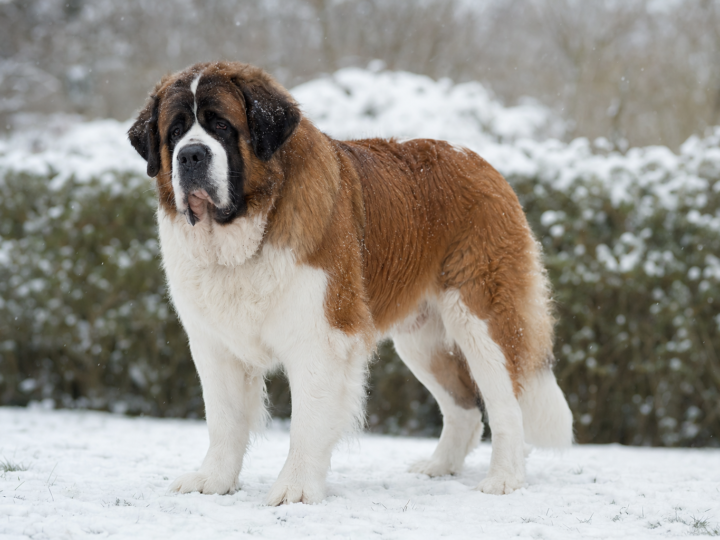
Thick coated giants. Newfoundlands, Saint Bernards, Great Pyrenees and similar breeds need the most conservative plan of all. Brush the coat out thoroughly so air can reach the skin, but never shave a double coat, since that coat also shields skin from the sun and helps regulate temperature.
Common hot weather mistakes to avoid
Most summer trouble traces back to a handful of habits rather than to bad luck.
- Walking at the usual time. The schedule that worked in spring is the single most common cause of a scorched paw pad in July.
- Trusting shade alone. Shade without moving air is still warm. A fan or a breeze changes the picture completely.
- Shaving a double coat. It feels helpful and it is not. The undercoat insulates against heat as well as cold, and the topcoat protects skin from sunburn.
- Ice water and ice baths. Cool water is right. Very cold water can cause the surface blood vessels to tighten, which slows heat loss from the core.
- Letting the dog set the pace. A driven big dog will fetch until they drop. Call the end of the game early and give a full rest between bursts.
- Waiting to see if it passes. If the warning signs are there, cool your dog and call your veterinarian. Time matters more than certainty.
Frequently asked questions
What temperature is too hot to walk a large breed dog?
Most large breeds are comfortable below 68 degrees Fahrenheit, need shade and a slower pace from 68 to 77, and should only have brief cool hour outings from 77 to 84. Above 84 degrees, and especially with high humidity, keep outings to short toilet trips. Thick coated and short muzzled breeds sit one band more cautious than that.
How do I know if the pavement is too hot for my dog?
Press the back of your hand flat against the pavement and hold it for seven seconds. If you cannot keep it there comfortably, the ground is too hot for paw pads. Grass, dirt and shaded paths stay far cooler, and the same test works for sand and decking.
Should I shave my big dog in summer?
No, not a double coated breed. The undercoat insulates against heat as well as cold and the topcoat protects the skin from sun. Brush the coat out thoroughly instead so air can reach the skin, and ask your groomer about thinning rather than clipping.
How much water does a large breed dog need in hot weather?
A rough daily baseline is about one ounce of water per pound of body weight, and hot weather or activity raises that. In practice, keep several full bowls of cool water available, refill them often, and add water to meals for a dog who does not drink much on their own.
What should I do if my big dog is overheating?
Move your dog into shade or air conditioning right away, wet the coat with cool water rather than ice water, aim a fan at them, offer small amounts of water to drink, and call your veterinarian immediately. Do not wait to see whether it settles on its own.
The bottom line
Hot weather safety for a large breed dog comes down to timing, water, shade and honest observation. Walk in the cool hours, test the ground before you step onto it, keep cool water and moving air within easy reach all day, trade distance for enrichment when the temperature climbs, and learn the early signs of overheating well enough to spot them without thinking. Big dogs build heat quickly and shed it slowly, so the margin is narrower for them than for smaller dogs, but with a plan made in the morning rather than in the afternoon, your big companion can have a comfortable, happy summer.
Want the simple roadmap in one place? Grab our free Big Dog Growth Guide for the growth window checklist, feeding framework and joint safe exercise limits, all written for large and giant breeds.
This article is for general educational purposes only and is not veterinary advice. It is not intended to diagnose, treat, cure or prevent any disease. Always consult your veterinarian about your dog’s individual health, nutrition and supplement needs. These statements have not been evaluated by the Food and Drug Administration.
Support Big Breed Joints from Day One
Large and giant breeds carry more load through every growth stage. MoveGuard Growth supports developing joints in young big dogs (8 to 30 months); MoveGuard Adult keeps grown big dogs moving comfortably.
Leave a Reply