Most healthy adult large breed dogs can run with you, but only once they are fully grown and only at a distance and pace that suits their build. Wait until the growth plates have closed, which is usually somewhere between 18 and 24 months for large breeds and later for giant breeds. Build up slowly over several weeks, stay on forgiving surfaces, run in cool parts of the day, and let your dog set the pace. Very heavy, very short faced and very long backed dogs are better suited to brisk walking than to steady running.
Running with your dog sounds like the perfect arrangement. You get your miles, your dog gets to move, and the two of you come home tired and happy. For plenty of big dogs that is exactly how it goes. The difference between a dog who thrives on a weekly run and a dog who ends up sore lies almost entirely in timing, surface, distance and honesty about what your particular dog is built for. This guide walks you through when to start, how to build up, what to watch for on the road, and which big dogs are usually better off with a long walk instead.
Can I run with my big dog?
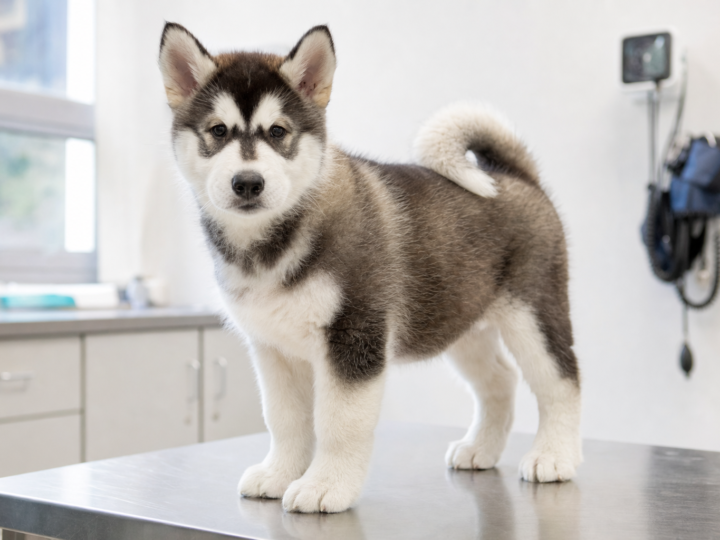
Yes, most healthy adult large breed dogs can run with you, provided they are fully grown, structurally sound and built for the job. The safe starting point is after the growth plates have closed, typically around 18 to 24 months in large breeds and as late as 24 to 30 months in the biggest giants. Before that, running asks a developing frame to absorb repeated impact it is not ready for.
Being able to run and being suited to distance running are two different things, though. A big dog can cover ground comfortably when the pace is easy, the surface is soft and the session is short. The same dog can struggle badly on hot pavement at your marathon pace. Your dog will almost always try to keep up with you, which means the judgement has to come from you rather than from your dog.
Why big dogs are not built like distance runners
A large or giant breed dog carries far more weight through each joint than a smaller dog does, and every stride sends that load through the hips, elbows, shoulders and spine. A sixty pound dog and a one hundred and forty pound dog running the same three miles are doing two very different amounts of work, even at the same pace.
Big dogs also shed heat poorly. Dogs cool themselves mainly by panting, and a heavy dog in a thick coat produces a great deal of heat while struggling to lose it. That is why heat, not distance, is the thing that most often gets big dogs into trouble on a run. Add a short muzzle into the mix and the cooling problem gets sharply worse.
There is a happy middle ground here. Large breeds are genuinely athletic, and many of them love a steady jog. They simply tend to be sprinters and steady movers rather than long distance specialists. A dog who is delighted by two easy miles on grass may be miserable by mile six on concrete, and both things can be true of the same dog on the same morning.
When is a big dog ready to run?
Readiness is about skeletal maturity, not birthdays or energy levels. A nine month old large breed puppy has boundless energy and an unfinished skeleton at the same time, and the energy is not evidence that the skeleton is ready. Use your dog’s expected adult weight as the guide, and confirm the timing with your veterinarian, who can assess your individual dog.
| Expected adult weight | Typical growth window | Earliest to start running |
|---|---|---|
| 50 to 65 lb | 16 to 18 months | About 16 to 18 months |
| 65 to 80 lb | 18 to 22 months | About 18 months |
| 80 to 100 lb | 20 to 24 months | About 20 to 24 months |
| 100 to 130 lb | 22 to 26 months | About 24 months |
| 130 lb and above | 24 to 30 months | About 24 to 30 months, if at all |
If you are counting down to that first run with a younger dog, the guide on when a big puppy can start running covers the earlier stages in more detail.
Why the growth window matters so much here
During the growth window your dog is still building the bone, cartilage and connective tissue that will carry it for life. Growth plates, the soft zones near the ends of the long bones, stay open through much of that period. While they are open they are the weakest point in the limb, and repetitive impact concentrates force exactly there. Free play on grass, where a puppy constantly changes pace and stops when tired, is a completely different proposition from a steady three mile run at a pace your puppy cannot opt out of.
Heat
Heavy coats and large bodies shed heat slowly. Warm, humid air removes your dog’s main cooling route long before you feel uncomfortable yourself.
Hard surfaces
Concrete and asphalt return every bit of impact to the joints, and hot pavement can damage paw pads within minutes.
Running too young
Repetitive loading on an unfinished skeleton asks a developing frame to do work it is not built for yet.
Running after meals
Deep chested breeds are more prone to bloat. Leave a clear gap of about two hours between a full meal and any hard exercise.
How to build your big dog up to running safely
Treat your dog like a new runner, because that is exactly what your dog is. The same gradual loading that protects a human beginner protects a dog, and big dogs need more patience than most.
- Get a veterinary check before you start, especially for hips, elbows and heart. Ask directly whether your dog is a good candidate for running.
- Begin with a walk and jog pattern. Five minutes of brisk walking, then one or two minutes of easy jogging, repeated for about twenty minutes total.
- Add no more than ten percent to your total distance each week, and only if the previous week went smoothly.
- Always start with five to ten minutes of walking to warm up, and finish with the same to cool down.
- Run two or three times a week at most, with a rest day in between. Big dogs recover more slowly than you do.
- Carry water for both of you and offer it at every stop rather than only at the end.
- Use a harness rather than a neck collar, and a fixed length leash rather than a retractable one.
- Stop the moment your dog wants to stop. A dog who lags, pulls toward shade or sits down is telling you the session is over.
How to check your dog is coping in ten seconds
Partway through a run, stop and run a quick check. Is the panting rhythmic and even, or frantic and noisy? Is the tongue a normal width, or wide and spread at the edges? Is your dog pulling forward on the leash, drifting to the side or falling behind? Are the paws lifting cleanly, or is there any hitch in the stride? A dog who is comfortable will stand square, look up at you and be keen to carry on. A dog who is not will do almost none of those things. That ten second pause every mile is the single most useful habit you can build.
Surfaces, weather and timing
Where and when you run matters more for a big dog than how far you run. Getting these right removes most of the risk before you take a single stride.
- Choose grass, dirt trail, packed earth or a rubberised track over concrete and asphalt whenever you have the option.
- Use the back of your hand on the pavement for seven seconds. If you cannot hold it there comfortably, it is too hot for paw pads.
- Run early in the morning or late in the evening through the warmer months, and shorten sessions sharply in humid weather.
- Avoid running in the two hours after a full meal, and offer only a small amount of food afterwards until your dog has settled.
- Watch for ice and grit in winter, both of which are hard on pads and on footing.
- Check paws and nails after every run, and feel down each leg for any warmth or tenderness.
For dogs who love to move but are not suited to impact, low impact exercise such as swimming, hill walking and long sniffing walks delivers much of the same benefit with far less loading.
Supporting the joints of a dog who runs
Running is load, and load travels through the joints with every stride. The two habits that protect a running dog most are keeping your dog genuinely lean and keeping the work sensible. A lean dog carries less weight through every joint on every stride, which is why body condition matters far more than any product.
Alongside lean feeding and sensible mileage, many big dog parents add a daily joint support chew made for large and giant breeds. MoveGuard Growth is built for the growing years, combining nine actives including New Zealand Green Lipped Mussel, glucosamine, chondroitin, MSM and hyaluronic acid to support healthy joint development across the roughly 8 to 30 month growth window. For dogs who are already fully grown and running with you, MoveGuard Adult supports comfortable movement and healthy cartilage and connective tissue in the same way. Both dose by expected adult weight, so most large breeds sit at two chews a day and the biggest dogs at three, ship as 90 chews, are made in the USA in an NSF facility, and are backed by a 60 day guarantee.
Support An Active Frame
Give your active big dog daily joint support built for large and giant breeds. Explore MoveGuard Growth.
Signs your dog is enjoying the run
A dog who is well matched to running tells you clearly. Look for a loose, even gait with no bobbing head or shortened stride. Look for a dog who trots ahead at a steady clip rather than surging and flagging. Look for even panting that settles within a few minutes of stopping, and for a dog who is ready to go again the following day without stiffness.
The morning after is the most honest report you will get. A dog who is coping well gets up normally, stretches once and gets on with the day. A dog who is doing too much is slow to rise, stiff on the first few steps, reluctant on stairs or quieter than usual. Any of those signs means the last session was too long, too fast or too hard underfoot, and the answer is to cut the next one back rather than to push through.
A simple running game plan, stage by stage
If you are starting from scratch with a newly mature dog, this pattern builds a running partner over roughly three months without asking too much at any point.
- Weeks 1 and 2. Brisk walking only, twenty to thirty minutes, three times a week. You are building the habit, the leash manners and the paw conditioning, not the fitness.
- Weeks 3 and 4. Introduce the walk and jog pattern. Five minutes walking, one minute jogging, repeated for twenty minutes total. Keep it on grass or trail.
- Weeks 5 to 8. Stretch the jogging intervals to three or four minutes and shorten the walking breaks. Aim for a continuous easy mile by the end of week 8.
- Weeks 9 to 12. Build toward two or three continuous miles at a conversational pace. Add distance on only one of the weekly runs, never on all of them.
- Beyond three months. For most large breeds, two or three miles two or three times a week is a comfortable lifetime ceiling. Giant breeds often top out well below that, and that is completely fine.
Common mistakes to avoid
- Starting before the growth plates have closed because your puppy seems tireless.
- Treating your own training plan as your dog’s training plan. Your distance goals are not your dog’s goals.
- Running on hot pavement in summer, which is the most common cause of serious trouble on a run.
- Pushing through a dog who has slowed down, on the assumption that the dog is being stubborn.
- Skipping the warm up and cool down and going straight from the front door to full pace.
- Feeding a full meal just before or just after a run, particularly with a deep chested breed.
- Running every day without rest days, which gives soft tissue no time to recover.
- Ignoring a mild limp because it went away after a few minutes of movement.
Which big dogs should probably skip the run
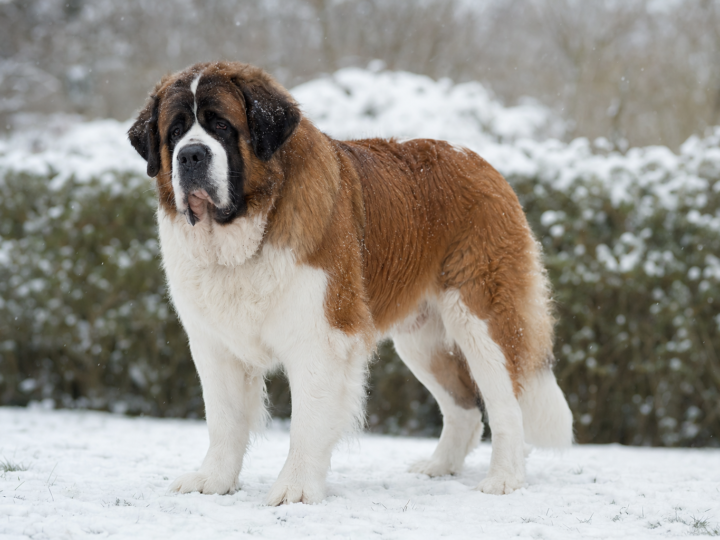
Some big dogs are simply not built for running, and choosing a long walk instead is not depriving them of anything. Short faced breeds such as the Bullmastiff and the Boxer struggle to cool themselves and can get into difficulty quickly even on mild days. The heaviest giants, including the Saint Bernard, the Newfoundland, the Great Dane and the English Mastiff, carry so much weight through each joint that sustained running rarely repays them for the loading it costs. Long backed and heavily wrinkled breeds have their own reasons to stay at walking pace.
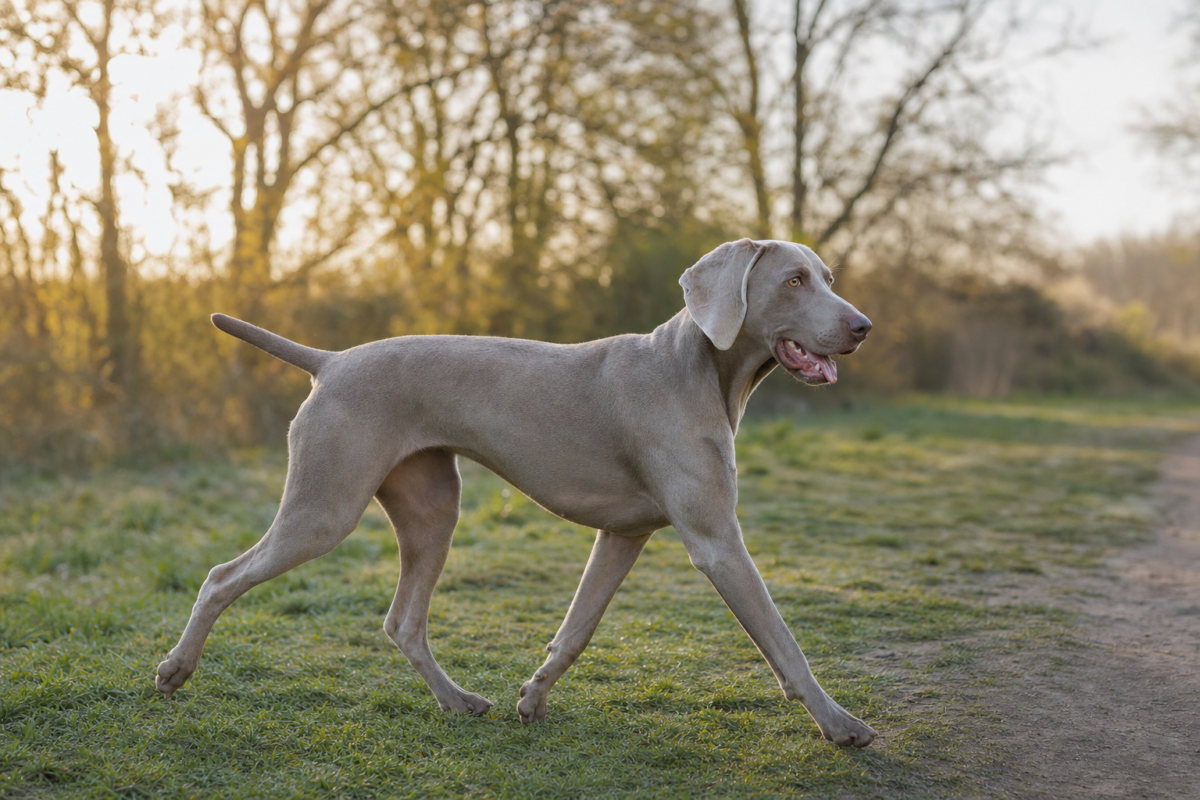
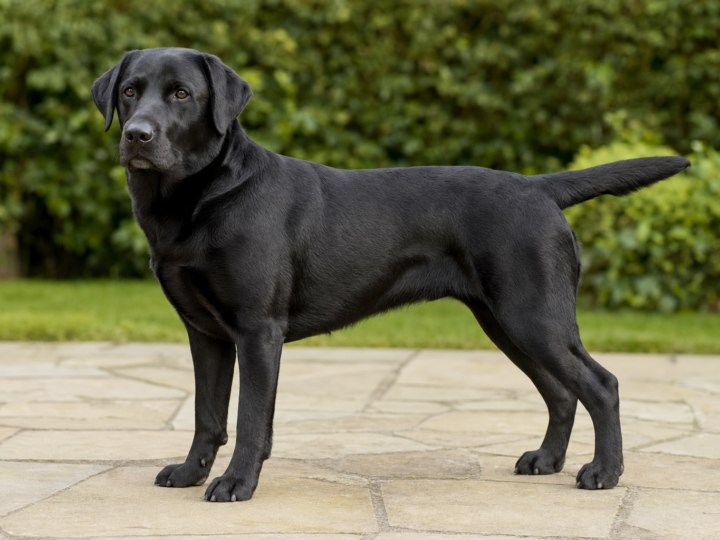
On the other side, breeds like the Weimaraner, the Vizsla, the Doberman, the Rhodesian Ridgeback, the Labrador Retriever and the German Shepherd tend to make genuinely good running companions once they are mature. Even within a suitable breed, though, the individual dog decides. A structurally sound, lean, keen dog of a heavy breed may run happily for short distances, and a poorly built dog of an athletic breed may not. Your veterinarian and your own observation matter far more than the breed label, and a dog who prefers to sniff and amble is telling you something worth listening to.
Frequently asked questions
How far can a large breed dog run?
Most fit adult large breeds are comfortable with two to four miles at an easy pace, two or three times a week, once they have built up gradually. Giant breeds often do best at one to two miles or less. Distance matters less than pace, surface and temperature, and a shorter run on grass in cool air is kinder than a longer one on hot pavement.
Is running bad for a big dog with hip problems?
That is a question for your veterinarian, who can assess your individual dog. In general, dogs with known joint issues are usually better served by controlled, low impact activity such as swimming, lead walking on soft ground and gentle hill work, which keeps muscle on the frame without repeated impact. Never start or continue a running programme with a dog who has a diagnosed joint condition without veterinary guidance.
What temperature is too hot to run with my dog?
There is no single safe number, because humidity, coat and body size all matter. As a practical rule, be cautious above roughly 20 degrees Celsius or 68 degrees Fahrenheit for a big dog in a thick coat, and treat humid conditions as hotter than the thermometer says. Run early or late, keep sessions short, carry water, and skip the run entirely on genuinely hot days.
Should my dog run on a leash or off it?
A fixed length leash attached to a well fitted harness is the safer choice for road and trail running. It keeps your dog at a predictable distance, protects the neck, and stops sudden dashes toward wildlife or traffic. Retractable leashes are not suitable for running because they allow too much slack and are hard to control at speed.
How do I know if my dog is limping after a run?
Watch your dog get up from rest the morning after, which is when stiffness shows most clearly. Look for a head bob, a shortened stride, reluctance on stairs or licking at one joint. Feel down each leg for warmth, swelling or tenderness. A limp that lasts more than a day or two, or that appears suddenly during a run, is worth a veterinary appointment rather than rest alone.
The bottom line
Running with your big dog can be one of the best parts of your week, as long as you let your dog’s frame set the terms. Wait for maturity, build up slowly, choose soft ground and cool air, and pay attention to how your dog moves the morning after. Do that, and you get years of easy miles together. Rush it, and you spend those years managing the consequences instead.
Want the full picture on raising a sound, comfortable big dog? Grab our free Big Dog Growth Guide for practical guidance on growth, feeding, movement and joint support through every stage.
This article is for general educational purposes only and is not veterinary advice. It is not intended to diagnose, treat, cure or prevent any disease. Always consult your veterinarian about your dog’s individual health, nutrition and supplement needs. These statements have not been evaluated by the Food and Drug Administration.
Support Big Breed Joints from Day One
Large and giant breeds carry more load through every growth stage. MoveGuard Growth supports developing joints in young big dogs (8 to 30 months); MoveGuard Adult keeps grown big dogs moving comfortably.
Leave a Reply