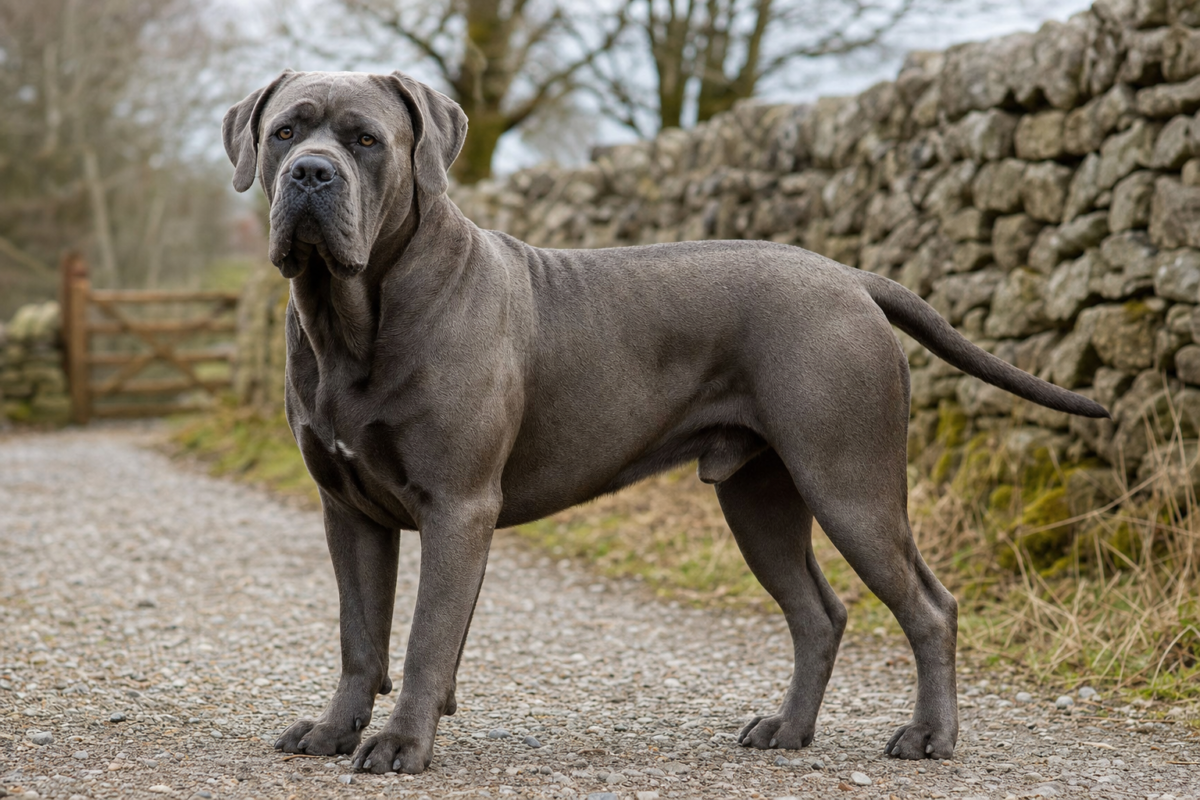
A Cane Corso stops growing in height between 12 and 15 months, but it does not finish growing. Muscle, chest width and head development continue until roughly two to three years of age. Growth plates in the long bones generally close somewhere between 14 and 18 months in this breed, and that closing point, not the first birthday, is what marks the end of skeletal growth.
Ask ten Corso parents when their dog stopped growing and you will get ten different answers, because a Cane Corso genuinely finishes in two separate stages that are months apart. The tape measure stops moving long before the dog looks finished. Knowing which stage your Corso is in tells you when to ease off the growth safe rules, when to change the food, and when that powerful adult outline is finally going to arrive.
When do Cane Corsos stop growing?
A Cane Corso reaches its adult height between 12 and 15 months. Skeletal growth finishes shortly after, as the growth plates in the long bones close somewhere around 14 to 18 months. Everything after that is substance rather than size: muscle across the shoulders and hindquarters, width through the chest, and the broad mature head, all of which keep developing until two to three years of age.
So there are two honest answers depending on what you mean. Your Corso stops getting taller at about a year and a bit. It stops changing at about three. If you want the adult size numbers rather than the timeline, our guide on how big a Cane Corso gets has the full picture.
Why a Cane Corso takes so long to finish
The Corso is a mastiff type guardian bred in southern Italy for farm work and protection, and it carries serious bone and muscle on a frame that still has to be athletic. Building that much dense tissue is slow work, and the body does it in a sensible order: the skeleton first, because everything else hangs off it, then the muscle that the skeleton has to be strong enough to carry.
That order explains the awkward middle stage almost every Corso goes through. Between roughly eight and fifteen months you often have a dog at nearly full height that still looks narrow, leggy and unfinished, with a head that has not broadened yet. It is not underfed and it is not failing to thrive. It is simply between phases, and no amount of extra food will move it into the next one any faster.
Cane Corso growth timeline, month by month
Use this as a milestone guide rather than a target. A Corso tracking a little above or below these numbers while moving easily and staying lean is usually doing just fine.
| Age | Male weight | Female weight |
|---|---|---|
| 2 months | 20 to 28 lb | 18 to 25 lb |
| 3 months | 33 to 42 lb | 28 to 37 lb |
| 4 months | 45 to 55 lb | 40 to 50 lb |
| 6 months | 65 to 78 lb | 58 to 70 lb |
| 9 months | 80 to 95 lb | 72 to 85 lb |
| 12 months | 88 to 105 lb | 78 to 92 lb |
| 18 months | 95 to 110 lb | 85 to 99 lb |
| 2 years plus | 99 to 110 lb | 88 to 99 lb |
The American Kennel Club’s Chief Veterinary Officer, Dr. Jerry Klein, DVM, has written extensively on the slower growth and development timeline of large and giant breeds. Read more from the AKC’s guidance on caring for large-breed dogs.
The two phases of Cane Corso growth
Phase one, birth to about 15 months, is skeletal. Height, leg length and frame size are all decided here, and this is the phase where feeding and exercise choices carry the most weight, because you are influencing a structure that is being built once and kept for life.
Phase two, roughly 15 months to 3 years, is muscular. The frame is set and the dog fills it. The chest broadens and drops, the neck and shoulders thicken, and the head takes on the width the breed is known for. Males typically take longer than females and often look their best somewhere in the third year.
As a rough guide, dogs with an expected adult weight of 100 to 130 pounds keep developing for roughly 22 to 26 months, with muscle filling in beyond that. Because phase one is the irreversible part, it is your prime window to build strong habits around food, movement and joint support.
Why the growth window matters for a heavy guardian breed
Through phase one your Corso is building the cartilage, bone and connective tissue that will carry a hundred pounds or more for the rest of its life. Growth plates, the soft areas at the ends of the long bones, stay open through most of that first year and close later in heavy breeds than in small ones. While they are open, hard impact and every extra pound ask more of a frame that is still forming, which is why lean feeding and sensible exercise matter so much before the eighteen month mark.
Growing Too Fast
Rapid growth asks a great deal of developing joints. Aim for a steady, even curve rather than a fast one.
Feeding For Bulk
Extra food will not speed up phase two. It only adds weight to joints that are still in phase one.
Too Much Impact
Jumping from height, hard turns and long runs on open growth plates are best kept to a minimum before eighteen months.
Rushing The Timeline
Weight pulling, protection work and serious conditioning belong after the plates close, not during the leggy stage.
How much should a Cane Corso eat while growing?
Large breed puppies do best with steady, moderate growth, and an even curve supports comfortable movement for years to come. A few practical habits make a real difference:
- Choose a complete food formulated for large breed puppies, which balances calories, calcium and phosphorus for slower, steadier growth.
- Stay on that puppy formula through phase one. Most Corsos move to an adult food somewhere between 15 and 18 months, and your veterinarian is the right person to time it.
- Split the daily amount into three meals while young, then two as an adult, and count treats inside the total.
- Feed to a lean body condition rather than to the bag, and expect a lean look through the leggy stage.
- Skip calcium and mineral extras unless your veterinarian recommends them, because a large breed puppy food is already balanced for a growing frame.
How to check your Corso’s body condition in ten seconds
The scale tells you weight, but body condition tells you health, and on a short coated breed your hands confirm what your eyes suspect.
- Ribs. Run your hands along the sides. You should feel the ribs easily under a thin layer. If you have to press, ease back on portions.
- Waist. Look down from above. You want a clear narrowing behind the ribs rather than a straight slab.
- Tuck. From the side, the belly should rise toward the back legs rather than hanging level.
Check every couple of weeks through the growth years and adjust portions with your veterinarian’s guidance.
Growth safe exercise, and what unlocks when
Exercise for a Corso is best thought of as a timeline rather than a rule. What is sensible at eight months is far too little at three years, and what is fine at three years could ask too much of an eight month old.
- Before 12 months. Free play, exploring and short walks on soft ground. Let the puppy set the pace and stop before it is exhausted.
- 12 to 18 months. Longer walks and gentle hill work are reasonable, but keep jumping, hard sprints and repeated stairs to a minimum while the plates are closing.
- After 18 months. With your veterinarian confirming the frame is ready, structured conditioning, longer hikes and sport work can be built up gradually.
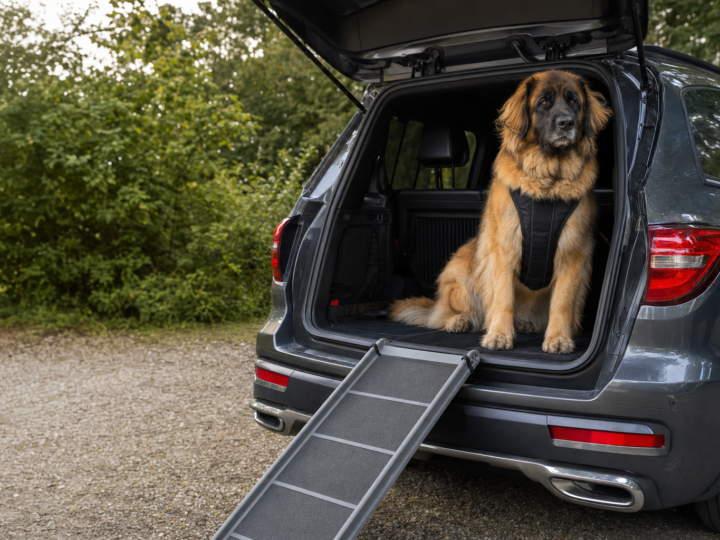
- At every age. Use a ramp for the car, discourage leaping off furniture, and let your dog rest fully between bursts of activity.
Protecting a heavy frame while it builds
A Corso carries serious weight, and every pound of it travels through the joints with each step and each rise from the floor. Supporting healthy joint development while your dog is still building that frame is a simple habit that pays off across a long working life.
Alongside lean feeding and sensible exercise, many big dog parents add a daily joint support chew made for large and giant breeds. MoveGuard Growth is built for exactly this stage. It combines nine actives, including New Zealand Green Lipped Mussel, glucosamine, chondroitin, MSM, krill oil and hyaluronic acid, to support the developing joints of young large breed dogs across the roughly 8 to 30 month growth window, which covers both Corso phases. You dose by expected adult weight, so a Corso sits at three chews a day. It is made in the USA, ninety chews to a jar, and is backed by a 60 day guarantee.
Support Both Growth Phases
Give your growing Cane Corso daily joint support built for large and giant breeds. Explore MoveGuard Growth.
Signs your Corso is on track, and how to tell when it is done
Through the growth years, look for a bright, steady dog with ribs you can feel under light pressure, a visible waist, smooth easy movement and a healthy appetite. Even, unhurried growth with slowly improving muscle tone is exactly what you want, even while the dog still looks unfinished.
Growth has usually finished when the height has not changed in three or four months, the chest has dropped level with the elbows, the head has broadened and squared off, and weight has been stable for a season without any change in feeding. Most Corsos tick all four somewhere in the third year. If you notice limping, stiffness after rest, reluctance to rise, or growth that suddenly speeds up, a conversation with your veterinarian lets you adjust early rather than late.
A simple growth game plan, stage by stage
You do not need a complicated program. You need the right emphasis at the right time.
8 weeks to 4 months. Foundation stage. A complete large breed puppy food, three calm meals a day, thorough socialisation and short bursts of free play on soft ground. Start handling and gentle training now, while your puppy is still liftable.
4 to 12 months. The fast climb and the leggy look. Keep feeding lean, keep exercise moderate, and set the habits that protect the frame. This is a natural point to begin a daily joint support routine that carries through both phases.
12 to 18 months. Height finishes and the plates close. Match portions to a lean body condition, discuss the move to adult food, and begin adding structured activity carefully.
18 months to 3 years. Phase two. Muscle, chest and head fill in. Build conditioning up as your veterinarian advises, keep the body condition checks going, and many parents carry the joint support routine straight into adulthood.
Common mistakes during the long finish
Most growth trouble in Corsos traces back to a few avoidable habits.
- Assuming growth ends at one year. Height does, but the plates may still be closing and phase two has not started. Keep the growth safe rules until about eighteen months.
- Feeding to force the muscle. Bulk arrives with age and conditioning, not with portions. Extra weight only loads young joints.
- Starting heavy work too early. Weight pulling, protection sport and long runs belong after the plates close.
- Switching to adult food too soon. Large breed puppy formulas control calcium and calories through the phase that matters most. Time the change with your veterinarian.
- Waiting for a problem before supporting joints. The growth window is the ideal time to support developing joints, not after signs appear.
The Cane Corso temperament through the growth years
A Corso matures mentally on roughly the same slow schedule as its body. You are living with a large, confident, intelligent guardian that is still a teenager well into its second year, and adolescence in this breed often shows up as testing boundaries and becoming more watchful of strangers rather than as silliness.
That makes the growth years the most important training window you will ever have. Thorough, positive socialisation through the first eighteen months builds a dog that is discerning rather than suspicious, and calm handling teaches a hundred pound adult that you make the decisions. Corsos are sensitive to their people and respond far better to clear, consistent expectations than to force. Give that serious mind daily work, keep your dog close to the family, and the gangly adolescent becomes the steady, deeply loyal guardian the breed is famous for.
Frequently asked questions
When do Cane Corso growth plates close?
In most Cane Corsos the growth plates in the long bones close somewhere between 14 and 18 months, later than in smaller breeds. Your veterinarian can confirm it for your individual dog, which is the usual way to decide when heavier exercise is reasonable.
Do Cane Corsos keep growing after 18 months?
Not in height. After about 15 months a Corso gains muscle, chest width and head development rather than inches, and that second phase typically runs until two to three years of age.
How can I tell if my Cane Corso has finished growing?
Height has not changed in three or four months, the chest has dropped level with the elbows, the head has broadened, and weight has held steady without any change in feeding. Most Corsos meet all four during their third year.
When should a Cane Corso switch to adult food?
Most Cane Corsos move from a large breed puppy formula to an adult food between 15 and 18 months, once skeletal growth is finishing. Confirm the timing with your veterinarian, since switching early removes the balance that supports steady growth.
Why is my Cane Corso still skinny at one year?
A lean, leggy look at twelve months is normal, because the skeleton finishes well before the muscle arrives. Feed to a lean body condition rather than to appearance, and expect the chest and shoulders to fill in through the second and third years.
The bottom line
Your Cane Corso stops getting taller between 12 and 15 months, closes its growth plates by around 14 to 18 months, and keeps building muscle, chest and head until two to three years of age. Hold the growth safe rules until the plates close, feed lean and let phase two arrive on its own schedule, support the whole window with the right daily habits, and give that serious mind steady work. That is how you raise the powerful, balanced Corso the breed is built to be.
Want the Simple Roadmap in One Place?
Grab our free Big Dog Growth Blueprint for the growth window checklist, feeding framework and joint safe exercise limits, all written for large and giant breeds.
This article is for general educational purposes only and is not veterinary advice. It is not intended to diagnose, treat, cure or prevent any disease. Always consult your veterinarian about your dog’s individual health, nutrition and supplement needs. These statements have not been evaluated by the Food and Drug Administration.
Support Big Breed Joints from Day One
Large and giant breeds carry more load through every growth stage. MoveGuard Growth supports developing joints in young big dogs (8 to 30 months); MoveGuard Adult keeps grown big dogs moving comfortably.
Leave a Reply