Controlled growth means feeding a giant breed puppy so that it gains size steadily rather than as fast as possible. It matters because a giant breed puppy multiplies its birth weight roughly a hundred times in two years, and every one of those pounds travels through a skeleton that is still soft and still forming. Growing at a measured pace gives bone, cartilage and connective tissue time to keep up with the load they are being asked to carry, which supports comfortable movement through the whole growth window and into adulthood.
If you are raising a puppy who will one day weigh more than you do, you have probably been told to keep that puppy lean, and you may have wondered why the advice is so insistent. This guide explains what controlled growth actually means, why giant breeds are the group it matters most for, what a steady curve looks like month by month, and the daily habits that keep your puppy on it.
Why is controlled growth important for giant breed puppies?
Controlled growth is important for giant breed puppies because their skeleton develops far more slowly than their appetite would allow. A giant breed puppy can add two to four pounds a week during the fastest months. If food pushes that curve steeper still, the puppy reaches a heavy body weight while the bone, cartilage and joint surfaces underneath are still soft and still forming, so a developing frame carries an adult sized load before it is ready for one.
Controlled growth does not mean underfeeding, and it does not make your dog smaller as an adult. Adult size is written into genetics. What you control is the speed of the journey there, and a slower journey lets every tissue mature at its own pace. A giant breed raised on a steady curve reaches exactly the same adult weight, just later, and arrives with a frame that had time to build properly.
What makes giant breeds grow the way they do
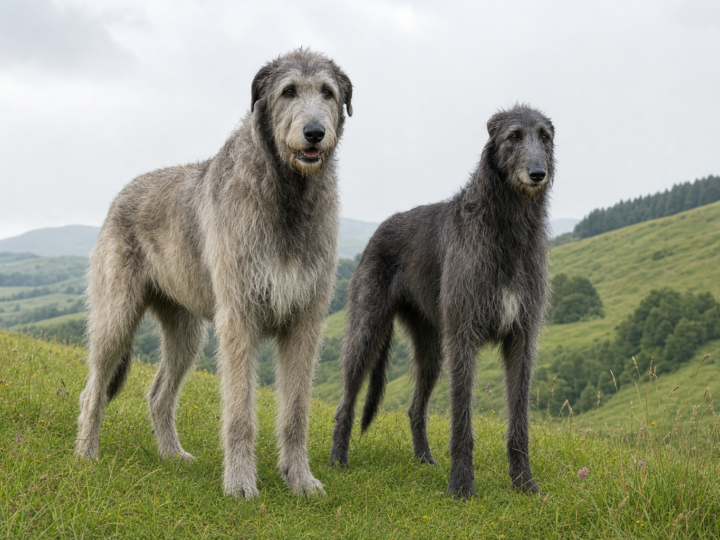
Scale is the whole story. A Labrador puppy leaves the whelping box heading for roughly 70 pounds. A Great Dane, English Mastiff or Irish Wolfhound puppy heads for 130, 160 or even 200 pounds on a timeline only a little longer. That is an enormous amount of tissue to build, and the body builds it in a specific order.
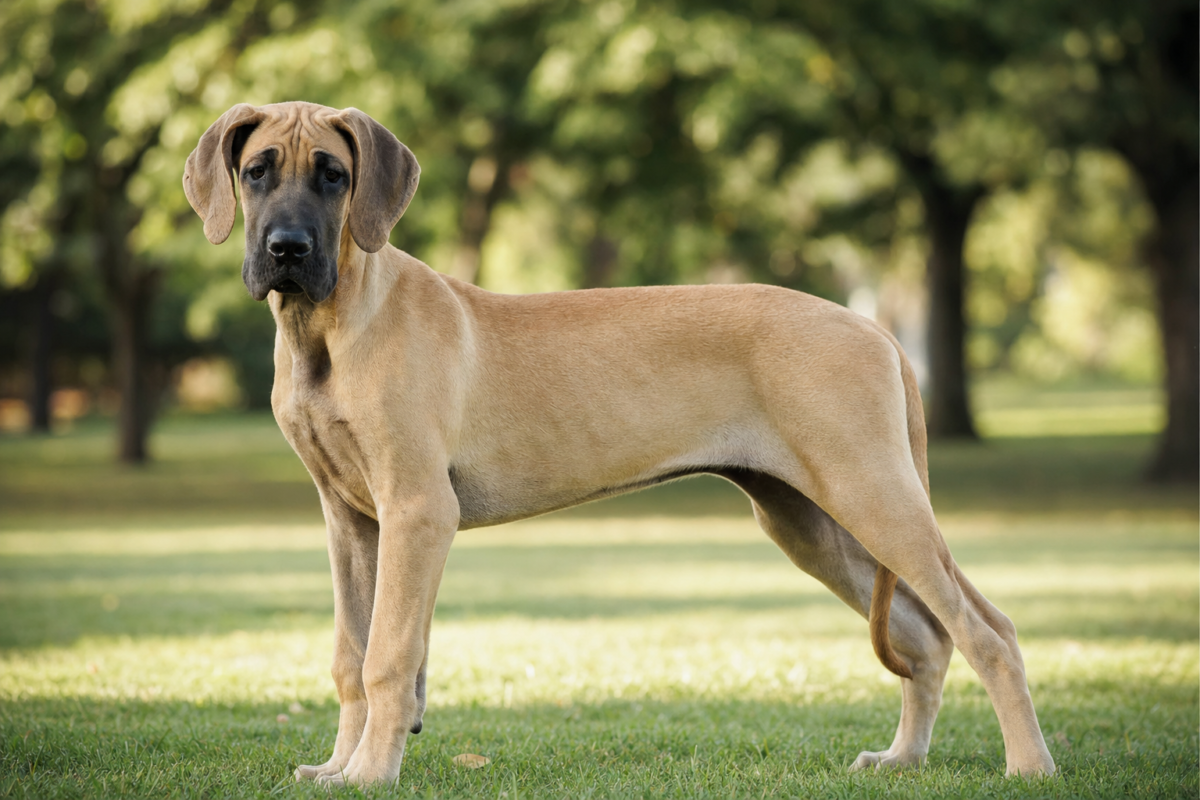
Height comes first. Through the middle of the first year most giant breed puppies shoot upward, looking tall, narrow and slightly comical, with paws and ears the body has not grown into yet. Substance arrives much later, often through the second year and sometimes into a third, which is why a lanky twelve month old giant breed puppy is not underfed. It is simply on schedule.
The other factor is mineral handling. Giant breed puppies are less able to protect themselves from excess dietary calcium than small breed puppies are, which is why a food formulated for their size group is a real nutritional difference rather than a marketing one.
Giant breed growth chart, month by month
Because giant breed adult weights span such a wide range, read growth against your own puppy’s expected adult weight rather than a single breed average. The columns below show a steady, controlled curve toward roughly 100 pounds and toward roughly 150 pounds.
| Age | Toward 100 lb adult | Toward 150 lb adult |
|---|---|---|
| 2 months | 20 to 26 lb | 25 to 35 lb |
| 3 months | 33 to 40 lb | 40 to 55 lb |
| 4 months | 45 to 55 lb | 55 to 75 lb |
| 6 months | 65 to 80 lb | 85 to 105 lb |
| 9 months | 80 to 95 lb | 105 to 130 lb |
| 12 months | 90 to 105 lb | 120 to 145 lb |
| 18 months | 95 to 110 lb | 135 to 160 lb |
| 2 years plus | 100 to 115 lb | 145 to 175 lb |
The World Small Animal Veterinary Association’s Global Nutrition Committee publishes evidence-based guidance for evaluating dog food and feeding practices. Read more from the WSAVA Global Nutrition Guidelines.
Read the shape, not the single number. A puppy tracking slightly under these figures while looking lean and bright is in a better place than one tracking above them and carrying softness over the ribs.
When do giant breeds stop growing?
Giant breeds finish later than any other size group. Most reach close to their adult height somewhere between 18 and 24 months, then keep adding chest depth and muscle until roughly two and a half to three years of age. The very largest sit at the far end of that range, which is why breeders of Mastiffs, Danes and Wolfhounds talk about a dog being finished at three rather than at one.
As a rough guide by expected adult weight, dogs heading for 80 to 100 pounds keep developing for about 20 to 24 months, 100 to 130 pounds for roughly 22 to 26 months, and 130 to 180 pounds or more for 24 to 30 months and sometimes beyond. The heavier the eventual adult, the longer the runway, and the longer controlled growth stays relevant.
Why the growth window matters most at this size
Across that window your puppy is laying down the cartilage, bone and connective tissue that has to support an adult body for a decade. Growth plates, the soft zones at the ends of the long bones, stay open through much of the first year and close later in giant breeds than in anyone else. Controlled growth is simply the practice of not asking more of that structure than it can give yet.
Growing Too Fast
A steep curve piles adult weight onto a young frame. Aim for even and unhurried, not quick.
Excess Weight
Every extra pound is carried by developing joints all day. Lean is the kindest setting during growth.
Calcium Overload
Toppers, supplements and adult foods can push minerals past what a giant breed puppy handles well.
Hard Impact Too Young
Long runs, stairs and repeated jumping load open growth plates. Keep it moderate while young.
How to feed for controlled growth
Feeding for controlled growth is less about restriction than consistency. The goal is a puppy who is never hungry and never heavy. A few habits do most of the work:
- Choose a complete food formulated for large breed puppies, which caps calcium and moderates calories so growth arrives on a gentler slope.
- Measure every meal. Free feeding hands the growth curve to your puppy’s appetite, and a giant breed appetite is not a careful planner.
- Split the daily amount into three meals through the first six months, then two after that, so each meal stays modest.
- Skip calcium supplements, bone meal and mineral rich toppers unless your veterinarian specifically asks for them. A complete food is already balanced.
- Recheck portions at every veterinary visit. The correct amount changes fast in the first year.
How to check body condition in ten seconds
The scale tells you weight. Body condition tells you whether that weight is right for the dog in front of you, and it takes seconds to read.
- Ribs. Run both hands along the sides. The ribs should be easy to feel under a thin covering. If you have to press to find them, trim the portion.
- Waist. Look down from above. There should be a clear narrowing behind the ribs rather than a straight line from chest to hip.
- Tuck. From the side, the belly should rise toward the back legs instead of running level.
Check every couple of weeks through the growth years. Small, early adjustments beat large, late ones.
Growth safe exercise while the frame is forming
Controlled growth is a food conversation and a movement conversation at once. A puppy carrying sensible weight can still overload a young joint with the wrong activity, so the aim during the fast months is frequent moderate movement rather than occasional hard effort.
- Favour free play on grass and soft ground, where the puppy sets its own pace and stops when tired.
- Keep jogging beside you, long hikes and repeated jumping for later, once your veterinarian confirms the frame has matured.
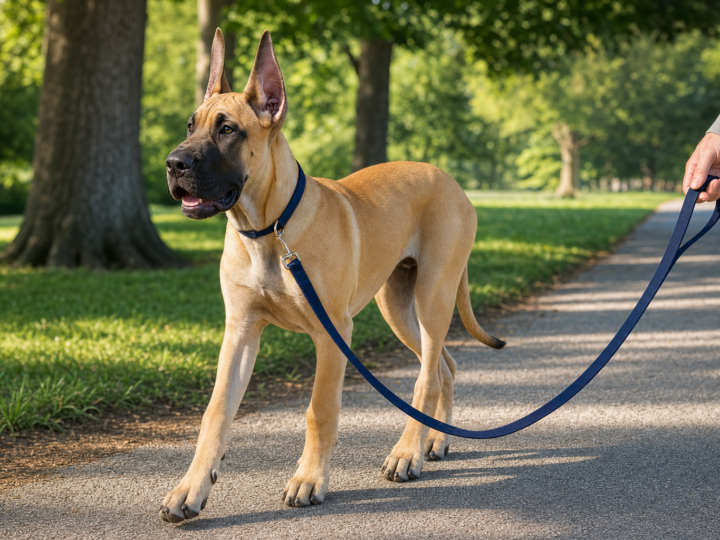
- Limit stairs and discourage leaping in and out of vehicles. A ramp is a genuinely useful purchase for a giant breed.
- Protect real rest. Growth happens while your puppy sleeps, and giant breed puppies need a great deal of sleep.
Daily habits that support developing joints
Controlled growth is the foundation, and the habits stacked on top of it are what carry a giant breed comfortably into adulthood. Lean feeding, sensible movement, good footing and steady joint support all pull in the same direction, which is giving a developing frame every advantage while it is still forming.
Alongside those basics, many big dog parents add a daily joint support chew made for large and giant breeds. MoveGuard Growth is built for exactly this stage. It brings together nine actives, including New Zealand Green Lipped Mussel, glucosamine, chondroitin, MSM and hyaluronic acid, to support healthy joint development and normal cartilage and connective tissue across the roughly 8 to 30 month growth window. Dosing follows expected adult weight rather than current weight, so a puppy heading for 50 to 80 pounds takes two chews and one heading for 80 to 100 pounds or more takes three. It is made in the USA, comes as 90 chews and is backed by a 60 day guarantee.
Support The Growth Window
Give your growing giant daily joint support built for large and giant breeds. Explore MoveGuard Growth.
Signs your giant breed puppy is growing on track
You do not need weekly weigh ins to know controlled growth is working. Look for a puppy who is bright and interested, whose ribs you can feel with light pressure, who has a visible waist from above, and who grows in gradual increments rather than sudden jumps. A slightly leggy, awkward look through the first eighteen months is a good sign, not a worrying one.
What deserves a call to your veterinarian is limping, stiffness after rest, reluctance to stand or climb, or weight gain that outpaces the chart by a wide margin. Catching those early usually means a small adjustment rather than anything more.
A simple growth game plan, stage by stage
Controlled growth is easier to hold when you know what each stage asks of you.
8 weeks to 4 months. Foundation stage. Three measured meals a day of a complete large breed puppy food, gentle socialisation, short bursts of free play, and no calcium extras. Weigh weekly so you learn your puppy’s normal pace.
4 to 8 months. The fastest stretch. Keep portions honest, resist the urge to feed for size, and start being deliberate about stairs, slippery floors and car entry. This is the natural moment to begin a daily joint support routine that runs through the whole window.
8 to 18 months. Height approaches its ceiling while substance begins to arrive. Appetite often outruns need here, so let body condition rather than the bowl decide portions. Build activity gradually and keep favouring soft surfaces.
18 months to 3 years. The lanky adolescent becomes a broad, settled adult while chest and muscle finish. Move to an adult food when your veterinarian advises, keep the lean habit for life, and many parents carry the joint support routine into adulthood.
Common controlled growth mistakes to avoid
Almost every growth problem in giant breeds traces back to a small number of well meant habits.
- Feeding for size. A heavier puppy is not a bigger adult, only a heavier puppy. Adult size is genetic. Extra food simply loads a young frame.
- Using adult or all life stage food too early. These are not formulated for the mineral needs of a fast growing giant, so confirm the choice with your veterinarian.
- Adding calcium. Supplements and mineral rich toppers on top of a complete food push intake past what a giant breed puppy manages comfortably.
- Waiting for a problem. The growth window is when support helps most. It is not a stage to revisit after something shows up.
Living with a giant puppy while you hold the line
The hardest part of controlled growth is rarely the science. It is the social pressure. Giant breed puppies are magnets for opinions, and someone will always suggest your dog needs more food or more calcium. Knowing exactly why you are doing what you are doing makes those conversations easier to shrug off.
It helps that giant breeds are generally so easy to live with. Most are calm, affectionate and slow to escalate, and they sleep for a huge portion of the day while all that building work happens. That gentle nature is also why measured feeding suits them so well. A giant breed puppy given a predictable routine and enough mental work settles into the pattern quickly, and within a few weeks lean, steady growth stops feeling like restraint and starts feeling like the normal rhythm of your household.
Frequently asked questions
Does controlled growth make my dog smaller as an adult?
No. Adult size is set by genetics. Controlled growth changes how quickly your puppy gets there, not where it finishes. A puppy raised on a steady curve reaches the same adult weight, simply later and on a frame that had time to mature.
How fast should a giant breed puppy gain weight?
Most giant breed puppies gain roughly two to four pounds a week through the fastest months between four and eight months of age, then slow noticeably. What matters more than the weekly number is that the curve stays even and body condition stays lean.
Can I feed a giant breed puppy adult dog food?
Adult foods are not formulated for the calcium, phosphorus and calorie needs of a fast growing giant breed puppy. A complete large breed puppy formula is the safer choice through the growth window. Confirm the food and the timing of any switch with your veterinarian.
Should I give my giant breed puppy a calcium supplement?
Not unless your veterinarian specifically recommends one. A complete large breed puppy food is already balanced, and added calcium from supplements or mineral rich toppers pushes intake past what a giant breed puppy handles well during growth.
When can a giant breed puppy start real exercise?
Free play on soft ground is fine from the start. Sustained jogging, long hikes and repeated jumping are best delayed until your veterinarian confirms the growth plates have closed, which in the largest breeds can be well past 18 months.
The bottom line
Controlled growth is the single most useful thing you can do for a giant breed puppy, and it costs nothing but attention. Feed a complete large breed puppy food in measured meals, keep body condition lean, skip the calcium extras, keep movement moderate while the frame forms, and support the growth window with steady daily habits. Your puppy still becomes the magnificent adult it was always going to be, on a frame that was given the time it needed.
Want the Simple Roadmap in One Place?
Grab our free Big Dog Growth Blueprint for the growth window checklist, feeding framework and joint safe exercise limits, all written for large and giant breeds.
This article is for general educational purposes only and is not veterinary advice. It is not intended to diagnose, treat, cure or prevent any disease. Always consult your veterinarian about your dog’s individual health, nutrition and supplement needs. These statements have not been evaluated by the Food and Drug Administration.
Support Big Breed Joints from Day One
Large and giant breeds carry more load through every growth stage. MoveGuard Growth supports developing joints in young big dogs (8 to 30 months); MoveGuard Adult keeps grown big dogs moving comfortably.
Leave a Reply