Veterinary reviewed by Dr. Gaby Thompson, DVM.
How much joint support a big dog needs depends on two things: life stage and weight. Growing large and giant breed puppies are dosed by their expected adult weight, while adult dogs are dosed by their current weight, and always at the amount printed on the product label. For example, MoveGuard Growth is two chews a day for dogs expected to reach 50 to 80 pounds and three chews for 80 to 100 pounds and up. MoveGuard Adult is one chew a day for dogs of 25 to 50 pounds and two chews for 50 to 75 pounds and up, with seniors aged 7 and over directed to the higher dose for their weight. Check with your veterinarian before starting, especially if your dog takes medication.
Choosing a joint support routine for a big dog is a caring decision, and getting the amount right is what turns that decision into a consistent daily habit. The good news is that dosing is far simpler than it first looks. Once you know which life stage your dog is in and which weight to use, the label does the rest. This guide gives you a quick calculator table, a three step method you can run in under a minute, and the common slip ups that lead Dog Parents to give too little or too much.
How much joint support does my big dog need?
Your big dog needs the daily amount printed on the label of the joint support product you choose, matched to the correct weight. For a growing puppy that means expected adult weight. For an adult it means current, healthy body weight. A large breed dog typically lands in the higher tiers on most labels simply because of size, and senior dogs are often directed to the higher dose for their weight.
The label is the dose. Giving more than it states does not add benefit, and giving less makes the routine inconsistent. If your dog is on medication, has a known health condition or is pregnant or nursing, ask your veterinarian to confirm the plan first.
What decides the right amount for a big dog
Four factors shape the daily amount, and each one points you to a specific row of the table below.
Life stage. A puppy inside the growth window is building cartilage and connective tissue, while an adult is maintaining a finished frame. Products made for each stage are formulated differently, so start by choosing the right one.
Weight basis. Growth formulas are dosed by expected adult weight, because a 30 pound puppy destined to be 110 pounds is building joints for a 110 pound adult. Adult formulas use the dog’s current weight.
Age within adulthood. Many adult labels, including MoveGuard Adult, direct senior dogs aged 7 and over to use the higher dose for their weight.
What else your dog already gets. Some large breed foods and other supplements contain glucosamine, chondroitin or fish oil. Stacking products without a plan is the most common way dogs end up with more than intended.
Joint support dose calculator, by weight and life stage
Find your dog’s life stage in the first column and the correct weight in the second. The amounts below are taken directly from the MoveGuard labels. For any other product, follow its own label.
| Life stage | Weight to use | Daily amount |
|---|---|---|
| Growing puppy, 8 to 30 months | Expected adult weight 50 to 80 lb | MoveGuard Growth, 2 chews |
| Growing puppy, 8 to 30 months | Expected adult weight 80 to 100 lb plus | MoveGuard Growth, 3 chews |
| Adult, 12 months and older | Current weight 25 to 50 lb | MoveGuard Adult, 1 chew |
| Adult, 12 months and older | Current weight 50 to 75 lb plus | MoveGuard Adult, 2 chews |
| Senior, 7 years and older | Current weight, any tier | MoveGuard Adult, the higher dose for weight |
Find the Right Daily Amount
Cornell University's College of Veterinary Medicine covers how growth rate, nutrition, and exercise interact with joint development in large breed dogs. Read more from Cornell's canine hip dysplasia overview.
For large breeds the growth window generally closes around 24 months and for giant breeds around 30 months. Most big dogs therefore stay on a growth formula through that window and move to an adult formula afterwards.
How to run the calculation yourself
You can work out the right amount for any big dog in under a minute, using the label and a recent weight.
The three step method
- Step one, name the life stage. Is your dog still growing, a mature adult, or a senior of 7 years and over? For a large or giant breed, “still growing” usually means younger than 24 to 30 months.
- Step two, choose the weight. For a growing dog, estimate expected adult weight from breed ranges and your veterinarian’s view. For an adult, weigh your dog now, ideally at a healthy body condition.
- Step three, read the tier. Match that weight to the label tier and give that amount every day, split across meals if your dog prefers.
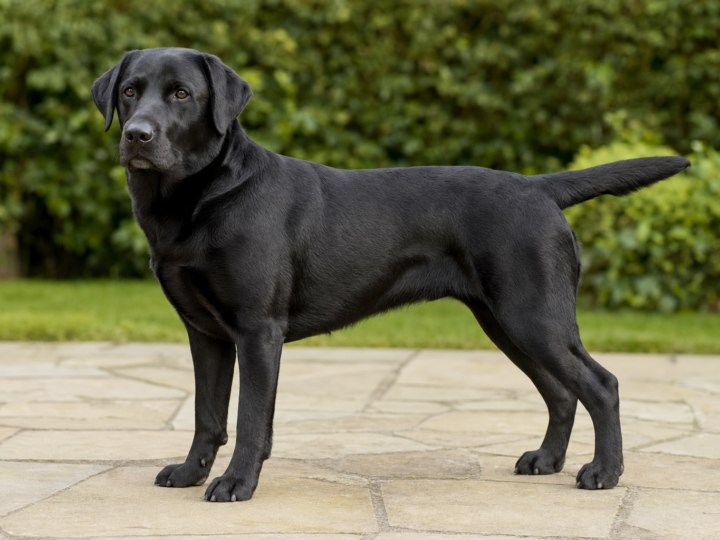
Worked example: a 7 month old Labrador puppy weighs 45 pounds today and is expected to reach about 75 pounds. Around 8 months, a natural time to begin, the growth tier for 50 to 80 pounds applies, so the daily amount is two chews. A 9 year old Rottweiler weighing 105 pounds is a senior on an adult formula, so the higher dose for its weight applies, which is two chews.
Guessing Low
Underestimating expected adult weight puts a future giant in the wrong growth tier. Use breed ranges and ask your veterinarian.
Doubling Up
Combining several joint products or a fortified food can stack the same ingredients. Review everything your dog takes together.
Stopping Too Soon
Joint support is a daily routine. The MoveGuard Adult label suggests allowing 6 to 8 weeks for full effect, so give it time.
Missing Allergens
Many joint chews contain shellfish, fish or soy, and some contain egg. Check the label if your dog has known sensitivities.
Giving joint support with food
A dose only works as a routine if it is easy to give every day. A few habits help:
- Give chews with a meal so the routine is tied to something that already happens twice a day.
- Split the daily amount between breakfast and dinner if your dog is a gulper or has a sensitive stomach.
- Count chews as part of daily treats and keep portions matched to a lean body condition.
- Store the jar sealed, somewhere cool and out of reach, because a big dog can open more than you expect.
How to check body condition in ten seconds
An adult dose is set by weight, so an accurate picture of your dog’s body matters.
- Ribs. Run your hands along the sides. You should feel the ribs easily under a thin layer.
- Waist. Look down from above. A visible waist should tuck in behind the ribs.
- Tuck. From the side, the belly should rise toward the back legs.
If your dog is carrying extra weight, work with your veterinarian on a lean target. That target weight, not the current number, is the better long term guide to the right tier.
Does activity change the dose?
Activity changes the routine around the dose, not the label amount. A working farm dog, a running partner and a sofa loving Mastiff of the same weight all take the same tier. What changes with activity is everything else that supports comfortable movement.
- Match exercise to life stage, keeping hard impact moderate for growing dogs.
- Warm up with a few minutes of walking before any vigorous activity.
- Choose soft ground over pavement for regular exercise.
- Keep one easier day between demanding days for very active dogs.
Choosing the right joint support for your big dog
The best joint support routine is one that matches your dog’s stage and that you can give consistently. For a growing large or giant breed, a growth formula supports developing joints through the window when the frame is still forming. For a mature dog, an adult formula supports comfortable movement in a finished frame. Our guide to joint support ingredients explains what each common active does.
MoveGuard Growth combines nine actives, including New Zealand Green Lipped Mussel, glucosamine, chondroitin, MSM and hyaluronic acid, to support healthy joint development across the roughly 8 to 30 month growth window. It is dosed by expected adult weight, and a 90 chew jar lasts about 45 days at two chews or 30 days at three, backed by a 60 day guarantee. MoveGuard Adult pairs green lipped mussel with eggshell membrane, glucosamine, chondroitin and MSM to support comfortable movement in dogs 12 months and older, with every active amount printed on the label. Its 60 chew jar lasts about 60 days at one chew or 30 days at two. Both are made in the USA in an NSF registered facility.
Dose It Right, Every Day
Give your big dog daily joint support built for large and giant breeds. Explore MoveGuard Growth.
Signs the routine is working well
A joint support routine is working well when it becomes invisible: your dog takes the chews happily, meals and digestion stay normal, and the habit continues day after day without gaps. Over the following weeks, look for a dog who moves comfortably, rises easily after rest, handles stairs and car entry willingly and enjoys normal activity.
Joint support is not a substitute for veterinary care. Limping, stiffness that does not ease after a few minutes of movement, reluctance to exercise, or any sudden change in how your dog moves is a reason to see your veterinarian promptly, whatever routine you are using. If your dog shows an upset stomach, itching or any unusual reaction after starting a new chew, stop and call your veterinarian.
A simple dosing game plan, stage by stage
8 weeks to 8 months. Focus on a complete large breed puppy food, lean body condition and growth safe exercise. Use this time to estimate expected adult weight with your veterinarian so you are ready to choose the right tier.
8 to 30 months. The growth window. Around 8 months is a natural time to begin a growth formula dosed by expected adult weight. Recheck the estimate at each vet visit and move up a tier if your puppy is clearly heading bigger.
Adulthood. Once growth has finished, around 24 months for large breeds and 30 months for giants, move to an adult formula dosed by current weight. Weigh your dog every few months and adjust the tier if weight changes.
7 years and older. Follow the senior guidance on the label, which for MoveGuard Adult is the higher dose for your dog’s weight, and schedule regular senior checkups so your veterinarian can review the whole routine.
Common dosing mistakes to avoid
- Dosing a puppy by today’s weight. Growth formulas are dosed by expected adult weight. A lighter tier shortchanges a future giant.
- Using an old weight for an adult. Weight drifts. Reweigh every few months so the tier stays accurate.
- Giving extra on busy days. More than the label states does not add benefit. Keep the amount the same every day.
- Stacking products. A second joint chew or fortified treat can double up ingredients. Choose one routine and share the full list with your veterinarian.
- Skipping days. Consistency matters more than any single dose. Tie chews to meals so they are never forgotten.
- Staying on a growth formula forever. Once growth has finished, move to a formula made for adult dogs.
Why big dogs sit in the higher tiers
Size is the reason most large and giant breeds land at the top of the dosing tables. A 110 pound Great Dane carries more than twice the body weight of a 45 pound dog through every step, and joint support labels scale their amounts to weight for that reason. The heaviest dogs also take longest to mature, which is why growth formulas for giant breeds cover a window running to around 30 months rather than stopping at a first birthday.
That is also why our guide to puppy versus adult joint supplements treats the two stages so differently. Matching the formula and the tier to your dog’s size and stage is the single most useful thing you can do to make a joint support routine fit your big dog.
Frequently asked questions
Should I dose a large breed puppy by current weight or adult weight?
Growth formulas such as MoveGuard Growth are dosed by expected adult weight, because the puppy is building joints for its adult size. Estimate that weight from breed ranges and your veterinarian’s advice, and recheck it as your puppy grows.
Can I give my dog more than the label dose?
No. Give the amount printed on the label for your dog’s weight and life stage. Extra chews do not add benefit, and only your veterinarian should recommend any change to the labelled amount.
When should I switch from a growth formula to an adult formula?
Most large breeds move to an adult formula once growth finishes, around 24 months, and most giant breeds around 30 months. Your veterinarian can confirm when your dog has reached maturity.
How long does joint support take to work?
Joint support is a daily routine rather than a quick fix. The MoveGuard Adult label suggests allowing 6 to 8 weeks for full effect, and giving chews consistently every day is what matters most.
Can joint supplements be given with medication?
Many dogs take both, but always check with your veterinarian first. Share the full list of medications, foods and supplements your dog receives so your veterinarian can confirm the plan suits your individual dog.
The bottom line
Working out how much joint support your big dog needs comes down to one simple rule: pick the right formula for the life stage, match the right weight to the label tier, and give that amount every day. Growing puppies use expected adult weight, adults use current weight, and seniors follow the higher dose for their weight. Keep your dog lean, keep the routine consistent, and bring your veterinarian into the plan.
Want the Simple Roadmap in One Place?
Grab our free Big Dog Growth Blueprint for the growth window checklist, feeding framework and joint safe exercise limits, all written for large and giant breeds.
This article is for general educational purposes only and is not veterinary advice. It is not intended to diagnose, treat, cure or prevent any disease. Always consult your veterinarian about your dog's individual health, nutrition and supplement needs. These statements have not been evaluated by the Food and Drug Administration.
Support Big Breed Joints from Day One
Large and giant breeds carry more load through every growth stage. MoveGuard Growth supports developing joints in young big dogs (8 to 30 months); MoveGuard Adult keeps grown big dogs moving comfortably.
Leave a Reply