
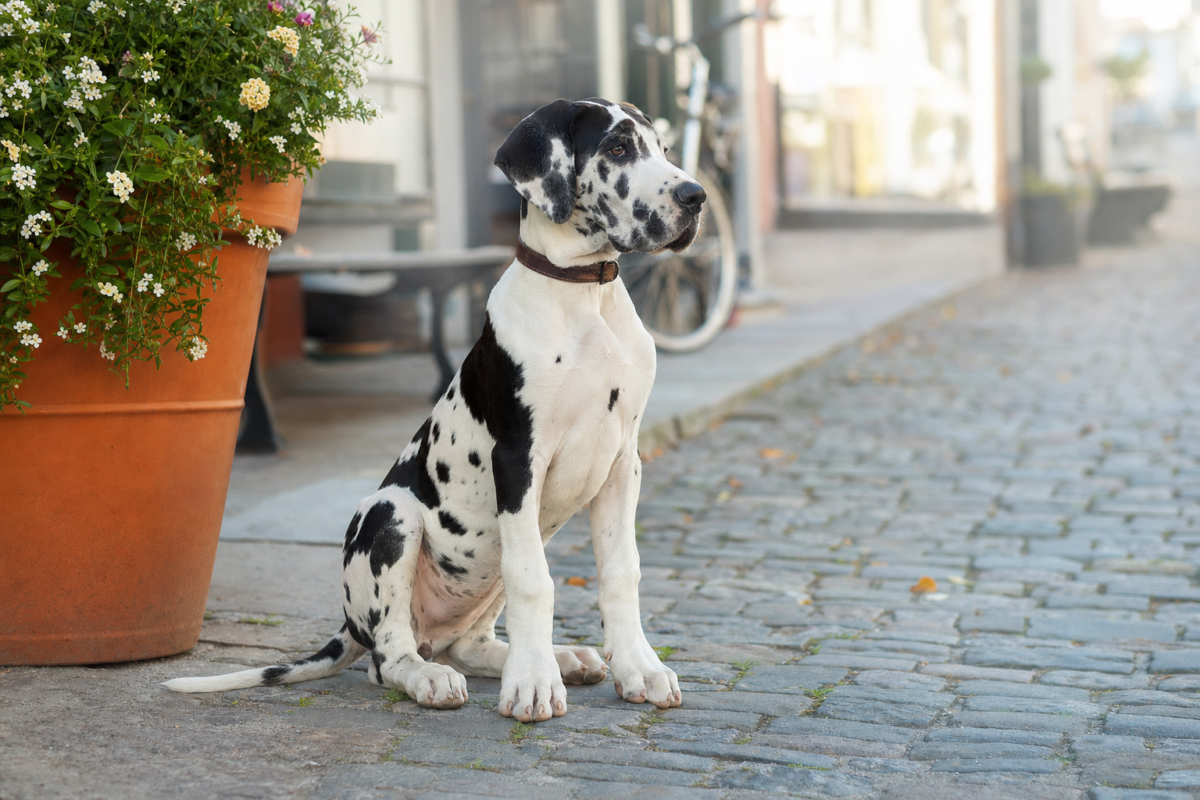
Introduce a large breed puppy to the world through short, calm, positive experiences, starting the week your puppy comes home and continuing well into adolescence. The most sensitive window runs from about 3 to 14 weeks, so aim for several gentle new people, surfaces, sounds and places each week during that time, pairing each one with food and letting your puppy choose to approach. Carry or use a clean blanket in public spaces until your veterinarian confirms vaccination, and keep outings short so a growing frame is not overworked. Because a big puppy soon looks like an adult, calm greetings and easy handling matter more than for a small dog.
Bringing home a big puppy means bringing home a future large or giant adult, and the confidence that adult carries into every vet visit, busy street and family gathering is built right now. The good news is that socialisation is not about exposing your puppy to as much as possible. It is about many small, pleasant moments that teach your puppy the world is safe and interesting. This guide shows you how to do that at the right pace, which experiences matter most for a big dog, and how to protect a growing body while you do it.
How do I introduce a large breed puppy to the world?
Introduce a large breed puppy to the world by offering short, positive exposures to new people, dogs, places, surfaces, sounds and handling, several times a week, from the day your puppy arrives. Keep each experience brief, reward calm curiosity with food, let your puppy retreat whenever it wants, and end on a good note. Prioritise the sensitive period of roughly 3 to 14 weeks, then keep going through adolescence, because big breeds can become newly cautious as they mature.
Quality beats quantity every time. Ten relaxed minutes watching a quiet street from a bench teaches more than an hour in a crowded market that leaves your puppy overwhelmed.
What makes socialisation different for a big puppy
Every puppy needs socialisation, but size raises the stakes in three ways.
Size arrives before maturity. A four month old giant breed can weigh 50 pounds or more and still have the emotional maturity of a baby. Strangers read size first, and a bouncy, uncertain youngster that looks like an adult can worry people and other dogs.
Handling has to be easy. A small dog who dislikes having its feet touched can be managed. A 130 pound adult who dislikes nail trims, ear checks or being lifted onto a scale is a genuine problem for you and your veterinarian, so gentle handling practice is essential.
Fear looks different in a big dog. A worried large dog that barks or lunges is far harder to manage and far more alarming to others. A confident, relaxed big dog, on the other hand, is a joy to take anywhere.
Socialisation checklist by age
Use this as a friendly guide. Every puppy has its own pace, and a shy puppy may need more repetition of fewer things.
| Age | Main focus | Good experiences to offer |
|---|---|---|
| 8 to 10 weeks | Home and handling | Household sounds, gentle handling of paws and ears, new textures, calm visitors |
| 10 to 12 weeks | The wider world from safety | Carried or blanket outings, watching traffic, a friendly vaccinated adult dog |
| 12 to 14 weeks | People and places | Puppy class, people in hats and uniforms, short car rides, shop doorways |
| 4 to 6 months | Manners in public | Calm greetings, passing dogs politely, busier streets in small doses |
| 6 to 12 months | Adolescent confidence | Revisiting old experiences, new environments, settling on a mat in cafes |
| 12 to 24 months | Adult steadiness | Varied outings, longer settles, maintaining friendly dog and people contact |
The American Kennel Club’s Chief Veterinary Officer, Dr. Jerry Klein, DVM, has written extensively on the slower growth and development timeline of large and giant breeds. Read more from the AKC’s guidance on caring for large-breed dogs.
When does the socialisation window close?
The most sensitive period for socialisation runs from about 3 weeks to around 12 to 14 weeks of age. During those weeks puppies accept new things readily, and experiences they miss can be harder to introduce later. The window does not slam shut, though. Socialisation continues to matter through adolescence, and many large breeds go through a second cautious phase somewhere between 6 and 14 months, when a previously bold puppy may suddenly worry about familiar things.
Most veterinary behaviour guidance now recommends that puppies begin carefully chosen socialisation, such as a well run puppy class, about a week after the first vaccination rather than waiting for the full series. Talk to your veterinarian about local disease risks and which places are sensible for your puppy.
Why the growth window matters on outings
Your puppy is building bone, cartilage and connective tissue at the same time it is learning about the world. The growth plates, the soft areas at the ends of the long bones, stay open well past the first year in large and giant breeds. That means socialisation outings should be about watching, sniffing and short sessions, not long walks, repeated jumping or endless play with bigger dogs. Big breeds keep developing for roughly 16 to 30 months depending on expected adult weight, so good habits built now carry through the whole growth window.
Overwhelm
Too much, too fast teaches fear rather than confidence. Short, calm sessions with an easy exit work far better.
Rough Play
Wrestling with much larger or boisterous dogs can frighten a puppy and load growing joints. Choose gentle, known playmates.
Too Much Walking
Long outings tire young joints. Carry, sit and watch rather than marching a puppy around town.
Missed Handling
A giant adult who resists paw, ear and mouth checks makes vet care hard. Practise gentle handling daily from week one.
Using food well on socialisation outings
Food is your most useful socialisation tool, because it turns something new into something good. Used thoughtfully, it also keeps growth on track.
- Take part of your puppy’s daily food ration on outings and use it as rewards, rather than adding lots of extra treats.
- Reward the moment your puppy notices something new and stays relaxed, before any worry appears.
- Choose small, soft pieces so rewards are quick and your puppy stays focused on the world around it.
- Keep feeding a complete food formulated for large breed puppies, and reduce meal portions slightly on days with lots of training rewards.
How to check body condition in ten seconds
Plenty of rewards can quietly add weight. A quick hands on check keeps things honest.
- Ribs. Run your hands along the sides. You should feel the ribs easily under a thin layer.
- Waist. Look down from above. A clear waist should tuck in behind the ribs.
- Tuck. From the side, the belly should rise toward the back legs.
Check every couple of weeks and adjust portions gently with your veterinarian’s guidance.
Growth safe outings for a big puppy
A socialisation outing for a large breed puppy is mostly about sitting, watching and sniffing. That is exactly what a growing frame needs.
- Keep early outings to 10 to 20 minutes, with plenty of time sitting still in one spot.
- Carry a young puppy or use a wagon to reach new places, then let it explore a small area on foot.
- Offer varied surfaces at walking pace, such as grass, gravel, wood decking and rubber mats.
- Lift your puppy in and out of the car rather than letting it jump, and approach stairs with a big puppy slowly and briefly.
- Choose calm, similarly sized or gentle adult dogs for play, and pause play before it becomes wild.
Supporting a growing frame while your puppy explores
A confident big puppy is a busy one, exploring new ground, climbing into cars and playing with friends. Supporting healthy joint development alongside that busy life is a simple, caring habit that fits naturally into the growth years, together with lean feeding and sensible activity.
Many big dog parents add a daily joint support chew made for large and giant breeds. MoveGuard Growth is built for exactly this stage. It combines nine actives, including New Zealand Green Lipped Mussel, glucosamine, chondroitin, MSM and hyaluronic acid, to support the developing joints of young large breed dogs across the roughly 8 to 30 month growth window, and around 8 months is a natural time to begin. You dose by expected adult weight, so most large breeds sit at two chews a day and the biggest at three. It ships as 90 chews, is made in the USA in an NSF facility, and is backed by a 60 day guarantee.
Grow Confident and Comfortable
Give your growing puppy daily joint support built for large and giant breeds. Explore MoveGuard Growth.
Signs your puppy is gaining confidence
A well socialised big puppy notices new things with interest rather than alarm. Look for a loose, wiggly body, a relaxed tail, curiosity about new sights and smells, a willingness to take food in new places, and a quick recovery after a surprise such as a dropped pan or a passing bus. A puppy that looks, sniffs, then checks back with you is doing beautifully.
Signs your puppy needs more distance or a break include a tucked tail, ears pinned back, lip licking, yawning, freezing, refusing food, hiding behind your legs or trying to leave. Move further away, let your puppy settle, and try again another day at an easier level. If fearfulness seems strong or persistent, speak to your veterinarian, who can refer you to a qualified behaviour professional.
A simple socialisation game plan, stage by stage
You do not need a complicated program. You need the right emphasis at the right time.
8 weeks to 4 months. Foundation stage. Aim for a few new, pleasant experiences every day: gentle handling of paws, ears and mouth, household noises, new textures, calm visitors, short car rides and carried outings to watch the world. Join a well run puppy class once your veterinarian agrees. Begin name, sit and settle on a mat.
4 to 8 months. Your puppy is growing quickly and may start pulling toward everything. Practise calm greetings, with all four paws on the floor, and passing other dogs without rushing over. Revisit earlier experiences in slightly busier places, keeping sessions short.
8 to 18 months. Adolescence. Expect a cautious phase and some selective hearing. Stay patient, keep outings positive, and do not force your dog toward anything that suddenly worries it. This is also the heart of the growth window, so keep activity moderate and feeding lean.
18 months to 3 years. The adolescent becomes a steady adult. Keep up regular variety, friendly contact with people and dogs, and handling practice, because confidence is maintained through use.
Common socialisation mistakes to avoid
Most socialisation setbacks come from a few well meaning habits.
- Flooding. Taking a new puppy straight to a busy festival or dog park is more likely to create fear than confidence.
- Waiting until every vaccine is done. The most sensitive weeks may pass. Ask your veterinarian how to socialise safely in the meantime.
- Letting everyone greet a jumping puppy. Cute at 20 pounds becomes a problem at 120. Reward four paws on the floor from day one.
- Uncontrolled dog park play. Unknown dogs, rough play and hard running are a poor mix for a growing big puppy.
- Forcing an approach. Pulling or pushing a worried puppy toward something teaches it that you cannot keep it safe.
- Stopping at 16 weeks. Adolescent big breeds need ongoing, positive experiences to stay confident.
Big breed temperament and the socialisation years
Many large and giant breeds were developed to guard, herd or work independently, and that heritage shapes how they meet the world. Guardian breeds such as the Cane Corso, Great Pyrenees, Anatolian Shepherd and Rottweiler are often naturally reserved with strangers, which makes early, positive exposure to many kinds of people especially valuable. Sociable breeds such as the Labrador, Golden Retriever and Newfoundland tend to love everyone, so their homework is usually calm manners rather than confidence.
Whatever the breed, the goal is the same: a relaxed adult who can walk past a stranger, meet a child politely, accept a veterinary exam and settle in a new place. For families, our guide on whether big dogs are good with children covers how to bring puppies and young people together safely. Building that steadiness takes patience, but a well socialised big dog becomes a wonderful ambassador for every large breed.
Frequently asked questions
When should I start socialising a large breed puppy?
Start the day your puppy comes home, usually around 8 weeks. Begin with gentle handling, household sounds and calm visitors, then add carried outings and a well run puppy class once your veterinarian agrees, often about a week after the first vaccination.
Can I take my puppy out before all vaccinations are finished?
Many veterinarians support carefully chosen outings before the full series is complete, such as carrying your puppy, visiting clean private spaces and attending a puppy class that requires vaccination records. Avoid places with unknown dog traffic, and ask your veterinarian about local disease risks.
How many new experiences does a puppy need?
There is no magic number. Aim for a few short, positive new experiences most days during the first months, focusing on variety of people, places, sounds, surfaces and handling. How your puppy feels about each experience matters far more than the total count.
Should a big puppy play with adult dogs?
Yes, with calm, friendly, vaccinated adult dogs you know well. Gentle adults teach good manners. Avoid rough play with much larger or boisterous dogs, and pause play regularly so a growing frame is not overworked.
Is it too late to socialise an older puppy?
It is never too late to help. Older puppies and adolescents still benefit from patient, positive exposure, though progress may be slower. Work at a distance your dog finds comfortable, reward calm behaviour, and ask your veterinarian about a qualified behaviour professional if fear is strong.
The bottom line
Introducing a large breed puppy to the world is about many small, happy moments rather than big adventures. Start early, keep sessions short, let your puppy choose to approach, practise handling every day, and protect growing joints by favouring watching and sniffing over long walks and wild play. Do that through puppyhood and adolescence, and you raise a big dog who meets the world with calm confidence.
Want the Simple Roadmap in One Place?
Grab our free Big Dog Growth Blueprint for the growth window checklist, feeding framework and joint safe exercise limits, all written for large and giant breeds.
This article is for general educational purposes only and is not veterinary advice. It is not intended to diagnose, treat, cure or prevent any disease. Always consult your veterinarian about your dog’s individual health, nutrition and supplement needs. These statements have not been evaluated by the Food and Drug Administration.
Support Big Breed Joints from Day One
Large and giant breeds carry more load through every growth stage. MoveGuard Growth supports developing joints in young big dogs (8 to 30 months); MoveGuard Adult keeps grown big dogs moving comfortably.
Leave a Reply