A large breed puppy moves through five growth stages: the neonatal and socialisation stage from birth to 12 weeks, the rapid growth stage from 3 to 6 months, the tall and leggy stage from 6 to 12 months, adolescence from 12 to 18 months, and the filling out stage from 18 months to roughly 2 or 3 years. Big dogs finish far later than small ones, with most reaching adult height between 12 and 24 months and adult substance well after that.
Raising a big dog is a long project, and that is easy to forget in the middle of month five when your puppy seems to grow overnight. Large and giant breeds do not simply take the small dog timeline and stretch it. They build a great deal of bone and frame across a much longer window, which changes what your puppy needs at each point along the way. This guide walks you through every growth stage a large breed goes through, what is actually happening inside that frame, and the small daily habits that matter most at each one.
What are the growth stages of a large breed puppy?
Large breed puppies pass through five practical growth stages. Birth to 12 weeks is the neonatal and socialisation stage, when the world gets learned. Three to six months is the rapid growth stage, when weight climbs fastest. Six to twelve months is the tall and leggy stage, when height arrives ahead of substance. Twelve to eighteen months is adolescence, when growth slows and behaviour tests the boundaries. Eighteen months to two or three years is the filling out stage, when muscle, chest and final width arrive.
The bigger the expected adult weight, the later each stage ends. A 60 pound dog is essentially finished around 16 to 18 months, while a 150 pound giant breed may still be adding substance at three years old. Knowing which stage your puppy is in tells you what to prioritise this month rather than guessing.
What makes large breed growth different
A small dog gains perhaps twenty times its birth weight. A large breed can gain seventy times, and a giant breed even more, all on a skeleton that is being laid down at the same time. That is an enormous amount of construction packed into a limited window, and it is the reason big dog advice looks so different from general puppy advice.
The practical consequence is that bone and joint development lag behind appetite and enthusiasm. Your puppy will want to run, jump and eat like an adult long before the frame is finished. Growth plates, the soft areas at the ends of long bones where lengthening happens, stay open through much of the first year and close later in bigger breeds than in smaller ones. While they are open, the frame is still forming, so extra weight and hard repeated impact ask more of it.
None of this needs to feel worrying. It simply means the job during the growth years is patience: feed for steady growth rather than fast growth, keep activity regular and moderate, and let the size arrive on its own schedule.
Large breed growth stages, month by month
Use this table as a friendly map rather than a report card. Every puppy moves through the same sequence, but bigger breeds spend longer in each stage.
| Stage | Typical age | What is happening |
|---|---|---|
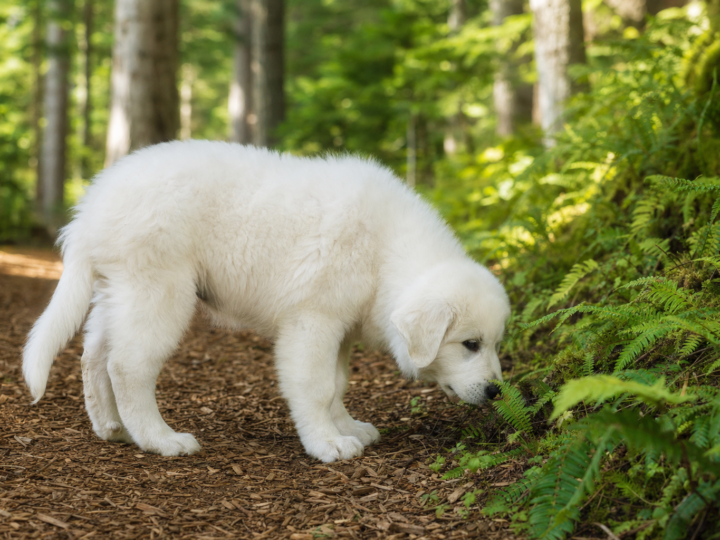
| Neonatal and socialisation | Birth to 12 weeks | Weaning, first vaccinations, the window when new people, sounds and surfaces shape confidence for life |
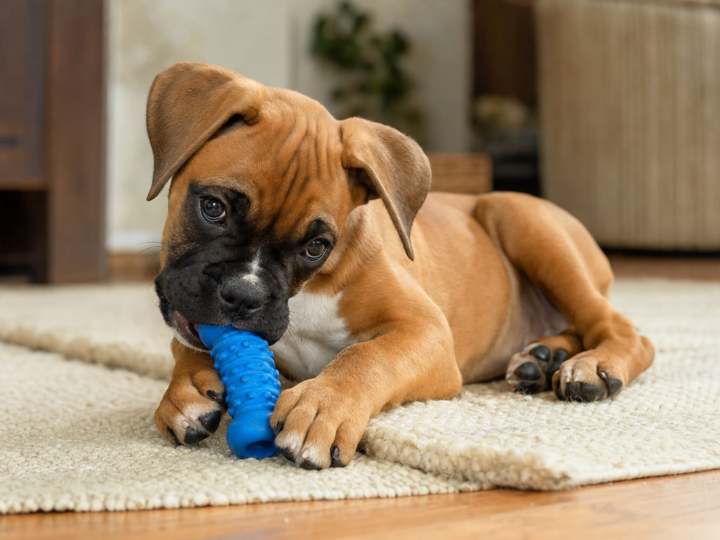
| Rapid growth | 3 to 6 months | The fastest weight gain of the whole timeline, teething, and the point where portion control matters most |
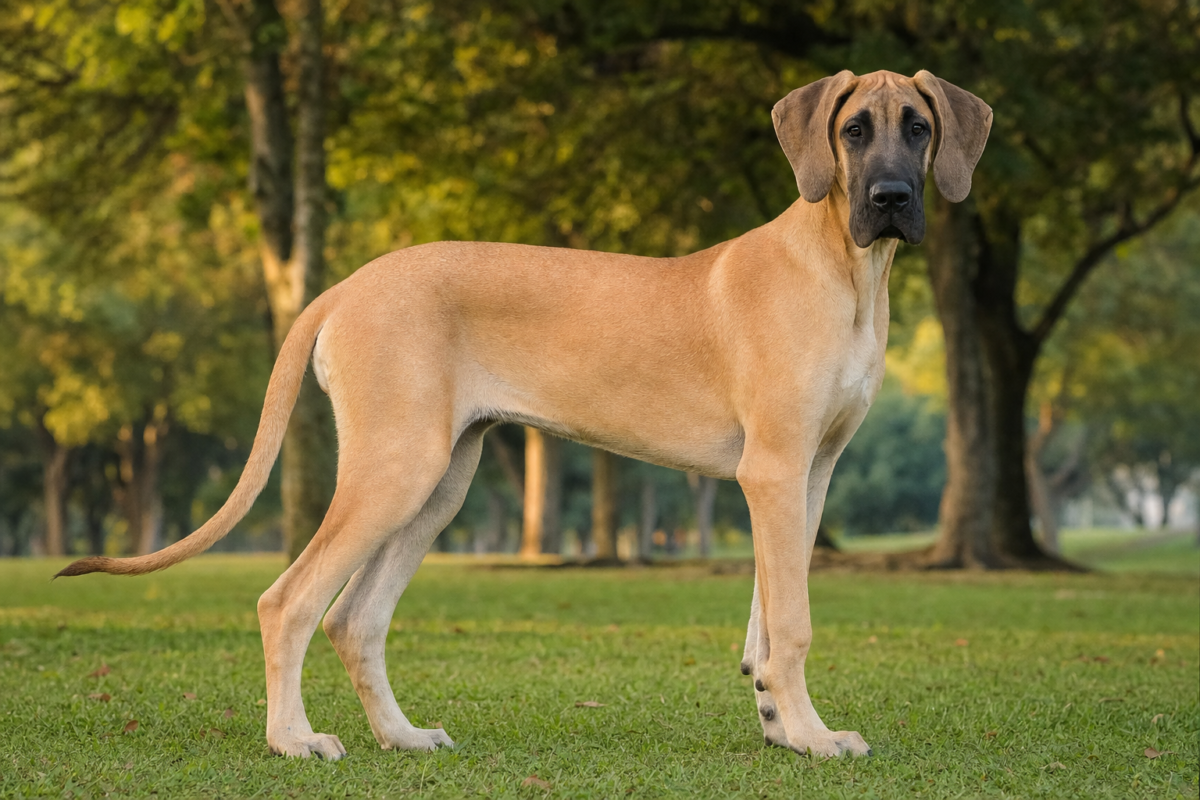
| Tall and leggy | 6 to 12 months | Height climbs toward adult, the body looks narrow and unfinished, appetite outpaces need |
| Adolescence | 12 to 18 months | Growth slows, muscle begins to arrive, training is tested and consistency pays |
| Filling out | 18 months to 2 or 3 years | Chest, shoulders and final width develop, coat matures, the adult outline finally appears |
The American Kennel Club’s Chief Veterinary Officer, Dr. Jerry Klein, DVM, has written extensively on the slower growth and development timeline of large and giant breeds. Read more from the AKC’s guidance on caring for large-breed dogs.
When do large breed dogs stop growing?
Most large breed dogs reach their adult height somewhere between 12 and 24 months, then continue adding muscle and width for another year or more. Giant breeds run at the far end of that range, and it is entirely normal for a two year old giant to still look a little unfinished.
Expected adult weight is the best predictor of the timeline. As a working guide, dogs expected to finish at 50 to 65 pounds grow for roughly 16 to 18 months. At 65 to 80 pounds it is about 18 to 22 months. At 80 to 100 pounds, 20 to 24 months. At 100 to 130 pounds, 22 to 26 months. At 130 pounds and above, growth can run 24 to 30 months or longer. That whole span is your prime window for habits around food, movement and joint support.
Why the growth window matters so much
During this window your puppy is building the cartilage, bone and connective tissue that will carry the weight of a big adult body for a decade or more. A dog that finishes growing at 120 pounds asks a great deal of every joint simply by standing up. Choices made while the frame is under construction have a longer reach in a big dog than in a small one, which is exactly why the growth window deserves attention rather than anxiety.
Growing Too Fast
Rapid growth asks more of developing joints. Aim for a steady, even curve rather than a fast one.
Excess Weight
Every extra pound is carried by a frame that is still forming. Lean is kind at this age.
Too Much Impact
Long runs, hard sprints and repeated jumping on open growth plates are best kept moderate while young.
Slippery Floors
A heavy puppy sliding on tile or wood splays and strains. Runners and rugs are a cheap, real fix.
How feeding changes at each growth stage
Feeding is the single lever with the biggest effect on how a big dog grows, and the right approach shifts as the stages pass. Steady, moderate growth supports comfortable movement now and for years to come.
- Choose a complete food formulated for large breed puppies, which balances calories, calcium and phosphorus for slower, steadier growth. This matters most from weaning to about 18 months.
- Feed three meals a day through the rapid growth stage, then move to two meals as adolescence arrives.
- Measure every portion rather than eyeballing it, and count treats inside the daily total.
- Reassess the amount every few weeks. The correct portion in month four is not the correct portion in month eight.
- Move to an adult formula on your veterinarian’s timeline, usually as growth flattens out near the end of the growth window.
How to check body condition in ten seconds
The scale tells you weight, but body condition tells you health. Use your hands, especially on a thick coated breed.
- Ribs. Run your hands along the sides. You should feel the ribs easily under a thin layer. If you have to press through padding, ease back on food.
- Waist. Look down from above. You want a clear waist that tucks in behind the ribs.
- Tuck. From the side, the belly should rise toward the back legs rather than hanging level.
Check every couple of weeks through the growth years and adjust portions gently with your veterinarian’s guidance.
Growth safe exercise, stage by stage
Big puppies need an outlet, but during the fast growth stages the goal is regular, moderate activity rather than repeated hard impact. Activity should grow with the dog rather than arrive all at once.
- Under 6 months, favour free play, exploring and short walks on soft ground, with plenty of rest between bursts.
- From 6 to 12 months, keep walks regular but resist long runs, hard sprints and repeated jumping while growth plates are open.
- Through adolescence, add structure gradually: longer walks, swimming, and training that asks the mind to work.
- After the growth window closes, build endurance activity up on your veterinarian’s advice rather than in one weekend.
- At every stage, let your puppy rest fully. Big dogs rarely stop themselves.
Supporting joints through the growth years
A large breed dog carries a big body on joints that spent the first two years being built. Supporting healthy joint development while the frame is still forming is a simple, caring habit that pays off across a long life.
Alongside lean feeding and sensible exercise, many big dog parents add a daily joint support chew made for large and giant breeds. MoveGuard Growth is built for exactly this stage. It combines nine actives, including New Zealand Green Lipped Mussel, glucosamine, chondroitin, MSM and hyaluronic acid, to support the developing joints of young large breed dogs across the roughly 8 to 30 month growth window. You dose by expected adult weight, so a dog expected to finish at 50 to 80 pounds takes two chews a day and one heading past 80 pounds takes three. It is made in the USA and is backed by a 60 day guarantee. Once your dog is fully grown, MoveGuard Adult carries the same idea into the adult years.
Support A Growing Frame
Give your growing big dog daily joint support built for large and giant breeds. Explore MoveGuard Growth.
Signs your big dog is growing on track
You do not need a daily scale reading to know things are going well. Look for a bright, alert puppy with a waist you can see from above, ribs you can feel with light pressure, smooth easy movement, and steady growth without dramatic jumps. A leggy, slightly awkward middle stage is normal and expected in a large breed.
If you ever notice limping, stiffness after rest, reluctance to use stairs or get into the car, or growth that suddenly accelerates, a quick chat with your veterinarian brings peace of mind and lets you adjust food or activity early.
A simple growth game plan, stage by stage
You do not need a complicated program to raise a sound big dog. You need the right emphasis at the right time.
8 weeks to 4 months. Foundation stage. A complete large breed puppy food, three calm meals a day, wide and gentle socialisation, and short bursts of free play on soft ground. Put runners down on slippery floors now, before your puppy is heavy.
4 to 8 months. The fastest growth of the whole timeline. Keep feeding lean, keep exercise moderate, and build habits around stairs and car entry while lifting your dog is still possible. This is a natural point to begin a daily joint support routine.
8 to 18 months. Height nears its peak while muscle begins to arrive. Match portions to a lean body condition, since appetite outpaces need at this age. Add structured activity gradually and keep training consistent through adolescence.
18 months to 3 years. The leggy adolescent becomes a substantial adult. Growth slows while chest and muscle continue to develop. Build activity up as your veterinarian advises, and many parents carry a joint support routine into adulthood.
Common growth mistakes to avoid
Most growth problems in big dogs come from a few avoidable habits. Steer clear of these and you are already ahead.
- Feeding for size. A heavy young dog is not a healthier one. Feed lean and let the size come on its own timeline.
- Adding calcium supplements. A complete large breed puppy food already balances minerals. Never add more without veterinary direction.
- Treating a big puppy like an adult athlete. Long runs and repeated jumping ask a lot of open growth plates.
- Assuming growth is finished at one year. In most large breeds, the second year still matters a great deal.
- Waiting for a problem before supporting joints. The growth window is the ideal time to support developing joints, not after signs appear.
How behaviour changes across the stages
The body is only half the story. A large breed puppy is also growing a mind, and the two timelines run alongside each other. The socialisation stage under 12 weeks sets confidence around people, surfaces and noise. The rapid growth stage brings teething and testing, and it is the moment to teach calm greetings while your dog is still liftable.
Adolescence, roughly 12 to 18 months, is where many big dog parents feel blindsided. A dog that knew every cue at nine months may suddenly seem to forget all of them. Nothing has gone wrong. Consistency, short positive sessions and patience carry you through, and the dog that comes out the other side is the steady adult you were working toward. Because a large breed is physically powerful long before it is mentally mature, manners built early are what make an adult big dog easy to live with.
Frequently asked questions
At what age is a large breed dog full grown?
Most large breeds reach adult height between 12 and 24 months, then keep adding muscle and width until roughly two to three years of age. Giant breeds sit at the later end of that range.
What is the fastest growth stage for a large breed puppy?
The stage from about 3 to 6 months brings the fastest weight gain of the whole timeline. This is when portion control and a complete large breed puppy food matter most.
When do a large breed puppy growth plates close?
Growth plates in large breeds typically close later than in small dogs, generally somewhere between 12 and 20 months depending on expected adult size. Your veterinarian can advise on your individual dog.
Why does my big puppy look tall and skinny?
Height arrives before substance in large breeds, so a leggy, narrow look between 6 and 12 months is normal. Chest, shoulders and muscle fill in through the second year.
How much exercise does a large breed puppy need?
Regular moderate activity suits a growing big dog better than long or high impact sessions. Favour free play and short walks on soft ground while young, then build up gradually as the growth window closes.
The bottom line
A large breed puppy grows in five stages across two years or more, and each one asks for something slightly different. Socialise early, feed lean through the rapid growth months, keep exercise moderate while the frame is forming, stay consistent through adolescence, and support the growth window with the right daily habits. Do that and the big dog you end up with is a comfortable, confident one.
Want the Simple Roadmap in One Place?
Grab our free Big Dog Growth Blueprint for the growth window checklist, feeding framework and joint safe exercise limits, all written for large and giant breeds.
This article is for general educational purposes only and is not veterinary advice. It is not intended to diagnose, treat, cure or prevent any disease. Always consult your veterinarian about your dog’s individual health, nutrition and supplement needs. These statements have not been evaluated by the Food and Drug Administration.
Support Big Breed Joints from Day One
Large and giant breeds carry more load through every growth stage. MoveGuard Growth supports developing joints in young big dogs (8 to 30 months); MoveGuard Adult keeps grown big dogs moving comfortably.
Leave a Reply