Most Dog Parents in the United States spend roughly $3,000 to $7,000 on a large breed dog in the first year. That figure includes the acquisition cost, the setup gear, early veterinary care, neutering, food and training. Adopting a young adult from a rescue puts you near the bottom of that range, while buying a giant breed puppy from a reputable breeder and adding insurance, classes and daycare pushes you toward the top. After year one, ongoing costs usually settle at about $1,800 to $3,500 a year.
Nobody plans for a big dog by looking at a spreadsheet, and that is exactly why the first year surprises so many people. Everything a large breed needs is simply larger. The crate is bigger, the food bag empties faster, the neutering bill reflects a longer surgery, and the flea treatment is priced by weight. None of it is unaffordable, but it does reward planning. This guide lays out honest numbers for the first twelve months, shows you which lines you control and which you do not, and helps you build a budget that holds up when real life arrives.
What does a big dog cost in year one?
A large breed dog typically costs $3,000 to $7,000 across the first twelve months in the United States, with a realistic midpoint near $4,500. Roughly half of that total lands in the first two months, because acquisition, setup gear, the initial vaccination series and neutering all cluster at the start. The remaining spend spreads across food, preventatives, training and everyday supplies.
Two choices move the number more than anything else. The first is where your dog comes from, since adoption fees run in the hundreds while a well bred giant breed puppy can run several thousand. The second is whether you carry insurance and use paid services such as daycare, walking or boarding. Everything else varies by a few hundred dollars either way.
Why a big dog costs more than a small one
Size touches almost every line in the budget, and it does so in ways that are easy to underestimate until the receipts start arriving.
Consumption scales with body weight. A 120 pound dog eats roughly four times what a 25 pound dog eats. Over a year that difference alone is hundreds of dollars.
Medication is dosed by weight. Flea, tick and worm preventatives are sold in weight bands, and big dogs sit in the most expensive band. The same applies to most veterinary medicines.
Procedures take longer. Anaesthesia is dosed by weight and surgery on a large body takes more time, so neutering, dental work and any procedure costs meaningfully more than it would for a small dog.
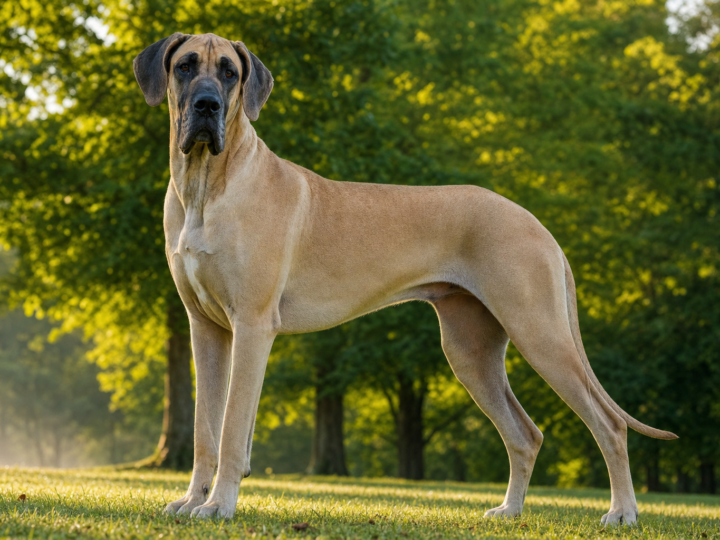
Gear is built heavier. A crate that holds a Great Dane, a bed that supports a hundred pounds and a lead rated for a strong dog all cost more than the small versions, and the flimsy ones fail and get replaced.
First year cost breakdown
Treat these as realistic planning ranges for a large or giant breed in the United States. Prices vary widely by city, and a rural practice can be half the cost of an urban one.
| Cost | Typical range | Notes |
|---|---|---|
| Adoption or purchase | $150 to $4,000 | Rescue fee at the low end, reputable breeder at the high end |
| Initial veterinary care | $250 to $600 | Exams, vaccination series, deworming, faecal tests |
| Neutering or spaying | $300 to $900 | Priced by weight, so large breeds sit high |
| Microchip and licensing | $40 to $110 | Often bundled with an early visit |
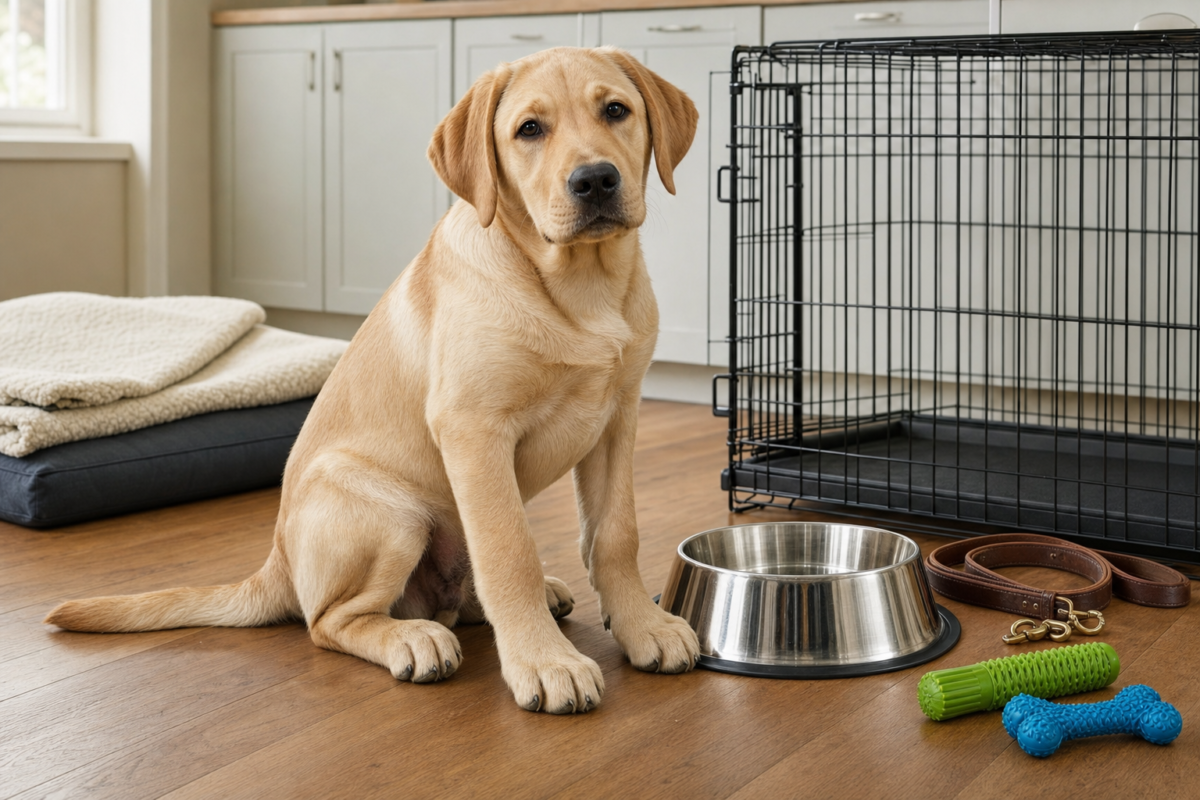
| Setup gear | $350 to $800 | Giant crate, supportive bed, bowls, lead, harness, gates |
| Food for the year | $700 to $1,500 | Large breed puppy formula, then adult food |
| Treats and chews | $150 to $400 | Durable chews for powerful jaws cost more |
| Preventatives | $250 to $550 | Flea, tick and worm control priced in weight bands |
| Training classes | $200 to $900 | Not optional for a dog that will outweigh a child |
| Grooming | $0 to $700 | Near zero for short coats, real money for heavy coats |
| Insurance | $0 to $1,200 | Large breeds sit in higher premium tiers |
| Daycare, walking or boarding | $0 to $1,800 | Entirely dependent on your working pattern |
| Unplanned veterinary care | $300 to $1,500 | Assume something happens, because it usually does |
The American Kennel Club’s Chief Veterinary Officer, Dr. Jerry Klein, DVM, has written extensively on the slower growth and development timeline of large and giant breeds. Read more from the AKC’s guidance on caring for large-breed dogs.
Add the low column and you land near $2,700. Add the high column and you clear $14,000, though that combination assumes an expensive puppy plus full time daycare. The realistic middle for most households sits around $4,500.
The costs you pay once, at the very start
The opening months are front loaded, and knowing that in advance prevents the panic that hits when three large bills arrive in the same fortnight.
Getting the setup right the first time
Buying twice is the most common avoidable expense with big dogs. A few decisions save real money.
- Buy the adult sized crate immediately. A divider panel costs a few dollars and lets one crate serve from eight weeks to adulthood. Three escalating crates cost triple.
- Choose a supportive bed, not a thick one. Heavy dogs flatten cheap filling within months. A proper orthopaedic base lasts years and supports a big frame properly.
- Spend on the lead and harness. Hardware that fails on a strong dog is a safety issue, not just an expense.
- Work through a large breed puppy checklist before your dog arrives, so you buy in one considered trip rather than five urgent ones.
- Skip the novelty items. Soft toys, small chews and light collars are consumed in days by a big dog and simply repeat as a monthly cost.
Weight Band Pricing
Preventatives and medications jump price at each weight band. Budget for the top band from the start.
Emergency Visits
An out of hours visit for a big dog runs into four figures quickly. A reserve fund is not optional.
Replacement Gear
Beds, toys and leads built for medium dogs fail fast under a heavy dog and quietly double their cost.
Service Costs
Boarding, daycare and grooming often carry a large dog surcharge that is easy to miss when comparing prices.
The running costs that repeat every month
Once the setup is done, life settles into a predictable monthly rhythm of roughly $150 to $300 for most large breeds.
- Food, $60 to $130 a month. The single largest ongoing line, and it rises through the growth year as portions increase.
- Preventatives, $20 to $45 a month. Flea, tick and worm control at big dog weights.
- Treats and chews, $15 to $35 a month. Durable chews for a powerful jaw are worth the premium over cheap ones that disappear in an evening.
- Insurance, $40 to $100 a month. Optional, but the maths favours it for breeds with known health considerations.
- Services, $0 to $400 a month. Walking, daycare or grooming, depending entirely on your schedule and your dog’s coat.
Food is the line that scales hardest with size
A large breed dog eats a great deal, and it matters that the food is the right food rather than simply more of it. A complete food formulated for large breed puppies balances calories, calcium and phosphorus to support steady growth, and it is the one place in the budget where trading down rarely pays.
Expect a growing large breed to work through roughly 25 to 45 pounds of food a month at peak, tapering as growth slows into the second year. Buying the largest bag your storage allows, using a subscription where one is offered, and portioning by body condition rather than by habit are the three habits that keep this line sensible without cutting quality. Feeding to a lean body condition also has a happy side effect on the budget: a lean dog eats less and asks less of its joints.
Health costs and how to soften them
Veterinary care is where big dog budgets either hold or break. The predictable part is manageable and the unpredictable part is what needs planning.
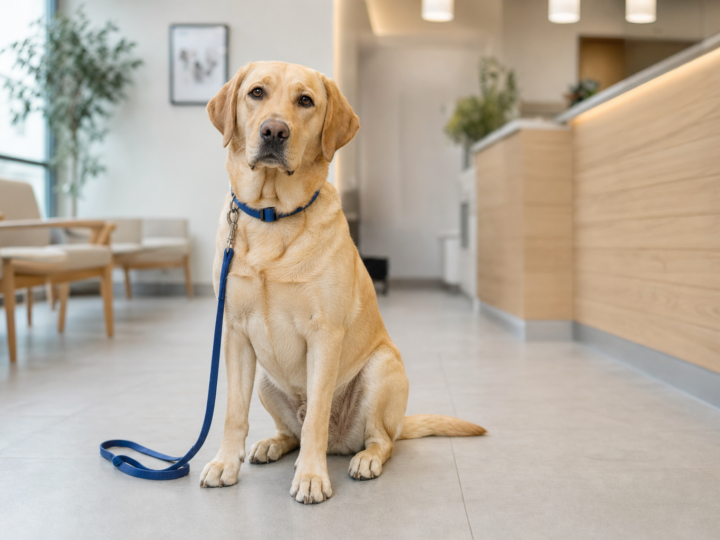
Routine care in year one means an exam and vaccination series, deworming, neutering or spaying, and a wellness check toward the end of the year. Together that is usually $600 to $1,500 for a large breed. Beyond that, an accident or a sudden illness is the risk you are actually budgeting against, and an emergency visit alone frequently runs past $1,000 before anything is treated.
Two approaches work. Some Dog Parents take out pet insurance for large breed dogs early, while the dog is young and nothing is excluded as an existing condition. Others transfer a fixed amount into a dedicated savings account every month and treat it as untouchable. The one approach that fails is assuming nothing will happen. Whichever route you choose, everyday habits that support comfortable movement, including a lean body condition, sensible exercise and thoughtful joint support, are a sound long term investment in a big dog. Discuss what suits your individual dog with your veterinarian.
Signs your budget is realistic
A workable big dog budget has three features. It funds the front loaded first two months without borrowing, it holds a reserve of at least $1,000 for the unplanned, and it survives your busiest working month without the walks quietly disappearing.
If a budget only works when nothing goes wrong, it is not a budget. Build in the emergency line first, then the monthly running costs, then the optional extras. Many households find that framing it as a fixed monthly transfer, rather than a series of individual purchases, makes the whole thing feel manageable and stops the spending decisions from arriving one at a time.
A simple budget plan, stage by stage
Spread across the year, the spending pattern is very predictable.
Before your dog arrives. Set aside acquisition plus $600 to $1,000 for gear, and open the emergency fund on the same day. Book the first veterinary visit before the dog is home.
Months one to three. The heaviest stretch. Vaccination series, microchip, first classes, and the discovery that your puppy grows out of a collar every six weeks. Expect $700 to $1,500 across the quarter beyond food.
Months four to eight. Food costs climb sharply as the fast growth months arrive, and neutering or spaying usually falls somewhere in this window depending on your veterinarian’s advice for a large breed. Training should continue rather than stop.
Months nine to twelve. Spending calms down. Growth slows, portions steady, and the pattern you will carry into adult life becomes clear. This is the right moment to review insurance and to top the reserve fund back up.
Common budgeting mistakes to avoid
Almost every first year overspend traces back to one of these.
- Budgeting for the purchase price only. The dog is the cheapest part of the first year for most people.
- Buying medium sized gear. It fails, and you pay twice.
- Treating training as optional. A hundred pound dog with no manners costs far more in the long run, in both money and stress.
- Ignoring the weight surcharge. Groomers, boarding kennels and some insurers price big dogs higher. Ask before you book.
- No reserve fund. The unplanned bill is the one that turns a comfortable budget into a crisis.
- Trading down on food to save money. A cheap growth year is a poor saving on a dog that will carry that frame for a decade.
What it costs after year one
The good news is that the first year is the expensive one. Once the gear is bought, the puppy series is done and neutering is behind you, ongoing costs for a large breed usually settle at roughly $1,800 to $3,500 a year, dominated by food, preventatives and insurance.
That figure drifts upward again in the senior years, when checkups become more frequent and supportive care becomes part of the routine. Plan for a gentle rise from around year seven for a large breed, and earlier for the giant breeds, whose senior years arrive sooner. Across a full lifetime, most Dog Parents of large breeds spend somewhere between $20,000 and $35,000, which is a serious number and, judging by how quickly people do it again, an easy one to justify.
Frequently asked questions
How much does a big dog cost per month?
Most large breeds cost roughly $150 to $300 a month once the first year setup is behind you. Food is the largest line, followed by preventatives, insurance and treats. Add walking, daycare or grooming and the figure rises accordingly.
Is a large breed dog more expensive than a small one?
Yes, meaningfully so. Food, medications and anaesthesia are all dosed or portioned by body weight, gear is built heavier, and many services apply a large dog surcharge. Expect a large breed to cost roughly double a small breed across a year.
How much should I save for emergencies?
A reserve of at least $1,000 to $2,000 is sensible for a large breed, because a single out of hours visit can pass $1,000 before treatment begins. Some Dog Parents carry insurance instead, and some do both.
What is the biggest first year cost after buying the dog?
Veterinary care, taken as a whole. The vaccination series, neutering or spaying and routine exams typically total $600 to $1,500 for a large breed in the first twelve months, ahead of food and well ahead of gear.
Can I lower the cost without cutting corners?
Yes. Adopt rather than buy, purchase adult sized gear once, buy food in the largest bag you can store, attend group classes rather than private sessions, and keep your dog lean. None of those choices reduce the quality of care your dog receives.
The bottom line
Budget $3,000 to $7,000 for the first year with a big dog, expect half of it in the opening two months, and open an emergency fund on the day you commit rather than the day you need it. Buy gear once, feed properly through the growth year, keep training in the budget, and the numbers stay entirely manageable. A large breed dog is a real financial commitment, and it is one that almost nobody regrets making.
Want the simple roadmap in one place? Grab our free Big Dog Mobility Guide for the everyday habits, movement checklist and joint safe activity limits that keep big dogs comfortable, all written for large and giant breeds.
This article is for general educational purposes only and is not veterinary advice. It is not intended to diagnose, treat, cure or prevent any disease. Always consult your veterinarian about your dog’s individual health, nutrition and supplement needs. These statements have not been evaluated by the Food and Drug Administration.
Support Big Breed Joints from Day One
Large and giant breeds carry more load through every growth stage. MoveGuard Growth supports developing joints in young big dogs (8 to 30 months); MoveGuard Adult keeps grown big dogs moving comfortably.
Leave a Reply