Giant breeds over 100 pounds need joint support that starts early and covers the whole life. That means slow, steady growth through a long growth window of up to 30 months or more, a lean body condition for life, low impact exercise with soft footing and good floor traction, supportive bedding, and regular veterinary checks. Many Dog Parents also add a daily joint supplement with ingredients such as green lipped mussel, glucosamine, chondroitin, MSM and hyaluronic acid, dosed for the dog’s full weight, to support cartilage and connective tissue.
Living with a giant breed is a special kind of joy. A Mastiff leaning against your legs, a Great Dane folding onto the sofa or a Saint Bernard greeting guests at the door brings a presence no smaller dog can match. That presence comes with a simple fact of physics, though, because every step, turn and climb carries well over 100 pounds through the same joints a much smaller dog uses. The good news is that the habits that support those joints are clear, practical and well within reach, and when you build them early they help your gentle giant move comfortably for years.
What joint support do giant breeds over 100 pounds need?
Giant breeds over 100 pounds need joint support that works on four fronts at once: controlled growth while young, a lean body weight for life, movement that builds muscle without heavy impact, and a home set up to make every step easy. Daily nutritional support, from a complete diet and often a joint supplement, sits alongside those habits rather than replacing them.
What makes giant breeds different is scale and time. They carry more load per stride, they grow for longer than any other group of dogs, and they often reach their senior years sooner. Joint support for a giant breed is not something to start when you notice a change. It is a lifelong routine that begins with the puppy and adapts as the dog matures.
Why weight over 100 pounds changes the picture
Joints are built from cartilage, the smooth cushion over the ends of the bones, held together by ligaments and tendons and moved by muscle. In every dog these tissues do the same job, but in a giant breed they do it under much more load. Every extra pound of body weight adds to the force passing through the hips, elbows, knees and spine with each stride, and the effect multiplies when a dog jumps, twists or lands.
Giant breeds also tend to have heavier bone and a larger frame than their muscle can always support, especially in adolescence. Muscle is one of the best protectors a joint has, because strong muscles help keep the joint stable as it moves. That is why a lean, well muscled giant breed usually moves far more freely than a heavier, softer one of the same height.
Finally, there is the clock. Many giant breeds are considered senior from around six or seven years of age, earlier than smaller dogs, so the window for building good habits is shorter and every year of steady care counts.
Giant breeds that regularly weigh over 100 pounds
These are typical adult weight ranges from published breed standards and breed club guidance. Individual dogs vary, so treat them as a guide rather than a target, and let body condition rather than the number on the scale tell you whether your dog is at a healthy weight.
| Breed | Typical male weight | Typical female weight |
|---|---|---|
| English Mastiff | 160 to 230 lb | 120 to 170 lb |
| Saint Bernard | 140 to 180 lb | 120 to 140 lb |
| Great Dane | 140 to 175 lb | 110 to 140 lb |
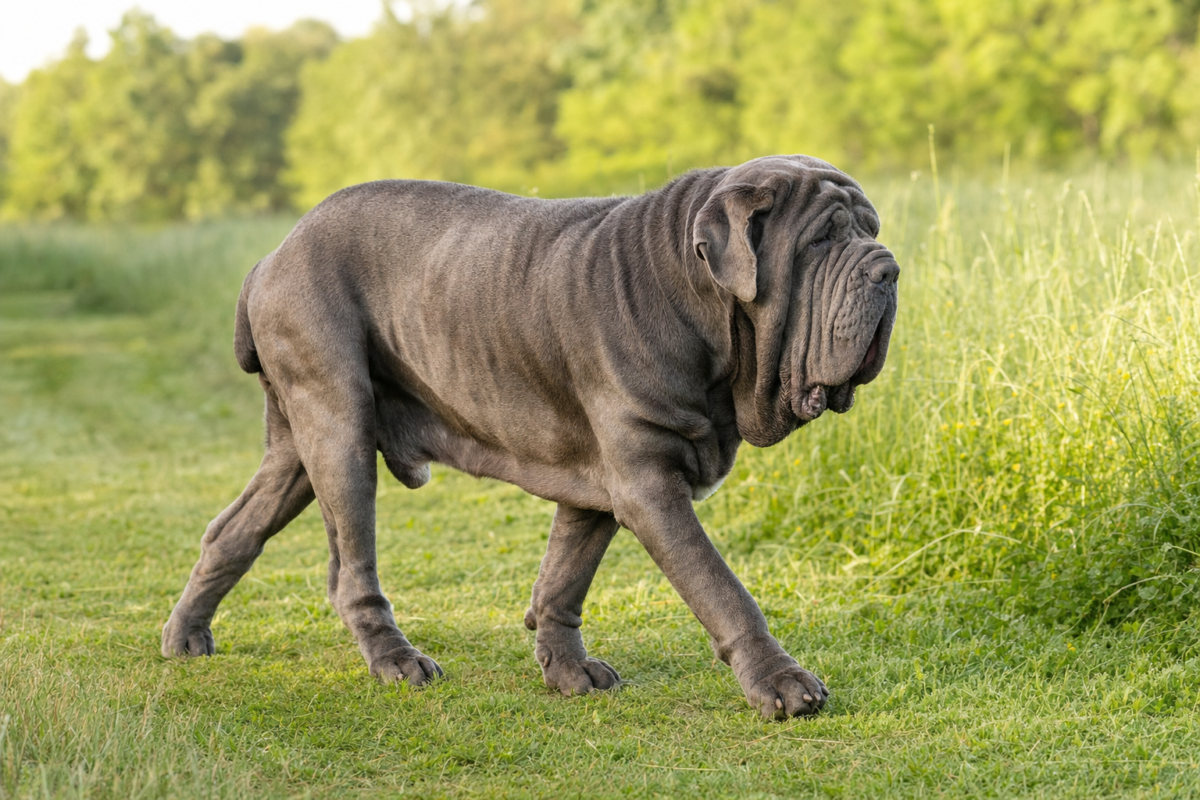
| Neapolitan Mastiff | around 150 lb | around 110 lb |
| Newfoundland | 130 to 150 lb | 100 to 120 lb |
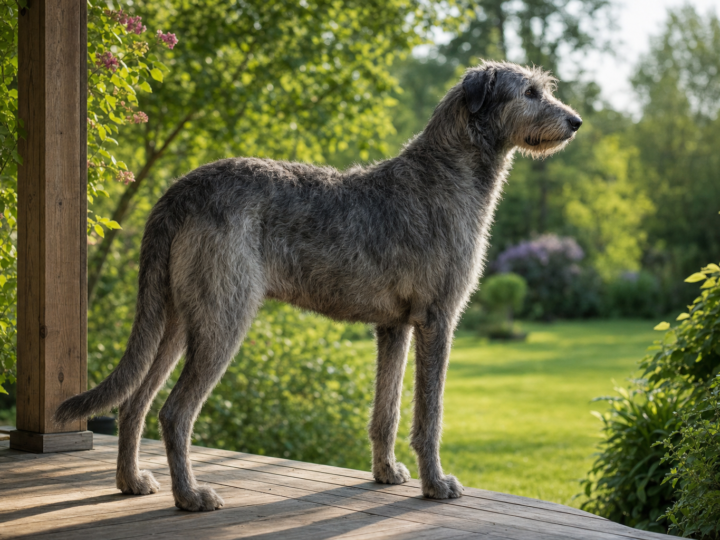
| Irish Wolfhound | 120 lb and up | 105 lb and up |
| Leonberger | 110 to 170 lb | 90 to 140 lb |
| Anatolian Shepherd | 110 to 150 lb | 80 to 120 lb |
| Dogue de Bordeaux | 110 lb and up | 99 lb and up |
| Great Pyrenees | 100 lb and up | 85 lb and up |
Joint support starts in the growth window
Giant breeds grow for a remarkably long time. A dog with an expected adult weight of 100 to 130 pounds typically keeps developing for around 22 to 26 months, and one heading for 130 to 180 pounds or more often keeps developing to 30 months and beyond. Through much of that time the growth plates, the softer areas at the ends of the long bones, are still active, and the cartilage and connective tissue around them are still forming.
That long window is the single best opportunity you will have to support lifelong joint comfort. A few habits matter most:
- Grow slow, not fast. Feed a complete diet made for large or giant breed puppies, which controls calories, calcium and phosphorus for steady growth.
- Feed lean. A giant breed puppy should look leggy and lean, with ribs you can feel easily. A round puppy is carrying load its frame does not need.
- Keep exercise moderate. Free play on soft ground and short walks are ideal. Long runs, repeated jumping, rough play with bigger dogs and stairs are best kept to a minimum while the frame is forming.
- Plan for the long haul. If you are raising a giant breed puppy, build these habits from the first week and carry them right through to the end of the growth window.
Extra Pounds
Every extra pound adds load to each stride. A lean giant moves more comfortably than a heavy one of the same height.
Hard Impact
Jumping out of cars, repeated stairs and long runs on hard ground ask a lot of big joints, at any age.
Slippery Floors
A giant breed who slides on tile or laminate strains joints and loses confidence. Rugs and runners help.
Too Little Movement
Joints and muscles need regular, gentle use. Long periods of inactivity let strength fade.
Weight management, the most powerful joint habit
If there is one thing that does the most for a giant breed’s joints, it is keeping the dog lean. Weight is load, and load is what joints carry every moment your dog is standing or moving. Even a few extra pounds on a giant frame make a real difference.
- Check body condition every two to four weeks. You should feel the ribs easily under a light layer, see a waist from above, and see the belly tuck up from the side.
- Weigh food rather than scooping it. Small daily errors add up quickly on a dog who eats several cups a day.
- Count treats as part of the daily allowance, and use small pieces or part of the meal as training rewards.
- Adjust portions with your veterinarian as your dog’s age and activity change, especially as the senior years approach.
Movement that builds muscle without heavy impact
Strong muscles help stabilise big joints, so regular movement is part of joint support, not a risk to it. The trick is choosing activity that builds strength and stamina without repeated jarring.
- Walk daily on varied, soft ground such as grass, trails and sand, at a pace your dog sets comfortably.
- Swimming is excellent for breeds that enjoy it, such as Newfoundlands and Leonbergers, because the water carries much of the body weight.
- Gentle hill walking, slow figure eights and controlled sit to stand exercises build the hind end muscles that support the hips and knees.
- Choose low impact exercise over fetch with sharp turns, repeated jumping or running alongside a bike.
- Warm up with a slow walk before more active play, and keep sessions shorter and more frequent rather than long and exhausting.
Setting up the home for a giant frame
A giant breed spends far more time at home than anywhere else, so small changes there have a big effect on everyday joint comfort.
- Floors. Lay rugs or runners over slippery tile, wood and laminate along the routes your dog uses most. Good floor traction helps a big dog stand, turn and lie down with confidence.
- Bedding. Choose a thick, supportive orthopaedic bed large enough for your dog to stretch out fully, so hips and elbows are not pressed against a hard floor.
- Stairs and furniture. Use baby gates to limit stairs where you can, and a ramp or step for any furniture your dog is allowed on.
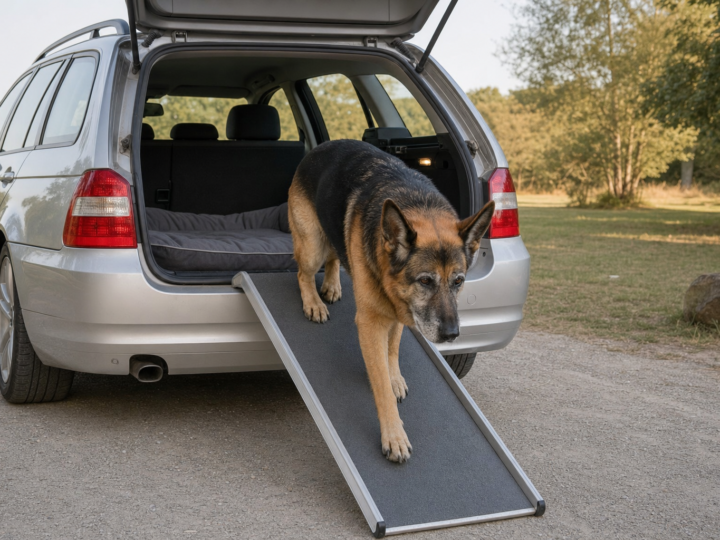
- Cars. Use a ramp so your dog walks in and out rather than jumping.
- Feeding height. Ask your veterinarian whether a raised bowl suits your dog, as advice varies for some deep chested breeds.
Nutritional joint support for giant breeds
A complete, balanced diet is the foundation, and many Dog Parents of giant breeds add a daily joint supplement on top. The ingredients most often used to support joints are worth knowing by name:
- Green lipped mussel. A New Zealand shellfish that naturally provides omega 3 fatty acids and glycosaminoglycans, and supports joint comfort and mobility.
- Glucosamine and chondroitin. Building blocks of cartilage that support its structure and resilience.
- MSM. A source of sulphur that supports connective tissue. Read more in our guide to MSM in joint chews.
- Hyaluronic acid. A natural component of joint fluid that supports lubrication and cushioning.
- Omega 3 fatty acids. From fish or krill oil, these support overall joint and skin health.
- Vitamins C and E. Antioxidants that support healthy tissues.
With a dog over 100 pounds, dose matters. Choose a product with clear dosing that scales to your dog’s full adult weight, and do not split a dose meant for a smaller dog. Check with your veterinarian before starting any supplement, especially if your dog already takes medication.
A daily chew made for big frames
For adult giant breeds, many big dog parents add a daily chew made for adult dogs. MoveGuard Adult is built for this stage of life. It brings together New Zealand Green Lipped Mussel, eggshell membrane, glucosamine, chondroitin, MSM, hyaluronic acid and vitamins C and E to support healthy joints, cartilage and connective tissue in adult medium and large breed dogs. Dose by weight following the label. It ships as 60 chicken liver flavoured chews, is made in the USA in an NSF registered facility, and is backed by a 60 day guarantee. Check with your veterinarian first if your dog already takes other supplements or medication.
If your giant breed is still growing, MoveGuard Growth is the version made for the roughly 8 to 30 month growth window. It is dosed by expected adult weight, so a puppy heading for 80 to 100 pounds or more takes three chews a day.
Support A Giant Frame Every Day
Pair lean feeding and gentle movement with daily joint support made for adult medium and large breeds. Explore MoveGuard Adult.
Signs your giant breed is moving comfortably
A giant breed whose joints are well supported usually rises from lying down without much effort, walks with an even, rhythmic stride, carries weight equally on all four legs, and is happy to join in walks and play. A clear waist, firm muscle over the hindquarters and a willingness to use stairs or a ramp without hesitation are all good signs.
Watch for changes such as stiffness after rest that takes a while to ease, lagging behind on walks, hesitating before stairs or the car, sitting or lying down awkwardly, or licking at a particular joint. These are worth mentioning to your veterinarian early, because small adjustments to weight, exercise and home setup are easiest to make before a habit sets in.
A joint support game plan, stage by stage
8 weeks to 12 months. Feed a complete large or giant breed puppy diet to a lean body condition, keep exercise to free play and short walks on soft ground, limit stairs and jumping, and start good floor traction at home. This is a natural point to begin a daily growth joint support routine.
12 to 30 months. Growth slows but the frame is still maturing. Keep feeding lean, build muscle with longer walks on varied ground and gentle strength work, and talk with your veterinarian about the right time to move to adult food.
Adult years. Hold a lean body condition, walk every day, add swimming or hill walking where your dog enjoys it, and keep the home set up with rugs, a supportive bed and ramps. Continue daily joint support as part of the routine.
Senior years, often from six or seven. Shorten walks and add more of them, review weight and portions as activity falls, upgrade bedding, and schedule regular veterinary checks to catch changes early.
Common mistakes with giant breed joints
- Waiting for a problem. Joint support works best as a habit started early, not a response once changes appear.
- Letting weight creep up. A few extra pounds a year on a giant frame is easy to miss and adds real load.
- Too much too young. Long runs, repeated jumping and stairs during the growth window ask a lot of a frame that is still forming.
- Under dosing a supplement. A dose meant for a 50 pound dog is not enough for a dog of 150 pounds. Follow the label for full body weight.
- Ignoring the floor. Slippery surfaces quietly strain joints every day.
- Weekend warrior walks. A quiet week followed by a long Saturday hike is harder on joints than steady daily movement.
The gentle giant temperament and an easy life
Most giant breeds are calm, affectionate and steady, happy to follow you from room to room and content with a good walk and a soft place to lie. That easygoing nature is a real advantage for joint care, because a giant breed rarely needs high intensity exercise to be fulfilled. Slow walks with plenty of sniffing, short training sessions, puzzle feeders and time with the family keep a big mind content without pounding big joints.
Lean into that temperament. Build routines your dog enjoys, keep life calm and predictable, and treat joint support as a quiet daily habit woven into the way you live together. That is how a gentle giant stays comfortable, confident and part of every family adventure for as long as possible.
Frequently asked questions
When should I start joint support for a giant breed?
Joint support for a giant breed starts in puppyhood with slow, steady growth, a lean body condition and moderate exercise. Many Dog Parents also begin a daily growth joint supplement during the growth window, which can last up to 30 months or more in the biggest breeds.
Do giant breeds need a higher supplement dose?
Yes. Joint supplements are usually dosed by body weight, so a dog over 100 pounds generally needs the higher dose on the label. Follow the instructions for your dog’s full weight and check with your veterinarian before starting.
What is the best exercise for a giant breed dog?
Daily walks on soft, varied ground, swimming for breeds that enjoy water, gentle hill walking and simple strength exercises suit most giant breeds well. Keep repeated jumping, sharp turns and long runs on hard ground to a minimum.
How much should a giant breed dog weigh?
It depends on the breed and the individual dog. Use body condition rather than a single number: you should feel the ribs easily, see a waist from above and see the belly tuck up from the side. Your veterinarian can confirm the right weight range for your dog.
Which ingredients support joints in big dogs?
Common joint support ingredients include green lipped mussel, glucosamine, chondroitin, MSM, hyaluronic acid, omega 3 fatty acids and vitamins C and E. Together they support cartilage, connective tissue and joint comfort as part of a complete diet.
The bottom line
Giant breeds over 100 pounds need joint support that begins with the puppy and continues for life. Grow them slowly through a long growth window, keep them lean, choose movement that builds muscle without heavy impact, set up the home with good traction and supportive bedding, and add daily nutritional support dosed for their full weight. Do those things consistently and you give your gentle giant the best chance to move with comfort and confidence for years.
Want a simple plan for lifelong comfort? Grab our free Big Dog Mobility Guide for daily comfort routines, home setups and gentle activity ideas, all written for large and giant breeds.
This article is for general educational purposes only and is not veterinary advice. It is not intended to diagnose, treat, cure or prevent any disease. Always consult your veterinarian about your dog’s individual health, nutrition and supplement needs. These statements have not been evaluated by the Food and Drug Administration.
Support Big Breed Joints from Day One
Large and giant breeds carry more load through every growth stage. MoveGuard Growth supports developing joints in young big dogs (8 to 30 months); MoveGuard Adult keeps grown big dogs moving comfortably.

Leave a Reply