
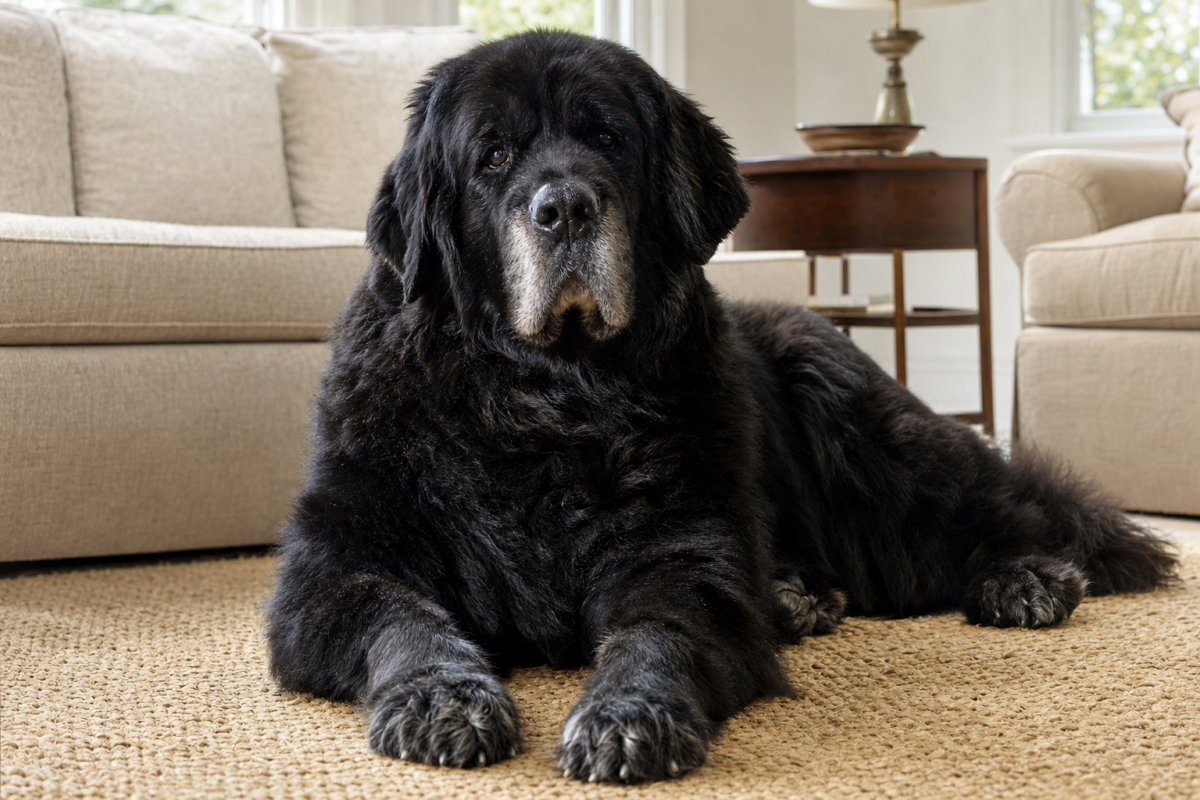
Caring for a senior large breed dog comes down to six habits: keep your dog lean, feed a complete adult diet in measured portions, replace long hard outings with shorter gentle walks taken more often, make the house easy to move around, support the joints every day, and see your veterinarian twice a year instead of once. Large and giant breeds reach their senior years earlier than small dogs, often between five and eight years of age, so these habits start sooner than most Dog Parents expect.
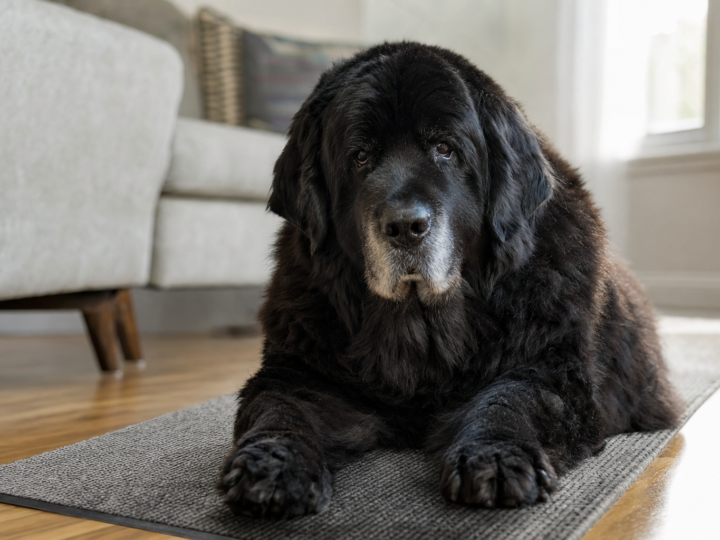
The grey muzzle arrives quietly. One season your big dog is charging down the hallway, and the next you notice a slower rise from the rug and a pause at the bottom of the stairs. That does not mean the good years are over. It means the plan changes, and with the right daily habits a senior large breed dog can stay comfortable, engaged and very much themselves for a long time.
How do I care for a senior large breed dog?
Care for a senior large breed dog by keeping body weight lean, feeding a complete adult food in measured meals, swapping long strenuous exercise for short frequent walks on soft ground, adapting the home with rugs, ramps and raised bowls, supporting joint comfort daily, and booking veterinary checkups every six months. Big dogs carry more weight over the same joints and age faster than small dogs, so every one of those habits matters more and starts earlier.
The goal is not to slow your dog down. It is to protect comfort so your dog can keep doing what they love at a pace that suits the body they have now.
What makes a senior large breed dog different
Size changes the timeline. A big dog carries far more body mass over the same four joints as a small dog, and that load never takes a day off. Every rise from the floor, every turn on a slick kitchen tile and every hop out of the car asks something of hips, elbows, shoulders and spine. Over the years that steady demand adds up, which is why the senior stage arrives earlier in big dogs and shows itself first in movement.
Big dogs also lose muscle visibly. The strong hindquarters that powered your dog up the back steps can soften over one quiet winter, and once the muscle thins the joints take on more of the work. And big dogs are stoic. Rather than complain, they quietly stop doing things: no more greeting you at the door, no more jumping onto the couch. Learning to read those small retirements early is one of the kindest skills a big dog parent can develop.
When does a large breed dog become a senior?
There is no single birthday, but as a rule the bigger the breed, the earlier the senior stage begins. Treat this table as a guide rather than a verdict, because a fit, lean dog often behaves years younger than the chart suggests.
| Adult weight | Considered senior | Typical life expectancy |
|---|---|---|
| 50 to 65 lb | around 8 years | 11 to 13 years |
| 65 to 80 lb | 7 to 8 years | 10 to 12 years |
| 80 to 100 lb | around 7 years | 9 to 11 years |
| 100 to 130 lb | around 6 years | 8 to 10 years |
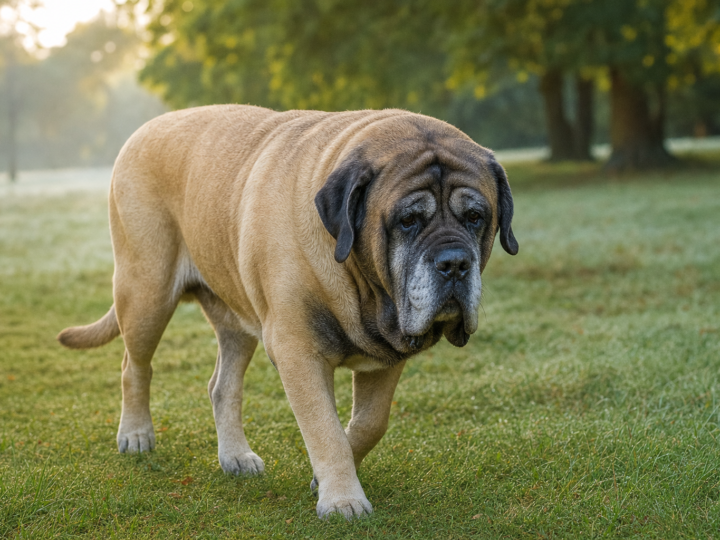
| 130 lb and up | 5 to 6 years | 7 to 10 years |
The American Veterinary Medical Association notes that larger breeds are generally considered senior earlier than small breeds, given their shorter typical lifespans. Read more from the AVMA’s guidance on caring for senior pets.
What changes as a big dog ages
The first changes are almost always about movement. Your dog takes a beat longer to stand, prefers the ramp to the tailgate, or trots instead of runs on the way home. Stiffness that shows after a long nap and eases once your dog gets going is the most common early signal in large breeds. Other changes follow at their own pace: deeper sleep, softer hearing, a bluish haze across the eyes, a coarser coat and a silvering muzzle.
The senior window and why it deserves a plan
Think of the senior years as a window that opens between five and eight years of age and stays open for the rest of your dog’s life. The frame is no longer building, it is maintaining, and maintenance rewards consistency far more than intensity. Daily lean feeding, daily gentle movement and daily joint support do more across a year than any single big intervention. Dog Parents who start at the front edge of that window, rather than after the first limp, get the smoothest ride.
Excess Weight
Every extra pound travels through aging joints thousands of times a day. A lean senior moves more freely than a heavy one.
Slippery Floors
Tile and hardwood turn a simple stand into a scramble. Grippy rugs along your dog’s usual routes cost little and help a lot.
Muscle Loss
Long rest days shrink the muscle that supports the frame. Short daily walks preserve it far better than one weekend outing.
Overdoing It
Big dogs push through on a good day and pay for it the next. Cap the fun before your dog does.
How should I feed a senior large breed dog?
Feeding a senior big dog is less about a special bag and more about a lean, steady approach. Most healthy seniors do well on a complete adult food, portioned carefully, with any change made under veterinary guidance.
- Measure every meal with a proper cup or a kitchen scale. Eyeballing portions is the most common cause of creeping weight gain.
- Split the daily amount across two meals so energy stays even.
- Count the treats. Chews, training rewards and table scraps add up quickly in a big dog household.
- Feed to a lean body condition rather than to a number on the bag, and adjust as activity changes with the seasons.
- Keep water easy to reach on every floor your dog uses, and raise the bowls if your dog has to splay to eat.
How to check body condition in ten seconds
The scale tells you weight. Body condition tells you whether that weight is right for your dog, and it is the most useful ten seconds in senior care.
- Ribs. Run your hands along the sides. You should feel the ribs easily under a thin layer. If you have to press, ease back on portions.
- Waist. Look down from above. You want a clear waist that tucks in behind the ribs.
- Tuck. From the side, the belly should rise toward the back legs rather than hanging level.
Run the check every two weeks. In a senior, a quiet gain of five pounds is a real change.
Exercise for a senior large breed dog
Rest is not the goal. Sustainable movement is. The right amount keeps muscle on the frame, keeps joints moving through their range and keeps your dog’s mind bright. The pattern that suits most senior big dogs is little and often.
- Choose two or three short walks a day over one long one. Twenty gentle minutes, three times, beats an hour of pushing through.
- Favour soft, level ground such as grass and dirt trails over concrete and gravel.
- Warm up at an easy pace and finish before your dog looks tired.
- Keep going in bad weather. A slow lap of the block beats a skipped day, and the principles behind safe exercise for large breeds apply again at the other end of life.
- Add scent games, food puzzles and simple training. Mental work tires a big dog beautifully without loading the joints.
- Watch the day after. If your dog is stiffer the next morning, the outing was slightly too much.
Supporting joint comfort every day
Joint comfort is the thread running through everything else. A dog who moves comfortably walks more, keeps more muscle, holds a healthier weight and stays engaged with the household. A dog who does not moves less, and the cycle tightens. That is why many Dog Parents treat daily joint support as a fixed part of the routine rather than something they reach for once a problem appears.
Alongside lean feeding and gentle daily movement, many big dog parents add a joint support chew formulated for adult medium and large breeds. MoveGuard Adult is built for this stage of life. It brings together glucosamine, chondroitin, MSM, New Zealand Green Lipped Mussel, eggshell membrane collagen, hyaluronic acid and vitamins C and E to support joint comfort and everyday mobility in adult dogs. The daily amount is printed on the label and set by weight, with dogs from 25 to 50 pounds taking one chew and dogs from 50 pounds up taking two, and the label directs senior dogs aged seven and over to use the higher amount for their weight and to allow six to eight weeks for the full effect. Each jar holds 60 soft chews and it is backed by a 60 day guarantee.
Comfort For The Grey Muzzle Years
Give your senior big dog daily joint support made for adult medium and large breeds. Explore MoveGuard Adult.
Making the home easier to live in
Some of the most valuable senior care happens indoors and costs almost nothing. Lay runners along the routes your dog uses most, especially around corners. Add a ramp for the car, since jumping down is the harshest movement most senior big dogs still make regularly. Give your dog a thick, supportive bed off cold tile and large enough to stretch out on fully. Gate the stairs if they are becoming a struggle. Keep nails trimmed short, because long nails change how a dog loads the foot and make slipping more likely.
Signs your senior large breed dog is doing well
A thriving senior gets up without a long struggle, holds a lean waist you can see from above, eats with interest, sleeps deeply and still lights up for the parts of the day they always loved.
Call your veterinarian if you notice limping, stiffness that does not ease after the first few minutes of movement, reluctance to rise or use stairs, a change in appetite or drinking, unexplained weight change, new lumps, laboured breathing or confusion at night. Twice yearly checkups with bloodwork are the standard for senior dogs, and they catch quiet changes long before you would see them at home.
A simple senior care game plan, stage by stage
The early senior years. The front edge of the window, roughly five to seven years in giant breeds and seven to eight in large ones. Your dog still looks and acts like an adult, which is exactly why this stage matters. Lock in lean feeding, start the two week body condition check, begin daily joint support and move to twice yearly veterinary visits while everything is still easy.
The middle senior years. Movement becomes the headline. Shorten walks and take them more often, add traction and a ramp before your dog needs them, and note what your dog has quietly stopped doing. Keep the mind busy, because mental work now carries the load that long walks used to.
The late senior years. Comfort leads every decision. Keep the routine predictable, keep meals and water within easy reach, help with the hard transitions such as cars and stairs, and stay in close contact with your veterinarian about comfort and quality of life.
Common senior care mistakes to avoid
- Treating slowing down as just old age. Age is not a diagnosis. A change in movement is worth a conversation with your veterinarian.
- Letting weight creep. Activity drops but portions stay the same. Adjust food as activity changes, not after the gain shows.
- Resting a stiff dog completely. Total rest costs muscle, and lost muscle makes the next month harder.
- Waiting for a problem before supporting joints. The early senior years are the time to start a daily routine.
- Saving activity for the weekend. Big dogs happily overdo it on a good day. Consistency beats intensity.
- Skipping the second yearly checkup. A senior year covers a lot of ground.
The senior temperament and the bond you already have
There is a particular sweetness to a big dog in the grey muzzle years. The frantic energy of adolescence is long gone, replaced by a dog who knows your routines, reads your mood and wants to be wherever you are. Many Dog Parents describe the senior stage as the most companionable years they had together.
Support that temperament by keeping life predictable, because older dogs lean on routine. Use hand signals alongside words so communication stays easy as hearing softens. And make room for what your dog still loves, adjusted for the body they have now: a sniff heavy amble instead of a run, a car ride to the park instead of a hike, five gentle minutes of training instead of twenty. Meeting your dog where they are keeps a senior engaged, and an engaged senior stays brighter, longer.
Frequently asked questions
At what age is a large breed dog considered senior?
Most large breeds are considered senior around seven to eight years of age, and giant breeds around five to six. The bigger the dog, the earlier the senior stage begins, so big dog parents should start senior habits sooner than small dog parents do.
How much exercise does a senior large breed dog need?
Most senior big dogs do best with two or three short walks a day rather than one long outing. Aim for gentle movement on soft ground and finish before your dog looks tired. If your dog is stiffer the next morning, shorten the next walk.
Should I switch my senior large breed dog to senior food?
Not automatically. Many healthy seniors do well on a complete adult food fed in measured portions to a lean body condition. Discuss any diet change with your veterinarian, who can weigh your dog’s weight, appetite and bloodwork.
Why is my senior big dog stiff when he gets up?
Stiffness that shows after rest and eases with movement is one of the most common changes Dog Parents notice in ageing large breeds. Keeping your dog lean, keeping daily gentle movement going and supporting joint comfort all help, and new or worsening stiffness is worth a veterinary visit.
How often should a senior large breed dog see the veterinarian?
Twice a year is the general recommendation for senior dogs, usually with bloodwork included. Big dogs age faster than small ones, so a six month interval catches quiet changes a single annual visit can miss.
The bottom line
Your senior large breed dog does not need a complicated plan. Keep them lean, feed measured meals of a complete adult food, trade long outings for short frequent walks on soft ground, make the house easy to move around, support the joints every day, and see your veterinarian twice a year. Start at the front edge of the senior window rather than after the first limp, and you give your big dog the best chance at comfortable, engaged years with you.
Want the simple roadmap in one place? Grab our free Big Dog Mobility Guide for the senior comfort checklist, the home setup list and the movement framework, all written for large and giant breeds.
This article is for general educational purposes only and is not veterinary advice. It is not intended to diagnose, treat, cure or prevent any disease. Always consult your veterinarian about your dog’s individual health, nutrition and supplement needs. These statements have not been evaluated by the Food and Drug Administration.
Support Big Breed Joints from Day One
Large and giant breeds carry more load through every growth stage. MoveGuard Growth supports developing joints in young big dogs (8 to 30 months); MoveGuard Adult keeps grown big dogs moving comfortably.

Leave a Reply