
Veterinary reviewed by Dr. Gaby Thompson, DVM.
Green lipped mussel is a shellfish from New Zealand used in dog joint supplements for its unusually complete nutrient profile. It supplies marine omega 3 fatty acids, naturally occurring glycosaminoglycans including chondroitin, plus minerals and antioxidants in one whole food ingredient. In large and giant breed dogs it is used to support cartilage, connective tissue and comfortable everyday movement, which matters more in breeds carrying eighty pounds or more through every stride. It is fed daily rather than occasionally, usually takes six to eight weeks to show, and is not suitable for a dog with a shellfish allergy.
If you have read the back of a joint supplement jar lately, green lipped mussel was probably on it, often near the top and often described in language that does not tell you very much. It is one of the more interesting ingredients in big dog nutrition, and also one of the most overhyped. This guide explains what it actually is, what it contributes that glucosamine alone does not, how much a large breed dog needs, who should avoid it, and how to tell a well made product from an expensive one.
What does green lipped mussel do for large breed dogs?
Green lipped mussel is used to support joint comfort and healthy connective tissue in large breed dogs. It works as a whole food source rather than a single isolated compound: one ingredient brings marine omega 3 fatty acids, naturally occurring glycosaminoglycans such as chondroitin sulphate, and a range of minerals and antioxidants that support normal cartilage and joint function. For a big dog whose joints carry far more load with every step, that combination is why it appears in so many large breed formulas.
What it does not do is act quickly or act alone. It is a daily nutritional input, not a switch, and it belongs alongside a lean body condition, sensible movement and veterinary care rather than in place of any of them.
What green lipped mussel actually is
The green lipped mussel is a shellfish native to the coastal waters of New Zealand, named for the bright green edge along the rim of its shell. It has been farmed there commercially for decades, and the same species is the source of every green lipped mussel powder you will find in a dog supplement. You may see it written as New Zealand Green Lipped Mussel or by its scientific name, Perna canaliculus. They are the same thing.
For supplement use the mussel is harvested, then dried and milled into a fine powder. How that drying is done matters a great deal, and it is the main quality difference between products that look identical on a label. Gentle, low temperature processing preserves the delicate fatty acids in the mussel. Aggressive heat drying is cheaper and damages them. Since the fatty acid fraction is a large part of why green lipped mussel is in the formula at all, that processing step is the thing most worth asking about.
What is inside the shell
The reason green lipped mussel earned its place in joint formulas is that it delivers several useful things at once rather than one thing in isolation.
- Marine omega 3 fatty acids. It supplies EPA and DHA, the same family found in fish oil, plus a less common fatty acid called eicosatetraenoic acid that is largely specific to this mussel. Read more in our guide to omega 3 for dog joints.
- Glycosaminoglycans. These include naturally occurring chondroitin sulphate, a building block of cartilage, present here in its natural food form rather than as an isolated extract.
- Minerals. Zinc, copper, manganese, selenium and iodine all appear in small, food level amounts, and several of them support normal connective tissue.
- Amino acids and protein. The mussel is a whole protein source, which is part of why dogs generally accept the taste well.
- Antioxidant compounds. These support the body’s normal handling of everyday oxidative load, particularly in an active dog.
That breadth is the genuine argument for it. A single scoop contributes across several of the pathways a joint formula is trying to support, which is why many large breed products pair it with isolated glucosamine and chondroitin rather than choosing between them.
Why large and giant breeds are the ones that notice
Joint load is not the same across dog sizes. A hundred pound dog puts far more force through the same hip, elbow and shoulder structures than a twenty pound one, and it does so through a frame that took two years or more to finish building. Large and giant breeds also tend to reach their senior years earlier, which shortens the window in which good daily habits can do their work.
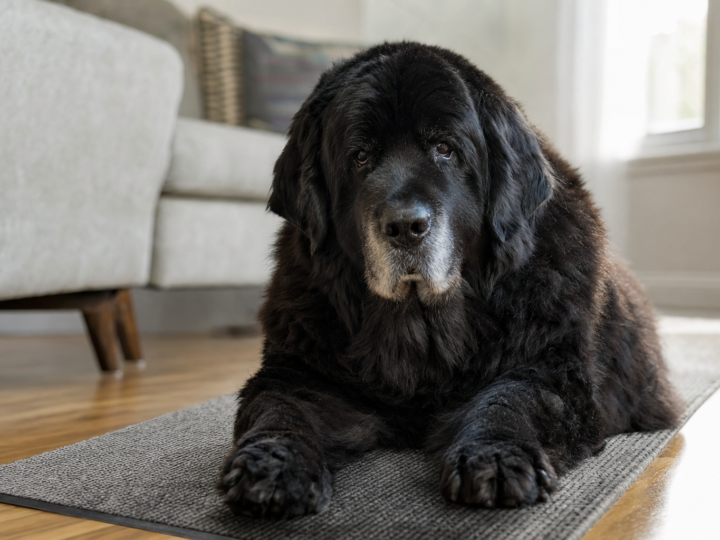
That is why the joint support conversation in big dogs starts earlier and runs longer than it does for small breeds. It is also why dose matters so much: a supplement sized for a medium dog and fed to a Newfoundland delivers a fraction of the intended amount, which is the single most common reason a Dog Parent concludes that an ingredient does nothing.
How green lipped mussel compares with the other joint ingredients
No single ingredient does everything, and most well built large breed formulas layer several. This is a plain reading of what each one is generally understood to contribute.
| Ingredient | What it contributes | Usual form |
|---|---|---|
| Green Lipped Mussel | Marine omega 3 fatty acids plus natural glycosaminoglycans and minerals in one whole food | Dried powder |
| Glucosamine | A building block used in cartilage and joint fluid | Isolated, usually as the hydrochloride or sulphate |
| Chondroitin | Supports cartilage structure and its ability to hold water | Isolated extract |
| MSM | A sulphur source used in connective tissue | Isolated powder |
| Hyaluronic acid | Supports the viscosity of joint fluid | Isolated, small amounts |
| Eggshell membrane | Natural collagen plus associated compounds | Processed membrane powder |
| Fish oil | EPA and DHA only, no glycosaminoglycans | Oil or encapsulated oil |
Cornell University’s College of Veterinary Medicine covers how growth rate, nutrition, and exercise interact with joint development in large breed dogs. Read more from Cornell’s canine hip dysplasia overview.
Reading across that table, green lipped mussel is the ingredient that overlaps with the most others. That is its practical advantage in a chew, where space is limited and every active competes for room.
Shellfish Allergy
This is shellfish. A dog with a known shellfish or fish sensitivity should not have it. Ask your veterinarian first.
Heat Damaged Powder
Harsh drying degrades the fatty acids that justify the ingredient. Look for gently processed New Zealand sourcing.
Hidden Amounts
A proprietary blend can hide a token sprinkle. If the label will not tell you the milligrams, assume it is small.
Expecting It Fast
This is a nutritional input, not a quick fix. Give it six to eight consistent weeks before judging.
How much green lipped mussel does a big dog need
There is no single official canine dose, and published feeding amounts vary between products. What is consistent is that the amount scales with body weight, which is exactly why a large breed specific product matters. A few practical rules hold up well.
- Follow the weight bands on the label of the product you are actually feeding, rather than a number from a different brand.
- Expect a genuine large breed formula to state green lipped mussel in milligrams per chew, not to bury it in a blend.
- Give the full daily amount every day. Skipping days is the most common way a supplement quietly stops working.
- Do not double the dose to speed things up. More is not faster, and it wastes the jar.
- Tell your veterinarian what you are feeding, especially if your dog is already on a prescribed diet or medication.
- Reassess at each annual visit, since the right amount changes as your dog’s weight and life stage change.
How to read a joint label in ten seconds
Turn the jar around and look for three things. First, is green lipped mussel listed with an amount in milligrams per chew or per serving, and is that serving the one your dog’s weight actually calls for. Second, is the sourcing named, since New Zealand is where the species is farmed and a product that is proud of its source usually says so. Third, is the rest of the active list sensible or is it a long tail of tiny amounts designed to fill a label. A short, honest list of well dosed actives beats a long list of decoration every time. Our guide on what to look for in a large breed joint supplement goes deeper on this.
Safety, allergens and who should skip it
Green lipped mussel is generally well tolerated by dogs, and the taste is usually an easy sell. There are still situations where it is the wrong choice, and they are worth knowing before you buy a jar.
- Shellfish or fish sensitivity. This is the clearest one. Green lipped mussel is shellfish and should be avoided in any dog with a known reaction.
- Dogs on other supplements or medication. Stacking several joint products can push some actives higher than intended. Tell your veterinarian everything your dog receives.
- Pregnant or nursing dogs. Check with your veterinarian rather than assuming a general purpose supplement is appropriate.
- Any dog with a current health concern. A supplement is not the right response to a new limp, a reluctance to rise or a sudden change in movement. Those are veterinary questions first.
Mild digestive upset when starting anything new is not unusual. Introducing it with food and at the lower end of the weight band for the first week usually settles it. If it does not, stop and call your veterinarian.
Everyday habits that support joint comfort
An ingredient only earns its keep inside a routine. A lean body condition does more for a big dog’s joints than any jar, gentle daily movement holds the muscle that supports them, and good footing at home protects the whole structure. A daily joint support routine is the piece that runs quietly alongside all of it, which is why consistency matters more than any single ingredient choice.
MoveGuard Adult is built for medium and large breed adult dogs from 25 to 75 pounds. It brings together glucosamine, chondroitin, MSM, New Zealand Green Lipped Mussel, eggshell membrane collagen, hyaluronic acid and vitamins C and E to support cartilage, connective tissue and comfortable movement. Dosing follows weight, so a dog from 25 to 50 pounds takes one chew a day and a dog from 50 to 75 pounds or more takes two, with the label advising senior dogs aged seven and over to use the higher amount for their weight and to allow six to eight weeks. It ships as 60 chicken liver flavoured chews, is made in the USA in an NSF registered facility, and carries a 60 day guarantee.
Support The Years Ahead
Give your big dog daily joint support made for medium and large breeds. Explore MoveGuard Adult.
What to expect, and when
Set the timeline before you start and you will judge the product fairly. Nutritional joint support works with time. Most labels, including those that feature green lipped mussel, ask for six to eight weeks of consistent daily feeding before you assess anything, and in a big dog with years of load behind them that is a reasonable ask.
What Dog Parents most often report noticing first is not dramatic. It is the ordinary stuff: an easier first movement in the morning, a willingness to do the second walk, a dog who settles more comfortably after activity. Keep a simple note on your phone of how your dog rises, moves and settles in the first week, then read it back at week eight. Memory is a poor instrument over that kind of window, and a two line note is a surprisingly good one.
A stage by stage view
When green lipped mussel makes sense depends far more on life stage than on breed.
Growing puppy. Large breed puppies are building the frame they will use for life, and joint support during the growth window is a long established habit in big breeds. Use a product formulated for growing dogs rather than an adult one, and dose by expected adult weight.
Young adult. This is the easiest stage to skip and the best one to start. Nothing looks wrong yet, which is precisely the point. Support is cheapest when it is proactive rather than reactive.
Mature adult. Around five to seven years in a large breed, the small changes begin: a slightly slower rise, less interest in the stairs, a shorter second walk. Keep the routine running daily and pair it with weight control.
Senior. The routine matters most here and is also most often interrupted. Many labels advise the higher amount for the weight band in dogs aged seven and over. Keep movement gentle, regular and frequent, and bring any new change to your veterinarian rather than to a jar.
Common mistakes to avoid
The ingredient is rarely the problem. How it gets used usually is.
- Buying on the front of the jar. The claim on the front tells you nothing. The amount per chew on the back tells you everything.
- Dosing a big dog like a medium one. A large breed at the bottom of the weight band gets a fraction of the intended amount, then the product gets blamed.
- Stopping at week three. The most common reason a joint routine fails is that it ended before it had a chance.
- Stacking three products at once. You lose track of totals and you cannot tell what is doing what. One well built formula is easier to judge.
- Using it as an answer to a new symptom. A sudden limp, stiffness that appeared this week, or a leg that will not take weight belongs with your veterinarian.
- Ignoring the weight on the dog. No supplement offsets extra pounds travelling through a big dog’s joints every day.
What green lipped mussel cannot do
Honesty about the limits is what makes the rest of this useful. Green lipped mussel is a nutritional ingredient. It supports normal joint structure and comfortable movement as part of a daily routine. It is not a medicine, it does not diagnose anything, and it is not a response to a health condition your veterinarian has identified or should be identifying.
It also cannot outrun the basics. A dog carrying too much weight, moving too little, or slipping on bare floors at home will not be rescued by an ingredient, however good the sourcing. Think of it as one of four levers, alongside body condition, daily movement and a home set up for good footing. Pull all four and you have given your big dog a genuinely good foundation. Pull one and expect one lever’s worth of result. That framing keeps expectations sensible and keeps the focus where it belongs, which is on the whole dog rather than on the label.
Frequently asked questions
Is green lipped mussel safe for dogs?
Green lipped mussel is generally well tolerated by dogs and is a common ingredient in joint supplements. It is shellfish, so it should be avoided in any dog with a known shellfish or fish sensitivity. Mild digestive upset when starting is not unusual and often settles if you introduce it with food. Check with your veterinarian before starting any new supplement.
How long does green lipped mussel take to work in dogs?
Most products ask for six to eight weeks of consistent daily feeding before you assess the result. It is a nutritional input rather than a fast acting one, so skipping days or stopping at week three is the most common reason Dog Parents conclude it did nothing.
Is green lipped mussel better than glucosamine for dogs?
They are not really competitors. Glucosamine is a single isolated building block, while green lipped mussel is a whole food that supplies marine omega 3 fatty acids, natural glycosaminoglycans and minerals together. Many large breed formulas include both, which is generally a more complete approach than choosing one.
Can I feed my dog fresh mussels instead of a supplement?
Fresh or cooked mussels are not a practical substitute. The amounts are inconsistent, the fatty acid content varies, and you cannot dose reliably by body weight. A supplement made for large breed dogs gives you a known amount per chew, which is the part that actually matters.
At what age should a large breed dog start green lipped mussel?
Many Dog Parents begin joint support during the growth window with a product formulated for large breed puppies, then move to an adult formula once growth finishes. Starting in young adulthood while everything still looks fine is the proactive approach most large breed guidance favours. Discuss timing with your veterinarian for your individual dog.
The bottom line
Green lipped mussel earns its place in large breed joint formulas because it delivers marine omega 3 fatty acids, natural glycosaminoglycans and supporting minerals in one whole food ingredient, which is a lot to ask of a single scoop. For a big dog carrying real weight through every stride, that breadth is genuinely useful. Buy on the amount per chew rather than the claim on the front, choose gently processed New Zealand sourcing, feed it daily for at least six to eight weeks before you judge it, and keep it beside the things that matter just as much: a lean dog, gentle regular movement and good footing at home.
Want the simple roadmap in one place? Grab our free Big Dog Mobility Guide for the home setup checklist, the weight framework and gentle movement routines, all written for large and giant breeds.
This article is for general educational purposes only and is not veterinary advice. It is not intended to diagnose, treat, cure or prevent any disease. Always consult your veterinarian about your dog’s individual health, nutrition and supplement needs. These statements have not been evaluated by the Food and Drug Administration.
Support Big Breed Joints from Day One
Large and giant breeds carry more load through every growth stage. MoveGuard Growth supports developing joints in young big dogs (8 to 30 months); MoveGuard Adult keeps grown big dogs moving comfortably.


Leave a Reply