
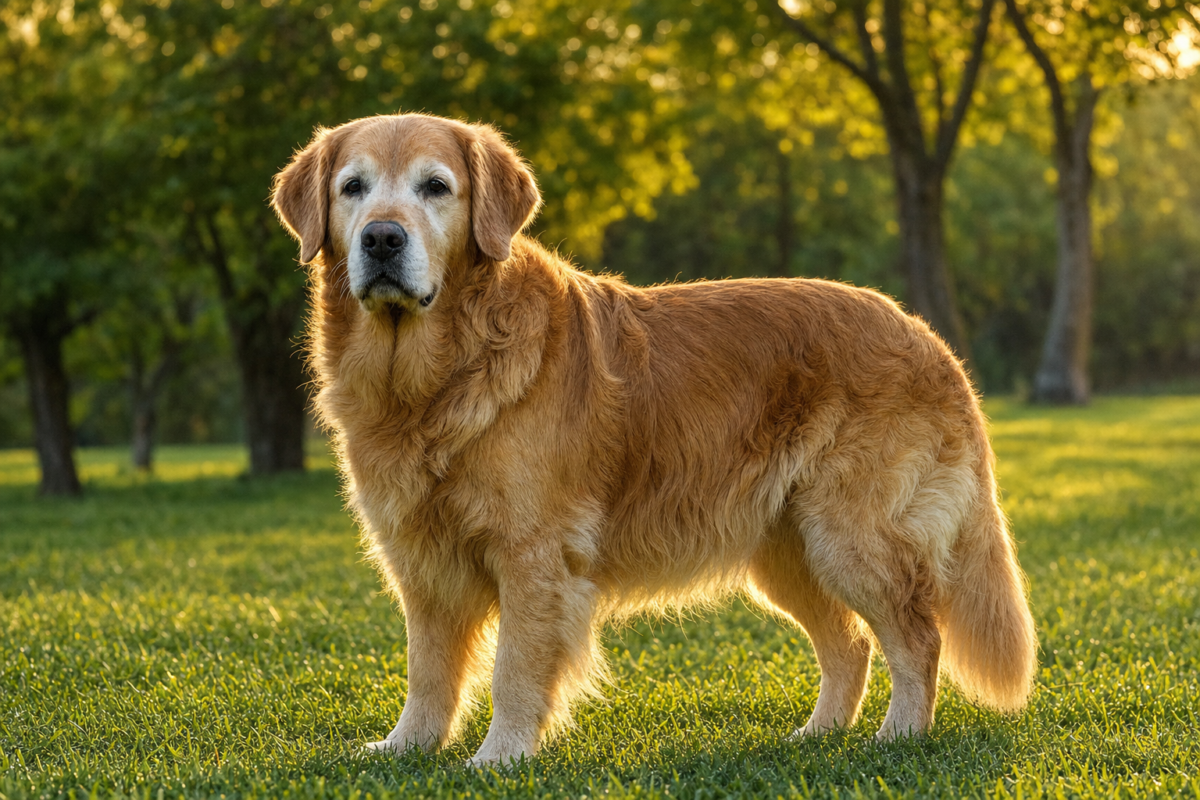
You support an ageing big dog’s mobility with a handful of daily habits rather than one big intervention. Keep your dog lean, because weight is the single largest load on an older frame. Keep movement gentle, regular and predictable instead of occasional and intense. Add traction at home so every step feels secure. Support the joints with daily nutrition made for large breeds. And see your veterinarian for regular checks, since a big dog is usually considered a senior from around 6 or 7 years of age, earlier than a small dog.
The first time you notice your big dog taking the stairs a little more thoughtfully, or pausing before jumping into the car, it lands somewhere in the chest. Large and giant breeds mature into their senior years earlier than small dogs do, and the changes tend to arrive quietly. The good news is that most of what helps is entirely within your control, costs very little, and works best when you start before you think you need to.
How can I support my big dog mobility as it ages?
Support an ageing big dog’s mobility by keeping weight low, movement consistent, footing secure and joint nutrition steady. Those four levers do most of the work. A lean body condition reduces the load through every joint on every stride. Daily gentle activity keeps muscle on the frame, and muscle is what holds a heavy dog steady. Rugs and runners give an older dog confidence on hard floors. Daily joint support built for large breeds keeps the routine going year round. Layer regular veterinary checks over the top and you have a plan that suits almost any big dog.
The order matters. Many Dog Parents reach for a supplement first and leave the weight alone, when trimming a few pounds usually changes more than anything else on the list. Do both and the effect compounds.
Why size changes the ageing picture
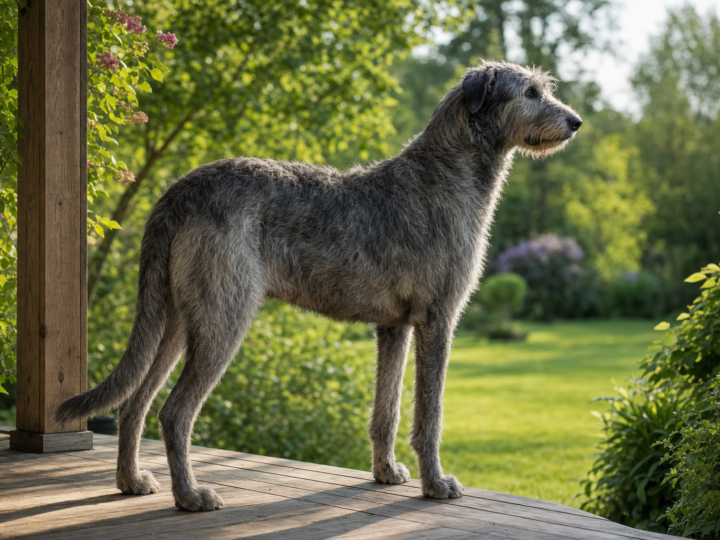
Big dogs live on a faster clock. A Labrador is often considered a senior at about 7, while a giant breed such as a Great Dane or an Irish Wolfhound may be classed as senior from 5 or 6. That means the window for building good habits opens earlier than most people expect.
Size also changes the physics. A 100 pound dog carries roughly five times the load of a 20 pound dog through joints that are not five times stronger. Every extra pound, every slippery landing and every long lie down on a hard floor asks more of a large frame than it would of a small one. That is why the same advice you might read for any dog deserves to be applied more carefully, and earlier, when the dog is big. Our guide on the early signs a large dog is slowing down is a useful companion to this one.
When a big dog becomes a senior
Use this as a general framework and let your veterinarian confirm where your own dog sits.
| Adult weight | Often considered senior from | What tends to change first |
|---|---|---|
| 50 to 65 lb | Around 8 years | Slower warm up after rest, less interest in long walks |
| 65 to 90 lb | Around 7 years | Hesitation at stairs and car doors, more sleep |
| 90 to 120 lb | Around 6 years | Slower to rise, shorter play sessions, muscle loss over the hips |
| 120 lb and above | Around 5 to 6 years | Noticeable change in pace, preference for soft ground |
Cornell University’s College of Veterinary Medicine covers how growth rate, nutrition, and exercise interact with joint development in large breed dogs. Read more from Cornell’s canine hip dysplasia overview.
Extra Weight
The heaviest load an older joint carries is the dog itself. Lean is the single biggest lever you hold.
Slippery Floors
Tile and wood make an older big dog brace and scramble. Traction restores confidence immediately.
Weekend Warrior Pattern
Nothing all week then a long hike Saturday is harder on an older frame than a steady daily routine.
Muscle Loss
Rest builds nothing. Gentle daily movement keeps the muscle that supports a heavy dog upright.
Weight is the biggest lever you hold
If you change one thing this year, change the number on the scale. Keeping an older big dog lean does more for comfortable movement than any product on any shelf, and it is free.
- Weigh meals rather than scooping them, and recheck the portion whenever activity changes.
- Move to an adult or senior formula suited to your dog’s size and let your veterinarian confirm the daily amount. Our guide on how much to feed an adult large dog gives you a starting point.
- Count treats, chews and table food inside the daily total, not on top of it.
- Trim slowly. Gradual change suits an older dog far better than a sudden cut.
- Weigh your dog every few months, because a heavy coat hides a lot on a big breed.
How to check body condition in ten seconds
The scale tells you weight. Body condition tells you whether that weight suits your dog today.
- Ribs. Run your hands along the sides. You should feel the ribs easily under a thin layer.
- Waist. Look down from above and you want a clear waist tucking in behind the ribs.
- Tuck. From the side, the belly should rise toward the back legs rather than hanging level.
Check every couple of weeks. On an older dog, also run your hands over the hips and thighs to feel whether muscle is holding, since muscle loss can happen while the scale stays still.
Movement that suits an older big dog
Rest is not kindness. An older big dog that stops moving loses the muscle that keeps a heavy body steady, and that loss is much harder to rebuild than it is to maintain.
- Go little and often. Two or three shorter walks a day suit an older frame better than one long one.
- Choose soft ground. Grass and trails are kinder than pavement for a heavy dog.
- Warm up gently. Give a few slow minutes at the start rather than setting off at pace.
- Keep it flat. Steady ground beats hills and repeated jumping for an ageing dog.
- Consider swimming. Many big dogs enjoy water, which lets them move without carrying their own weight. Ask your veterinarian whether it suits your dog.
- Watch the day after. If your dog is stiff the following morning, the outing was too long. Adjust rather than stop.
Daily habits that support joint comfort at any age
Comfortable movement in a big dog is the sum of small, repeated things. Lean feeding, steady activity, secure footing and consistent nutrition each carry part of the load, and they work best together and started early rather than saved for later. Daily joint support belongs in that routine the same way a daily walk does.
Many big dog parents add a joint chew formulated for large breeds. MoveGuard Adult is built for adult dogs, combining clinically studied eggshell membrane with New Zealand Green Lipped Mussel, glucosamine, chondroitin, MSM and hyaluronic acid to support cartilage, connective tissue and comfortable movement. The daily amount is printed on the label and set by weight, with 1 chew for dogs from 25 to 50 pounds and 2 chews for larger dogs, and the label asks senior dogs of 7 and older to use the higher amount for their weight and to allow 6 to 8 weeks. It ships as 60 soft chews in chicken liver flavour, is made in the USA in an NSF facility, and carries a 60 day guarantee. For a dog still growing, MoveGuard Growth is the version built for the growth window.
Keep The Routine Going
Support comfortable movement in your adult big dog with a daily chew built for large breeds. Explore MoveGuard Adult.
Setting up a home that works for an older big dog
Small changes around the house often make more visible difference than anything else you try, because they remove the moments where an older dog braces.
- Add traction. Runners and rugs along the routes your dog actually uses matter more than one rug in the middle of a room.
- Use a ramp for the car. Jumping down from a boot is the hardest single movement most older big dogs make.
- Invest in a supportive bed. A thick orthopaedic bed keeps a heavy dog off a hard floor and makes rising easier.
- Keep nails short. Long nails change how a dog stands and reduce grip on smooth floors.
- Keep the essentials on one level. Water, bed and door on the ground floor removes a lot of unnecessary climbing.
- Mind the temperature. Many older dogs move more freely in warmth and stiffen in cold, damp weather.
Signs worth a conversation with your veterinarian
You know your dog better than anyone, and change over weeks is the thing to watch. Bring up any of these at your next visit, or sooner if they appear suddenly.
Slowness to rise after rest, hesitation at stairs or the car, a shortened stride, sitting down partway through a walk, a change in the way the back legs track, muscle loss over the hips, licking at one joint, reluctance to be touched in a particular spot, or a dog who has simply stopped asking to go out. None of these tell you what is happening on their own, and all of them are easier to work with when raised early. Twice yearly checks are a sensible habit once a big dog is a senior.
A stage by stage mobility plan
2 to 5 years. Prime adulthood, and the best time to start. Lock in the lean body condition, the daily walk and the joint routine while everything is easy, because habits started here carry through.
5 to 7 years. Many big dogs cross into their senior years in this window. Add traction at home, move to twice yearly veterinary visits, and start paying attention to how your dog rises rather than how fast it runs.
7 to 9 years. Shorten and multiply the walks, add a ramp for the car, and keep weight firmly in check as activity naturally drops. This is where consistency pays off most.
9 years and beyond. Keep movement gentle, predictable and daily. Prioritise comfort at home, warmth, soft bedding and easy footing, and work closely with your veterinarian on the whole picture.
Common mistakes to avoid
- Letting the weight creep. Activity falls with age while portions stay the same, and the gap shows up on the joints.
- Resting a dog into stiffness. Complete rest costs muscle, and muscle is what holds a big dog up.
- Saving the effort for weekends. Older frames prefer little and often to occasional and long.
- Ignoring the floors. A dog that scrambles on tile is bracing many times a day.
- Assuming slowing down is just age. It often is, but it is worth a professional opinion rather than an assumption.
- Waiting for a problem before starting a joint routine. Daily support is a habit for the whole adult life, not a response to a bad week.
The older big dog at home
There is an emotional side to this that deserves saying out loud. Big dogs pack a full life into fewer years, and watching a dog who once towered over the sofa take the garden steps carefully is genuinely hard. It helps to remember that an older dog is not a diminished one. The personality is intact, the bond is deeper, and most of what your dog wants from a day is your company.
Older big dogs often become more attached rather than less. They follow you room to room, settle where they can see you, and appreciate a predictable routine more than a new adventure. Meet that where it is. A slow sniffy walk around the block, a warm bed near the family and a body kept lean and comfortable is a very good life for a senior giant. Keep the habits simple, keep them daily, and keep enjoying the dog in front of you.
Frequently asked questions
At what age is a large breed dog a senior?
Most large breeds are considered senior from about 7 years, and giant breeds often from 5 or 6. Smaller large breeds may not reach that stage until 8. Your veterinarian can tell you where your individual dog sits and how often to schedule checks.
What is the best exercise for an older big dog?
Short, frequent walks on soft ground suit most older large breeds better than one long outing. Gentle warm ups, flat routes and, where your veterinarian agrees it is suitable, swimming all let a big dog keep muscle without carrying the full load of its own weight.
Does losing weight help an older dog move more comfortably?
Body weight is the largest single load an ageing joint carries, so keeping a big dog lean supports comfortable movement more than almost anything else you can do at home. Any weight loss plan for an older dog should be gradual and guided by your veterinarian.
When should I start joint support for a big dog?
Earlier than most people expect. Large breeds carry more weight through their joints across their whole lives, so many Dog Parents keep a daily joint routine going from young adulthood rather than starting it once a dog has already slowed.
Are ramps and rugs really worth it?
Yes, and they are usually the fastest visible improvement. Jumping out of a car and scrambling on smooth floors are two of the most demanding things an older big dog does each day, and a ramp and a few runners remove both.
The bottom line
Supporting an ageing big dog is not complicated, but it does need to be consistent. Keep your dog lean, keep movement gentle and daily, give every floor some grip, keep a joint routine running year round, and see your veterinarian twice a year once your dog is a senior. Big dogs reach that stage earlier than small ones, so the best time to start is before you notice anything at all. Get the habits in place while your dog is strong and you give your companion the best chance of moving comfortably for as long as possible.
Want the simple roadmap in one place? Grab our free Big Dog Mobility Guide for the home setup checklist, the weight framework and gentle movement routines, all written for large and giant breeds.
This article is for general educational purposes only and is not veterinary advice. It is not intended to diagnose, treat, cure or prevent any disease. Always consult your veterinarian about your dog’s individual health, nutrition and supplement needs. These statements have not been evaluated by the Food and Drug Administration.
Support Big Breed Joints from Day One
Large and giant breeds carry more load through every growth stage. MoveGuard Growth supports developing joints in young big dogs (8 to 30 months); MoveGuard Adult keeps grown big dogs moving comfortably.

Leave a Reply