
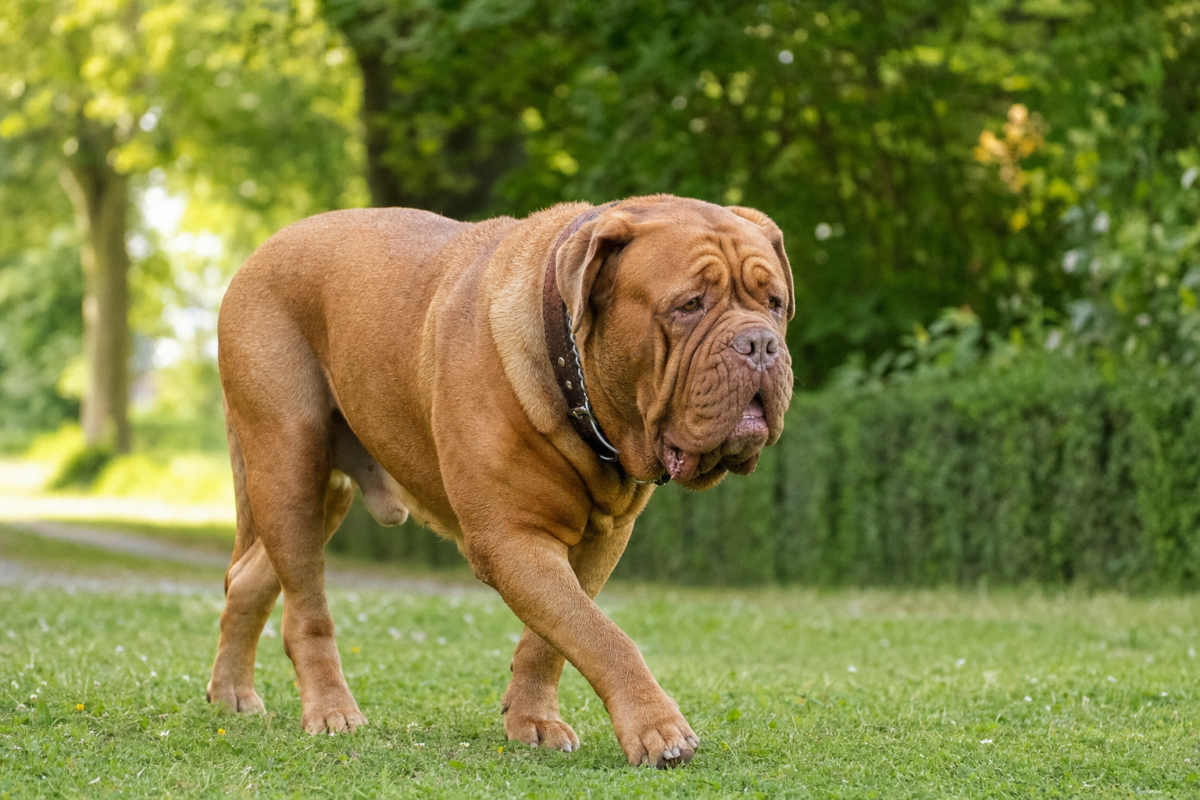
The daily habits that support joint comfort in big dogs are simple and repeatable: keep your dog lean, walk daily on soft, level ground rather than in weekend bursts, add traction to slippery floors, use a ramp instead of a jump into the car, give a supportive bed and a warm resting spot, keep nails short, and add a daily joint support chew made for large breeds. None of these is dramatic on its own. Done every day for years, together they are the single biggest thing a Dog Parent controls.
Big dogs carry more weight through the same set of joints as every other dog, over a longer frame and often for a shorter lifetime. That is why the small things matter so much. The habits below take a few minutes a day, cost almost nothing, and quietly shape how comfortably your dog moves at eight years old. This guide walks through each one, why it works, and how to fit it into an ordinary week.
What daily habits support joint comfort in big dogs?
The core daily habits are keeping a lean body condition, giving steady moderate exercise instead of occasional hard bursts, protecting your dog from slips and hard landings at home and in the car, providing supportive rest, keeping nails and paw hair trimmed so your dog stands correctly, and supporting the joints from the inside with a daily chew formulated for large breeds. Consistency matters far more than intensity. A dog who walks thirty calm minutes every day is better served than one who rests all week and then runs for two hours on Saturday.
These habits suit any age. They are worth starting with a young dog, they matter most through the middle years when nobody is worried yet, and they stay valuable into old age.
Why big dog joints work harder
Weight is the obvious part. A 120 pound dog puts far more load through each hip, elbow and knee than a 30 pound one, every single step of every single day. Length is the quieter part: a long limb acts as a lever, so the same slip or landing sends a larger force through the joint at the top of it.
Big breeds also reach adult size while still finishing construction underneath. In the biggest breeds the growth plates stay open well past the first birthday, and the muscle that stabilises those joints keeps developing into the third year. That is why habits formed early keep paying out for a decade.
There is a third factor that gets less attention: repetition. A big dog does not usually hurt a joint in one dramatic moment. It gets there through thousands of ordinary ones, the skid on the kitchen tile, the hop down from the tailgate, the extra four pounds carried through a whole summer. Because the wear is cumulative, the fix is cumulative too, which is genuinely good news. You do not need a perfect week. You need an ordinary day that is slightly kinder to the joints, repeated.
What daily comfort looks like by size
The habits are the same across the size bands. What changes is how much each one is worth, because the load on the joints rises with body weight.
| Adult weight | Typical breeds | Where the daily effort pays most |
|---|---|---|
| 50 to 65 lb | Boxer, Border Collie, Springer type | Steady daily walking, lean feeding, warm ups before hard play |
| 65 to 80 lb | Labrador, Golden Retriever, German Shepherd | Weight control above all, traction indoors, nail length |
| 80 to 100 lb | Rottweiler, Doberman, Cane Corso | Car ramp, softer walking surfaces, supportive bedding |
| 100 to 130 lb | Alaskan Malamute, Newfoundland, Leonberger | Runners on every slippery route, moderate exercise, daily joint support |
| 130 lb and above | Great Dane, English Mastiff, Saint Bernard | Every habit on this page, started early and kept up |
Cornell University’s College of Veterinary Medicine covers how growth rate, nutrition, and exercise interact with joint development in large breed dogs. Read more from Cornell’s canine hip dysplasia overview.
When does joint support matter most?
There are two windows worth knowing. The first is the growth window, roughly 8 to 30 months in large and giant breeds, when the frame is being built. The second is the long adult stretch from about two years onward, when that frame simply does the work, mile after mile.
Most Dog Parents think about joint support in a third window, once a dog is visibly stiff. The habits below are much easier to build before that, when your dog still feels well and the routine can settle in without any urgency attached to it.
Why the middle years are the quiet opportunity
A large breed dog is often at peak strength between two and five, which is exactly when nothing looks like it needs attention. That is the stretch where lean weight, daily movement and a good home setup do their most useful work, because they are protecting a joint surface that is still in excellent shape. Waiting until you notice a change means starting the habits with less to protect.
Extra Weight
The single heaviest load a joint carries is the dog itself. Even a few pounds off makes every step easier.
Slippery Floors
Tile and laminate turn a normal turn into a scramble. Runners along the routes your dog uses are cheap and immediate.
Weekend Warrior Exercise
Six quiet days then one long hard one asks a lot of a large frame. Steady beats occasional.
Jumping From Height
In and out of the car and off the sofa are the two most repeated hard landings in most households.
Habit one, keep your dog lean
If you only build one habit, build this one. A lean dog moves more comfortably now and holds condition better later, and portion control is entirely within your hands.
- Measure meals with a proper cup rather than filling the bowl by eye.
- Count treats and training rewards as part of the daily total, not as extras.
- Feed an adult food suited to large breeds and confirm the amount with your veterinarian.
- Reassess after any change in activity, because a quieter month needs a smaller portion.
How to check body condition in ten seconds
The scale tells you weight. Body condition tells you whether that weight suits your dog.
- Ribs. Flat hands along both sides. You should feel the ribs easily under a thin covering.
- Waist. From above, a clear waist should tuck in behind the ribs.
- Tuck. From the side, the belly should rise toward the back legs rather than running level.
Check every couple of weeks and adjust portions gently, with your veterinarian guiding anything larger.
Habit two, walk daily and evenly
Movement is what keeps joints nourished and the muscles around them strong. The aim is regular and moderate rather than long and hard.
- Two shorter walks usually suit a big dog better than one long one.
- Favour grass, dirt trails and level ground over pavement and steep hills.
- Start slowly for the first five minutes so everything warms up before the pace lifts.
- Let sniffing take up part of the walk. It tires the brain without loading the body.
- Build any increase in distance gradually rather than in one jump.
Habit three, fix the house and the car
Most of the hard moments in a big dog’s day happen indoors, and they are the easiest to remove.
- Traction. Lay runners or rugs on the hallway, the kitchen and anywhere your dog turns at speed.
- A ramp for the car. Jumping down from a tailgate is a real landing, repeated hundreds of times a year.
- Steps or a ramp for the sofa if your dog is allowed up, or a floor bed beside it if not.
- Nails short and paw hair trimmed. Long nails change how a dog stands, and hairy pads slide.
- A supportive bed in a warm spot. Big dogs rest for most of the day, so where they rest matters.
Habit four, support the joints from the inside
Alongside lean feeding and daily movement, many big dog parents add a joint support chew made for large breeds. It takes ten seconds a day and fits neatly onto an existing routine, which is exactly why it tends to stick.
MoveGuard Adult is built for adult medium and large breed dogs. Its six ingredient joint formula combines glucosamine, chondroitin, MSM, New Zealand Green Lipped Mussel, clinically studied eggshell membrane and hyaluronic acid, with vitamins C and E, to support healthy joints, cartilage and comfortable movement. It ships as 60 chicken liver flavour soft chews, is made in the USA in an NSF facility, and is backed by a 60 day guarantee. Ask your veterinarian if you are unsure whether a supplement suits your individual dog.
Ten Seconds A Day
Support comfortable movement in your adult big dog with a daily chew built for large breeds. Explore MoveGuard Adult.
Habit five, make the routine impossible to forget
The habits on this page only work if they survive a busy month, so it is worth designing them to be easy rather than impressive. Attach each one to something you already do without thinking.
- Keep the measuring cup inside the food bin so portioning takes no extra step.
- Give the joint chew with breakfast, every day, at the same moment.
- Store the car ramp in the car rather than in the garage, or it will not get used.
- Put the walk in the calendar as a fixed thirty minutes rather than a hopeful maybe.
- Do the body condition check on the same day each week, such as a Sunday evening.
A routine that needs willpower fails eventually. A routine built out of things already sitting in the right place tends to last for years, which is exactly the timescale joint comfort is measured in.
Signs the daily habits are working
Progress with joint comfort is quiet, so it helps to know what to look for. A dog whose routine is working rises smoothly after a nap, uses both back legs evenly on stairs, keeps a loose swinging gait at the end of a walk as well as the start, and settles without shifting around for a comfortable position.
The signs pointing the other way are just as ordinary. Stiffness in the first few minutes after rest, a shorter stride, hesitating at the car, sitting down during walks, or a dog who is slowing down earlier than the years suggest. Any of these is worth a conversation with your veterinarian rather than a wait and see approach.
A simple daily routine
Here is what the whole page looks like as an ordinary day.
Morning. Measured breakfast with the joint chew alongside it, then a calm walk that starts slowly and finishes on soft ground.
Daytime. Rest on a supportive bed away from draughts, with runners in place so nothing turns into a skid on the way to the water bowl.
Evening. A second shorter walk with plenty of sniffing, a measured dinner, and calm play rather than a hard sprint in the yard.
Weekly. Run the ten second body condition check, look at the nails, and keep any increase in distance small and gradual.
Common mistakes to avoid
- Letting weight creep. A few pounds a year is invisible until it is not, and every one of them travels through the joints.
- Saving all the exercise for the weekend. Big frames prefer daily and moderate to occasional and hard.
- Ignoring the floors. A house full of hard, shiny surfaces undoes a lot of careful walking.
- Rewarding jumping into the car. A ramp costs less than one veterinary consultation and gets used every week.
- Waiting for stiffness before starting. These habits are protective, so their value is highest before anything changes.
How the habits shift as your dog gets older
The list does not change much with age, but the emphasis does. A young adult benefits most from lean feeding and sensible exercise limits. A dog in the middle years benefits from consistency, because this is when routines either stick or quietly lapse.
An older big dog needs the same habits with gentler edges: shorter and more frequent walks, warmer bedding, more traction, and a little more patience on cold mornings. Keep the walks going even when they get slower, since gentle daily movement supports the muscle that holds a joint steady. Speak with your veterinarian about what suits your dog, and let the routine adapt rather than stop.
Frequently asked questions
What is the single best daily habit for big dog joint comfort?
Keeping your dog lean. Body weight is the largest and most constant load a joint carries, so portion control does more for daily comfort than any other single habit, and it costs nothing.
How much should a large breed dog walk each day?
Most healthy adult large breeds do well with roughly thirty to sixty minutes a day, usually split into two calmer walks. Consistency matters more than distance, and soft level ground is kinder than pavement.
Do rugs and ramps really make a difference?
Yes, because they remove repeated hard moments. Slipping on smooth floors and landing from a tailgate happen many times a week, so adding traction and a ramp changes something your dog does constantly rather than occasionally.
At what age should I start a joint supplement for a big dog?
Many Dog Parents start during the growth window with a product made for large breed puppies, then move to an adult formula. Others begin in the early adult years. Either way, starting before you notice a change gives the routine more to support, and your veterinarian can advise on timing.
Can daily habits help a big dog who is already stiff?
Lean weight, gentle daily movement, traction and supportive rest are sensible at any age and stage. Stiffness itself always deserves a veterinary assessment first, so that the routine you build sits alongside proper guidance for your individual dog.
The bottom line
Joint comfort in a big dog is not built in one decision. It is built in a measured breakfast, a calm daily walk, a runner in the hallway, a ramp at the tailgate, a supportive bed and ten seconds with a chew. Each is small. Repeated across years, they are the most powerful thing you control, and they are just as worth starting today with a five year old as with a puppy.
Want the simple roadmap in one place? Grab our free Big Dog Mobility Guide for the daily habit checklist, home setup fixes and movement guidelines, all written for large and giant breeds.
This article is for general educational purposes only and is not veterinary advice. It is not intended to diagnose, treat, cure or prevent any disease. Always consult your veterinarian about your dog’s individual health, nutrition and supplement needs. These statements have not been evaluated by the Food and Drug Administration.
Support Big Breed Joints from Day One
Large and giant breeds carry more load through every growth stage. MoveGuard Growth supports developing joints in young big dogs (8 to 30 months); MoveGuard Adult keeps grown big dogs moving comfortably.
Leave a Reply